
The First World War career of René Fonck
The designation of "fighter ace" - achieved upon the confirmed destruction of five enemy aircraft - represents a standard of excellence reached by only a small number of First World War pilots. However, the service record of René Fonck stands out as truly exceptional. By the conclusion of World War I, Fonck had amassed 75 confirmed victories, establishing him as the highest-scoring Allied pilot of the conflict and the premier ace of France. He was, however, a divisive character.
‘He is a tiresome braggart, and even a bore, but in the air, a slashing rapier,’ wrote Claude Haegelen of squadron mate René Fonck—and he was one of Fonck’s best friends.
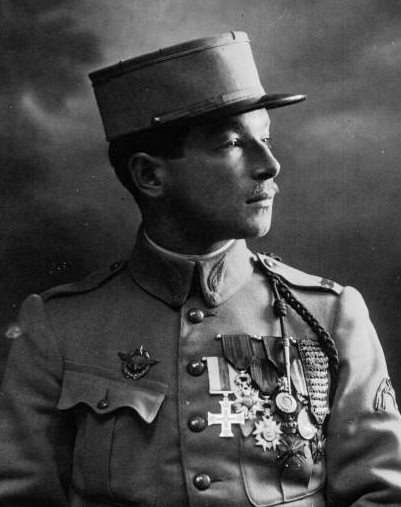
Early Service and Transition to Aviation
Born on 27 March 1894, in Saulcy-sur-Meurthe, Fonck’s military career began in 1914 within the engineering corps. Despite his initial assignment to trench construction and bridge repair, he remained persistent in his pursuit of flight. In February 1915, he was accepted for pilot training, subsequently flying reconnaissance missions. These early sorties, conducted in vulnerable, under-armed aircraft, fostered the disciplined observation and steady nerves that would characterise his later combat style.
1916
By July of 1916, Fonck had taken the initiative to enhance the offensive capabilities of his Caudron G.4 by mounting a Lewis machine gun designed to fire over the aircraft's upper wing.
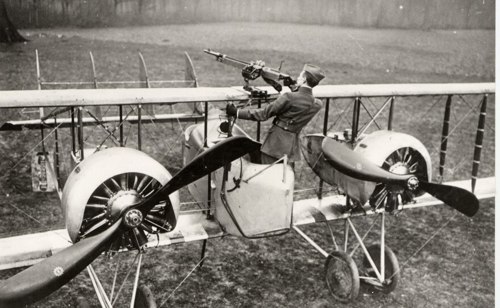
This modification soon proved its worth; despite suffering a disabled engine from an anti-aircraft shell burst during a mission that month, Fonck demonstrated his superior piloting skills by successfully returning to base on his sole remaining engine.
The true measure of Fonck's tenacity, however, was recorded on 6 August 1916. While conducting a photographic reconnaissance mission over the Roye sector with his observer, the French duo was intercepted by two Fokker E.III monoplanes. Rather than retreating, Fonck executed an aggressive counter-attack, forcing one Fokker into a steep dive toward German lines while the second retreated from the engagement. With the immediate threat neutralised, the crew resumed their intelligence-gathering until a new opportunity arose: French anti-aircraft fire signalled the presence of two Rumpler C.I reconnaissance planes over Estrées-Saint-Denis.
Fonck immediately dived upon the enemy formation. As one Rumpler attempted to break away, Fonck initiated a pursuit, mirroring the German pilot’s every manoeuvre despite defensive fire from the enemy observer. Fonck later recounted the intensity of the descent:
“For twenty minutes at least, from bank to bank and spiral to spiral, we descended from an altitude of 4,000 meters until we landed on a grassy field where, their will broken, two [German] officers surrendered—the only prisoners I ever took.”
The surrender marked a rare feat in the annals of Great War aviation—a forced landing resulting in the capture of an intact enemy crew. Official German records later confirmed the identity of the captured airmen as Second Lieutenant Hermann von Raumer and Reserve First Lieutenant Adam Brey.
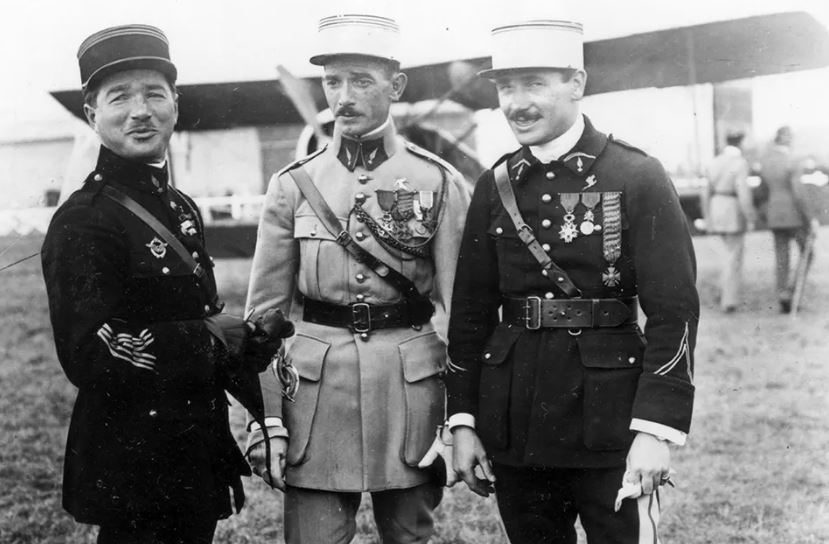
By March 1917, having surpassed 500 flight hours, he was invited to join the elite Escadrille des Cigognes (the Storks Squadron), serving alongside the legendary Georges Guynemer.
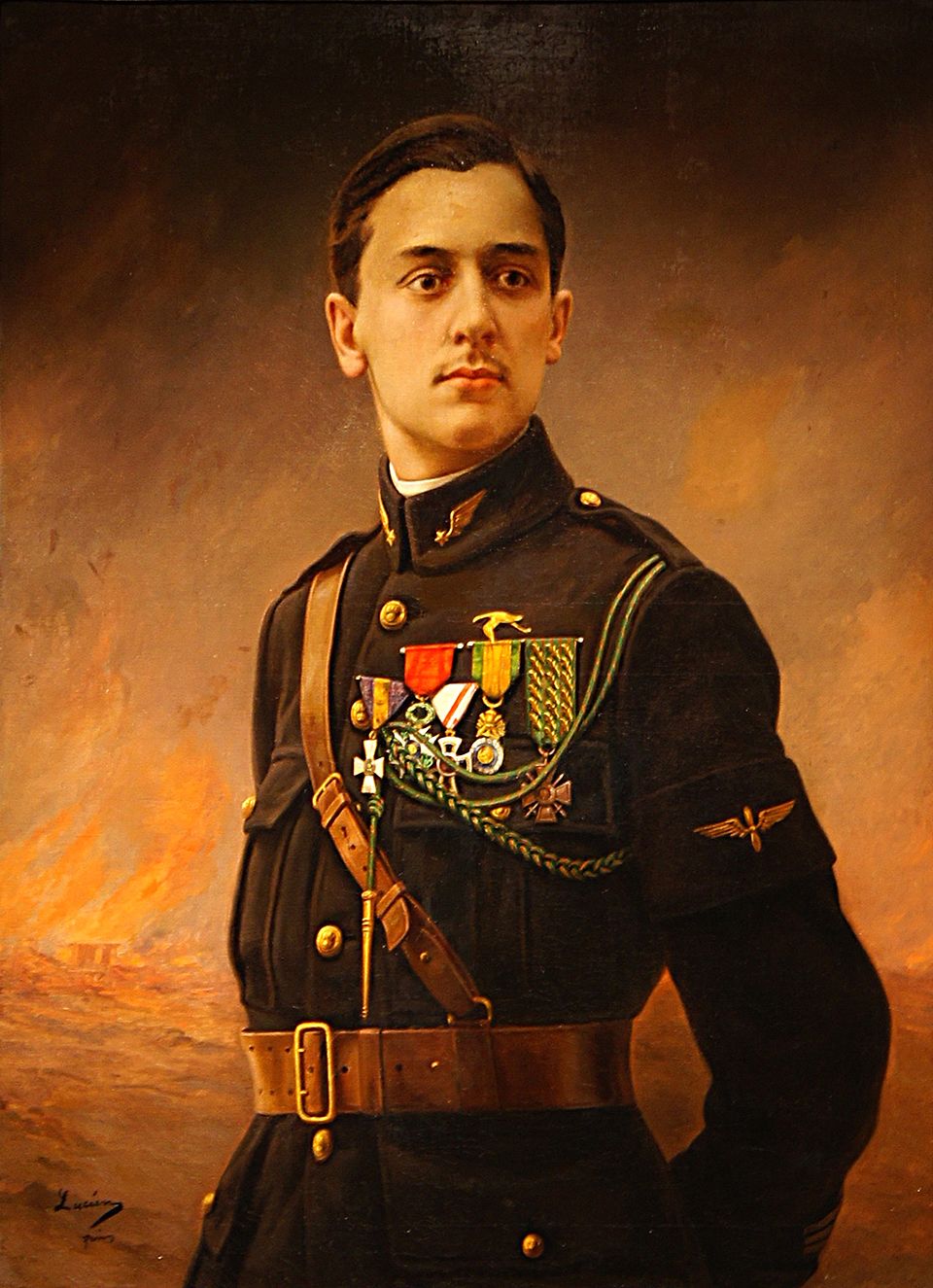
Character
Despite his undeniable aerial achievements, Fonck’s accounts of his combat actions frequently reflected a deep-seated vanity that alienated him from his peers. Comrades often perceived him as either painfully shy or overtly conceited, and he struggled to integrate socially with other flyers.
His reputation was perhaps best captured by his contemporary, Haegelen, who—despite being a close friend—noted that Fonck was a "tiresome braggart" and a "bore" on the ground. While Haegelen praised Fonck’s "unblemished courage and priceless skill" in the cockpit, he lamented Fonck’s tendency to incessantly remind others of his heroics, stating that his personality "can almost make you wish he hadn’t helped you in the first place."
This sentiment was echoed by Swiss volunteer Jacques Roques, who acknowledged Fonck as the premier fighter pilot of the era but characterised him as an unsympathetic figure.
Interestingly, this abrasive personality stood in stark contrast to Fonck's disciplined and professional approach to the war. While other high-ranking French aces like Georges Guynemer flew to the point of exhaustion, or Charles Nungesser indulged in a lifestyle of heavy drinking and minimal sleep, Fonck maintained a remarkably pragmatic routine. He prioritised rest between missions, practised moderate consumption, and dedicated his leisure time to honing his marksmanship—a calculated lifestyle that likely contributed to his status as the highest-scoring Allied ace.
Tactical Methodology and Technical Proficiency
Assigned to Escadrille 103, Fonck achieved ace status by 13 May 1917. His approach to aerial warfare was notably clinical; he eschewed the chaotic, high-risk dogfights favoured by his contemporaries in favour of a methodical, economy-of-force strategy.
• Tactical Execution: Fonck typically utilised altitude advantages to strike from above.
• Marksmanship: He was renowned for his extreme precision, famously stating, "I put my bullets into the target as if I placed them there by hand."
• Armament: He successfully piloted the SPAD XII, utilising its difficult-to-master 37mm cannon to down approximately 11 aircraft before transitioning to the twin-gun SPAD S.XIII.
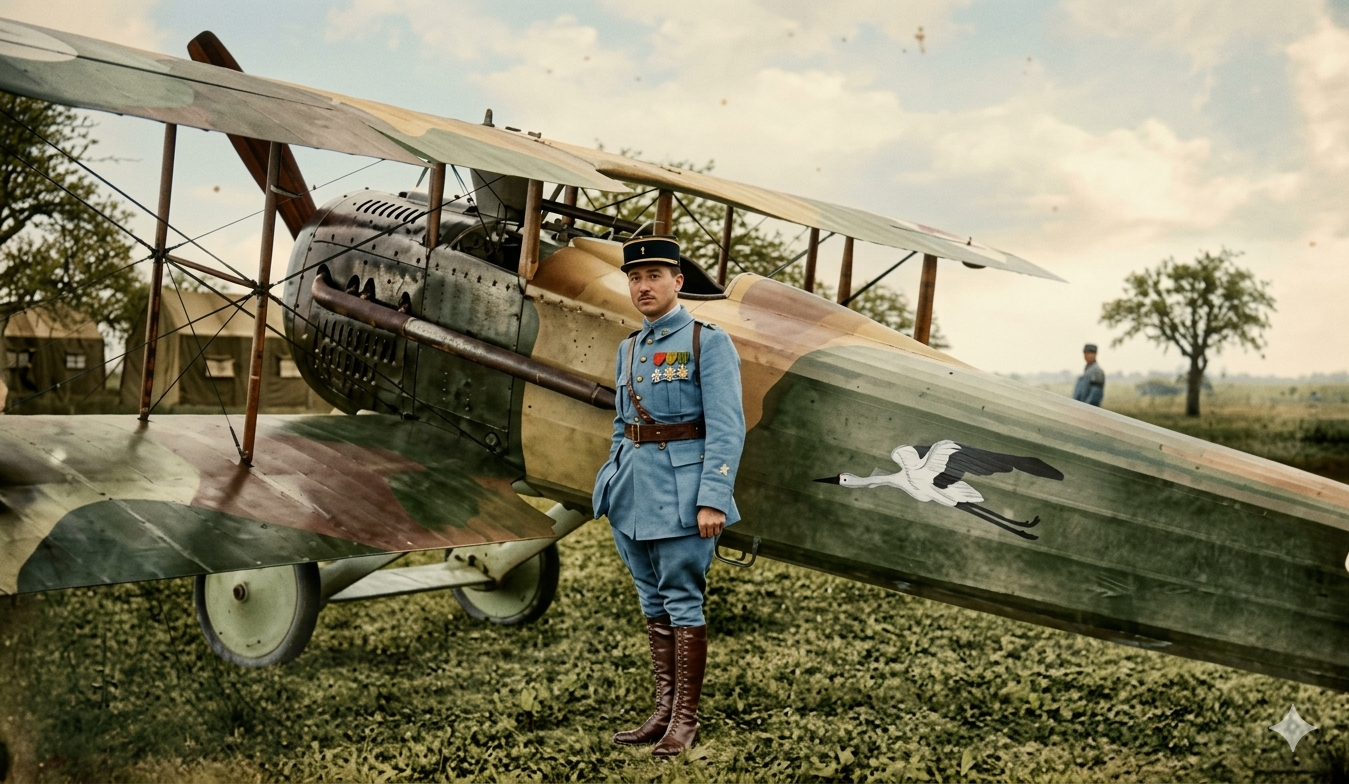
The Record-Breaking Year: 1918
The final year of the war saw Fonck reach the height of his skills. His efficiency was most notably demonstrated on 9 May 1918, when he downed six enemy aircraft in a single day, including three within a five-minute period during the afternoon, and three more that evening.
On 19 July he surpassed the career total of 53 victories previously held by the fallen hero Georges Guynemer.
Fonck repeated his "six-in-a-day" feat on 26 September 1918, a tally which included the destruction of three Fokker D.VII fighters. By 31 October, he concluded his wartime service with a final total of 75 confirmed victories.
Remarkably, despite his high engagement rate, Fonck was never wounded. Only a single enemy bullet was ever recorded striking his airframe throughout his entire combat tenure.
Post-War Endeavours and Later Life
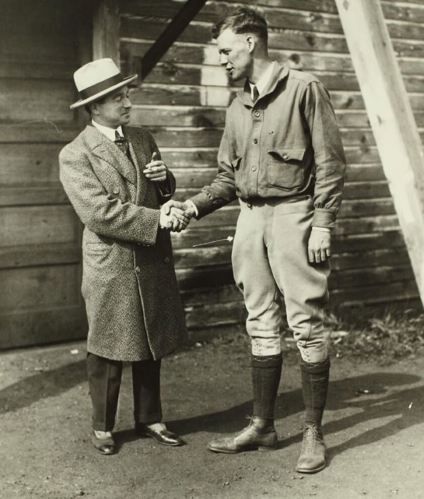
Following the Armistice, Fonck transitioned into the political sphere, serving as a Member of Parliament for the Vosges from 1919 to 1924. He also sought to achieve the first nonstop transatlantic flight; however, his 1926 attempt in the Sikorsky S-35 ended in a tragic crash during take-off, resulting in the deaths of two crew members.
During the Second World War, Fonck served as the Inspector of French fighter forces. While his reputation was briefly clouded by controversial diplomatic meetings during the occupation, he was fully exonerated post-war and awarded the Certificate of Resistance in 1948.
René Fonck died in 1953 at the age of 59, leaving behind a legacy defined by a ruthless, solitary efficiency and a record of aerial success that remains unsurpassed in French history.
Fonck's list of victories
|
Above table courtesy of www.theaerodrome.com
Becoming a member of The Western Front Association (WFA) offers a wealth of resources and opportunities for those passionate about the history of the First World War. Here's just three of the benefits we offer:

Identify key words or phrases within back issues of our magazines, including Stand To!, Bulletin, Gun Fire, Fire Step and lots of others.

The WFA's YouTube channel features hundreds of videos of lectures given by experts on particular aspects of WW1.

Read post-WW1 era magazines, such as 'Twenty Years After', 'WW1 A Pictured History' and 'I Was There!' plus others.


