
How effective was dazzle camouflage?
A recent re-examination of a century-old experiment indicates that the dazzle camouflage used on warships during the First World War may have been less effective at disguising a vesselʼs movements than originally thought.
This is according to a recent article published by the BBC, which details a new study by researchers from Aston University. The distinctive paintwork, featuring bold geometric shapes and stripes, was employed by the Royal Navy and the US Navy to confuse enemy submarines.
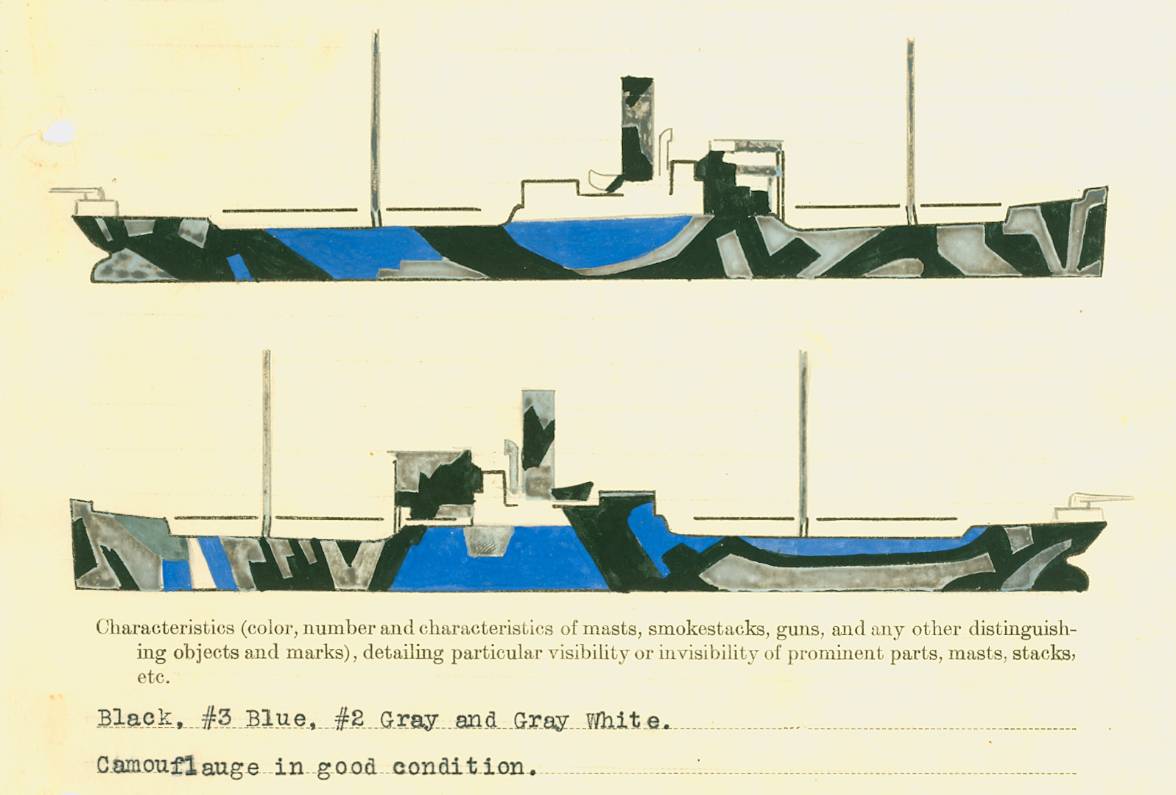
Researchers from Aston University revisited historical data to better understand the true impact of this unique camouflage. The team, led by Professor Tim Meese and Dr Samantha Strong, concluded that while dazzle paintwork did have some effect, its benefits were likely “substantially overestimated”. Their analysis points to another, more powerful optical illusion known as the “horizon effect” as being more influential in confusing observers. The horizon effect is a phenomenon where a ship viewed from a distance appears to be travelling along the horizon, regardless of its actual course. This illusion occurred with both camouflaged and uniformly painted ships.
The original purpose of dazzle camouflage was not to conceal the ship, but to make it difficult for a German U-boat commander to accurately judge its speed and direction, complicating the aiming of torpedoes. The new analysis suggests that while the dazzle patterns did create a minor “twist” in the perceived direction of the ship, this was a smaller influence compared to the horizon effect. The researchers noted that at times the two effects worked together, but in other instances, they competed, potentially even aiding an attacking submarine.

For those interested in the visual history of this technique, the Imperial War Museum holds an extensive collection of original model ships painted to test dazzle designs. These models were created by the Dazzle Section at the Royal Academy of Arts and were studied through a periscope on a rotating turntable to assess the effectiveness of various patterns.
While a notable and artistic feature of naval warfare in its time, the advent of modern tracking technologies like radar and sonar has since rendered such visual deception techniques obsolete.


