
Deep Heritage: cathodic protection for Dardanelles wrecks
The Çanakkale Wars Gallipoli Historical Site Directorate has begun a conservation programme to protect First World War shipwrecks lying in the waters off the Gallipoli peninsula.
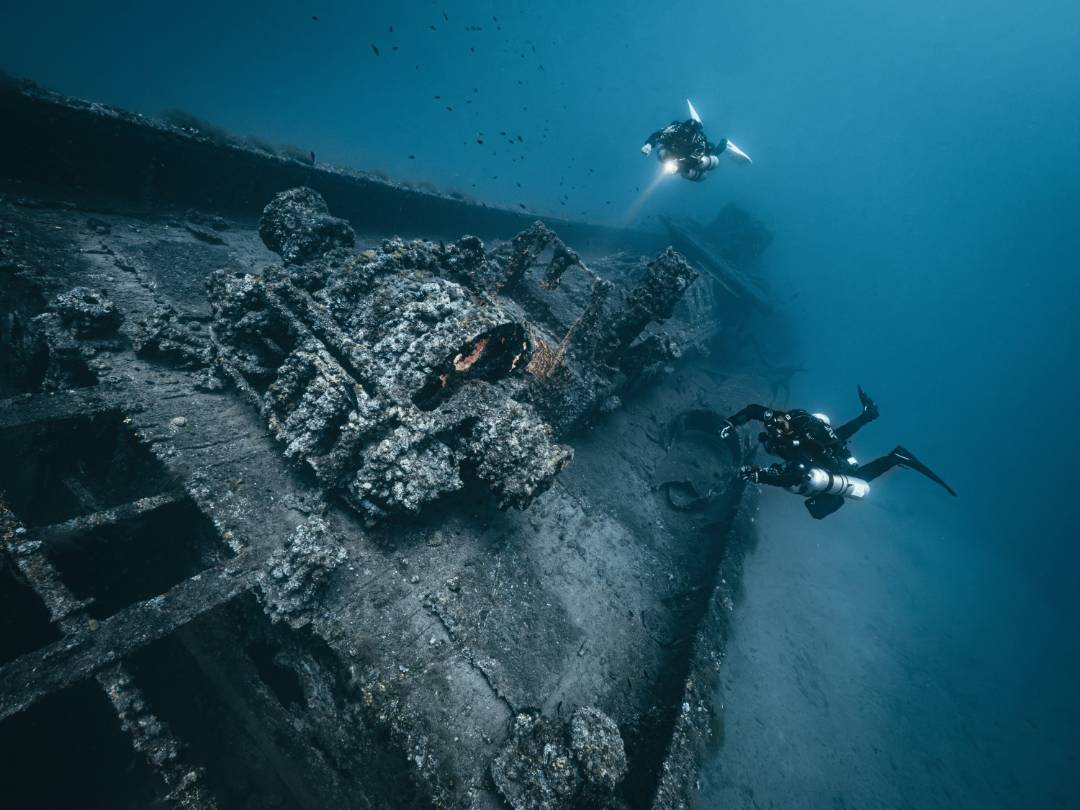
The ‘Deep Heritage’ project, launched in conjunction with the 1915 Çanakkale Bridge and Motorway Corporation, applies cathodic protection to slow corrosion of the wrecks’ metal hulls.
Officials describe it as a milestone for the Gallipoli Historic Underwater Park, which opened to divers in October 2021 and now lists 29 dive points among more than 100 recorded wrecks in these waters. The park’s sites range from deep technical dives of 70 metres or more to shallow wrecks such as SS Milo, a steamer sunk late in the campaign as a breakwater; Milo lies off the Anzac commemorative site on North Beach in water shallow enough to reward snorkellers.
Under the scheme, a ‘sacrificial’ anode — zinc, copper or aluminium — will be connected to each of the wrecks included in the project. Seawater corrodes the anode instead of the historic metal, without any physical alteration to the ship itself.
Project engineers forecast the technology will add 30 to 35 years to a wreck's life, although the anodes themselves need replacing every five years. The technology is to be deployed on at least 15 wrecks in the waters off the peninsula.
The system’s first fitting went to HMS Louis, a Laforey-class destroyer launched in December 1913. She ran aground off Suvla during a gale on 31 October 1915 and became a fixed target for Turkish gunners over the following days. She now rests at 13 metres, and was the centrepiece of the launch event, with a promotional dive by Guinness World Record-holding free-diver Bilge Çingigiray.
HMS Louis: from scuttling to salvage
The Gallipoli Association’s journal draws on contemporary accounts to show that a scuttling party from HMS Canopus deliberately broke the stranded destroyer in half in early November 1915, using guncotton charges. The after section was sunk where she lay; the forward section was towed into deep water and sunk separately.
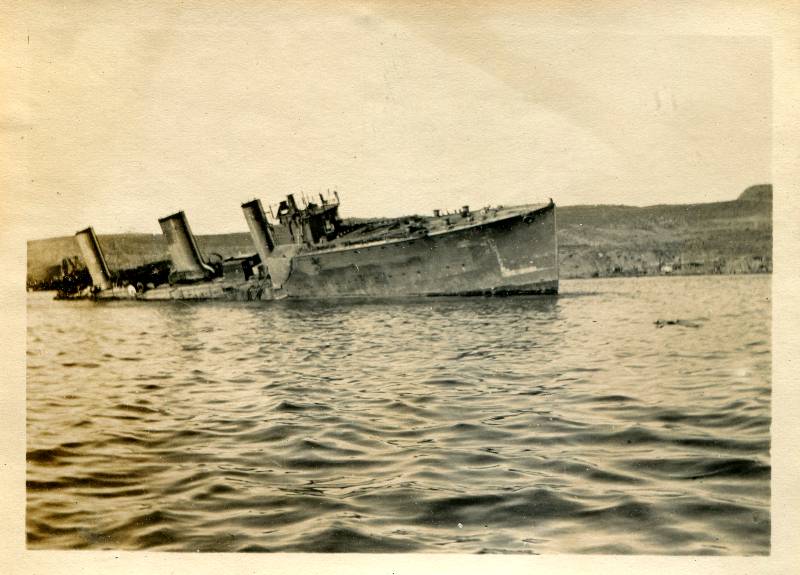
AB Driver Harold John Snape of the Royal Australian Naval Bridging Train, who watched the whole episode from the shore, recorded in his diary:
1st November: HMS Louis (Destroyer), a suction dredge & a couple of lighters went ashore tonight about 8-30p.m. The breeze was fairly strong.
4th November: Destroyer's back appears to be broken.
5th November: Destroyer in halves. Navy men salving her.
9th November: The Canopus towed the for'ard portion of the Louis off, but she is almost underwater & doesn't look too good.
11th November: Rough sea & destroyer has disappeared.
Later, decades of scrap-metal salvage reduced Louis to little more than her keel and engine room, although her boilers remain prominent.
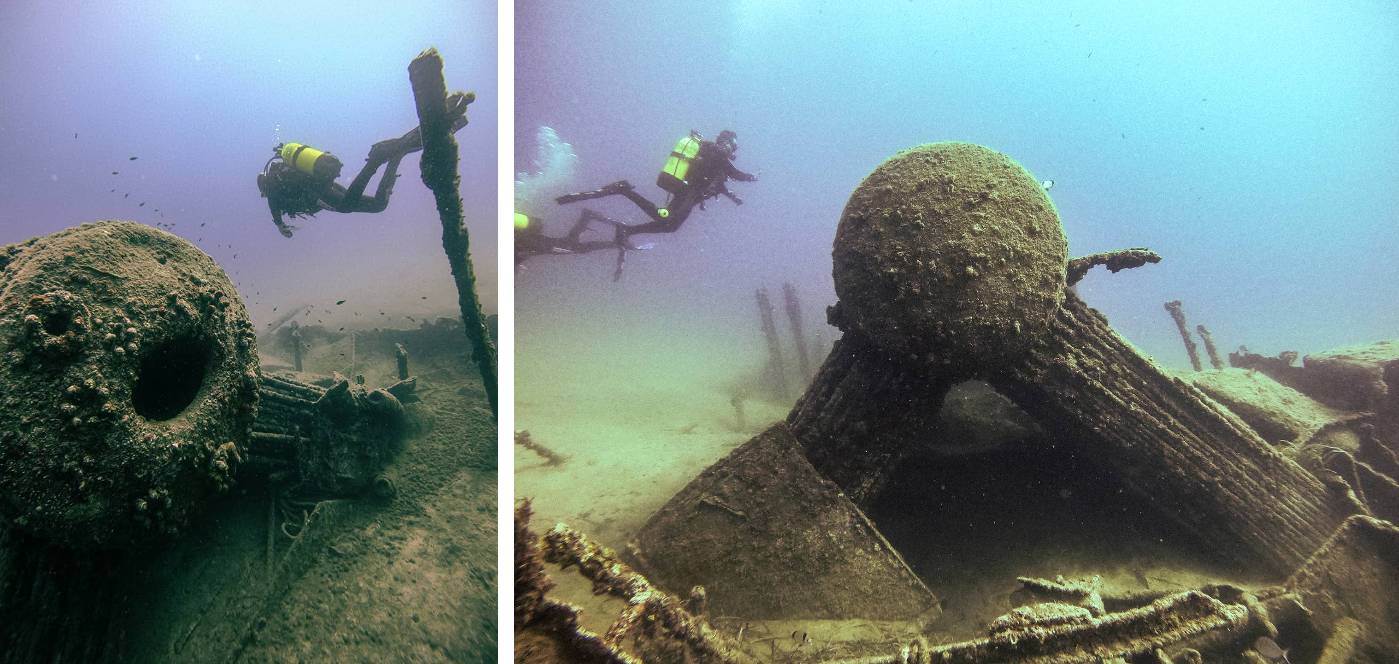
Louis is not unique. HMS Majestic, torpedoed off Cape Helles in 1915 with the loss of 49 men, saw her most distinctive sections stripped by divers for scrap in the 1960s. Organised salvage of the Gallipoli wrecks ran from the 1920s until it stopped being economical in the 1970s; concerns about losing the wrecks altogether, and about the status of any war graves among them, also contributed to ending the practice.
Watch a 1967 Belgian television report on salvage operations then underway at the Dardanelles.
Are these war graves?
A question likely to follow any piece on First World War wrecks: aren’t they war graves? The answer depends on the ship. The Gallipoli Historic Underwater Park’s website is explicit about one of them: it describes HMS Triumph, torpedoed off Gaba Tepe just south of the Anzac sector on 25 May 1915, as continuing to serve today as an anıt mezar – a memorial grave – for the 73 men who went down with her. HMS Majestic, torpedoed two days later off Cape Helles with the loss of 49 men, belongs in the same category even though the park’s description of her does not use the word. HMS Louis, by contrast, was abandoned before gunfire and guncotton finished her off, so she carries no such status.
Under UK law, the Protection of Military Remains Act 1986 can designate a wreck as a ‘protected place’ (divers permitted, look-don't-touch) or a ‘controlled site’ (diving banned). The Act applies in principle anywhere in the world, but outside UK waters it can only be enforced against UK citizens, UK-flagged vessels or those calling at UK ports – and none of the Dardanelles wrecks currently appear on the UK’s designation list. In practice, the Gallipoli Historic Underwater Park enforces its own version of the same rule: dives must be guided, and removing anything from a wreck is prohibited, regardless of whether human remains are present.
Further reading
- Daily Sabah, ‘Türkiye starts high-tech conservation of WWI wrecks in Çanakkale Strait’, 25 June 2026
- Gallipoli Historic Underwater Park (official site, Turkish Ministry of Culture and Tourism), divinggelibolu.com
- Nick Baker and Bryn Dolan (editor), ‘HMS Louis at Gallipoli’, The Gallipolian (journal of the Gallipoli Association), no. 159, Autumn 2022, pp. 23–26
- Selçuk Kolay, Okan Taktak, Savaş Karakaş and Mithat Atabay, Echoes from the Deep: Wrecks of the Dardanelles Campaign, Istanbul, 2013 (2nd ed. 2015)
- Dr Piotr Nykiel, Polish Diving Expedition Gallipoli 2011, navyingallipoli.com


