
Stretchers, splints and gas masks: WFA grant brings the Western Front to Worthing High
A grant from The Western Front Association has funded a day of immersive living history workshops at Worthing High School in West Sussex, giving more than 100 Year 10 and Year 11 students hands-on preparation for the British sector study in their Pearson Edexcel GCSE History paper.
History in the Making: Bringing the Western Front to Life
By James Oram, Worthing High Head of History
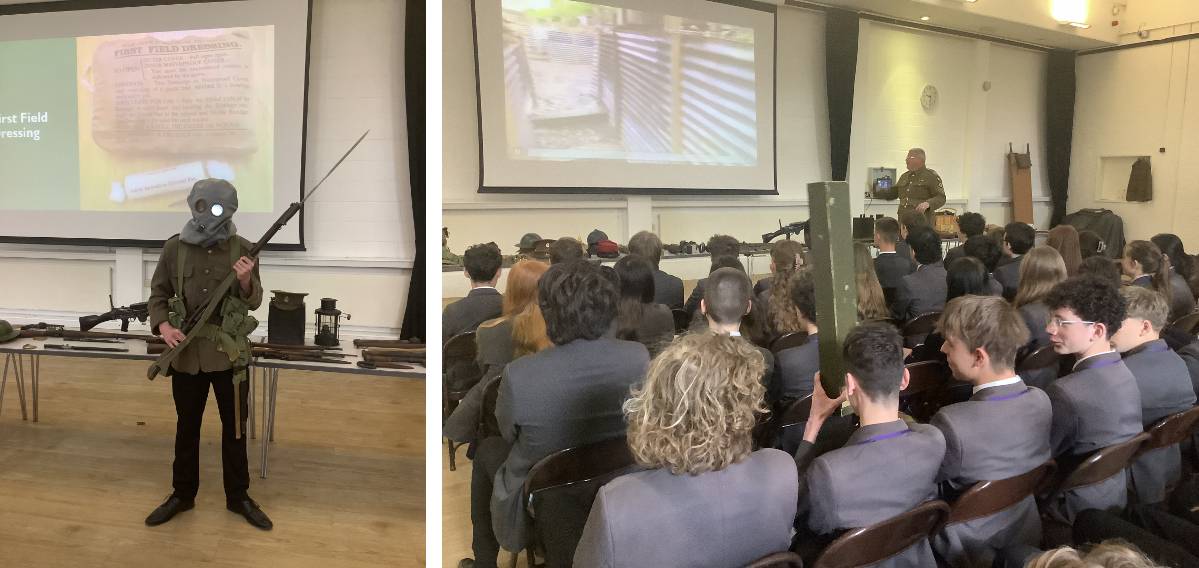
History recently leaped off the pages of the textbook and into the classroom as over 100 of our Year 10 and Year 11 students were transported back to the frontline of the Great War. This immersive experience was made possible through a generous grant from The Western Front Association, which funded a specialist workshop delivered by David Allton of Frontline Living History. The sessions, which ran throughout the day, were meticulously designed to support our students as they prepare for their Pearson Edexcel GCSE Paper 1: Medicine in Britain, focusing specifically on the challenging environment study of the British sector of the Western Front.
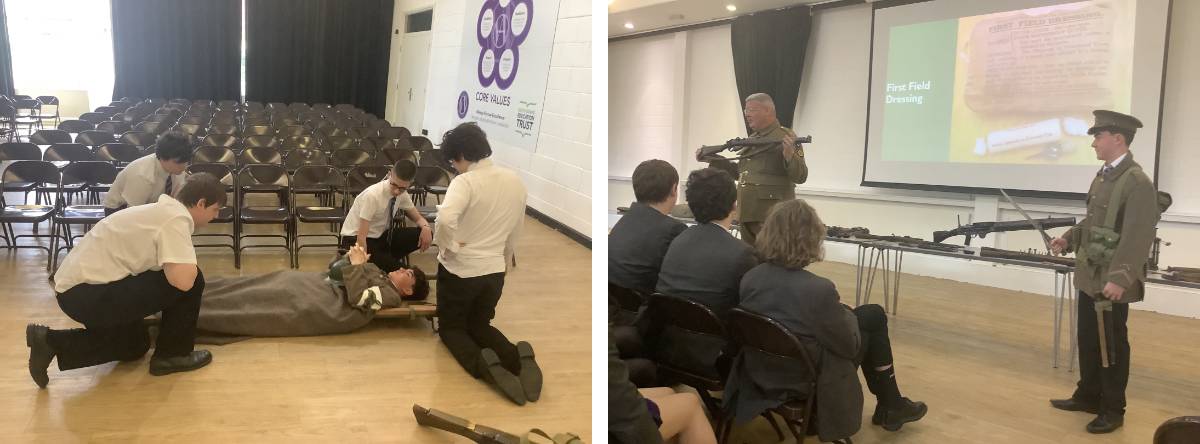
Throughout the day, the abstract concepts of the trenches became a vivid reality. Students explored how the harsh physical environment, from the waterlogged clay of Flanders to the bacteria-rich soil of the Somme, directly dictated the medical crises of the era, such as the rapid spread of gas gangrene and the agony of trench foot. By engaging with authentic medical kits and heavy-duty stretchers, the classes gained a profound understanding of the chain of evacuation. They traced the harrowing journey a wounded soldier would take, moving from the muddy danger of a Regimental Aid Post through to the organised chaos of Casualty Clearing Stations.
The impact of this hands-on learning is invaluable for exam preparation, particularly for our Year 11s approaching their finals and our Year 10s as they build their foundational knowledge. Seeing a Thomas Splint in person or examining the evolution of gas masks provides the kind of mental hooks that help students excel in their GCSE paper. They are now better equipped to describe the features of medical treatment and evaluate the utility of historical sources because they have handled the very tools mentioned in the archives. This deep dive into the innovations of the RAMC and FANY has turned a complex syllabus into a tangible, human story for both year groups.
This event highlights the ongoing commitment of Worthing High School and the South Downs Education Trust to providing an enriched, high-quality curriculum that goes beyond standard classroom learning to inspire every pupil. We would like to extend our sincere thanks to the Western Front Association for their vital support in making this day a reality. Their commitment to Great War education, combined with the expertise of Frontline Living History, has given our students a significant academic advantage and a lasting appreciation for the medical pioneers who served under fire.
Student Voices:
“I really enjoyed wearing and holding all the kit, it helped me understand what the soldiers endured” Emmett, Y10
“I liked taking part in the stretcher bearer activity…it helped me to remember the chain of evacuation” Emelia, Y11
“I really enjoyed getting out of the classroom; it made it more memorable for us.” Dexter
“Handling the Lee Enfield Rifle and the different weapons was memorable.” Multiple year 10s and 11s said this.
The WFA’s grants for schools support First World War learning activities that might otherwise be out of reach — from battlefield visits and museum trips to specialist workshops like the one at Worthing High. Small grants of £100–£500 are available to schools that have taken part in WFA competitions and activities, with eligible schools invited to apply in the summer term.
Latest news


