
Trooping the Colour 1919: The largest ever event
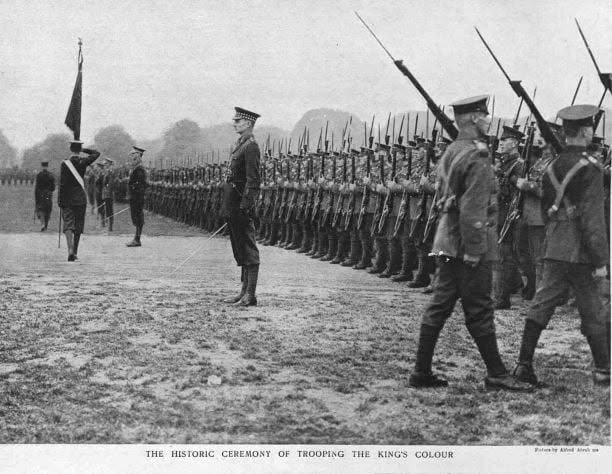
The annual 'Trooping the Colour' ceremony held in London has been a 'fixture' for many years. But - for obvious reasons - the ceremony didn't take place in 1915, 1916, 1917 or 1918. The first post-war Trooping the Colour took place on Tuesday 3 June 1919. It was unique for several reasons.
1914
The last pre-war event took place some years before, when King George V took the salute; it was the fourth time he had participated as sovereign, but little did anyone know that the ceremony would not take place for another five years.
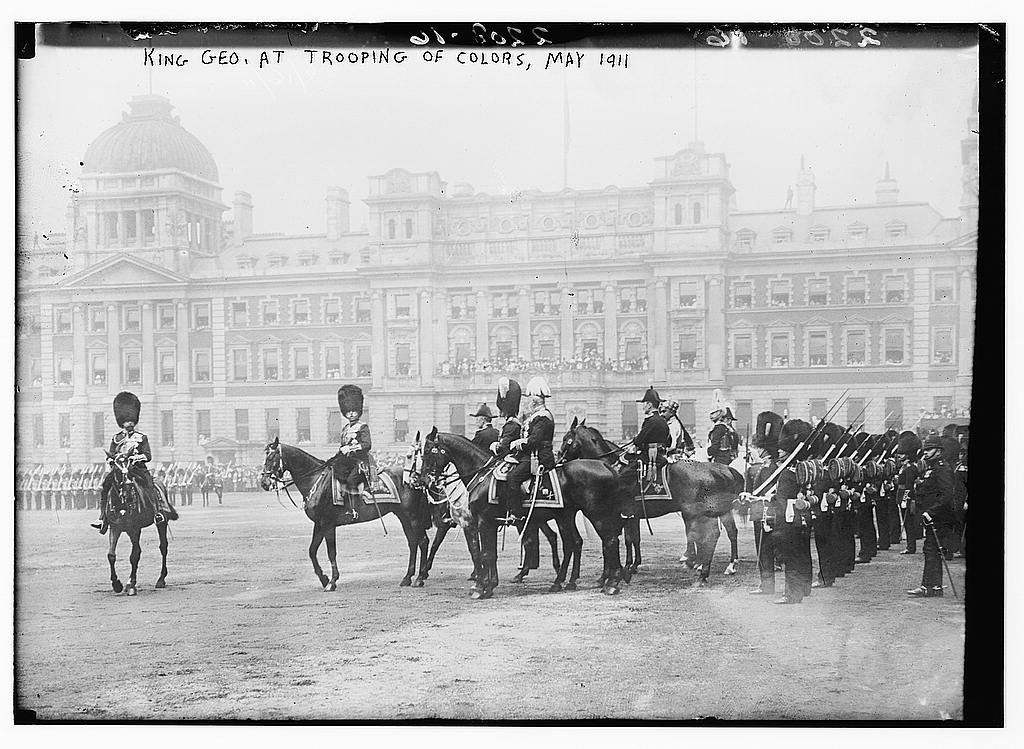
1919: Hyde Park
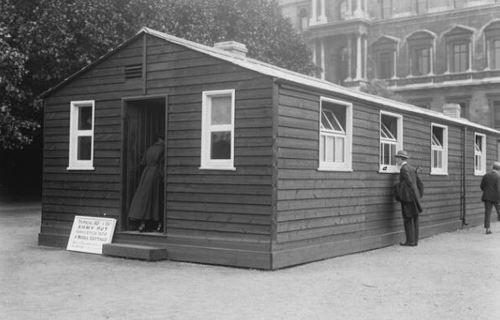
Rather than at Horse Guards, where most previous ceremonies had been held,[1] the 1919 event took place at the much larger Hyde Park, this was due to Horse Guards Parade still being covered in temporary wartime huts. The ceremony took place on Tuesday 3 June.
The usual 'standard' is for six companies of foot guards to take part, each comprising 3 officers and 70 guardsmen; they are ordered by company number, for example "No. 4 Guard..." The battalion of foot guards trooping its particular colour in any given year is "No. 1 Guard."
Whilst six companies of foot guards is the modern norm, before 1993 eight guards was usual. However, in 1919 no less than eleven guards took part. The battalion trooping its colour was the 3rd Battalion Coldstream Guards.[2]
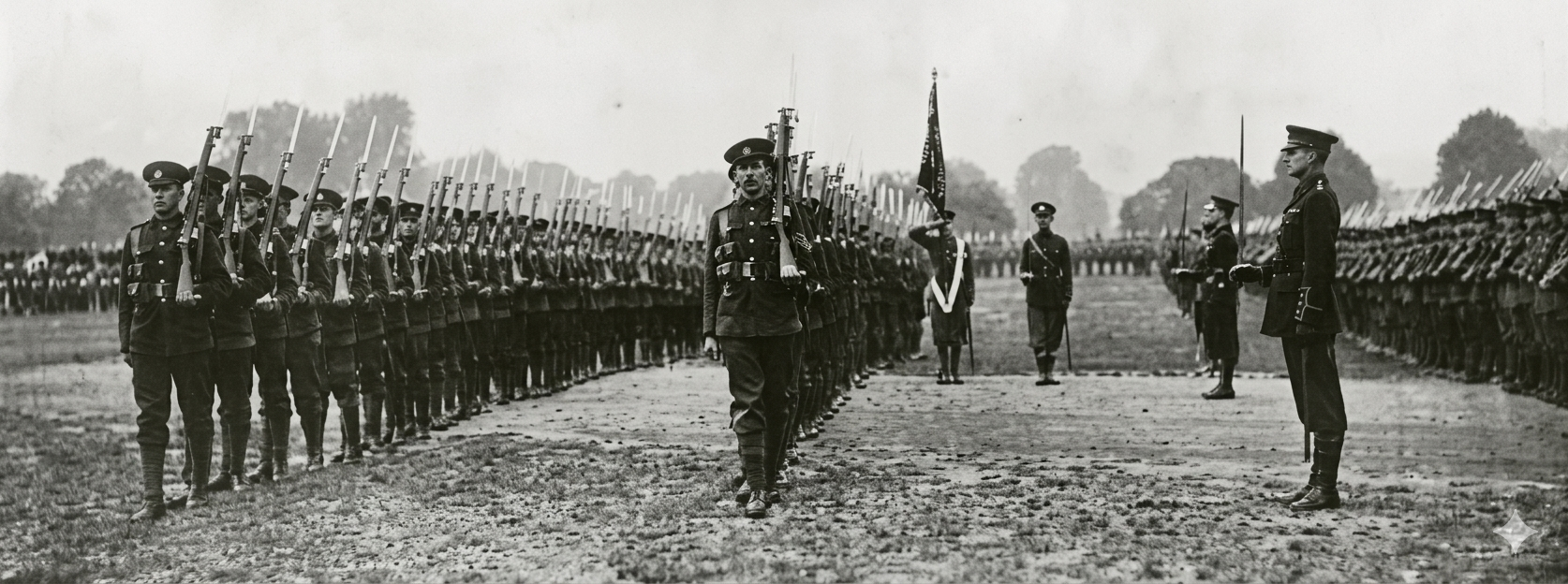
It is estimated that at the 1919 event, with 76 men per guard plus three officers, there were 869 Guardsmen and officers parading (excluding the Household Cavalry element). In recent years, this number would typically be 438 (70 men plus three officers per company on parade). Clearly the 1919 event was double the size of what we see today.
It should be noted that the 1920 event was marginally smaller - with ten rather than eleven companies participating. This was also held at Hyde Park.
First and last parade: The Guards Machine Gun Regiment
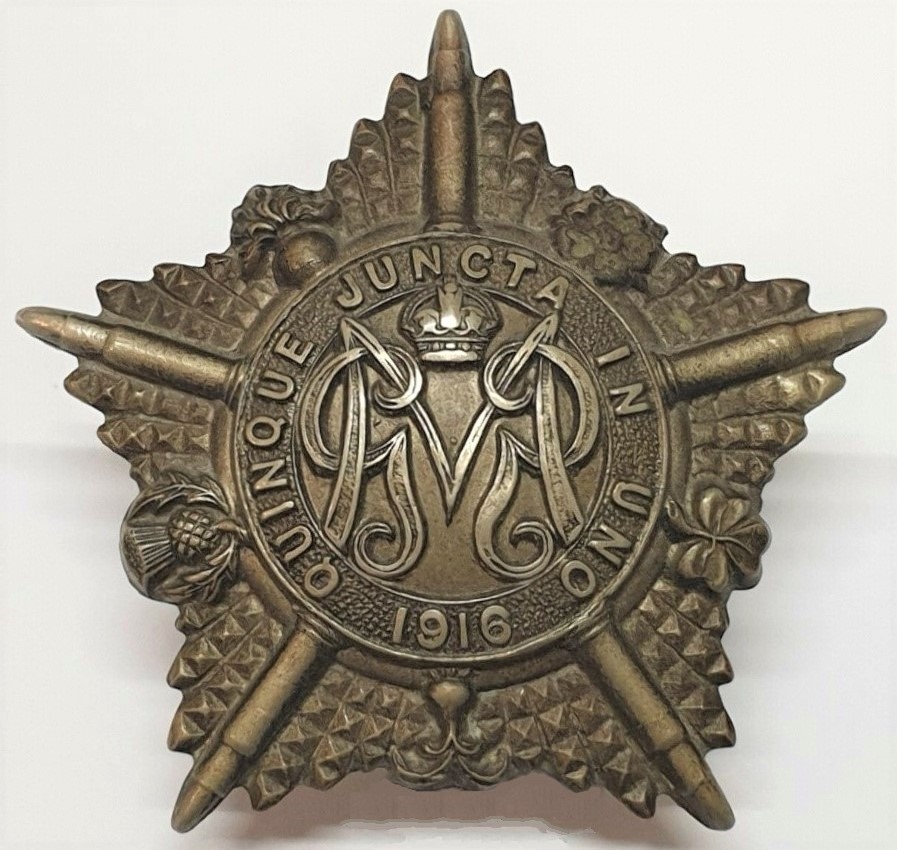
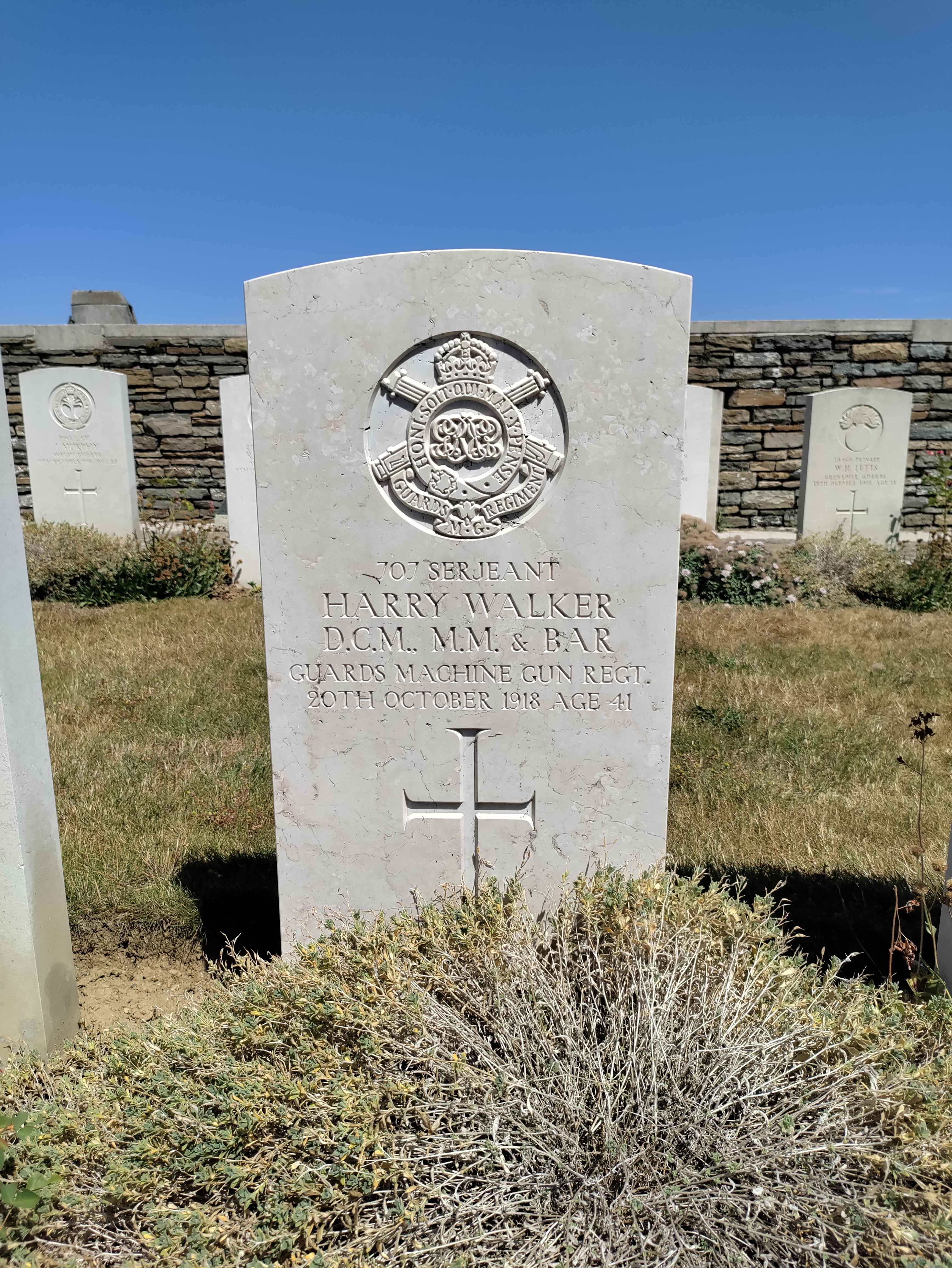
The eleven guards taking part in 1919 included, for the first and last time, a regiment that was only formed during the war: The Guards Machine Gun Regiment. The regiment provided number 8 Guard at this ceremony.[3]
In April 1917, the four companies of machine guns operating within the Guards Division (created in August 1915 from various battalions that were operating within other divisions) were joined together as a single battalion named the Machine Gun Guards.
Later - in May 1918, under a Royal Warrant, they became the Guards Machine Gun Regiment.[4]
Parade in Khaki
As the war had only just ended (technically, it was still on-going, with the peace treaty signed later in June 1919) the ceremonial uniforms were not available (or - possibly not fit for purpose after five years),[5] and the Trooping the Colour ceremony took place with all the guards wearing service dress.
Watching the parade
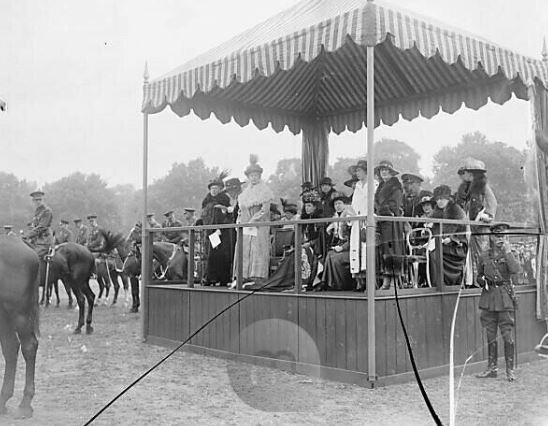
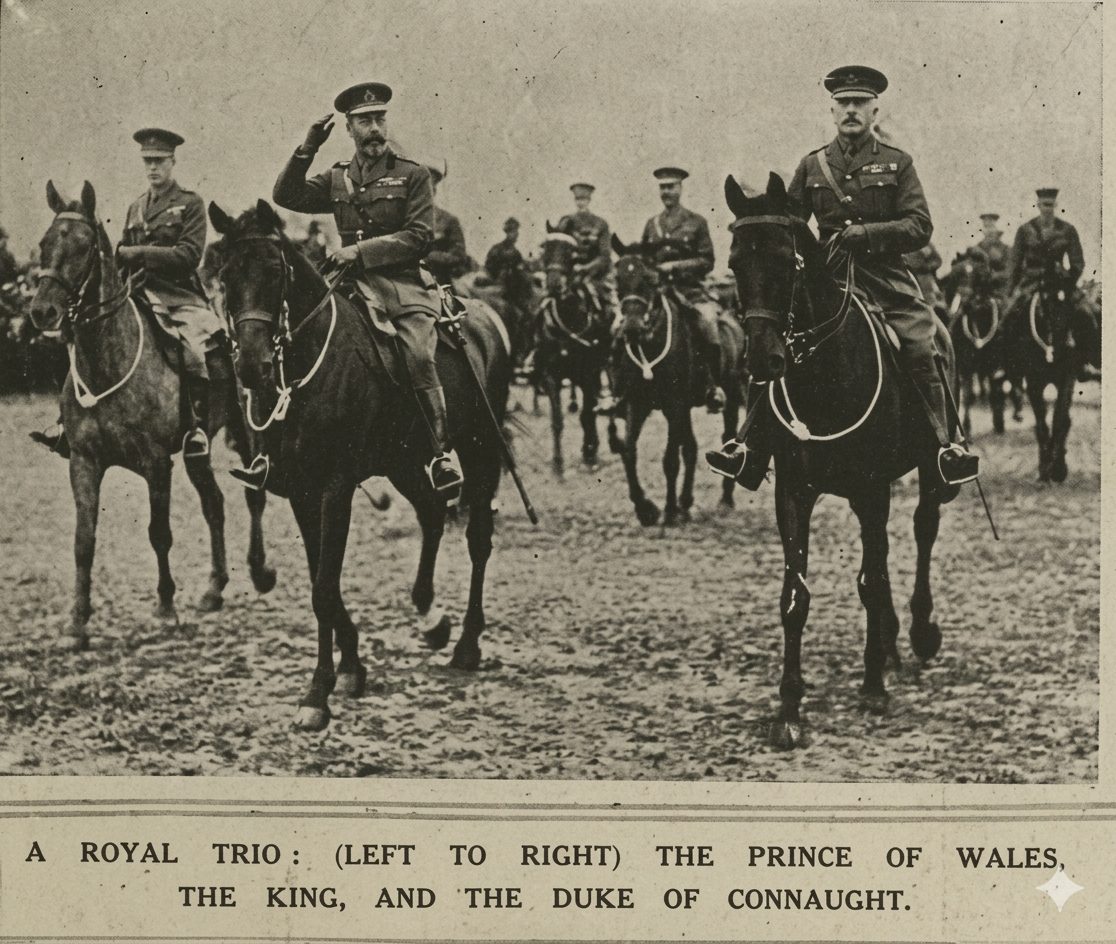
From a stand erected within Hyde Park, a number of royals watched the ceremony.
The Guards Machine Gun Regiment marched past in slow time to Mandalay with the Soldiers' Chorus from Faust being played for the march past in quick time.
Contemporary Accounts
The 1919 Trooping the Colour was reported in 'The Sphere' as follows
The spectacle of the Trooping of the Colour in Hyde Park on the King's Birthday (June 3) was necessarily shorn of some of its splendour by the fact that the troops wore their service dress of khaki instead of their gorgeous pre-war uniforms. The bands, however, were in full uniform, and provided splashes of brilliant colour. The march past was led by the Household Brigade, followed by the regiments of the Guards, to martial music played by their bands, the Guards Machine-gun Regiment marching to the haunting strains of "Mandalay." The Queen, Queen Alexandra, the Prince of Wales, and Princess Mary were also present at the ceremony in Hyde Park.
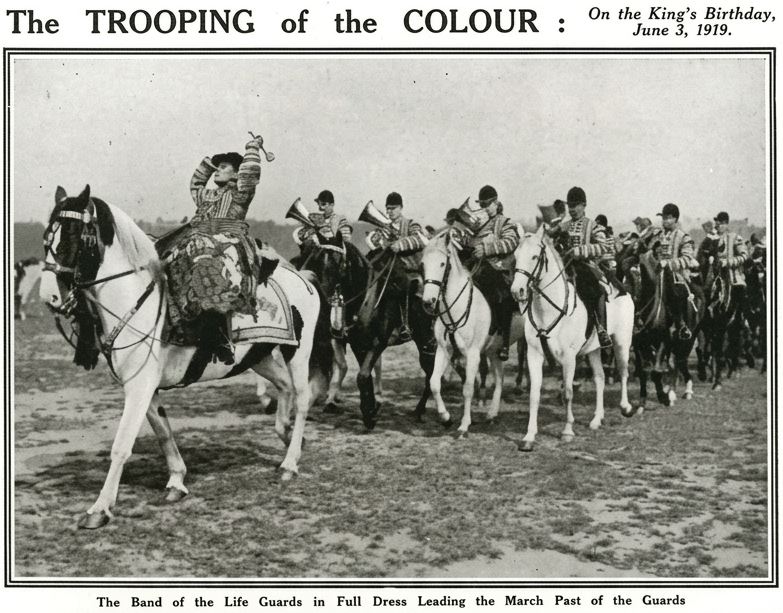
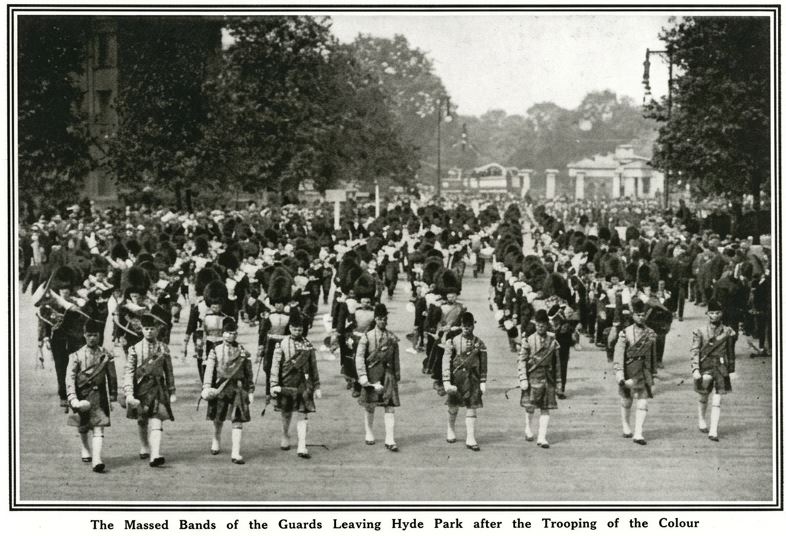
When the parade was over it was a splendid sight indeed. Two sides of a vast square were formed by the line of the Foot Guards, rigid and motionless, while a third side consisted of the massed bands and drums of the Brigade of Guards and the Household Brigade, with their massed bands in front. Here, indeed, was contrast, brilliant and complete. The massed bands, with all their layout of scarlet and gold, were a picture of sheer delight to eyes satiated with khaki and all its associations.
After the march past, the King rode back to Buckingham Palace, led by the massed bands of the Household Cavalry and followed by the tooling sections of the mounted troops. His Majesty took up his position in front of the gates leading to the forecourt and watched the returning troops march by. They were also watched from the balcony by Queen Mary and Queen Alexandra, who had driven back to the Palace.
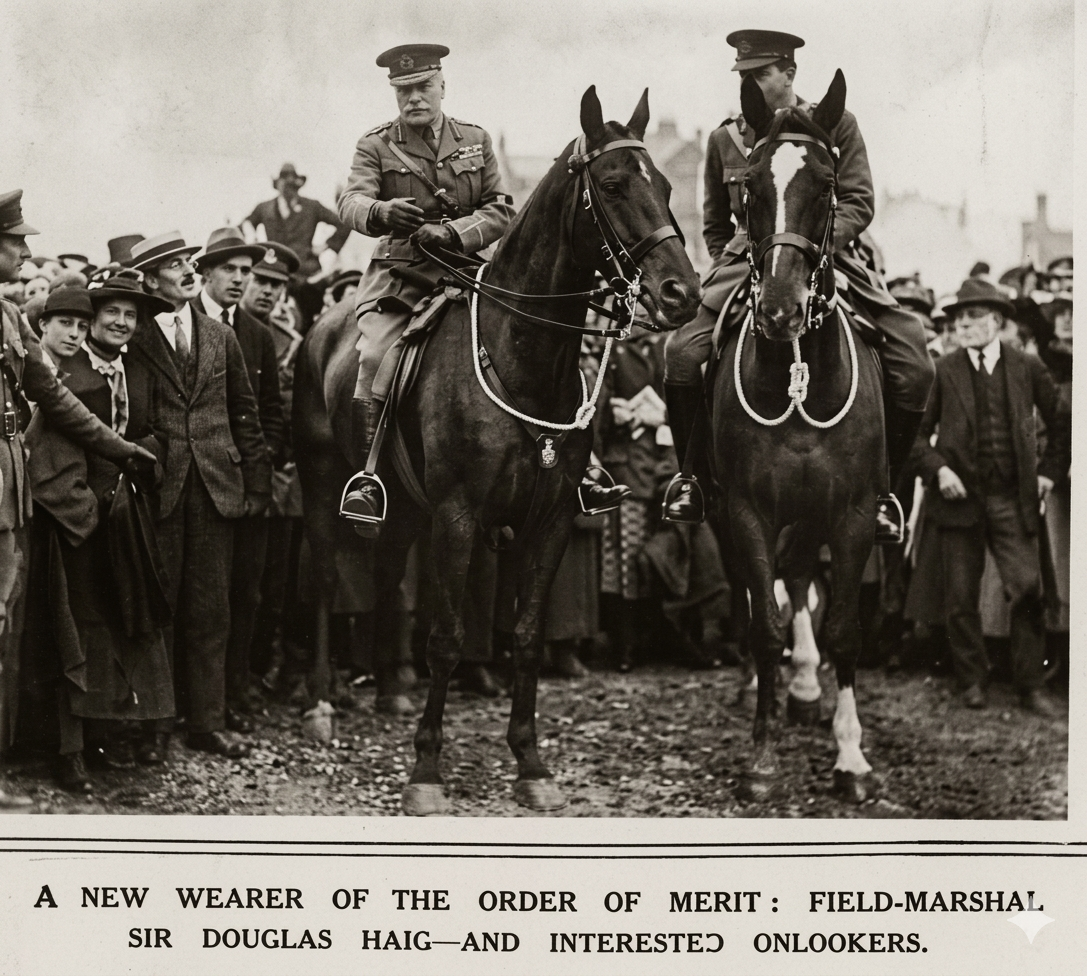
A large number of distinguished people enjoyed the ceremony of the Trooping of the Colour in Hyde Park, which offered a more picturesque setting than the customary one of the Horse Guards, including the Princess Royal, Princess Victoria, Commander and Lady Patricia Ramsay, Sir Rosslyn Wemyss and Lieut.-General Sir Arthur Currie, Sir Douglas Haig, and other mounted officers received a tremendous ovation from the people.
Good old Duggie
According to reports, Field Marshal Sir Douglas Haig received a tremendous ovation; also present were Sir Rosslyn Wemyss and Lt Gen Sir Arthur Currie. The Westminster Gazette reported the crowd shouted ‘Good old Duggie’ when Haig arrived.
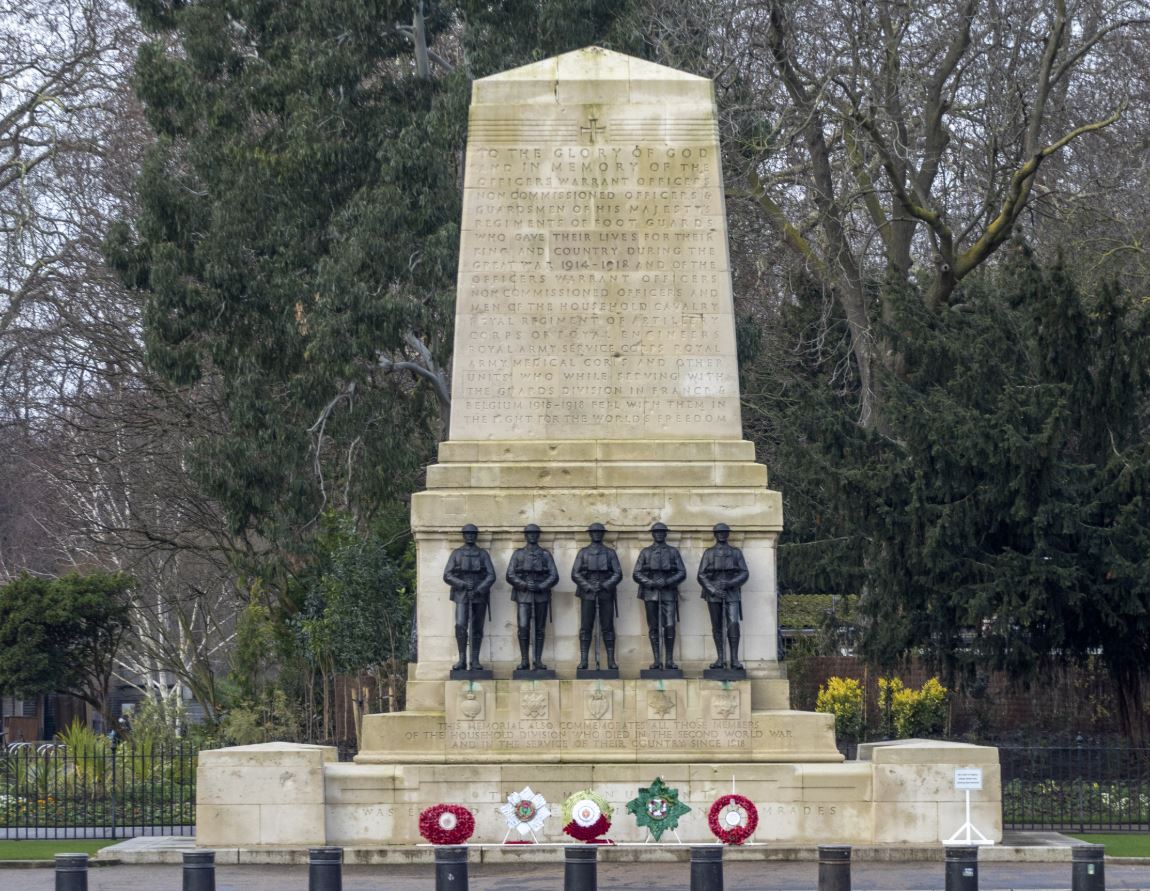
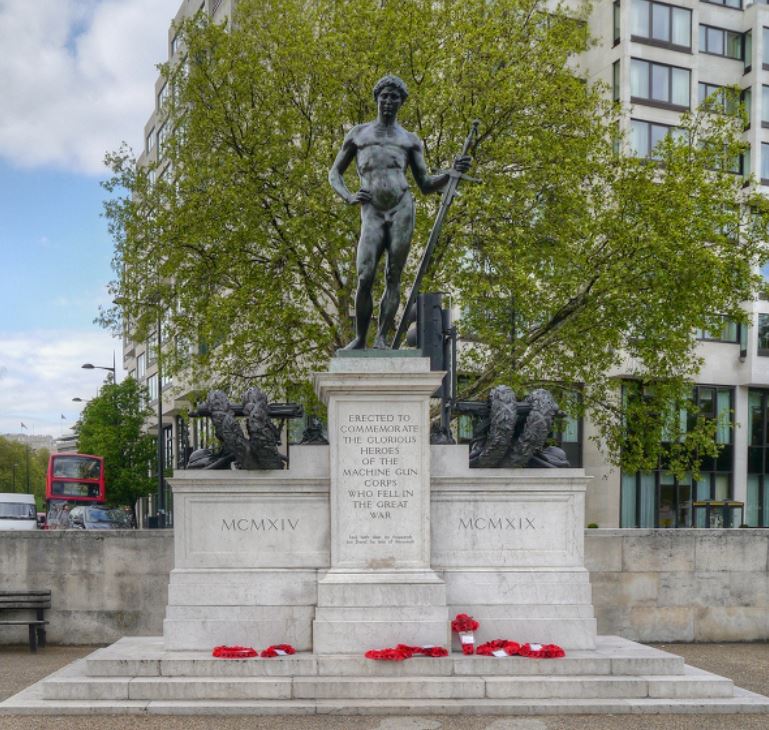
On 26 February 1920 an army order was issued announcing that the Guards Machine Gun regiment was to be immediately disbanded. The regiment is not represented on the Guards Memorial, (which is located on the west side of Horse Guards Road, opposite Horse Guards Parade), nor is it mentioned on the Machine Gun Corps Memorial (situated at Hyde Park Corner).
The regiment had a brief existence, and its appearance at the 1919 Trooping the Colour was certainly a major contribution to that event being the largest ceremony, in terms of number of Guards present, ever held.
Further Reading
References
[1] Although most elements of the parade have remained unchanged since 1889, the event took place at Windsor Castle in 1895, and only in 1959 did it become fixed as a 'Saturday' event.
[2] The 3rd Battalion Coldstream Guards was disbanded in 1959
[3] See The Household Division
[4] The Welsh Guards were only raised in 1915 and were therefore only marginally ‘senior’ to the Guards Machine Gun Regiment
[5] Ceremonial scarlet tunics (the full dress uniform) would only make a return in 1921
Becoming a member of The Western Front Association (WFA) offers a wealth of resources and opportunities for those passionate about the history of the First World War. Here's just three of the benefits we offer:

The WFA regularly makes available webinars which can be viewed 'live' from home. These feature expert speakers talking about a particular aspect of the Great War.

Featured on The WFA's YouTube channel are modern day re-interpretations of the inter-war magazine 'I Was There!' which recount the memories of soldiers who 'were there'.

Explore over 8 million digitized pension records, Medal Index Cards and Ministry of Pension Documents, preserved by the WFA.


