
The other nurses of Mudros – France’s Red Cross at Lemnos, 1915
In July and August 1915, two echelons of French Red Cross nurses arrived at Mudros on the island of Lemnos, weeks ahead of the first Australian sisters. They were civilian volunteers – France had no female army nurses in 1914 – and they staffed the largest hospital on the island.
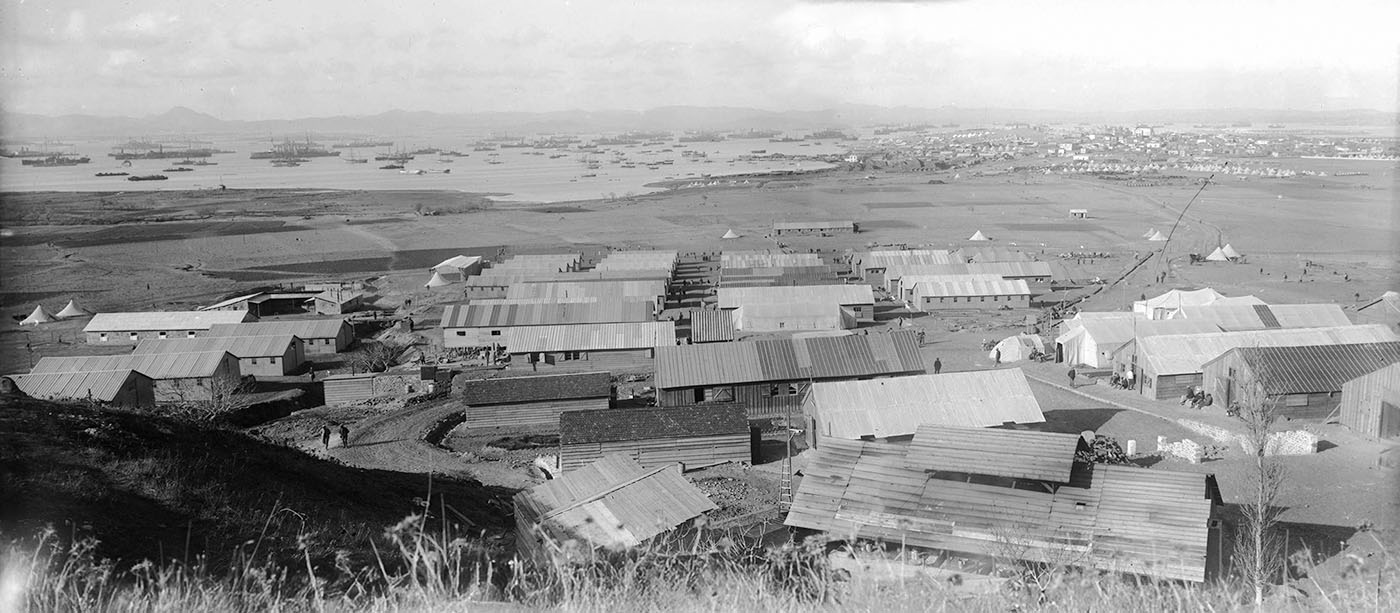
On 25 March 1915, exactly one month before the Gallipoli landings, French medical officers took possession of a site on the lower slopes of a barren hillside one kilometre south of Mudros town and began pitching tents. Mudros, the natural harbour on Lemnos, was the Allied forward base for the coming campaign, 80 kilometres west of the peninsula itself. Within four months, the hospital those officers built held more patients than any other on Lemnos. By October, Hôpital d’évacuation no. 1 was treating up to 1,800 sick and wounded.
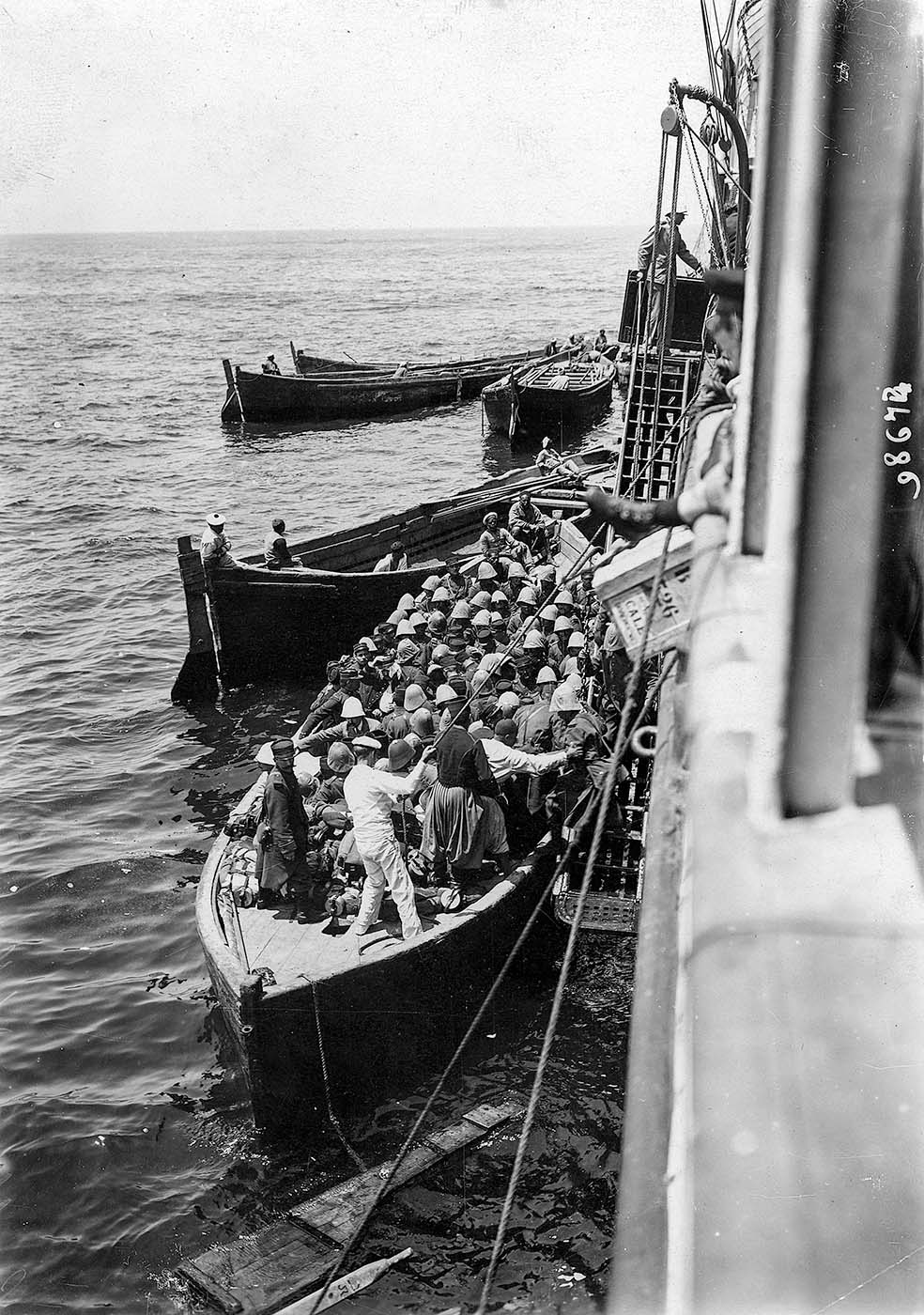
Alongside the British and Dominion forces, the French committed two divisions to the campaign. The Corps expéditionnaire d’Orient (CEO) made a diversionary landing on the Asian shore at Kum Kale on 25 and 26 April, then transferred to the European side, where French troops held the right of the line at Helles throughout the campaign.
Each of the CEO’s two divisions was equipped with an evacuation hospital, a field hospital, two field ambulances and a group of stretcher-bearers; a chief medical officer sat on each divisional staff and at corps headquarters. Hôpital d’évacuation no. 1, attached to the 1st Division, had embarked at Marseille on 3 March aboard the transport Magellan and reached Mudros on 15 March, a fortnight before British and Dominion forces began assembling in any numbers. By the time the French infantry re-embarked for Alexandria on 25 March, the hospital was already on its hillside, drawing water from a spring, levelling its ground, and laying stone paths between its tented wards.
Operations began in earnest on 26 April, the day after the Allied landings. Through May and June the hospital ran with five or six hundred patients on average, the worst of them in tentes tortoises – large rounded ward tents, adapted from a British design, holding fifty stretchers – the rest under marabout bell tents on mattresses stuffed with seaweed. Towards the end of June, numbers rose sharply. By July, the hospital held 1,600 patients. By October, 1,500 beds with overflow on top. Wooden huts of various designs – Bessonneau, Favaron, Adrian, Egyptian – replaced most of the canvas. A bacteriology laboratory was added in August, then a radiography laboratory; the engine that powered the X-ray apparatus also lit the hospital at night. By comparison, 3rd Australian General Hospital, which began receiving patients on Lemnos in August, opened with 1,040 beds. No. 27 British General Hospital, of similar size, did not arrive until November.
Red Cross volunteers
Unlike the British and Dominion armies, which fielded uniformed military nurses on Lemnos, the French had not yet brought trained female nurses into uniform. Of the 9,000 nurses serving with the French army in August 1914, all were men. The female nurses on Lemnos were therefore civilians – Red Cross volunteers, drawn from France’s tripartite Red Cross system. Each had its own politics. The senior, founded in 1864, was the Société de secours aux blessés militaires (SSBM), conservative and Catholic. The Association des dames françaises (1879) was republican and anticlerical. The Union des femmes françaises (1881) was feminist and Protestant. They competed for patronage and prestige; together they mobilised some 30,000 nurses in 1914, growing to 72,000 by 1918. A formal military nursing role for women would not appear in the French army until 1918.
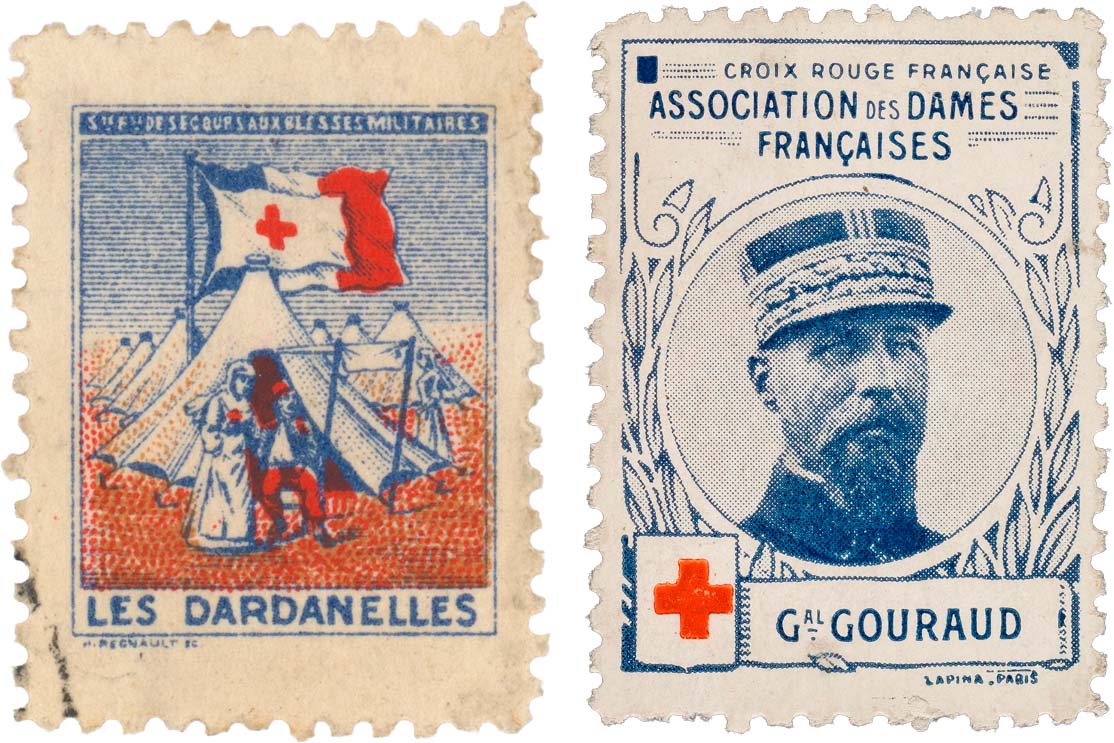
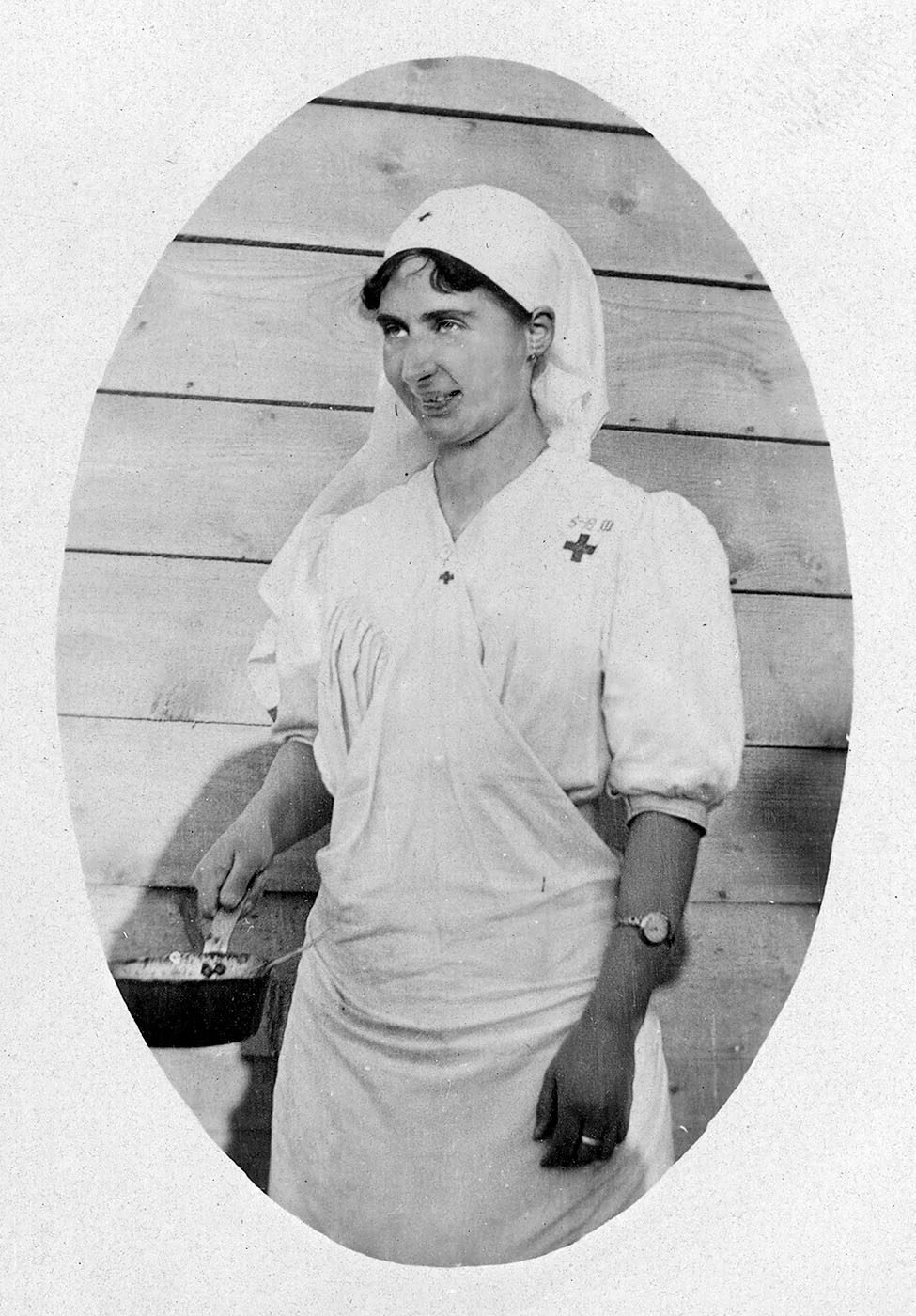
The eight Red Cross sisters who staffed Hôpital d’évacuation no. 1 were SSBM. They came in two waves. The first reached Mudros in July 1915 aboard the hospital ship Duguay Trouin under their matron, Mademoiselle Yolande Oberkampf.
Among them was Elisabeth Jardin, daughter of an infantry colonel who had risen from Saint-Cyr to a professorship at the École Supérieure de Guerre. By 1915 Jardin was an étudiante en médecine who had served as an extern at Paris hospitals. She volunteered as a nurse but carried a clinical eye, and a camera.
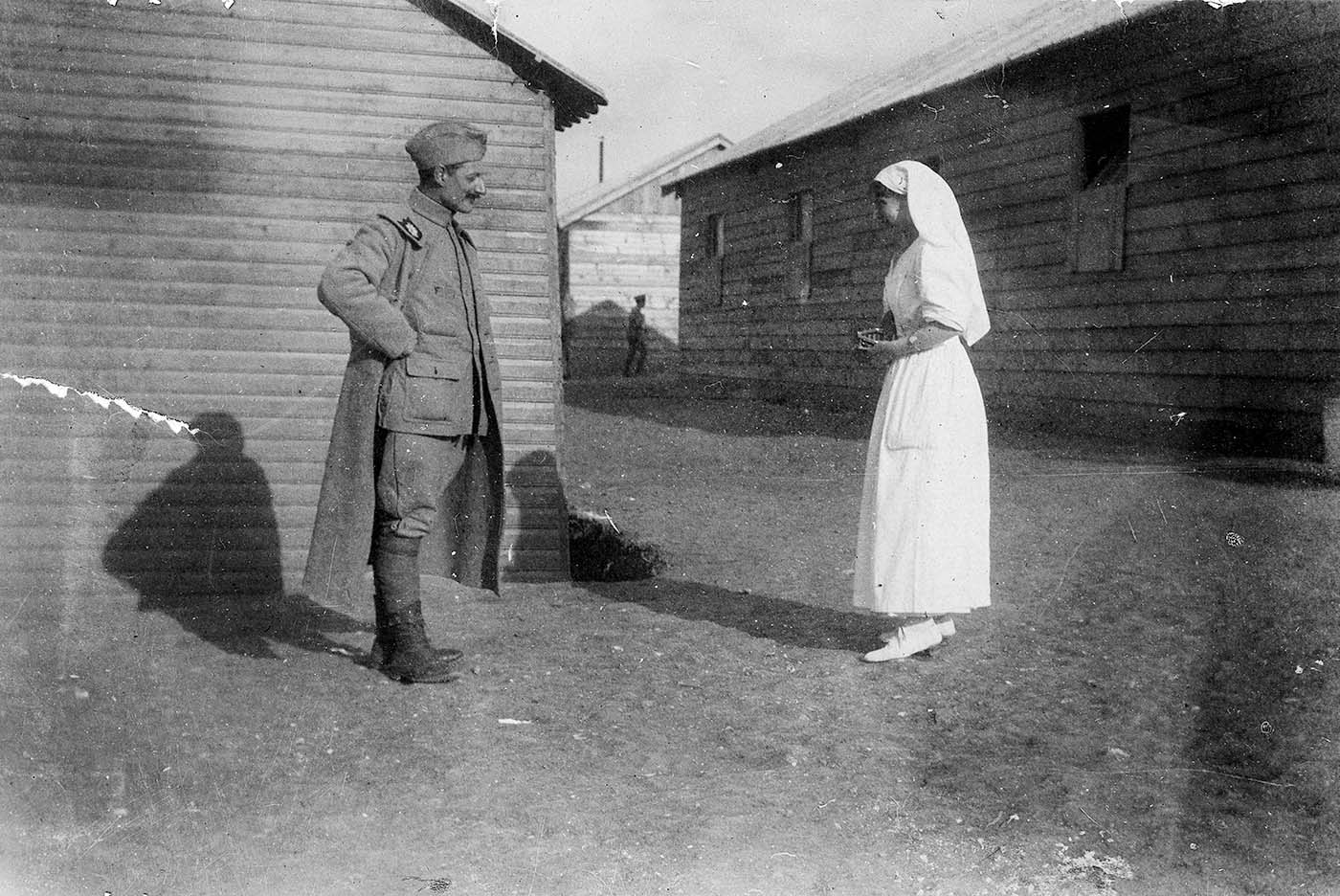
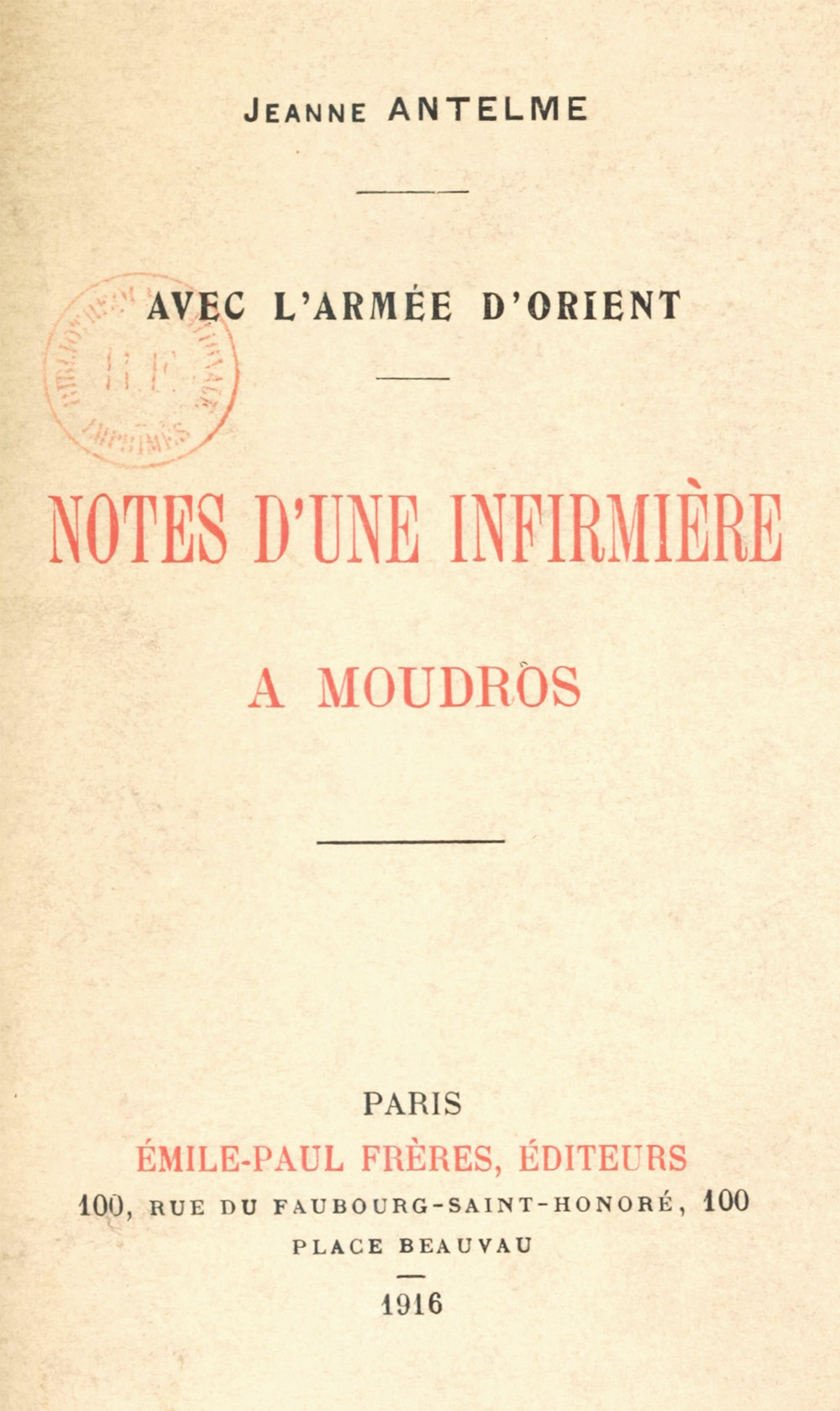
The second echelon arrived in August aboard Charles Roux. Its passengers included Jeanne Antelme – Mauritian-born, 32, married to the deputy director of the Wagons-Lits company, operators of the Orient Express. Her literary debut, a volume of chronicles published just before the war under her maiden name, had been singled out by male critics for its ‘feminist ardour’.
Antelme published a memoir of the campaign in Paris in 1916; it won a prize from the Académie française. Hers is the only known literary account by a woman who set foot on the Gallipoli peninsula.
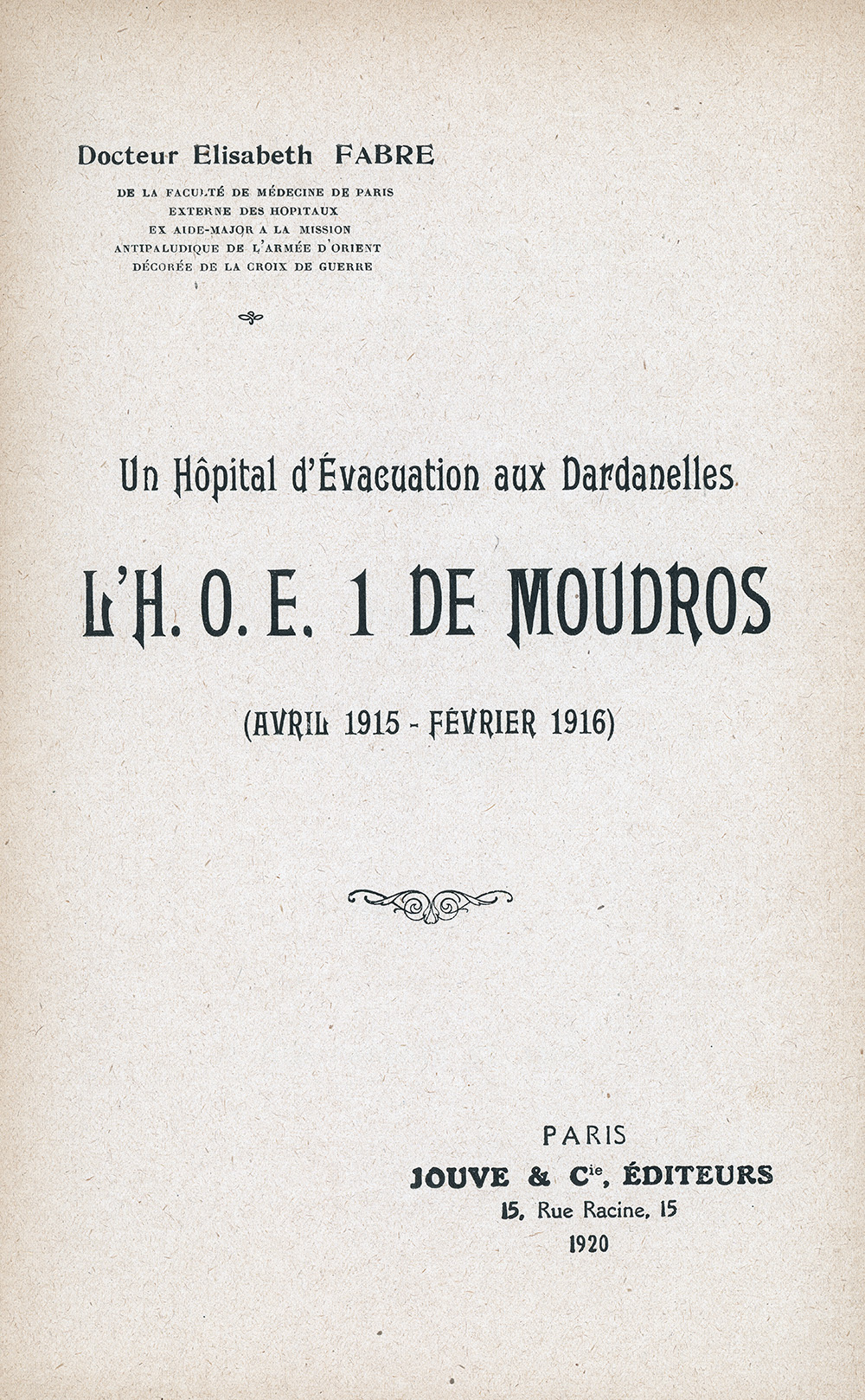
Jardin, returning to her medical studies after the war, completed a doctoral thesis on the hospital in 1920, submitted to the Faculty of Medicine of Paris under her married name Fabre. The two accounts are chalk and cheese.
The wards
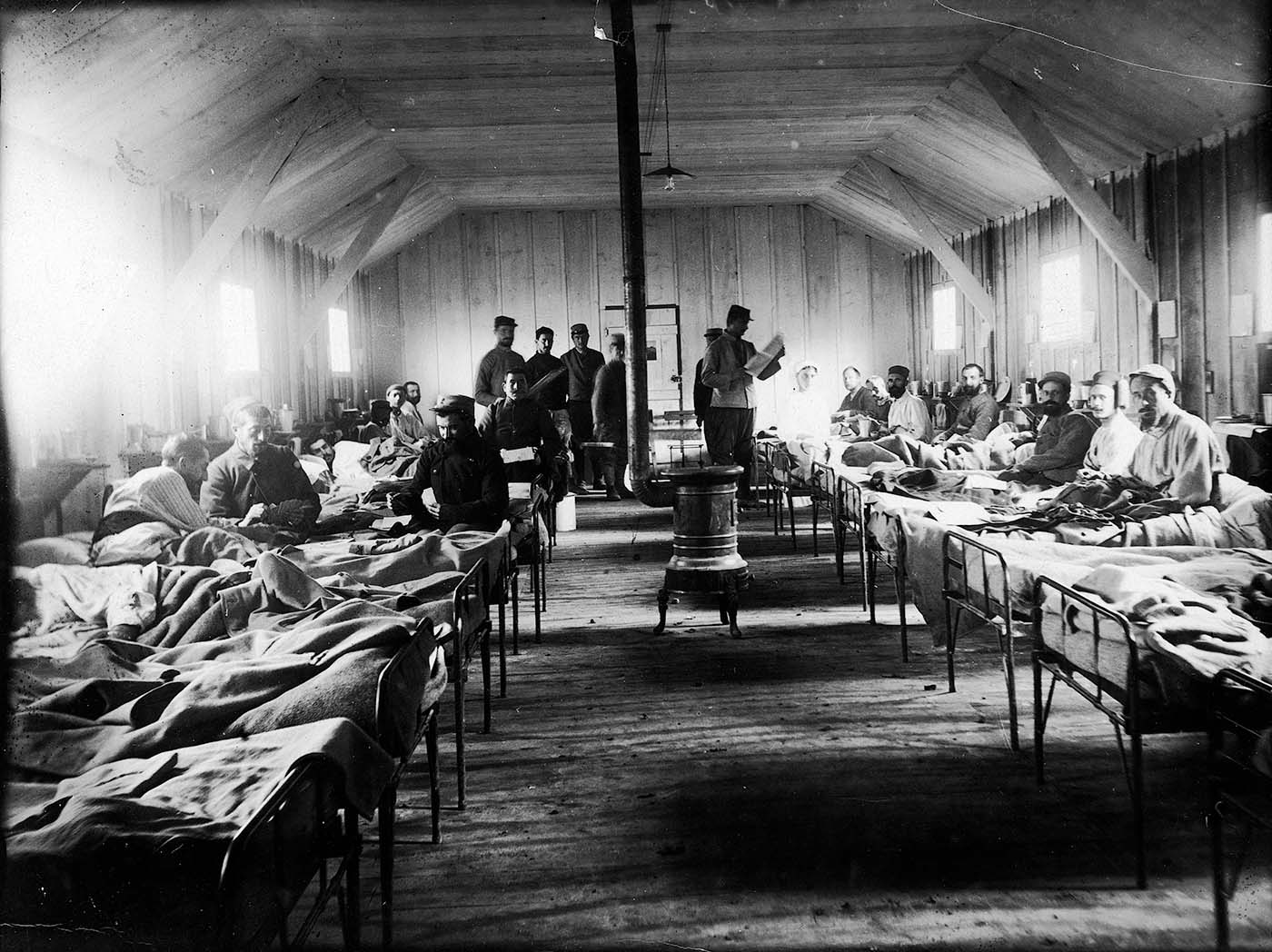
Jardin’s thesis is methodical and dispassionate. It opens with the Regulations on the Medical Service in the Field, lists the hospital’s departments – four fever wards, a typhoid ward, an infectious diseases ward, surgery, ophthalmology and otorhinolaryngology, the bacteriology and radiography laboratories, the pharmacy – and works through them in order. Her writing is plain and factual.
Once the bacteriology laboratory opened in August it became possible to distinguish reliably between typhoid and paratyphoid. Eberth’s bacillus, the typhoid agent, predominated in August; from September on, paratyphoid B took over. The cerebral form of typhoid – appearing during the worst of the summer heat – produced a peculiar distress: patients in delirium would slip past their orderlies and run for the sea. Staff chased them through the camp.
Most surgical cases arriving from the peninsula came in with infected perforating bullet wounds; secondary procedures were the rule. Tetanus, however, was almost unknown – every wounded man had received anti-tetanus serum before evacuation. The operating theatre was finished in white Ripolin enamel, with a folding lacquered-metal table and daylight from three sides. ‘It did credit to the service,’ Jardin notes, ‘and allowed a great deal of useful surgical work to be carried out.’
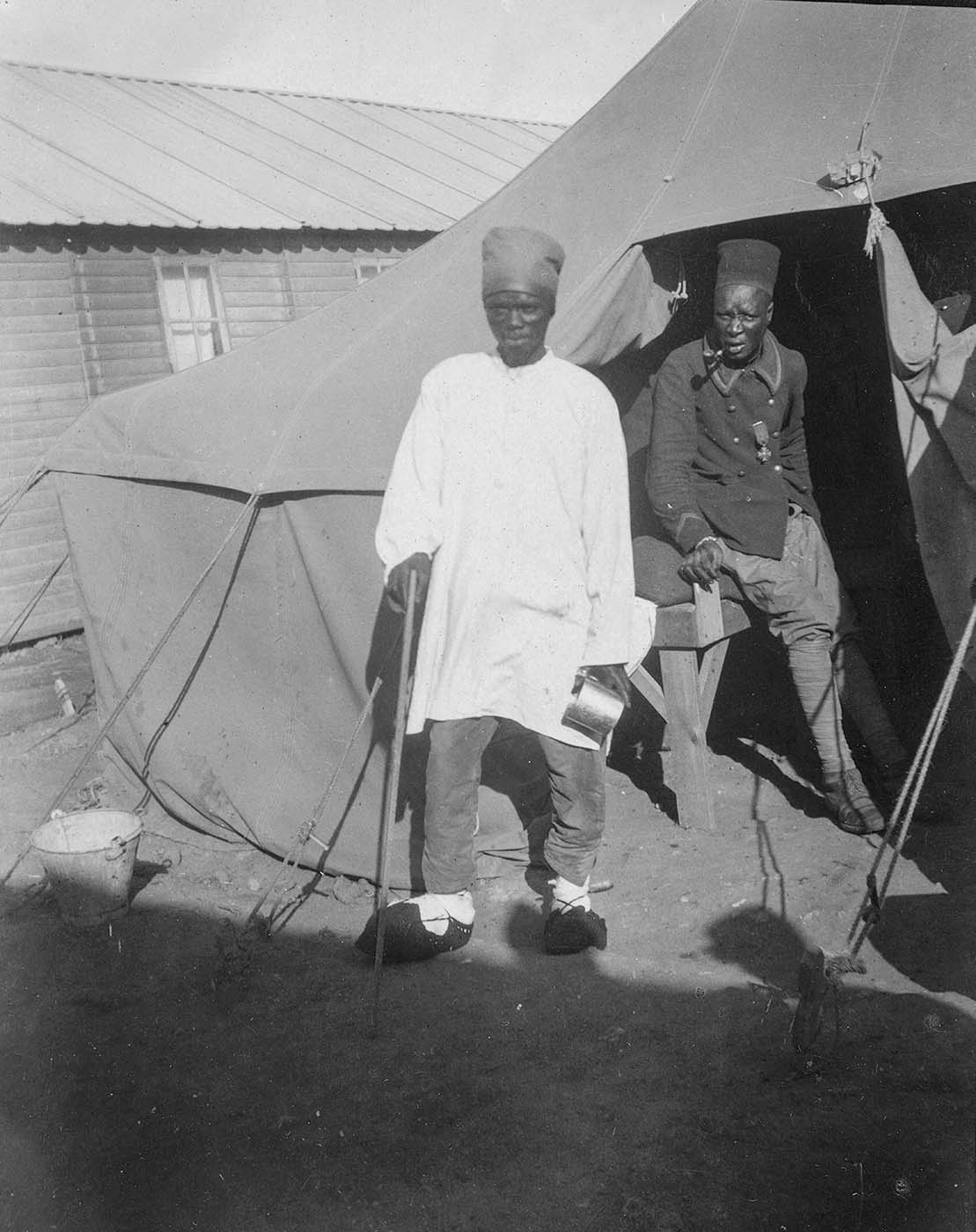
The autumn brought new conditions. Jaundice ran through the hospital in September and October. Pulmonary disease followed the first damp cold spells, particularly among the Senegalese and Somali troops of the colonial divisions. Then, in early December 1915, the temperature fell to minus eight degrees. Jardin records that the old fishermen of Mudros said within living memory no one had seen such cold. Frostbite of the feet appeared, then gangrene, then a number of amputations.
Most of these patients reached the hospital from the peninsula aboard supply tugs returning empty from Helles. A few hours by large transport, but the approaches to the peninsula made it necessary to risk only small craft in those waters. The crossings averaged twelve hours, the patients lying mainly on deck because no other space could hold them. In bad weather it was a hard passage. As soon as the vessels entered the roadstead, the naval base signalled the hospital. A duty medical officer with a party of orderlies and araba carts (later motor ambulances) went down to the disembarkation point. A bell brought the wardroom doctors to their wards. Patients arriving in the evening or at night – which was usual – came in soaked and exhausted to find hot drinks, shelter and a bed.
The experience
Antelme’s memoir is literary and confessional. She came east, she said, with the resolve to leave much of herself far behind. She found the hospital camp, in summer, ‘something of a vision of hell’.
‘You had to see those great emaciated skeletons burning with fever, thrusting out, in unconscious movement, legs and arms that were less than bone. All that under canvas, mingled with dust, flies and fleas.’
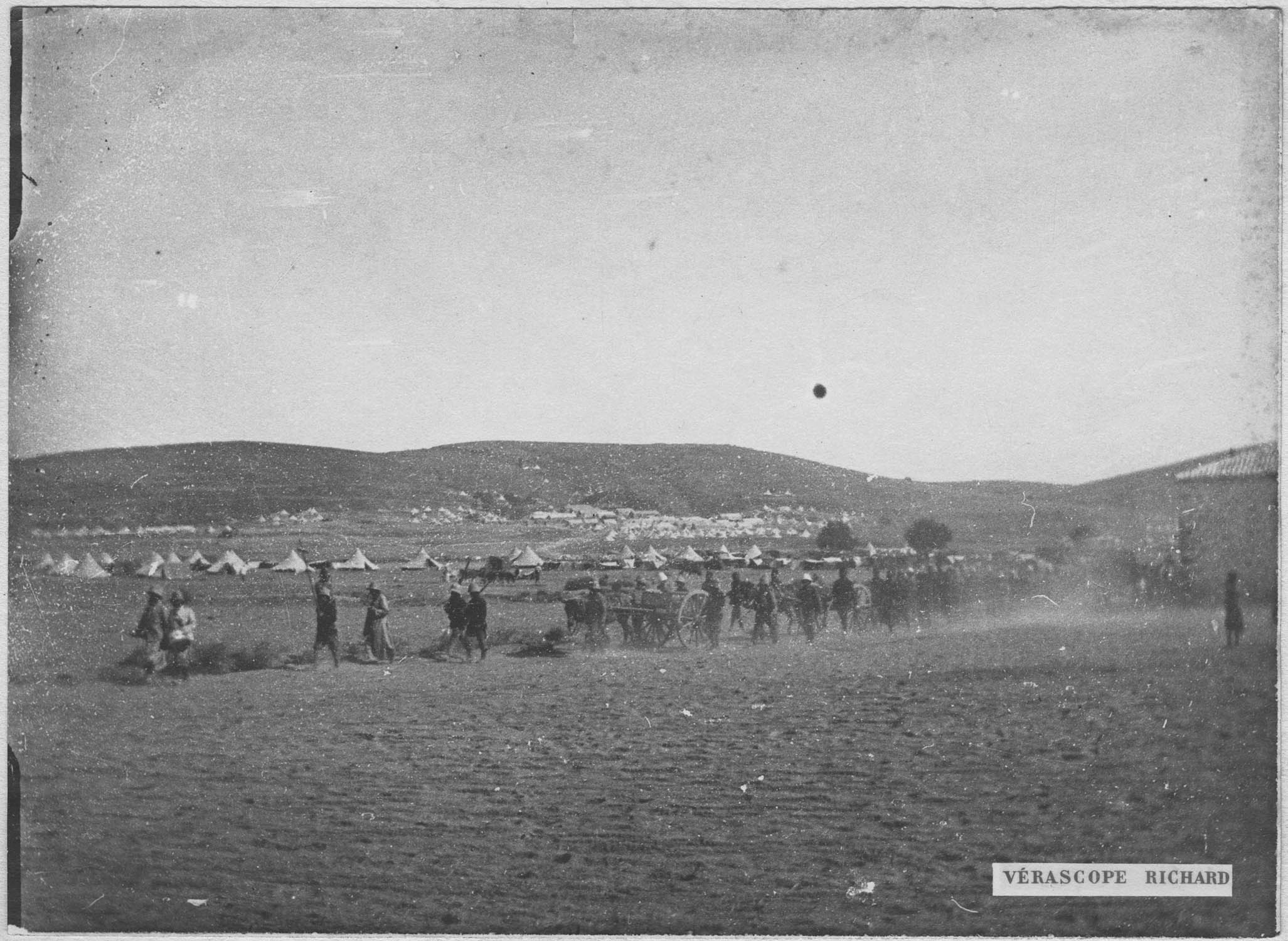
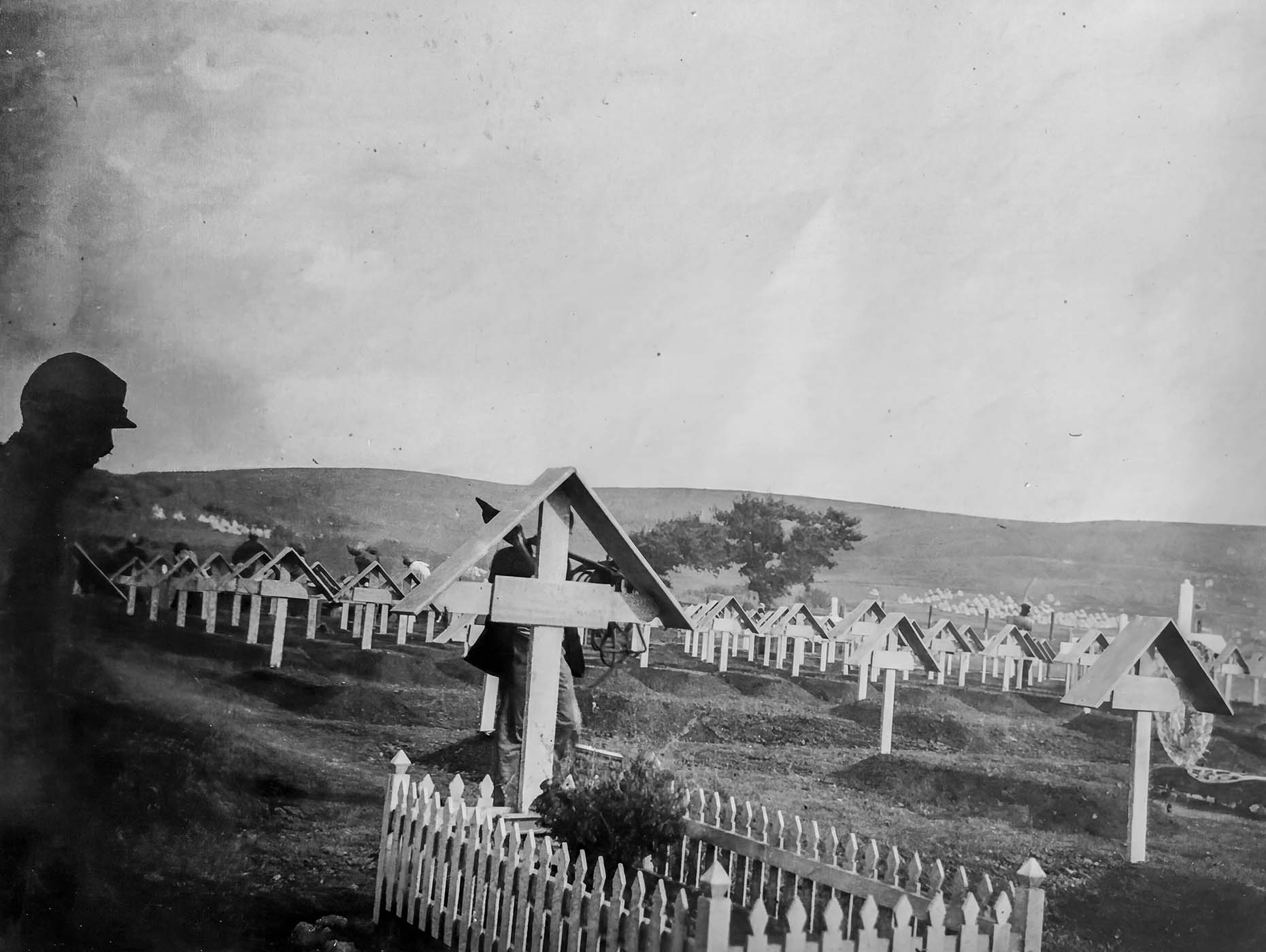
She watched the processions to the cemetery in the afternoons. One was for a strapping young soldier she had nursed through fever; his younger brother had got himself posted to the Dardanelles and kept vigil at the bedside, staying there until the end. Of the procession itself, she wrote:
‘There was wind, and dust, and we were all spattered by it. The bugler marching at the head of the procession cast great, deep, mournful notes into the sky every two minutes, sounds that seemed a reminder of the hour we were living…’
Across to Sedd-el-Bahr
In October 1915, Antelme crossed to the peninsula herself. The transport took twenty-four hours through wind and rain – a passage usually made, she says, in six – with the steering gear damaged, the captain briefly unable to control his ship, the current carrying her within two thousand metres of the Asiatic coast before another current intervened.
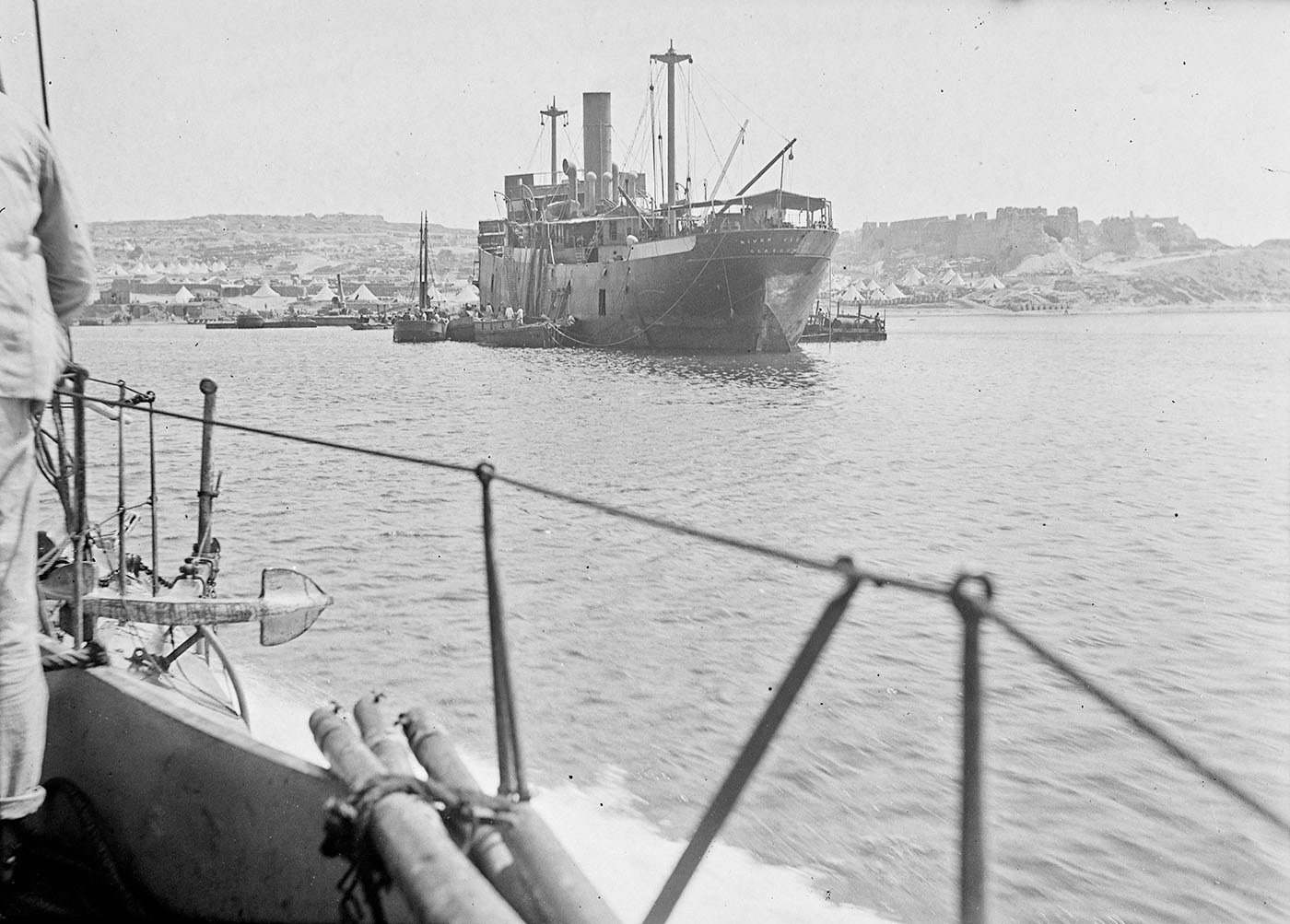
They anchored off the tip of the peninsula, between Cape Tekke and Cape Helles. Sedd-el-Bahr lay shattered, its mosque stove in, the château d’Europe half-collapsed but still bearing its battlements. Tents covered the flanks of the peninsula. Achi Baba rose inland. The upturned hull of the wreck Majestic and the beached collier River Clyde lay in the foreground. Antelme watched the shellfire come down on Sedd-el-Bahr from Achi Baba, the white puffs of bursting shells rising and dispersing, the horses still moving in convoy on shore as the shells fell.
She also caught the light. ‘Nowhere else,’ she wrote, ‘have I seen a light so pure, so beautiful, so gripping. Every hour brings with it a whole procession of new colours, unknown sweetnesses, and greater songs.’
And she went ashore. She saw the field hospitals – ‘nothing can shield them from the enemy’, she wrote – and the graves on the shore ‘piled high with shingle and bathed by the sea’. She saw the black cypresses where French dead lay. Twenty or thirty bodies, she recorded, were heaped into each grave.
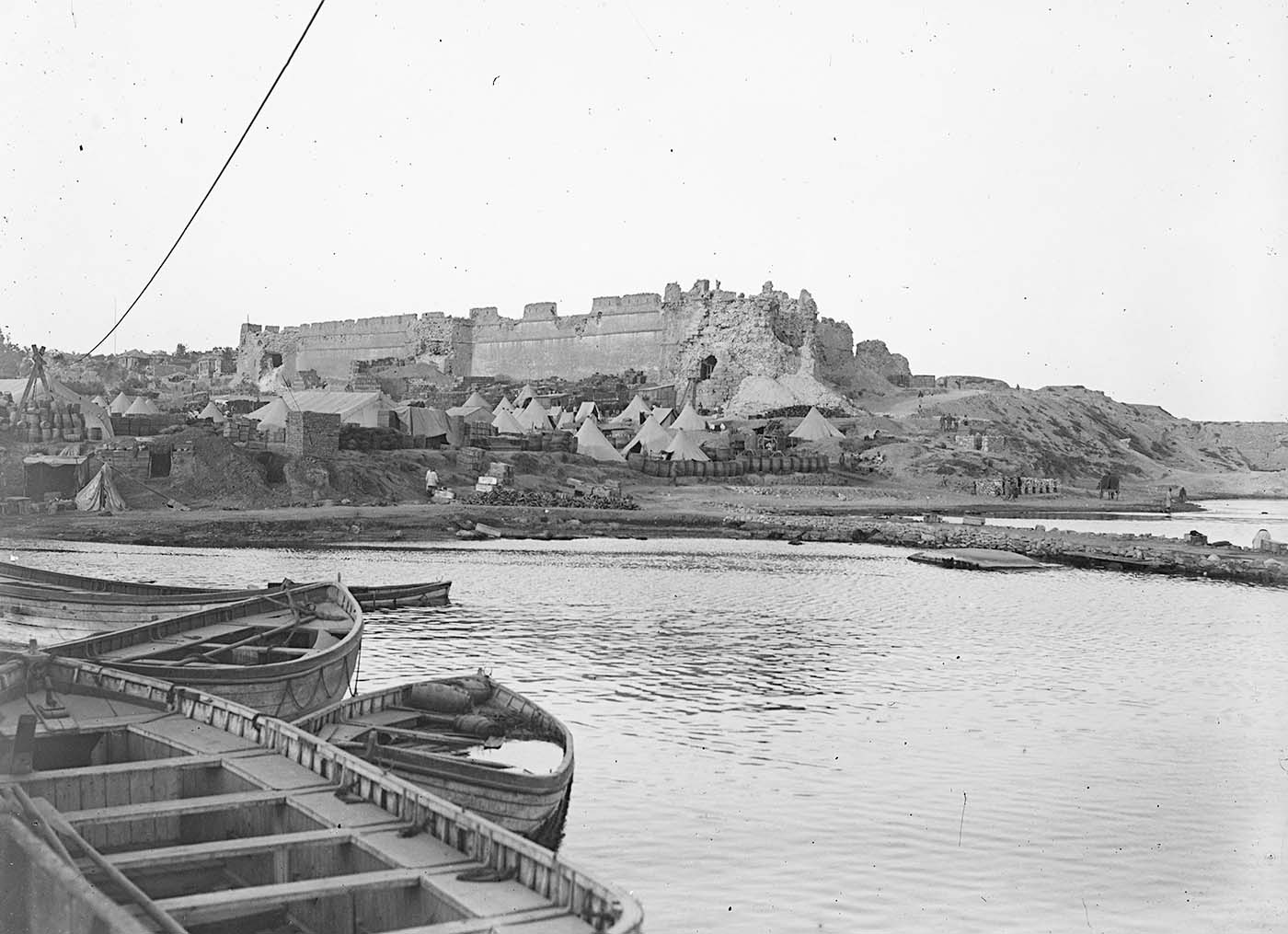
Her destination beyond the field hospitals was a laboratory in the cellars of Sedd-el-Bahr castle itself. French medical staff had taken over the cellars on landing in April and equipped them with apparatus from the Pasteur Institute in Paris. For the first months of the campaign this lab carried out the pathology work for the whole Allied effort at Helles, the British units having been slower to get their own facilities ashore. A British doctor who used it called it ‘extremely well equipped’. Antelme’s lab was run by a Dr S—, whom she found working by the light of a single lamp in the cellar, the old stones of the castle around him looking on, she said, in bewilderment.
She returned to Mudros on the Jeanne-Antoinette, a hundred-ton trawler carrying a hundred sick men on deck. A south wind hit them as soon as they cleared the jetty alongside the River Clyde.
French hospitals at Gallipoli
The French medical effort at Gallipoli was not confined to Hôpital d'évacuation no. 1.
In theory it ran along a chain familiar to British and Dominion forces – regimental aid post, field ambulance, evacuation hospital (what the British called a casualty clearing station), then rail to a base hospital. In practice the peninsula’s geography broke that model. There were no railways. The Allied beachhead at Helles was a few kilometres deep, with no rear area in which to land an evacuation hospital, let alone a base hospital. The sea took the place of the railway: French hospital ships standing off Cape Helles did much of the work that evacuation hospitals did on the Western Front, while the proper evacuation hospital – Hôpital d'évacuation no. 1 – lay 80 kilometres of open water away on Lemnos, the chain’s effective terminus for the CEO’s two divisions.
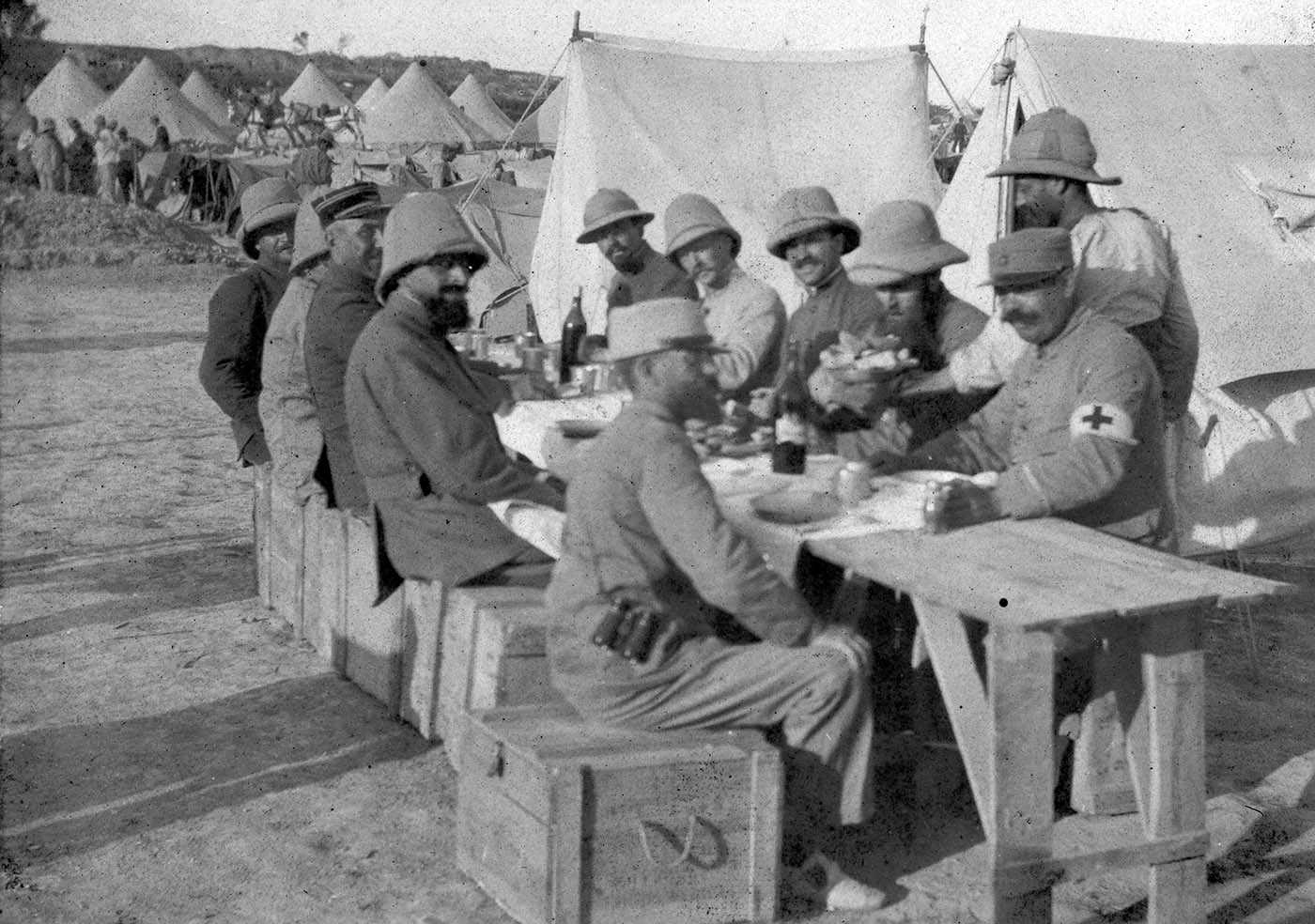
On the peninsula itself, Field Hospital no. 1 operated in Sedd-el-Bahr castle from 29 April – for the first ten days, the only French hospital ashore. Four field ambulances followed through May, June and July, in the upper courtyard of the castle, the lower courtyard, a courtyard where a former olive oil works stood, and at the entrance to the village. Combined capacity by July was over four hundred beds.
Sedd-el-Bahr was exposed to Ottoman artillery throughout the campaign, and a French senate commission visiting late in 1915 described the hospital in the fort as ‘working under fire’. Officially designated a field hospital, in practice it functioned as a casualty clearing station, sorting and stabilising men for evacuation to a hospital ship or by ferry to Lemnos.
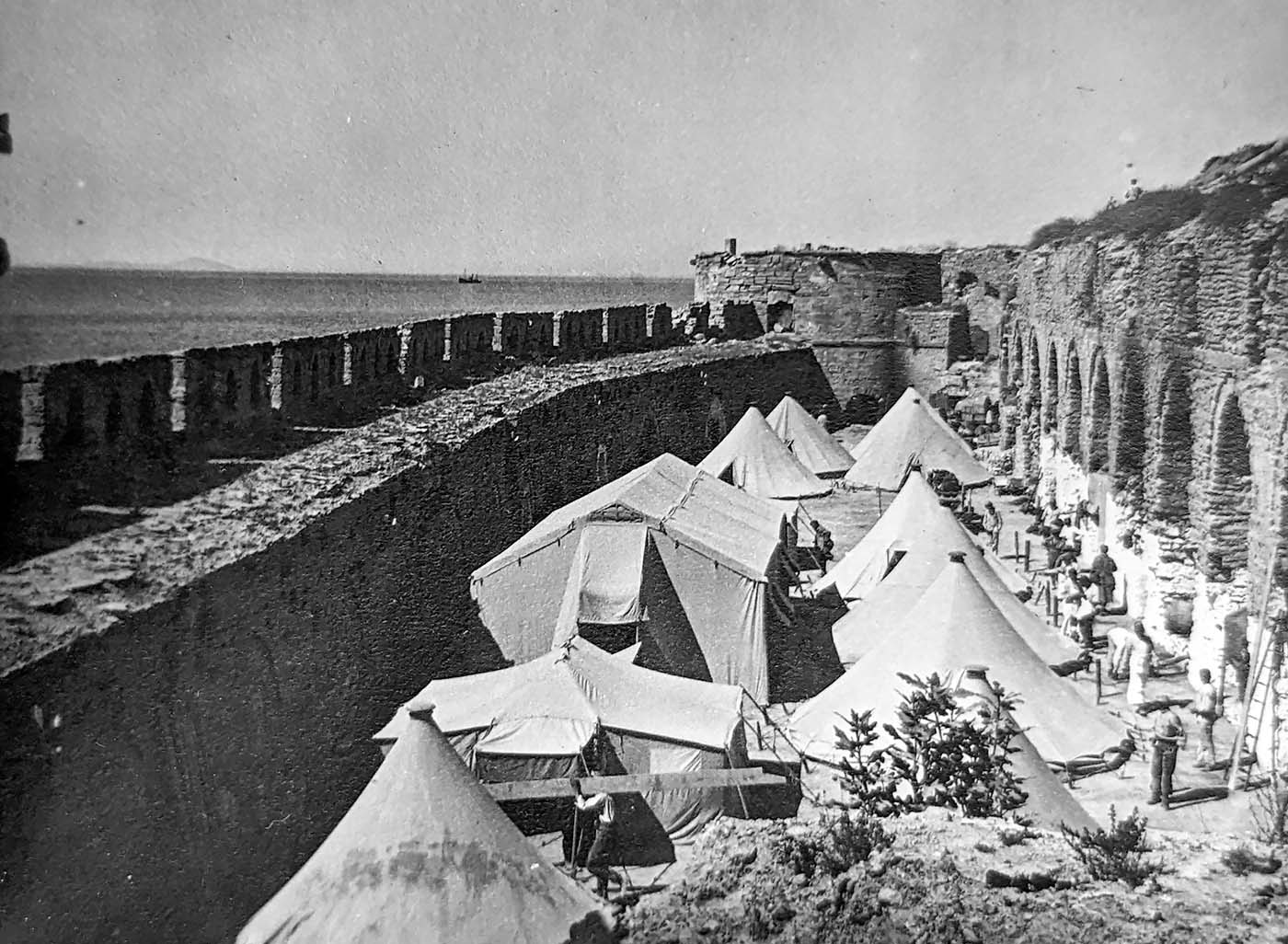
On Lemnos, a second cluster of French hospitals stood on the harbour’s north shore, near the village of Lychna, attached to the CEO’s 2nd Division. Field Hospital no. 2 and Evacuation Hospital no. 2 together held more than 700 beds by October, with built accommodation prepared for at least 12 Red Cross nurses (it is not clear whether any joined before the cluster closed in early 1916). On high ground south of Mudros, a naval lazaret – a quarantine hospital ordered specifically against typhus, typhoid and cholera, the epidemic killers of the Crimean and Balkan wars – was established in the summer of 1915, six Bessonneau huts in line as wards. Léon Peaudeleu, a doctor at Hôpital d’évacuation no. 1, remembered it from across the harbour: ‘Every evening, at dusk, the sky was ablaze with purple and orange strata, the dazzling layers of which contrasted with the dark mass of the hill dominated by the sailors’ lazaret.’
Behind these forward elements lay the hospital ships: several on station off Cape Helles at any one time, with a team of ten navy doctors stationed at Mudros to embark on the transports as needed. Canada, Duguay Trouin, Tchad and Bretagne anchored two or three nautical miles off the firing line, occasionally exposed to it. On one occasion Canada received 625 seriously wounded in less than 18 hours; she weighed anchor only when the last man was aboard, emergency operations continuing throughout the crossing.
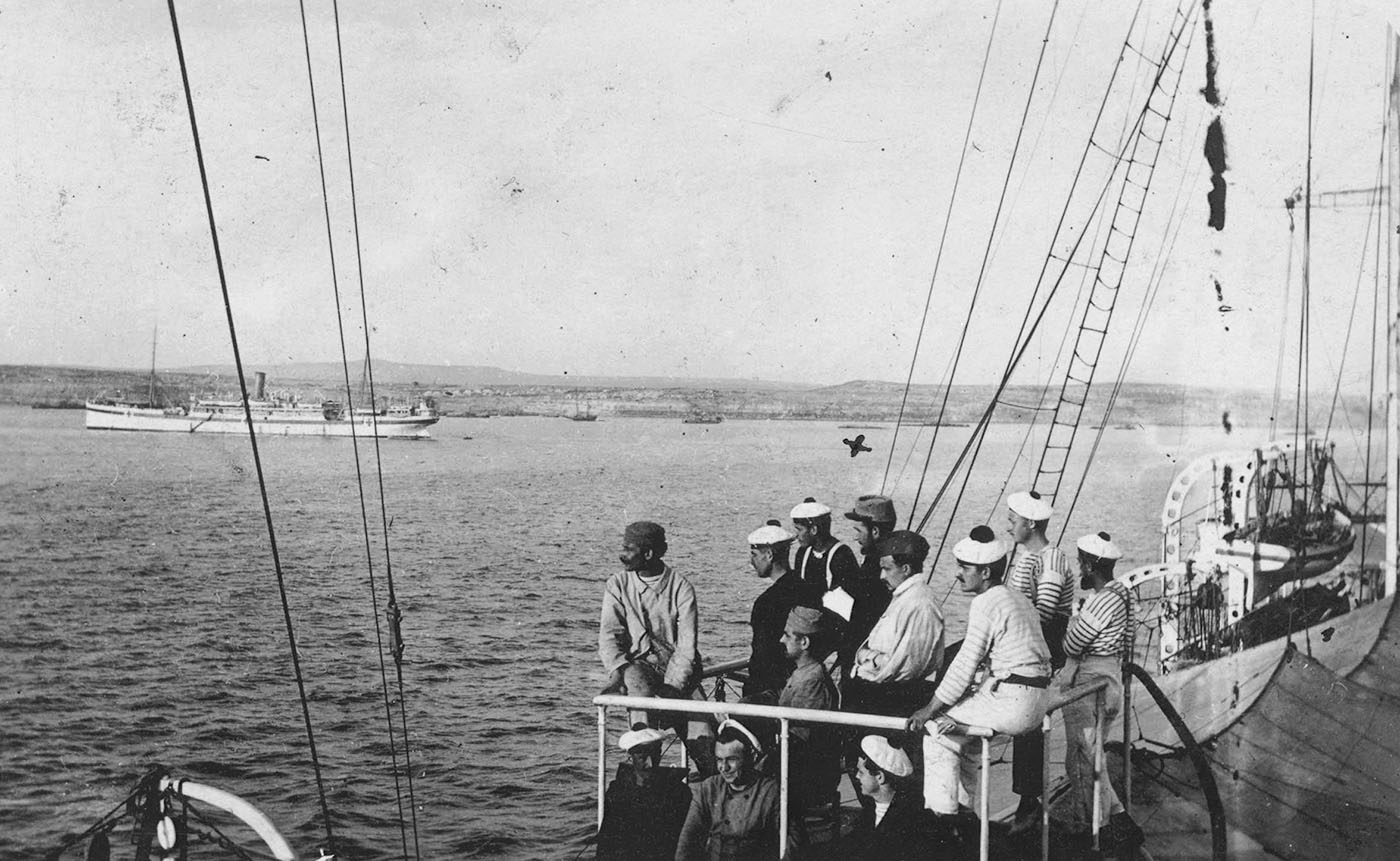
When the French drew down at Helles in September and October, the medical apparatus moved with them. Field Hospital no. 1 left Sedd-el-Bahr for the island of Tenedos (modern-day Bozcaada). Evacuation Hospital no. 2 transferred from Lychna to Mytilene (Lesvos). Hôpital d’évacuation no. 1 held its hillside at Mudros until February 1916, then sailed for Salonika to reopen there as Auxiliary Hospital no. 7.
A wider French nursing presence
The eight SSBM sisters at Hôpital d’évacuation no. 1 were not the only French nurses at the campaign. The Charles Roux on which Antelme had crossed to Mudros carried a much larger contingent: 22 Red Cross nurses, two senior surgeons, and a complement of six Daughters of Charity of Saint Vincent de Paul, all under Mme la marquise de Clapiers. The ship had been funded and equipped by the SSBM. Charles Roux reached Mudros on 28 August 1915 and worked the Cape Helles-to-Lemnos run thereafter; when she could not take coal at Mudros, she made for Salonika or Athens. On 17 October 1915, the doctors and nurses of the Charles Roux were received at the French legation in Athens, where the pro-Allied statesman Eleftherios Venizelos toasted them. Mme de Clapiers, who also set foot on the Gallipoli Peninsula during the campaign, later took the Croix de Guerre.
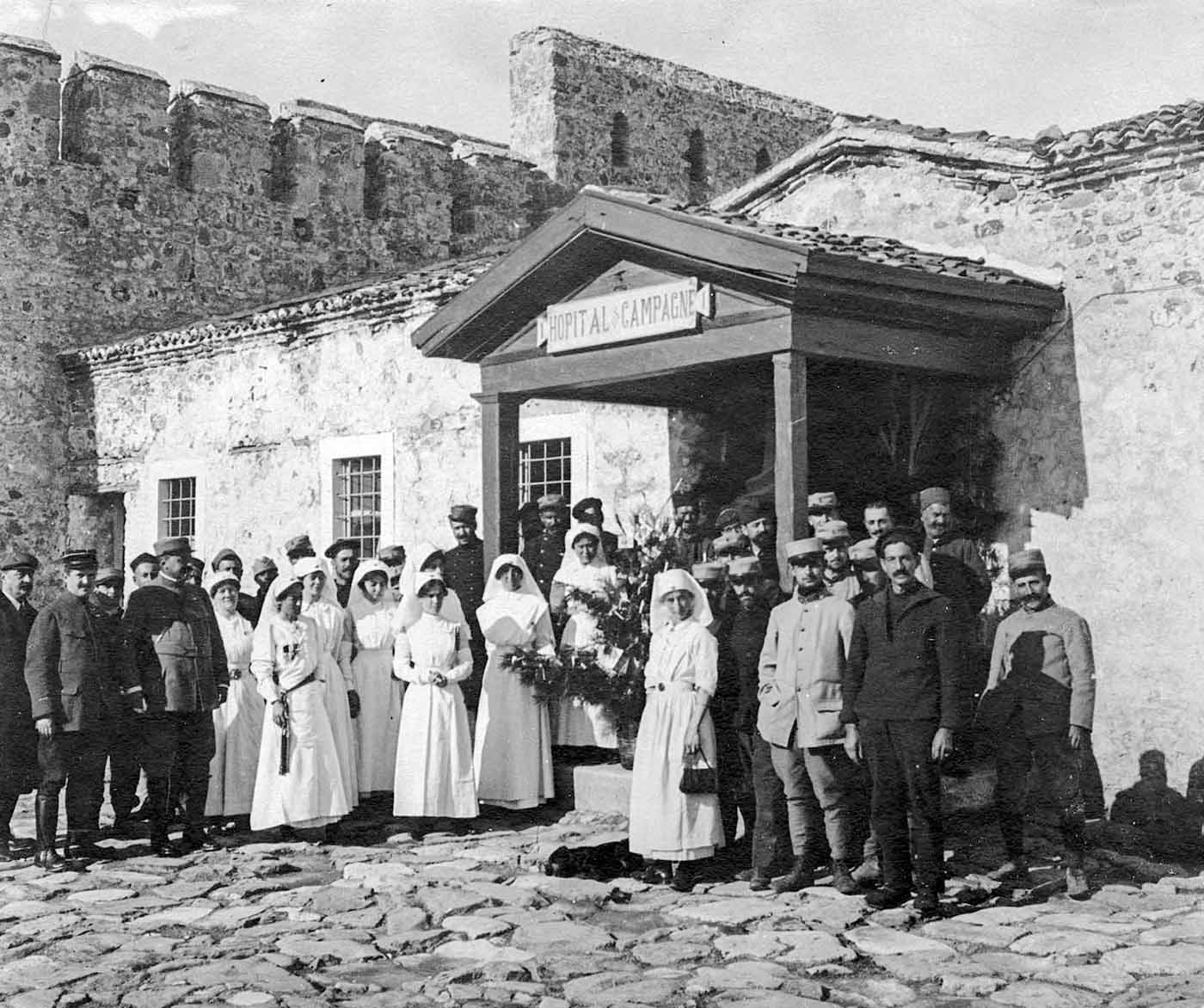
A different kind of cross-Allied nursing was happening on Tenedos. From November 1915 the French field hospital in the castle there was reinforced by eleven English nurses serving under the French Red Cross, led by Lilian Doughty-Wylie – widow of Charles Doughty-Wylie, the British officer killed at V Beach on 26 April 1915 and posthumously awarded the Victoria Cross. Mrs Doughty-Wylie had been anxious to reach the Dardanelles to visit her husband’s grave; she probably crossed to V Beach from Tenedos. When the French withdrew from the islands in early 1916, she moved to the British Royal Naval Division hospital at Mudros, and later founded a hospital of her own on Thasos.
After Lemnos
Hôpital d’évacuation no. 1 left Mudros for Salonika in February 1916, where it was reconstituted as Auxiliary Hospital no. 7. By then, as Peaudeleu later wrote, ‘more than 20,000 sick and wounded had found asylum in this corner of the world, which represented distant France for them’. Jardin had moved on to the Macedonian theatre. On 12 April 1917 she was mentioned in despatches and awarded the Croix de Guerre, her citation describing her as a ‘nurse of tireless activity and unfailing devotion’ and ‘a precious collaborator to the treating physician of her ward’. After the war she completed her medical degree, married Eugène Fabre in 1919, and submitted her thesis on Mudros in 1920. She died in May 1929 as Madame le Docteur Elisabeth Jardin.
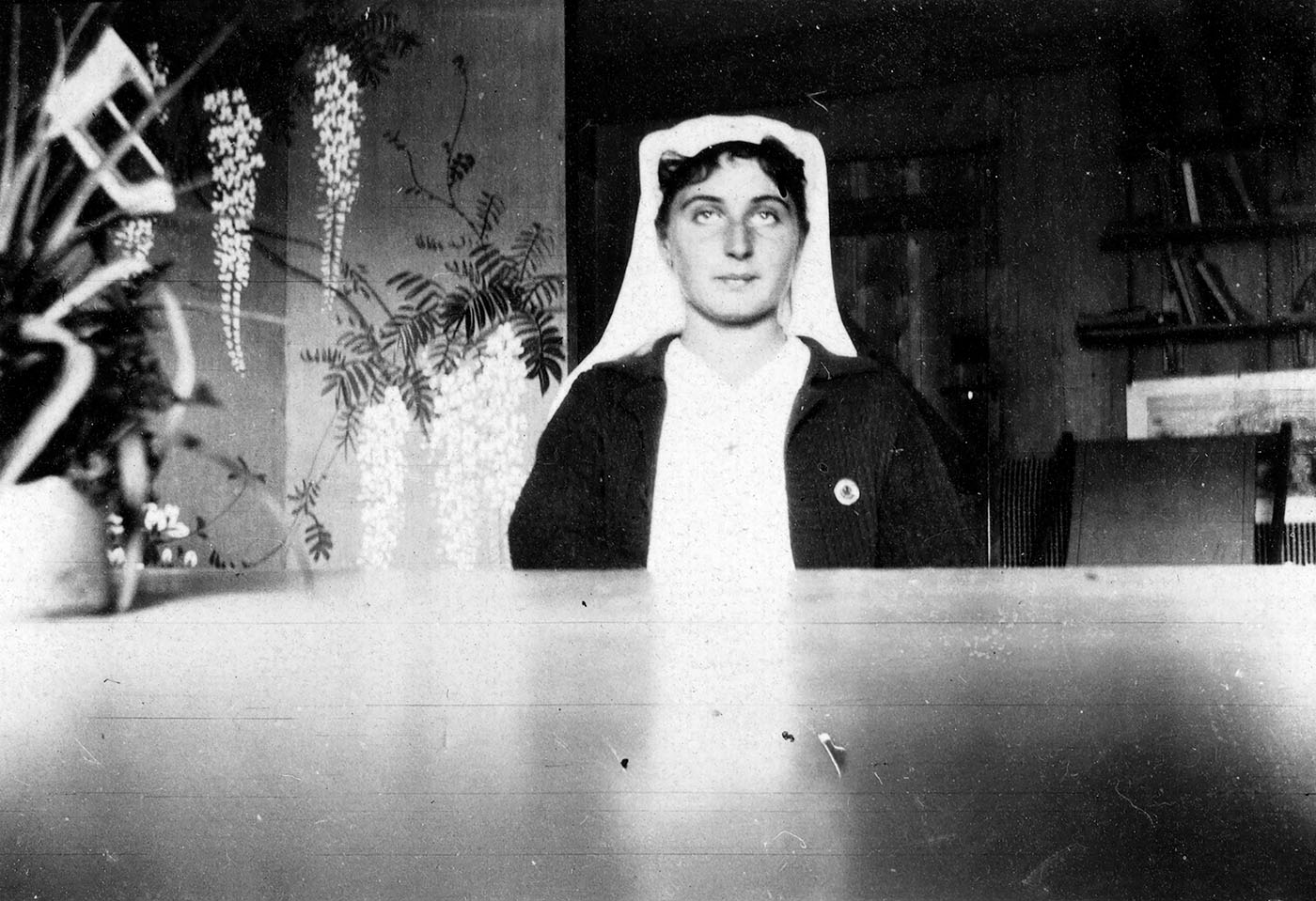
Antelme’s later life took stranger turns. After a public divorce in 1919, and a brief incarceration at Saint-Lazare prison – she had hurled an electric lamp at the Deputy Public Prosecutor – she turned to painting and sculpture, exhibiting at the 1923 Salon d’Automne as ‘Mme Jeanne Antelme – Mauritienne (britannique)’. She had returned to her maiden name.
The photographs Jardin had taken on Lemnos very nearly disappeared. Her album was rescued from a Paris rubbish bin. The seller broke up the collection and put the photographs onto eBay in 2021, allowing the author to acquire a portion of it. The album’s second section, dated to early 1916, holds quite different pictures: Vido island, off Corfu, where French medical teams – including some of the staff transferred from Hôpital d’évacuation no. 1’s sister units – dealt with the typhus epidemic among the survivors of the Serbian army’s retreat through the Albanian mountains. Over five thousand bodies were weighted with rocks and consigned to the sea.
The cemetery Antelme had walked past on Lemnos no longer holds French dead. The 632 French war dead at Mudros were exhumed after the war: 133 were repatriated at the request of their families, 499 reinterred in the French national cemetery on the Gallipoli peninsula. What remains at East Mudros Military Cemetery is the French memorial – a gabled pedestal supporting a squat obelisk – built by French engineers and sappers in late 1915 and early 1916, finished after the rest of the unit had gone by a detachment of three junior officers and 27 men.
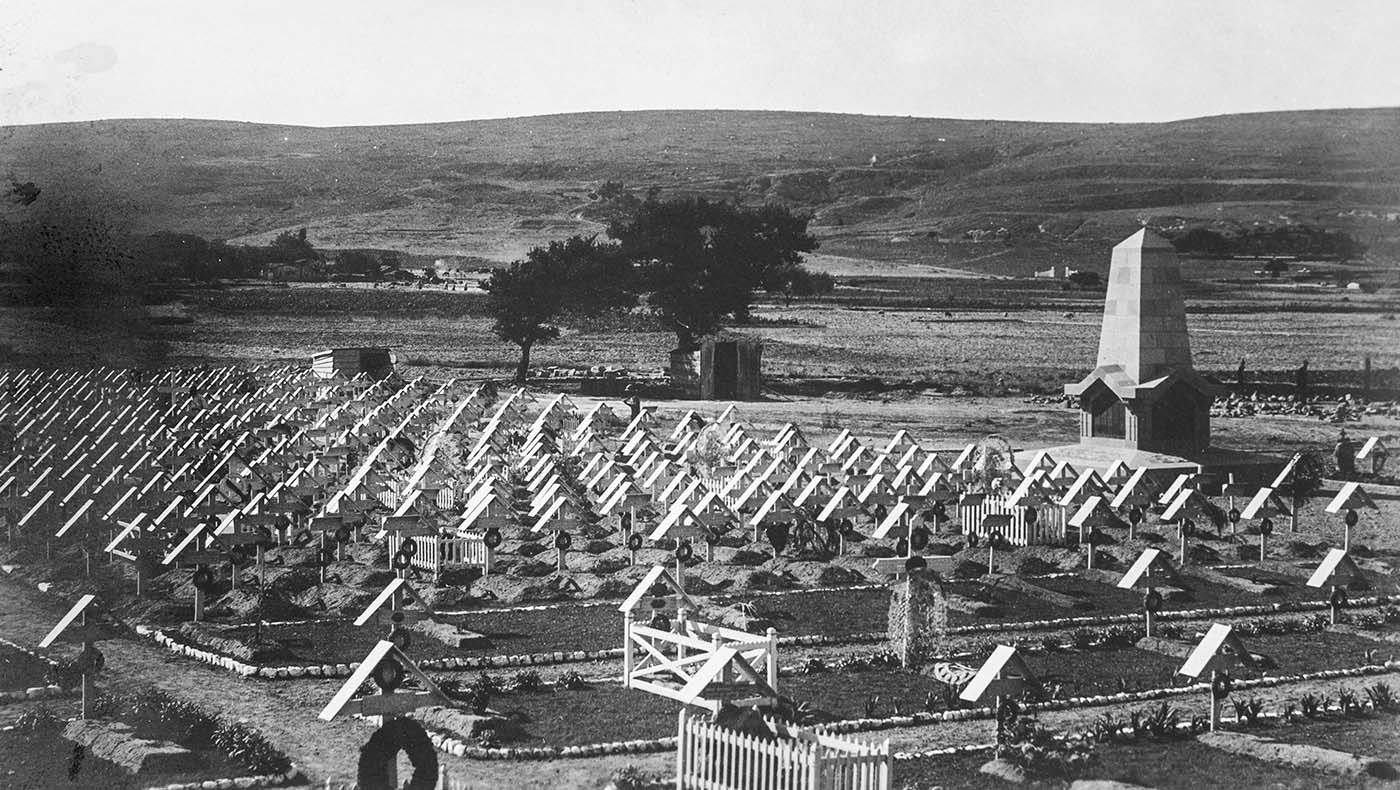
In 1930, a French pilgrimage to Lemnos placed a bronze plaque on the monument. General d’Amade, the first commander of the CEO, led the service. Among those laying wreaths was General Ruef, who had commanded the Kum Kale landing on 25 April 1915 as a colonel. The mayor of Mudros, the clergy, Greek troops and local residents attended.
What survives is the writing, the photographs, and the names. The bulletin of the SSBM lists the matron and seven sisters who served at Hôpital d’évacuation no. 1: Oberkampf, Bouchez, de Brinville, Marie Laporte, Jeanne Noblemaire née Antelme, Romain-Bougère, Jardin, and Lacaze. Twenty-two more crossed on the Charles Roux under Mme de Clapiers.
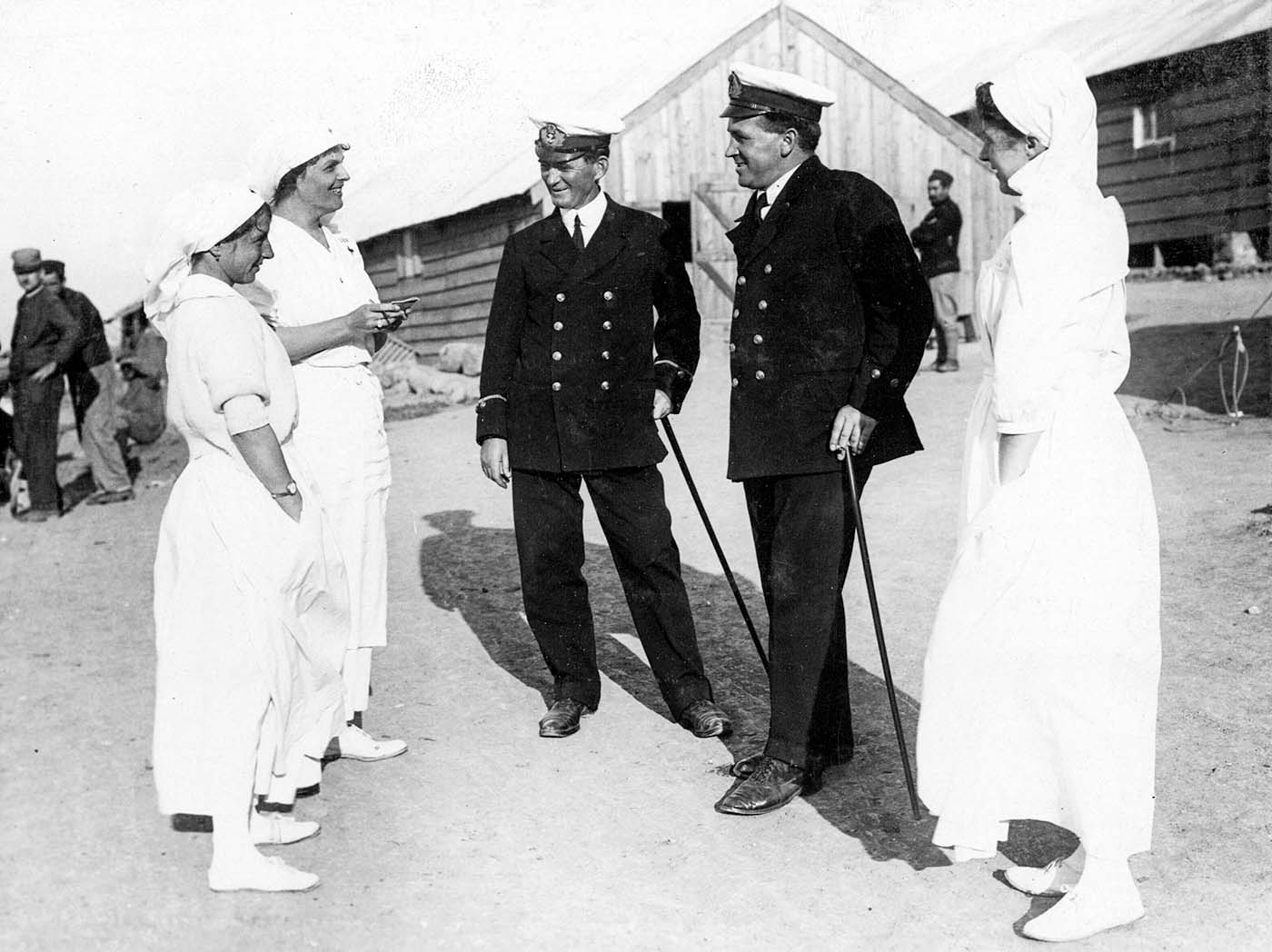
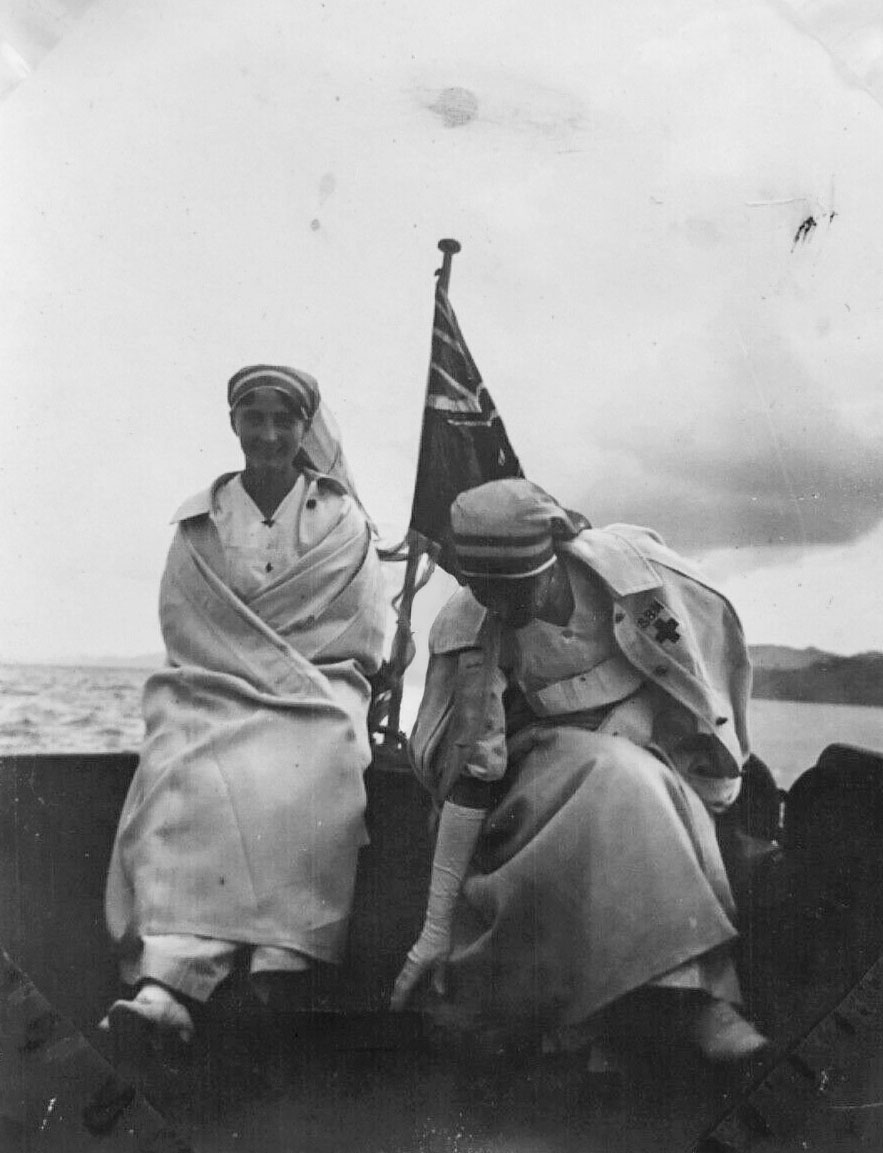
The Allied nursing effort at Lemnos was British, Dominion, and French.
Mudros, 1915
Bernard de Broglio is a member of the WFA’s support team and has contributed to the journals of the Gallipoli Association, the Australian Society of WW1 Aero Historians, and the Great War Aviation Society. His English translations of Antelme’s memoir and Jardin’s thesis appear in Mudros, 1915 (Little Gully Publishing), which includes a survey of the French hospitals at Gallipoli.
Becoming a member of The Western Front Association (WFA) offers a wealth of resources and opportunities for those passionate about the history of the First World War. Here's just three of the benefits we offer:

The WFA regularly makes available webinars which can be viewed 'live' from home. These feature expert speakers talking about a particular aspect of the Great War.

Featured on The WFA's YouTube channel are modern day re-interpretations of the inter-war magazine 'I Was There!' which recount the memories of soldiers who 'were there'.

Explore over 8 million digitized pension records, Medal Index Cards and Ministry of Pension Documents, preserved by the WFA.
Other Articles


