
What’s in a name? The Futters of Burnham Thorpe
A typical Commonwealth War Graves Commission headstone stands in a military cemetery in northern France, defying the winter snows.
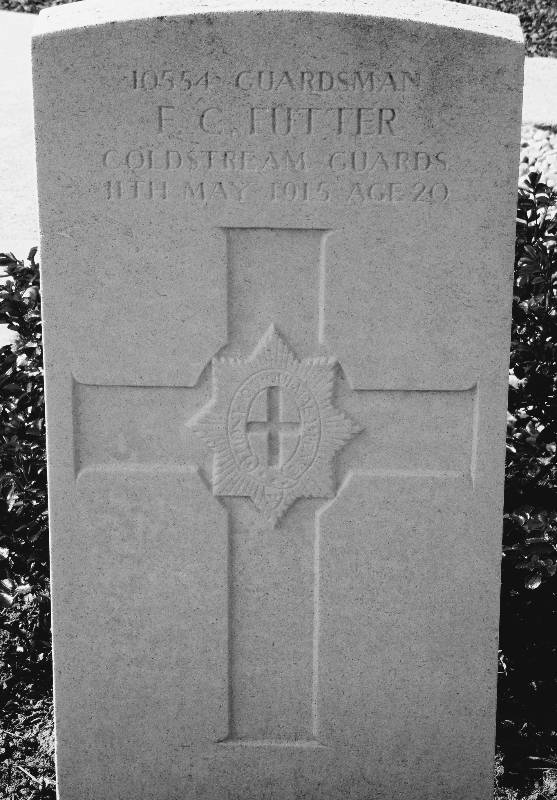
The photograph was taken by Ian and Karen Barber, who have travelled widely on the Western Front, gathering an astonishing database of almost 373,000 images of headstone and memorial names.
There is, on the face of it, nothing exceptional about this stone, marking the burial place of Private Frank Charles Futter, of the Coldstream Guards, who died on May 11th, 1915.
However, dig a little deeper, into where he came from and how he’s remembered back home, and Frank Futter’s story raises issues of interest to anyone who visits WWI cemeteries and memorials. What are we to assume when we see multiple names on a memorial, all with the same surname? The same family? It’s not always straightforward.
What, then, do we know of Frank Futter? We know that he enlisted in 1913, serving as Private 10554 with the 3rd Battalion Coldstream Guards, and his medal card index tells us that he was overseas from very early in the conflict, from August 26th, 1914. He was one of the British Army’s ‘Old Contemptibles’, and was awarded the 1914 Star, with clasp and roses, indicating that he was under fire.
According to the CWGC records, Frank was the son of Charles and Elizabeth Futter, of Burnham Thorpe in Norfolk, and an entry in De Ruvigny’s Roll of Honour describes his father as a tilemaker, of the School House at Burnham Thorpe. In the 1911 census, young Frank was described as a farm labourer. His stated age was 14, which suggests he might have been younger than the ‘20’ given as his age when he died.
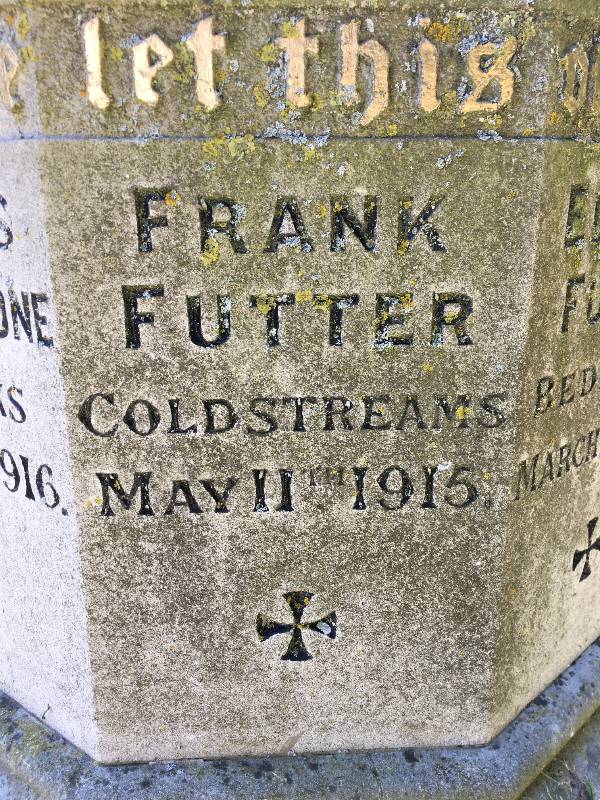
De Ruvigny’s Roll recorded Frank’s date of birth as 31st July 1895, but there is a sad aspect of this family history. There were three births of babies called Frank Charles Futter in the Docking district (which includes Burnham Thorpe), all with a mother’s maiden name of Norman.
The first was registered in 1894, but the child died within six months. The second was registered in 1895, but the boy died within a year.
The third birth, registered in 1897, must refer to the Frank on the memorial, despite the anomalous date of birth in De Ruvigny’s.
It was common to re-use a name for a deceased infant, but to have three such children with the same name is a rarity. There were no fewer than sixteen children in the marriage; only eleven survived.
The 3rd Battalion Coldstream Guards War Diary indicates that Frank was one of two men killed in trenches near Cuinchy, not far from Bethune. He now lies in Cuinchy Communal Cemetery. He never married, and there are no direct descendants.
Frank’s name is etched on the plinth of a war memorial in the graveyard at All Saints’ Church in Burnham Thorpe.
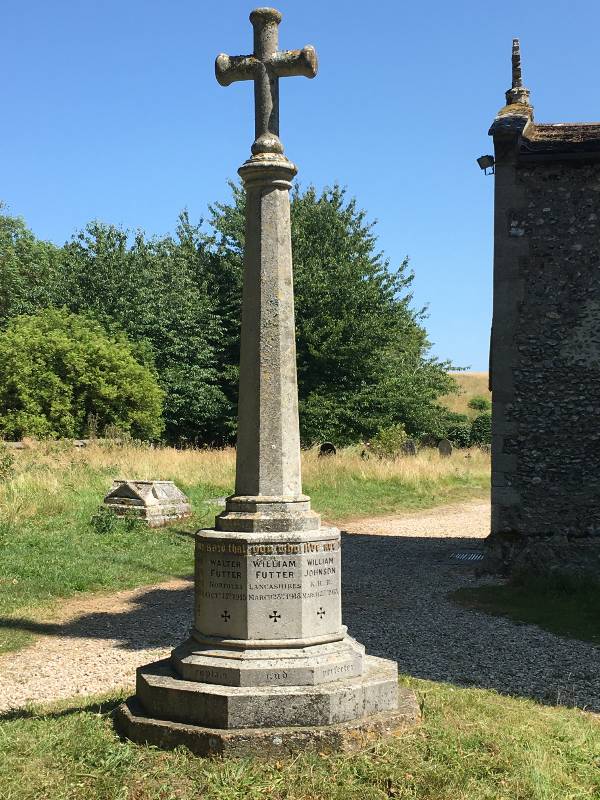
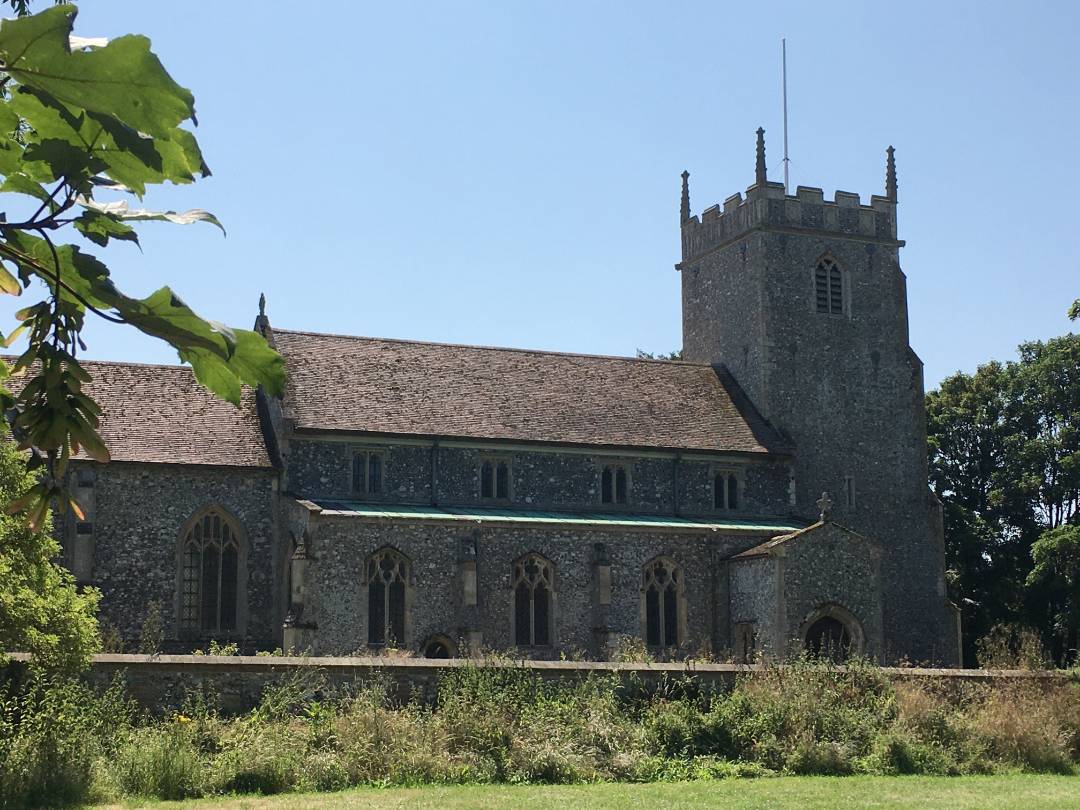
The church is probably best-known as where the Reverend Edmund Nelson was Rector, and stands very near the site of the long-disappeared parsonage where Edmund’s son Horatio grew up.
The son went on to become Horatio Lord Nelson, Admiral of the Fleet, and hero of Trafalgar.
The war memorial was unveiled in 1920. Burnham Thorpe is small, and the memorial contains the names of only nine casualties from the First World War – and no fewer than four of the men share the same surname: Futter. Frank Charles Futter is the only one of the quartet of Futters to have a headstone.
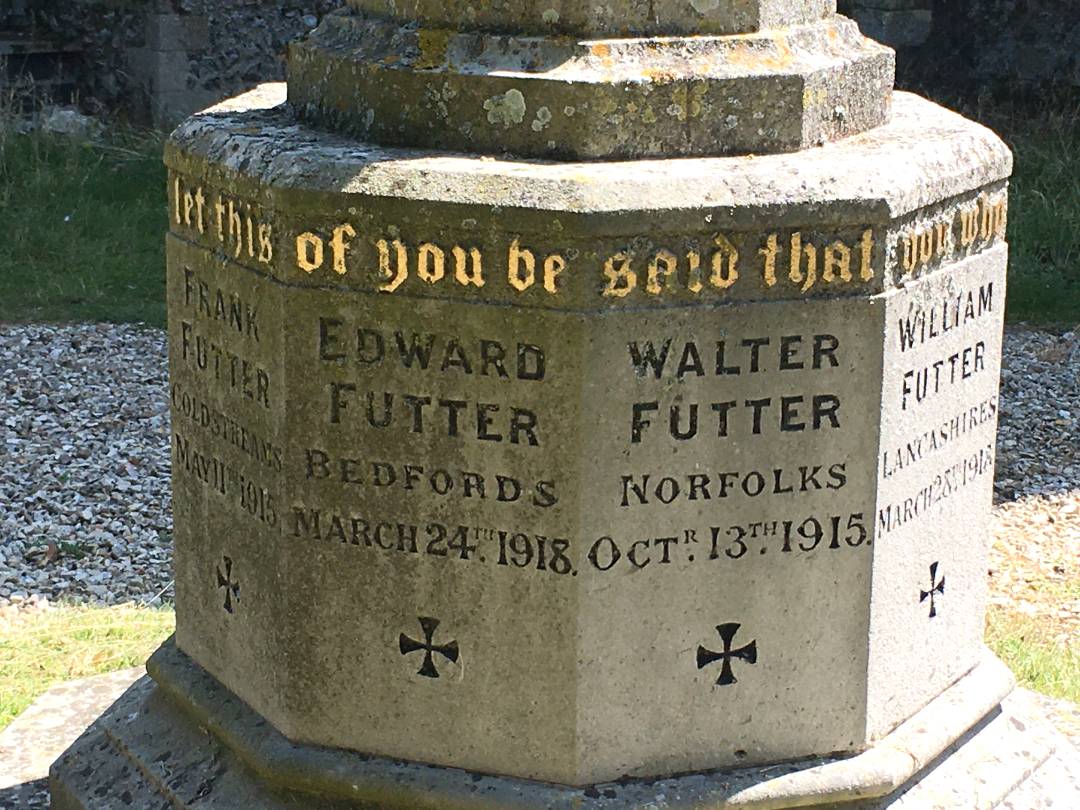
Surely, in such a small community, it would be fair to assume that these men were related. But if so: how? We investigated, making particular use of digitalised pension records, and were surprised by what we found. As far as we could tell, none were brothers or cousins. Almost certainly, in such a small community, they belonged in some way to an extended family going back generations. But they didn’t appear to be close relatives. Even an article we wrote for a local community newsletter failed to produce any evidence.
So who were the other men named Futter on this memorial?
Edward Futter
The bare inscription on the memorial for Edward Futter tells us he was in the ‘Bedfords’, and indicates he died on March 24th, 1918.
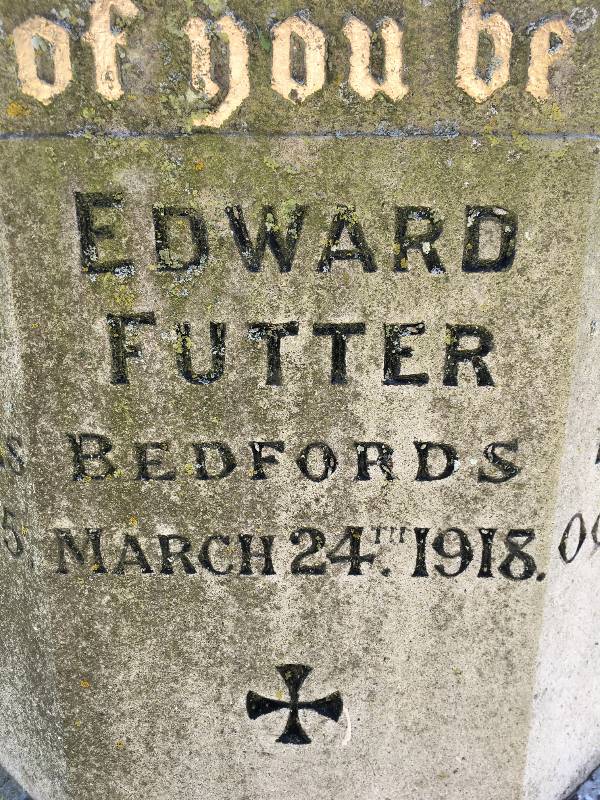
Edward’s service record hasn’t survived, but the CWGC records his death one day earlier than the memorial - March 23rd, 1918, while serving as Private 29215, with the 7th Battalion Bedfordshire Regiment.
Soldiers Died in the Great War confirms that Edward was born in Burnham Thorpe in 1884. His parents shared the same surname – John Futter and Sarah Futter. In 1901, Edward was still living with his parents, described as a domestic gardener. By 1911, aged 26, he was still living at home.
His medal card index suggests he didn’t serve overseas until 1916, and the War Diary indicates he was killed on the third day of ‘Operation Michael’, the huge German Spring Offensive, near what was called the Crozat Canal, now known as part of the St Quentin Canal. The officer writing the diary refers, repeatedly, to ‘heavy attacks’ and being outflanked.
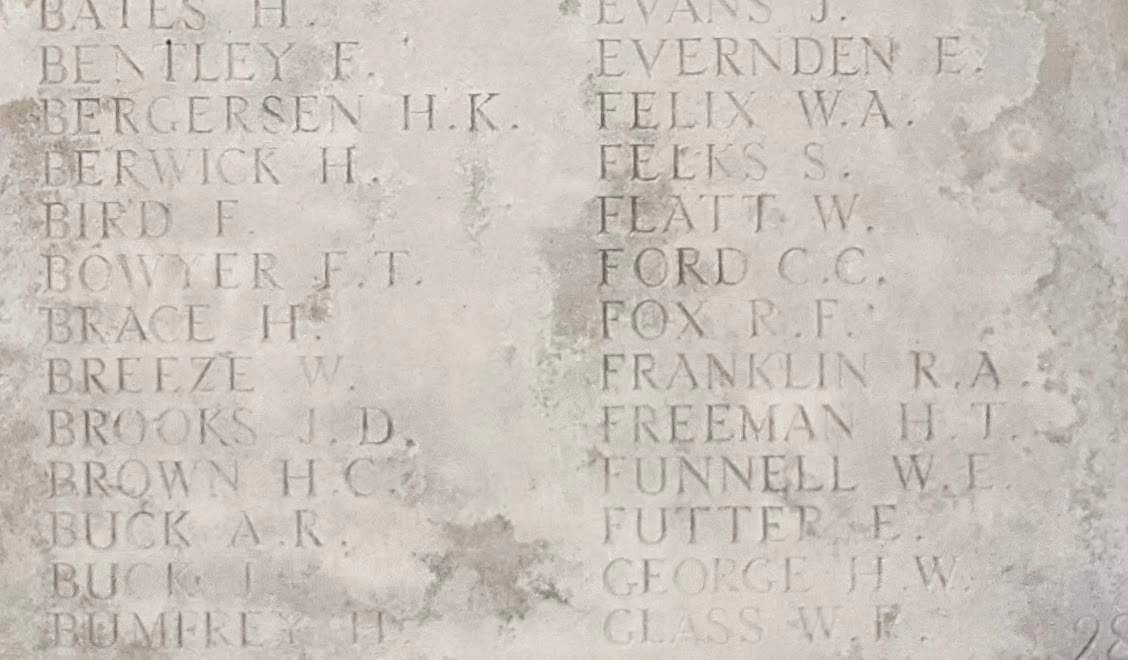
Edward has no known grave. His name is recorded on the Pozieres Memorial (above), and there is no available next of kin information. A pension card, however, carries the name of his father John Futter as a dependent, with a second dependent - Miss Helen Futter, his older sister - clearly added later.
Tantalisingly, though, there is a reference appended to one of the pension cards with the name of a second soldier, a ‘William Futter’, whose Army Number, Rank and Regiment match the name on the war memorial, alongside Edward’s. This reference remains a mystery; it might suggest a connection, or it might be a clerical error.
There is no evidence that Edward married, or had descendants. As far as we can tell, his elder sister Helen (or Helena) never married. She was in service with a family in Orpington in the 1939 register, and her death was recorded in 1963, aged 87, in Surrey.
William Futter
This is all we learn about William Futter from the memorial. His Regiment (‘Lancashires’) and his date of death – March 28th, 1918.
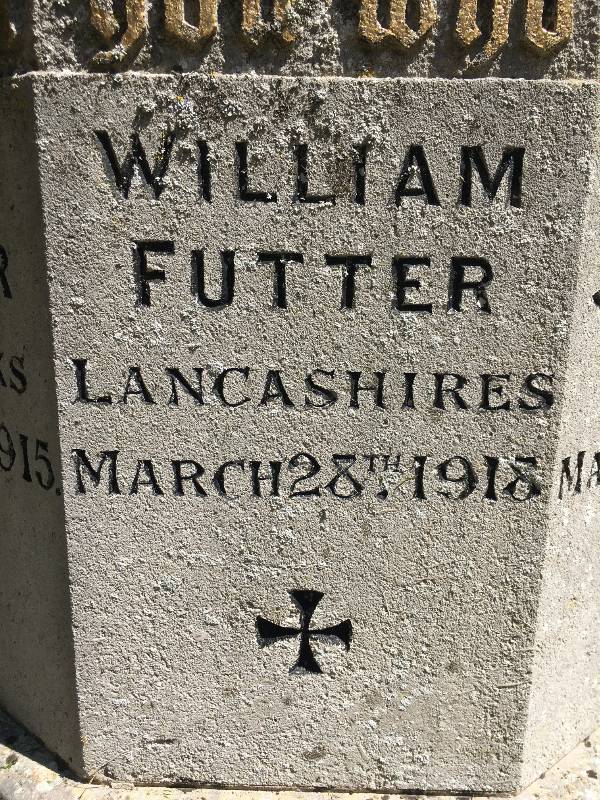
William’s service record hasn’t survived, but the CWGC confirms his death on that date, whilst serving as Private 30545 with the 8th Battalion Kings Own (Royal Lancaster Regiment).
Like Edward, William was killed during the great German Spring Offensive, near Neuville-Vitasse, just south east of Arras. The Battalion was under heavy shell-fire and had to withdraw to avoid being outflanked. William was one of about 40 Battalion casualties.
William, we learned, was the son of Martha (nee Battersby or Battaby) and another William, a labourer. He was born in 1894. Pension ledgers indicate that his mother was first named as his dependant, but she was later superseded by his father. Martha died in 1932.
William appears with his parents as a seven-year-old in the 1901 census for Burnham Thorpe, and again in 1911, as a seventeen-year-old farm labourer.
But how was William connected with Edward, which appears to have been the case because William’s name was appended to one of Edward’s pension cards?
So far, it’s a mystery.
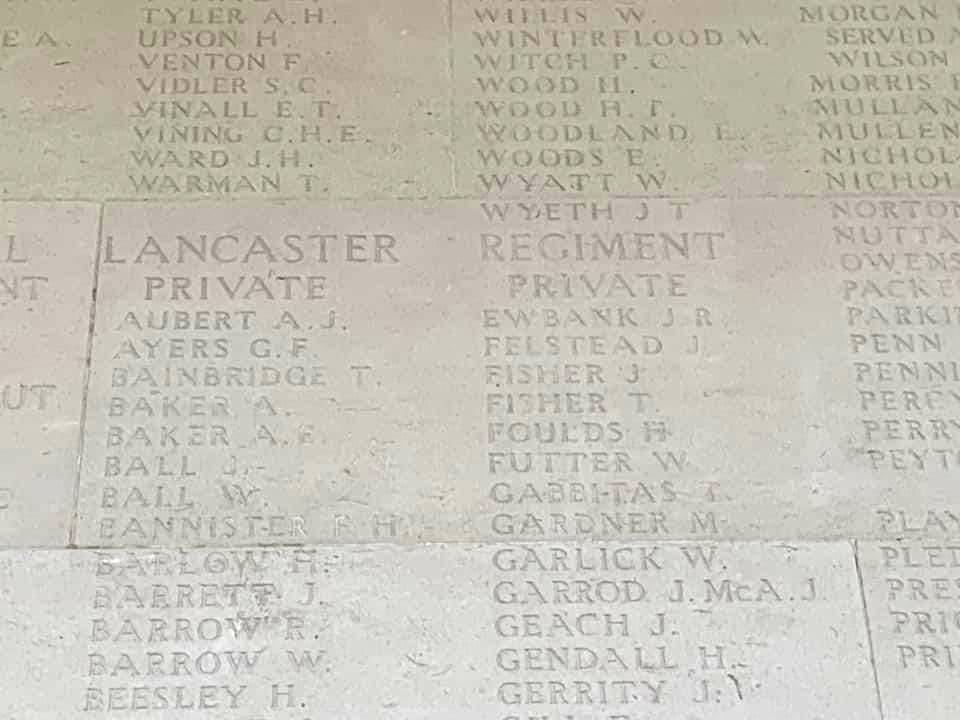
He has no known grave and his name is commemorated on the Arras memorial (above).
Walter Frederick Futter
These are the bare facts for Walter on the Burnham Thorpe war memorial:
Walter Futter, Norfolks, Oct 13th 1915.
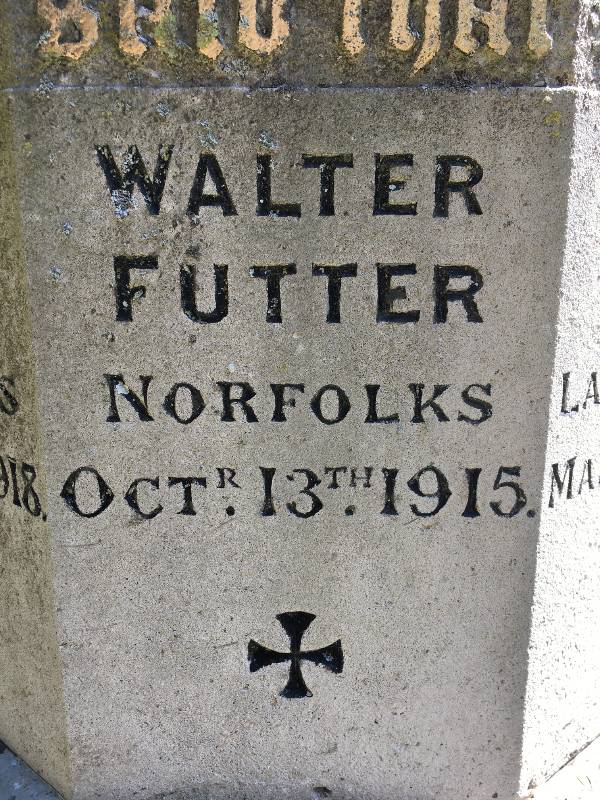
From the CWGC records, we learn that his full name was Walter Frederick Futter, serving as Private 16610 in the 7th Battalion, Norfolk Regiment.
He is the only Futter on the memorial to have served in the county regiment, and in many ways, his story has been the most challenging. This is partly because he was illegitimate, and partly because there were many errors in the army paperwork; the Army appears to have been as perplexed by the number of Futters as we have been.
He was a farm labourer before the war, and was 19 years old when he died, and was listed as the grandson of Eli Futter of Burnham Thorpe. Note: no mention of a father or a mother.
Walter’s service record survived the fire which destroyed the bulk of WW1 service records, and is in the ‘burnt series’ series WO 363. He enlisted in Norwich on November 17th, 1914.
His medal index card shows he was awarded the 1914-15 Star, arriving in France on August 30th, 1915.
His active service lasted barely six weeks. In mid-October, the Battalion took part in an assault on the Hohenzollern Redoubt near Loos, supported by massive artillery and smoke barrages. It didn’t work. The Norfolks were enfiladed by German machine gun fire. James Edmonds, in his History of the Great War, later wrote: The fighting had not improved the general situation in any way and had brought nothing but useless slaughter of infantry.
Overall, the attack cost 3,643 casualties; Walter was one of 66 Other Ranks killed in the 7th Battalion, Norfolk Regiment, along with five officers. Having no known grave, his name is commemorated on the Loos memorial (below).
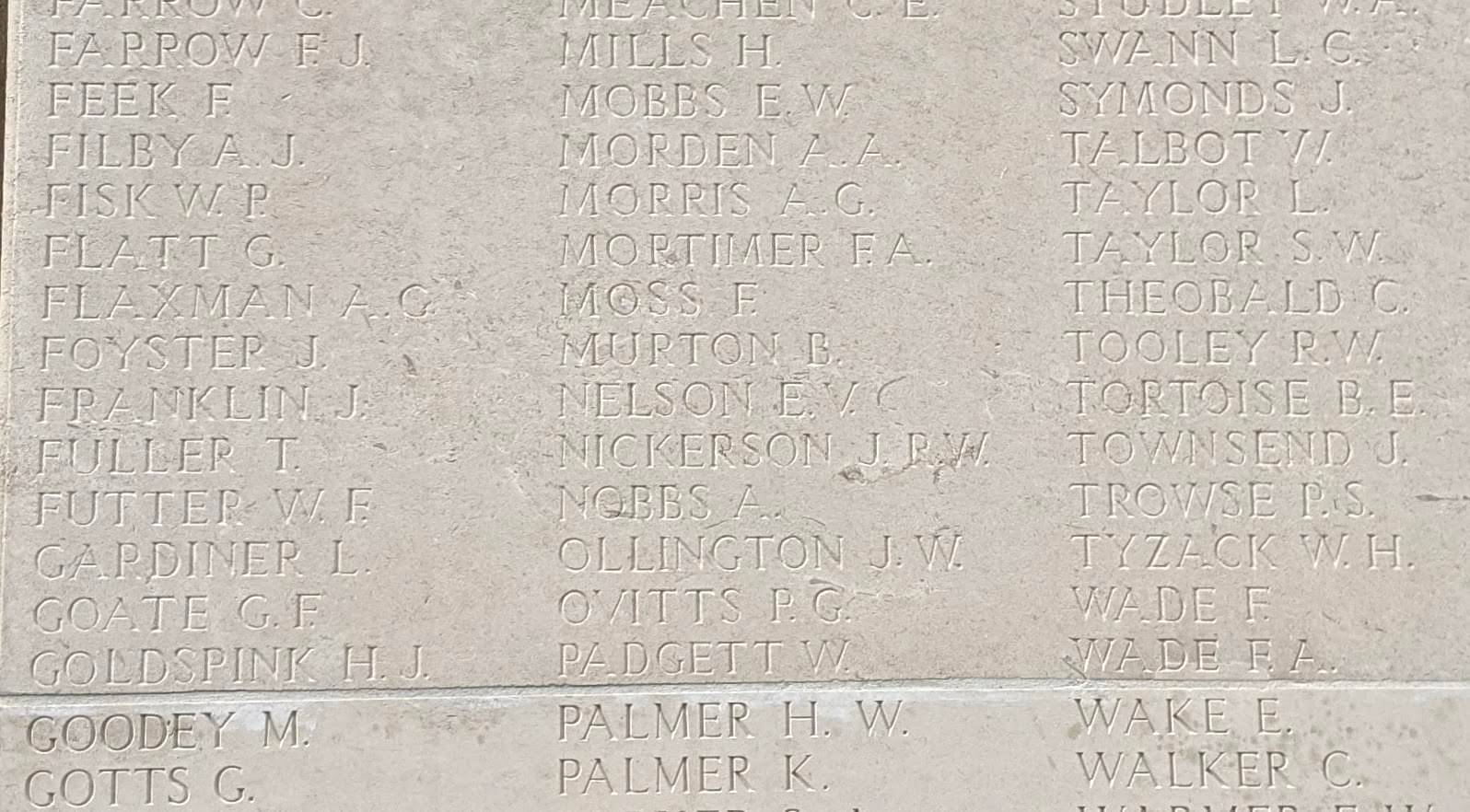
He gave his grandfather Eli as next of kin but Eli is incorrectly described on the form as father. This is one of many errors in Walter’s paperwork. In another document, it’s stated that his father was Charles Futter, but this is because the form relating to his death was sent to the father of Frank Charles Futter – another of our quartet.
We know from the Soldiers’ Effects Register that Walter’s mother forename was Florence; she received his 1914-1915 Star. But a register of his relatives, supplied by his grandmother, indicates that Walter had a half-brother and two half sisters, so it’s likely that Florence had several illegitimate children, including Walter Frederick.
Walter’s pension card shows that his dependant was originally given as his grandmother Elizabeth Futter.
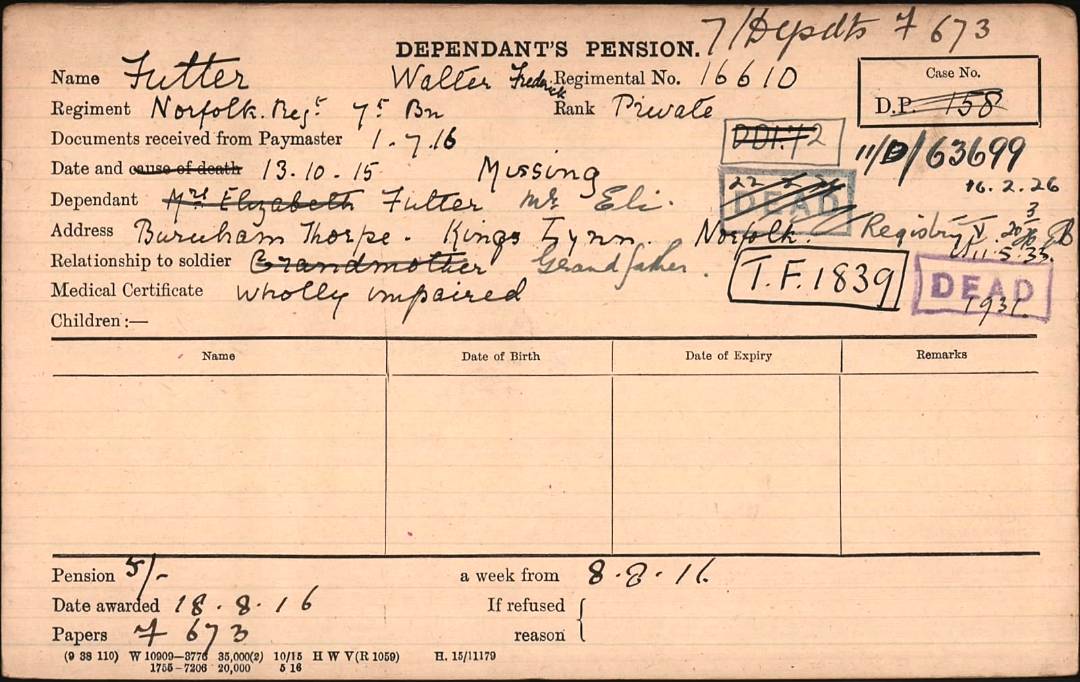
This was later changed to his grandfather Eli.
A further pension card only shows his grandfather Eli.
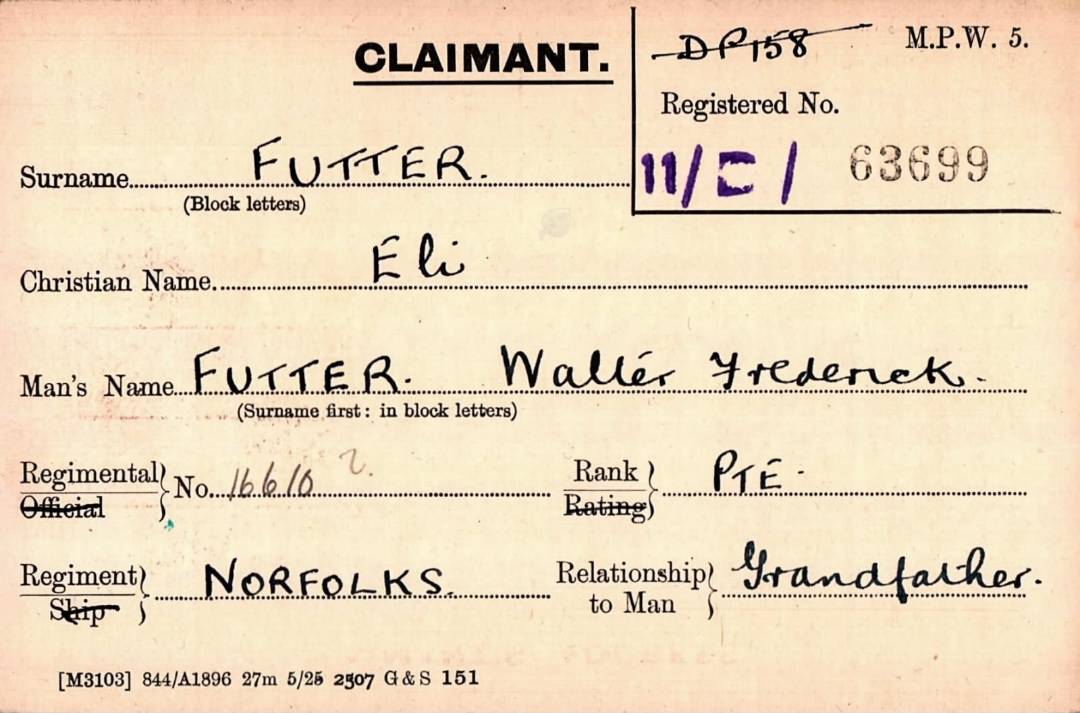
This is a further demonstration of the value of the pension cards, rescued by the Western Front Association, in identifying soldiers, and providing information on their families. This is particularly useful when no service record has survived.
Conclusion
What have we achieved? At the very least, we underlined the importance of the Pension Records in supplementing other resources, which means all the hard work by the Western Front Association in digitalising the records and making them available was worth-while.
In a way, though, we proved a negative, because there appears to be no close links between the four men called Futter on the Burnham Thorpe memorial. They were certainly neither brothers nor cousins. We were able to identify the parents of all four from various sources, and all are different.
The complexities are profound. The parents of one of the four (Edward) shared the same Futter surname before they married; details about William inexplicably appear on Edward’s pension card, and parts of Frank’s service record appear to be embedded in Walter’s records.
It is probable they all belonged to a very extended family. The name Futter is far from uncommon in the area; indeed, a website called tinstaafl.co.uk contains a register of births in Burnham covering 67 years, from 1813 to 1880, and of the 728 people, no fewer than 83 of them are named Futter.
None of the soldiers married. None had children – as far as we can tell. There are no direct descendants. Only one service record survived the WW2 bombing of the London warehouse where the archive was stored.
We have, to date, been unable to trace any family testimony, portraits or artefacts, but as we know from previous projects, you can never say never…
The inscription on the memorial says: ‘Let this of you be said, that you who live are worthy of your dead sons of this place’.
The authors
Dr Alan Hawkins has contributed several articles which have arisen from the WFA pension card project, and his wife Margaret is one of five Team Leaders involved in processing the digitalised records.
Rob Kirk was Editor of the biannual journal Lochnagar Crater Today.
Together, they were part of research teams who explored the crews who fought and died in the discovered and recovered Flesquières tank, Deborah D51 at Cambrai, and the recreated Poelkapelle tank, Damon II, in Belgium.
Becoming a member of The Western Front Association (WFA) offers a wealth of resources and opportunities for those passionate about the history of the First World War. Here's just three of the benefits we offer:

Explore over 8 million digitized pension records, Medal Index Cards and Ministry of Pension Documents, preserved by the WFA.

Featured on The WFA's YouTube channel are modern day re-interpretations of the inter-war magazine 'I Was There!' which recount the memories of soldiers who 'were there'.

The WFA regularly makes available webinars which can be viewed 'live' from home. These feature expert speakers talking about a particular aspect of the Great War.


