
‘A varied repertoire’: the air war at Gallipoli in RAF Staff College papers
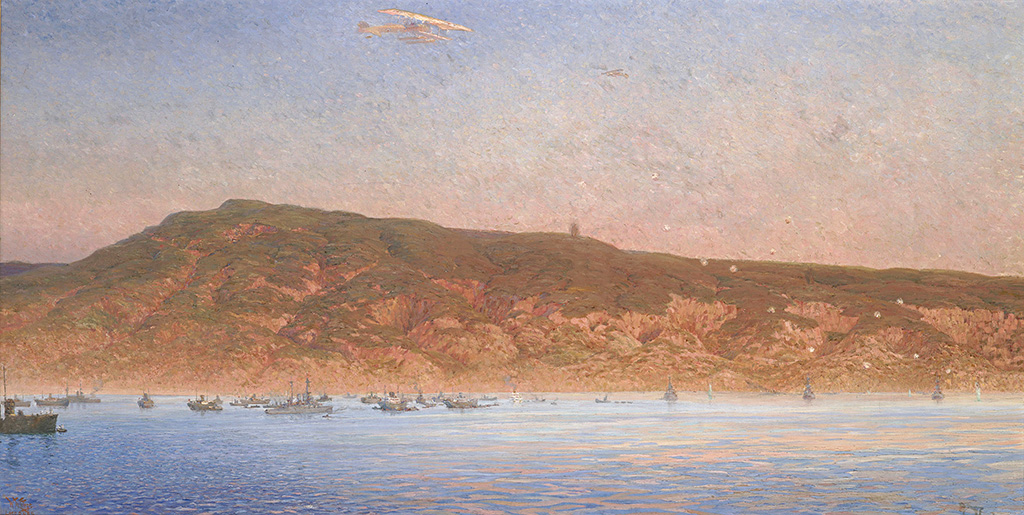
Soon after dawn on 25 April 1915, Private Thomas Howe of the 12th Battalion, Australian Imperial Force, had just reached the shingle bank at Anzac. When the Turkish fire slackened he looked round, and saw the fleet, a kite balloon spotting for HMS Triumph, and an aircraft in the sky above:
‘An aeroplane from the Ark Royal flew overhead at about 3,000 feet and as it passed along the Turkish positions nearly every man must have fired at it. It was possible in this way to gauge roughly the position and numbers of the enemy.’
Nine years later Howe was a squadron leader, and he wrote those lines at the RAF Staff College at Andover.
Staff College papers
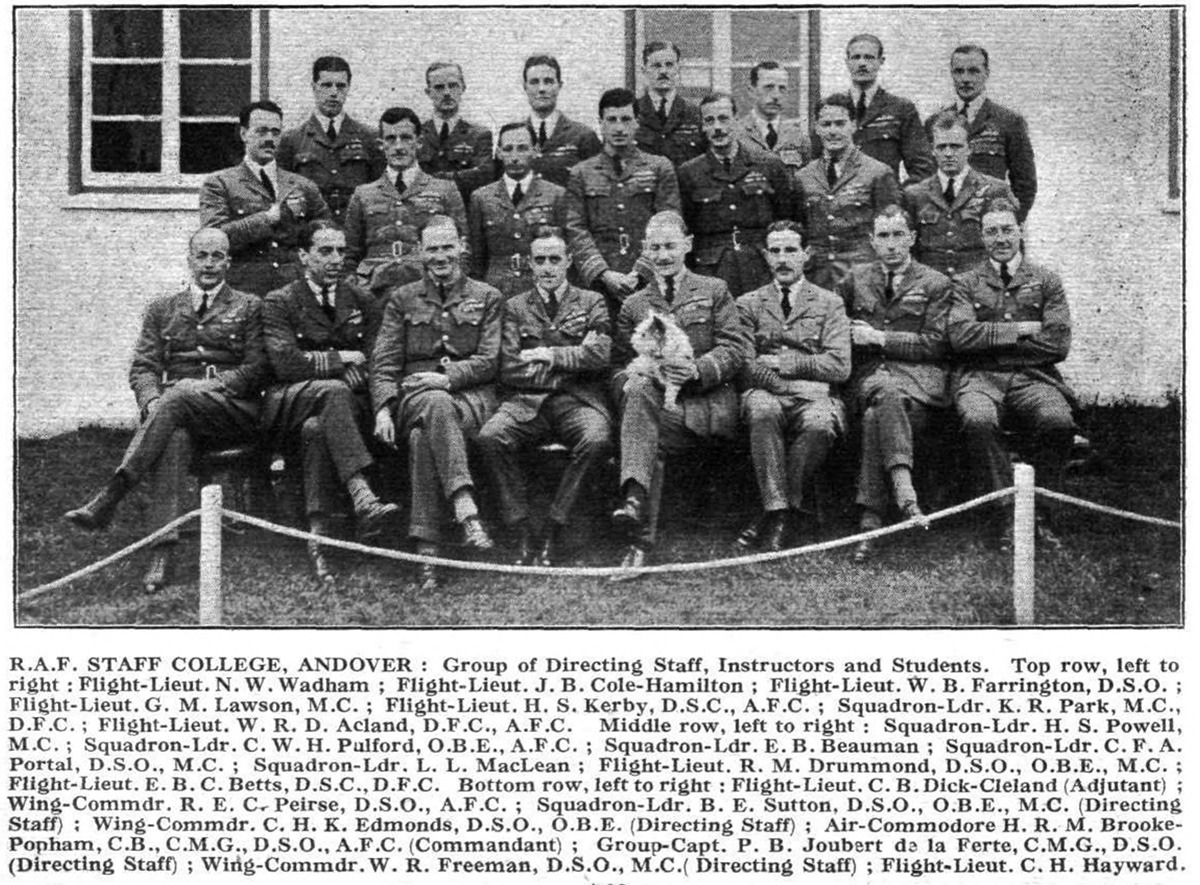
The RAF Staff College opened near Andover in 1922. Every officer on its course had to write an account of his own war experiences, and about 180 of these papers survive among the Air Historical Branch files at The National Archives, in AIR 1/2386 to 2392. Trevor Henshaw, who has indexed them, calls them ‘a goldmine of information’.1 But they can be hard to use. The National Archives lists them by author only, with nothing to say which unit, front or year a paper covers. Henshaw’s index fills much of that gap. This article builds on it, and sets out to bring together every paper in the series that gives a first-hand account of the Gallipoli campaign of 1915–16.
Most readers who know the air war at Gallipoli know it through Charles Samson’s memoir, Fights and Flights, and through the official history, The War in the Air, whose account of the campaign rests largely on Samson’s own reports.2 Some will have read Richard Bell Davies’s Sailor in the Air.3 There are many more first-hand accounts than these in the archives, and among them the Staff College papers are especially valuable. Seven of them deal with Gallipoli. Between them, they follow the campaign from beginning to end.
Geoffrey Bromet flew the first reconnaissance of the Straits from HMS Ark Royal in February 1915, and stayed until September. Richard Peirse, a pilot in Samson’s squadron, found himself spilled ‘on the uninviting beach’ of Tenedos in March while looking for a landing place for its aeroplanes, and flew from the island until July. Howe and John Bell, both of the 12th Battalion, AIF, watched the aircraft from below at Anzac. Andrew Walser, an RFC officer lent to the Royal Naval Air Service, flew as an observer, and his job was to get the Army and Navy working with the airmen. Conway Pulford flew Ark Royal’s seaplanes through the summer. Gilbert Smylie bombed the Bulgarian railways in the autumn, was shot down and rescued in November, and helped get the anti-aircraft guns off Helles in the last days of the evacuation.
The papers were written for fellow officers, as lessons for a new service, and they are frank and unvarnished. Their authors complain about spares, about the Air Department, and about the Army and Navy alike. The papers are useful records and engaging accounts, but they were written some years after the events, and like any recollections they need to be read with care. What follows keeps to their words wherever possible.4
The naval attack, February–March 1915
Flight Lieutenant Geoffrey Bromet had come to the Dardanelles by way of the Central Flying School, where his course was just finishing in July 1914, and a string of seaplane stations – Eastchurch, Westgate, Calshot and Dover. At the end of 1914 he was appointed to Ark Royal, a new seaplane carrier then completing at Blyth. Bromet admired her:
‘The main features of her design (she was like no other ship that had ever sailed the seas!) were a flush deck extending from the bows to about 1/3rd of the ship’s length, at the end of which and on either side was a steam crane.’
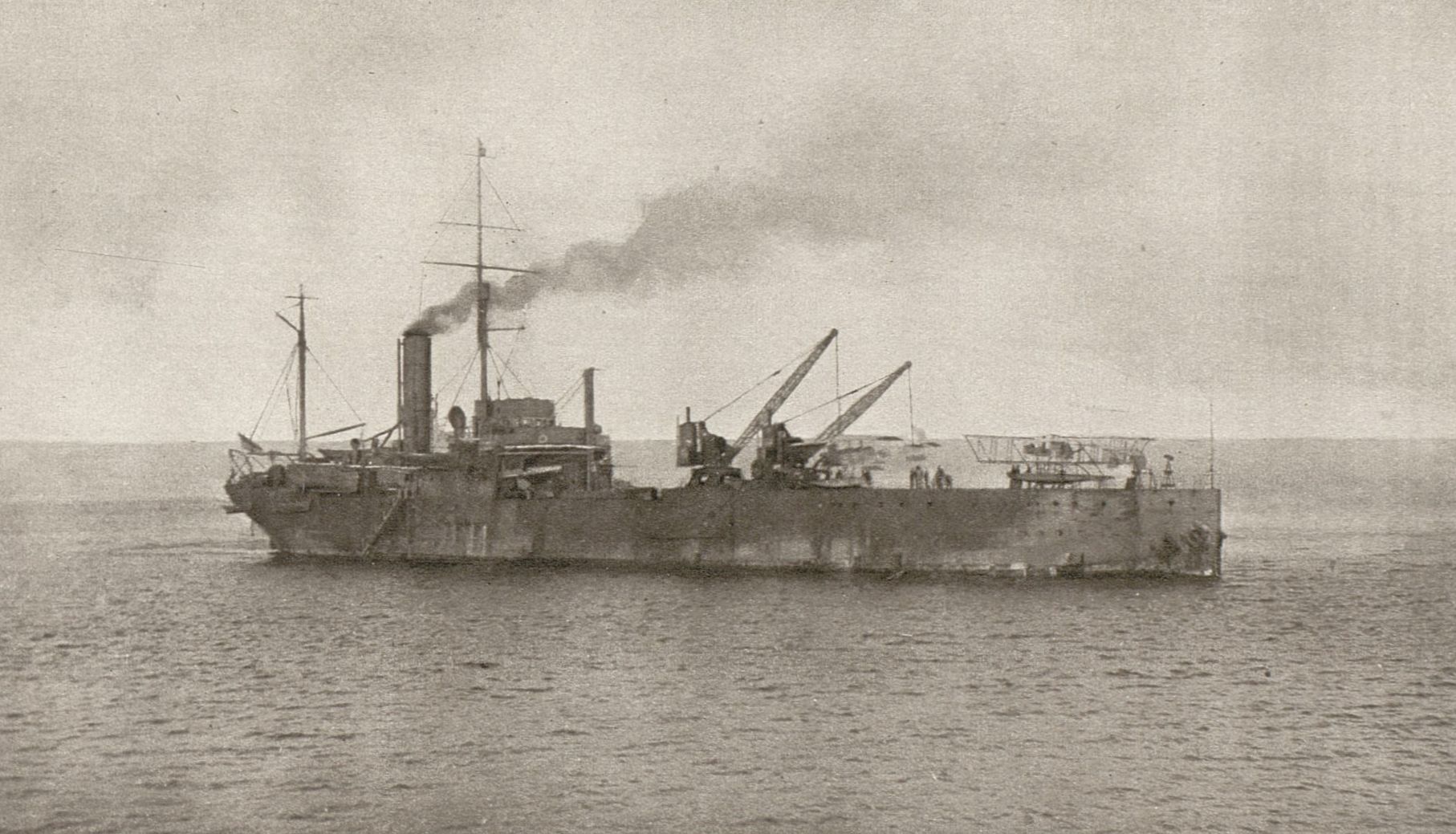
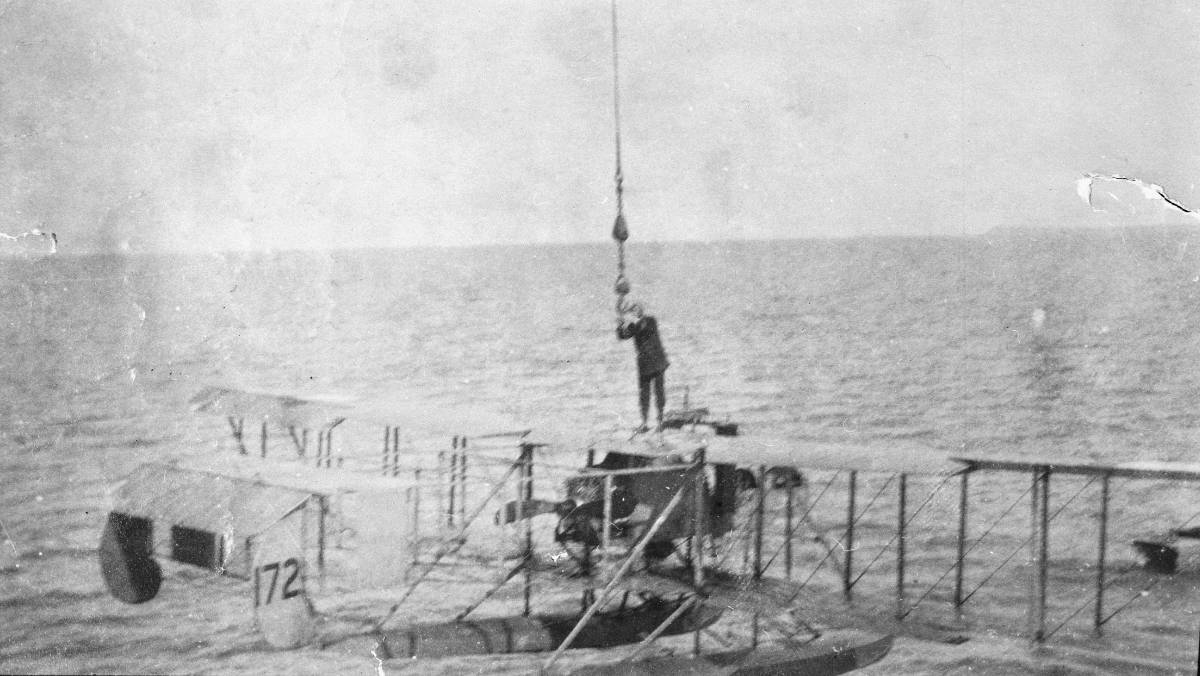
She was slow – ‘11 knots all out’ – but her hold took seven seaplanes. She sailed on 1 February 1915, called at Malta, and reached Tenedos on 17 February. That afternoon Bromet flew Wight seaplane No. 172, with Flight Commander Hugh Williamson as his observer, on the first reconnaissance of the Dardanelles forts.5 It carried two 20-lb bombs, though not for the reason one might think:
‘The bomb dropping carried out at this time was of a very crude nature and more for amusement’s sake than anything else. Indeed the real reason why No.172 carried bombs was to reduce her tail heaviness, and it was thought that bombs were the best to carry because they could be dropped to the discomfort of the Turk on the completion of a flight when tail heaviness no longer mattered.’
The fleet opened its bombardment of the outer forts two days later. The seaplanes reconnoitred, but the ships did not want them spotting: ‘no reliance was placed in aircraft assistance at this time’. Then the weather closed in, and nothing flew from 20 to 25 February.
Ark Royal’s captain, Commander Robert Clark Hall, had two problems. Everyone wanted his seaplanes, and he could not replace them. Bromet put it like this:
‘There was every reason to wish to tax the seaplanes to their utmost limit because we were getting requests for work from all sides, but we had to remember that the seaplane was really but a “river plane” and that new machines and spare parts could not be got within six weeks of being asked for.’
Clark Hall decided to husband his machines, and to make spotting for the fleet their ‘primary function’. Bromet recalled that ‘although we came in for a certain amount of criticism and ridicule at the time, none of us had any doubt that it was the correct policy.’ The first of many successful shoots came on 5 March, for HMS Queen Elizabeth, with Flight Lieutenants Dunning and Kershaw in Sopwith No. 922. The ship talked to the seaplane by searchlight, and ‘all her W/T signals were received without difficulty.’
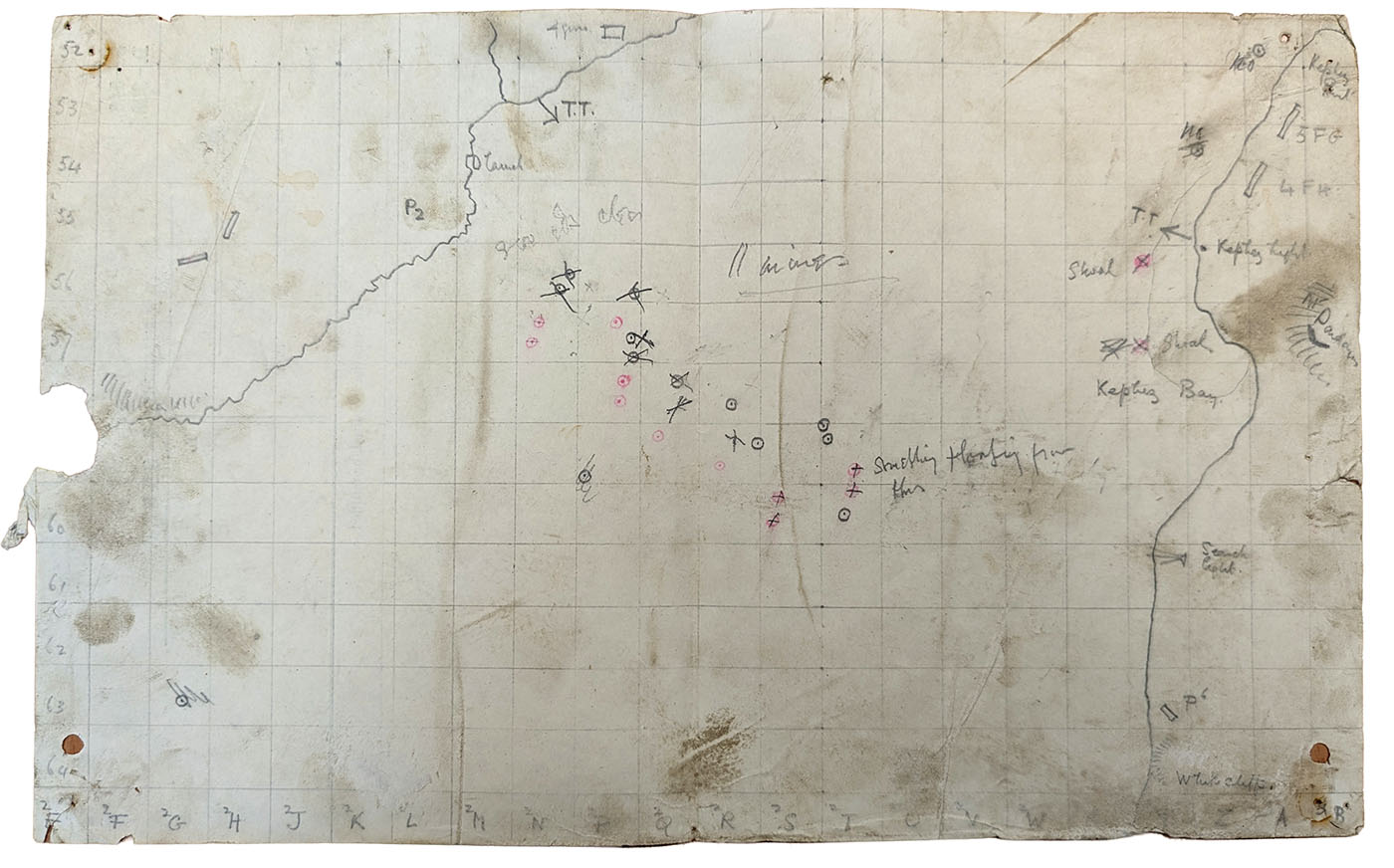
Bromet attached one of his own flying reports to his paper. There was no official form, so Ark Royal made one up, and reports were written ‘on any convenient piece of paper of foolscap size’. On Saturday 13 March 1915 he and Sub-Lieutenant W. Parke, RNVR, took No. 172 up the Straits at 2,500 feet, to look for damage to the forts and for any attempt to raise a sunken French submarine. They were in the air for an hour and a half. Their report lists new gun emplacements, trenches, a camp of 200 to 300 tents screened with branches, and the minefield:
‘MINES. – The line of mines previously reported between Kephez Light and Swandere River was again seen; 13 mines were counted there. One detached mine was seen in 2 O 63. A number of other mines were observed between Chanak and Kephez Point. All those seen appeared to be placed towards the Gallipoli shore leaving the Asiatic side clear.’
On 18 March the fleet tried to force the Narrows. Ark Royal’s job that day was ‘to patrol the scene of operations throughout the day reporting the result of gunfire and any other matters of importance seen.’ By evening three battleships had been sunk by mines, and Bromet drew the conclusion everyone else drew: ‘until some adequate measures could be adopted to overcome the floating mine menace further operations on a large scale inside the Straits were out of the question.’
Not everything in the Aegean was what it seemed. Returning from Imbros on 9 March, Bromet passed two dummy battleships, merchant ships dressed up as HMS Tiger and Indomitable.
‘They were extremely clever imitations, and quite capable of hoodwinking anybody at long ranges,’ he wrote, ‘but it seemed unfortunate that their merchant ship sterns had been left so pronounced.’
Samson arrives: Tenedos, March–April 1915
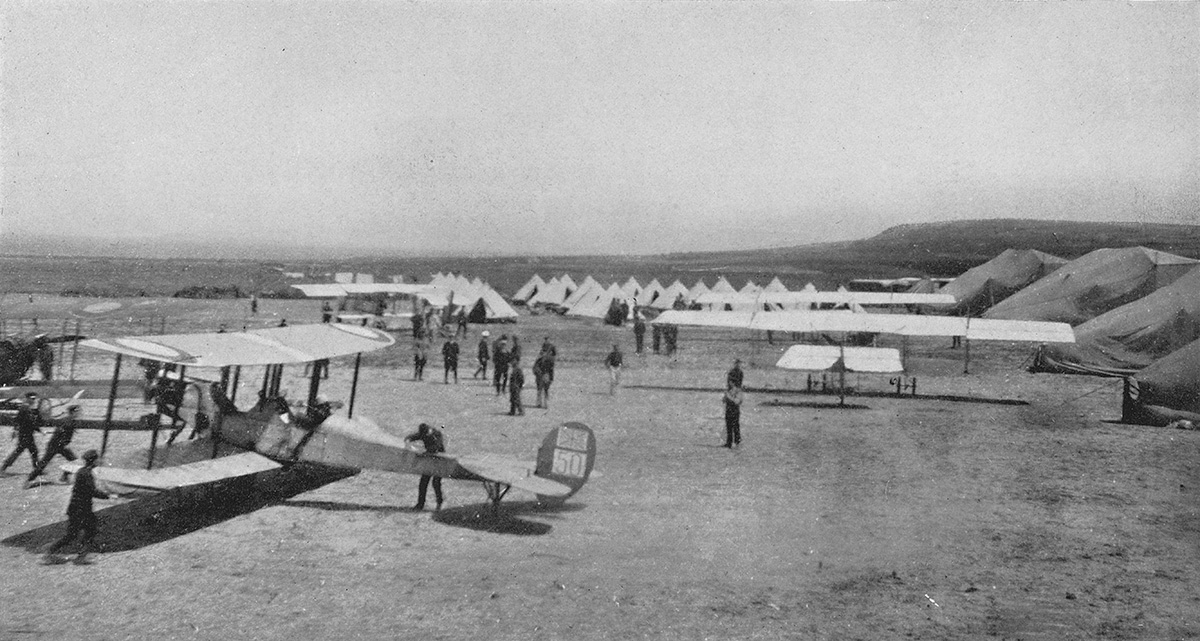
While Ark Royal worked the Straits, the Admiralty sent out an aeroplane squadron. Commander Charles Samson’s No. 3 Squadron RNAS had spent the winter in France and Flanders, and in February 1915, Lieutenant Richard Peirse recalled, ‘we received orders to return to England, to embark without delay and proceed to the Dardanelles.’ They took what aeroplanes they could collect, mostly 80-hp Henry Farmans in packing cases, and sailed in the small transport Inkosi.
On what Peirse thought was the last day of March, the transport arrived off Tenedos at dawn, in a cold northerly wind, and the crew spotted a tent on low ground on the north-west side of the island. Peirse was sent in with a cutter of provisions and a collapsible boat to find a landing place. The shore turned out to be rocky, the sea was breaking heavily, and the steamboat that was meant to tow him back lost its nerve and returned to the ship:
‘There was then no alternative but to turn and run ashore and this we did, spilling ourselves, the boat and its contents on the uninviting beach.
‘It is not my intention to describe the discomforts of the succeeding week whilst the weather precluded any communication with the transport, the inadequate tent in a sea of mud, the acute shortage of food and the despondency of those already ashore by the discovery that the cases which floated ashore with us contained, not biscuits but pyrene fire extinguishers.’
Everything – aeroplanes, stores, bombs, even the workshop lorries – had to come ashore the same way, in ships’ boats, onto an open beach. Even so, ‘machines were in the air forty-eight hours after disembarkation commenced’.
Out on Ark Royal, Bromet watched the new squadron arrive with mixed feelings:
‘We felt very bitter at this time on hearing that Commander Samson’s squadron was to consist of 21 aeroplanes. I don’t think our soreness was really justified but it was occasioned by the knowledge that whereas we couldn’t get a single spare seaplane sent to us the Air Department were only too ready to provide a squadron of aeroplanes and give them all their wants.’
When stores did arrive, it was ‘exasperating and disheartening beyond all description … to find that the complete machines were covered in salt water and rust’. Of ten propellers sent out with two new machines, ‘only 4 arrived in a serviceable condition!’ Ark Royal’s report home on 11 April ended with a plea: ‘Since leaving England on last February I have received no single intimation of what is being sent out to me or any answer to my various cablegrams’. Years later, Bromet had not softened: ‘We could find no excuses then for the lack of support we received from the Air Department and for the shocking supply arrangements, and I can find none to-day.’ With hindsight, though, he thought the real mistake lay elsewhere. Had Samson’s squadron been sent out in February, with the seaplanes, ‘the value of their cooperation would have been immense.’
The seaplanes were proving their worth all the same. By 17 April, Ark Royal reported, the Commander-in-Chief had found seaplane reconnaissance ‘of such value that he now desires to keep a machine permanently on board “Minerva” and “Doris”’. Bromet worked out that her machines were averaging 3.6 hours’ flying a week each, against 2.1 for the aeroplanes in Flanders: ‘The comparison may or may not have been a fair one; I don’t pretend to know, but the figures served to show us that we were working well up to average in spite of bad luck and disheartening machines.’
The enemy’s aircraft appeared at about the same time. On 28 March an enemy machine bombed Ark Royal as she lay stopped off the entrance to the Straits. It carried only two bombs, but ‘she made fairly good shooting with both of them’.
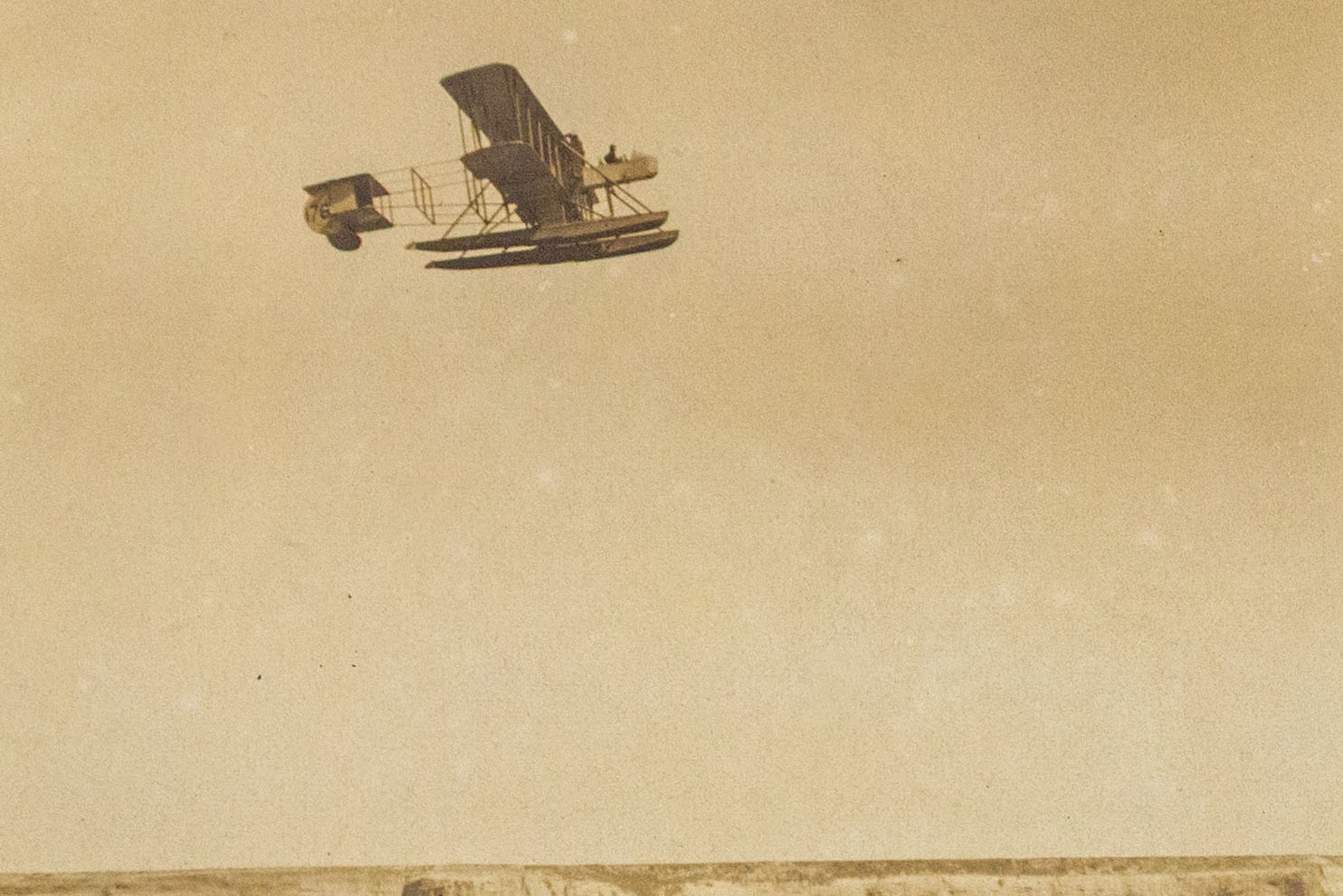
Before the landings, Ark Royal was sent south to the Gulf of Smyrna to look for Turkish torpedo boats, which had been harassing Allied shipping. At dawn on Easter Day, 4 April, two Sopwiths and a Wight were hoisted out with full loads of 20-lb bombs. Only the Wight reached Smyrna:
‘Present day armament officers would open their eyes in horror at the sight of a machine getting off the water in the manner of Wight No. 172 on this occasion. The swell having completely upset the bombs in their between-float carriers the observer climbed down, adjusted the safety pins again, and then transferred the bombs from their carriers to his lap in the observer’s cockpit. Four 20-lb. bombs were thus conveyed to Smyrna and hurled at the decks of three torpedo boats which were under way in the harbour!’
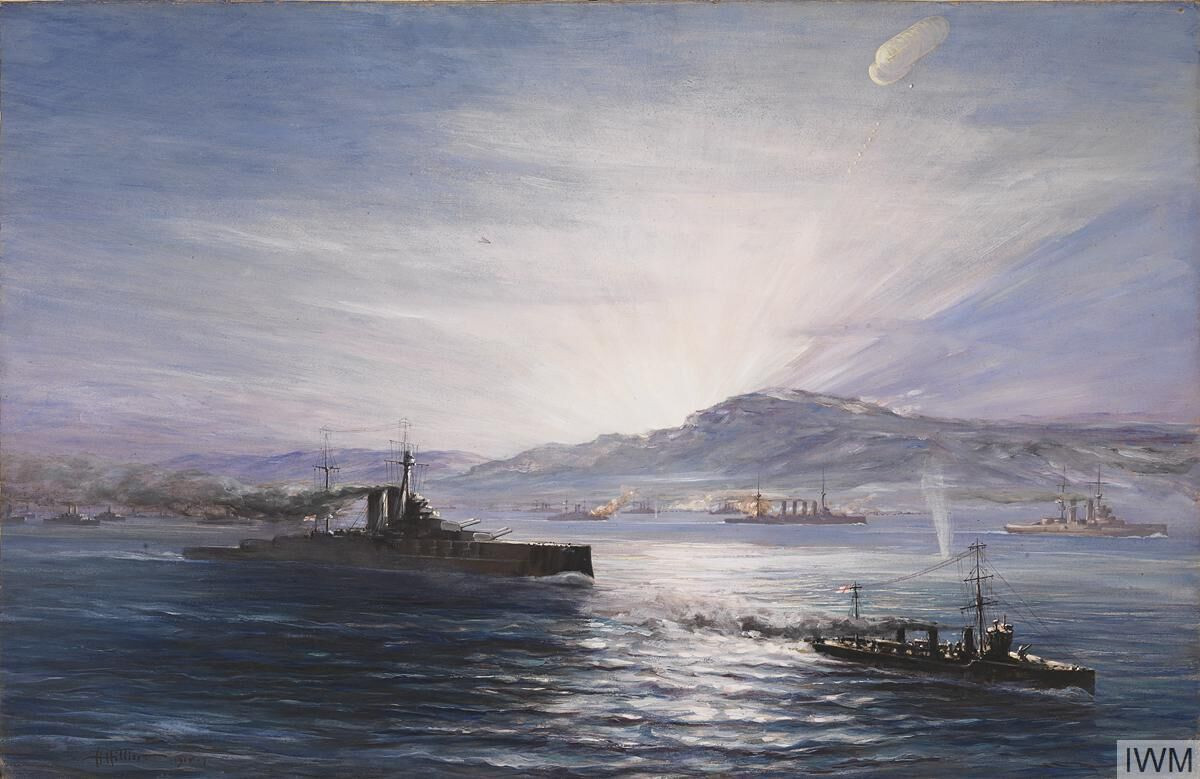
By mid-April Ark Royal was back at Mudros, where the invasion fleet was gathering. ‘What a wonderful harbour!’ Bromet wrote. ‘I counted as many as 91 transports and 26 men-o-war from the deck of the “Ark Royal”’. A kite balloon section had arrived too, and the seaplane pilots were ‘inclined to treat the kite balloons with good natured contempt’ – though Bromet admitted in the end that the balloons ‘took a good deal of work off our shoulders and were responsible for some excellent shoots.’
The landing, 25 April 1915
Thomas Howe was not yet an airman. Born in County Down and educated at Dover College, he had been growing fruit in Tasmania, and was now Private 1212 of the 12th Battalion, AIF. His first sight of military flying had been some Farmans patrolling the Suez Canal at the end of January 1915.6 His battalion reached Mudros in March, packed into the old P&O liner Devanha, and he noticed an aeroplane there too:
‘One evening an aeroplane flew high above us but I do not know whether it was an enemy taking photographs or not – it was certainly a great opportunity. I have since learnt that our own pilots and observers were busy at this time noting new trench and gun positions and that a member of General Birdwood’s staff was actually flown over Gaba Tepe before the landing.’7
On the afternoon of 24 April the transports sailed. Ark Royal, with the balloon ship HMS Manica, anchored for the night off Kephalo Point on Imbros, and at 2.30am on 25 April moved to her station off Gaba Tepe. Howe’s battalion transferred to the destroyer HMS Ribble at 11pm, and at about 5am he was woken ‘by the sound of bullets pattering against the steel sides of the destroyer.’ His boat was towed inshore by a pinnace, ‘the still air being rippled by the constant stream of bullets’, and he and his mates ran for the shingle bank. When the firing slackened, he looked round and saw the Ark Royal seaplane draw the Turkish fire. Another aircraft, he noted, ‘spotted the Triumph on to the Torgud Reis in the Narrows thus causing her to cease fire from her 11-inch guns over the peninsula’.
As the day went on, Turkish field guns caught the Australians on the heights before they could dig in. The airmen could not find them. Howe explained why they kept flying anyway:
‘These guns were well concealed from the air and consequently the seaplanes could not find them, but the presence of aircraft overhead prevented the Turks from firing for fear of detection. For this reason the machines remained in the air as much as possible during the day.’
Bromet, above him, had reached the same conclusion from the other direction:
‘During these operations (at any rate in the early stages) we found that the presence of aircraft over the enemy’s head had a very marked effect in keeping his fire down. This discovery was very heartening because we hadn’t had much luck with the information we were able to give to the troops, and we badly wanted to prove of some real value to them.’
The scrub was the problem. The Army’s gunners were sure an expert would do better, so ‘our very capable observers were told to swallow their pride and give a real live soldier a chance to “penetrate the scrub”. The expected happened, however, and the gunner officer, having failed to locate anything fresh, reported that the country made it extremely difficult to find battery positions etc.’
The next morning Howe watched Queen Elizabeth bursting 15-inch shrapnel over a Turkish counter-attack. It was then, he wrote, that ‘the Ark Royal intercepted a signal from the shore “Q.E., range and line correct; give them beans.”’
‘No doubt this message was appreciated by those on board,’ he added, ‘but the supply of shrapnel was strictly limited.’
Of the 136 officers and 4,016 men of his brigade who landed, 62 officers and 1,803 men became casualties in the first few days. Howe was one of them, wounded on 28 April and taken off: ‘It was with great reluctance we left our comrades on shore.’8
Twelve days after the landing Bromet went ashore at Anzac himself, to look for somewhere to fly from. ‘I could not find an aerodrome, but I found an excellent lunch and much encouragement from General Birdwood who impressed upon me the value of the seaplane as a means of keeping down gunfire.’
Summer 1915: the work settles down
In late May the first German submarine reached the Dardanelles: U-21, under Kapitänleutnant Otto Hersing. Private John Bell, a signaller in the 12th Battalion, AIF, watched its first success from the trenches at Anzac. Like Howe, he later became an airman, and he wrote his paper at Andover as a flight lieutenant in the Royal Australian Air Force:
‘On 25-5-15 “Triumph” was in action about half-mile off Gaba Tepe. At 1.25 p.m. there was a terrific explosion on her seaward side, she heeled over at once, turned turtle in 11 minutes and in half an hour had completely disappeared. As she was turning over we could see the crew jumping from the side and struggling in the water. Four destroyers came up from Helles direction at full speed, and trawlers and other craft went to the rescue. The Turkish batteries fired on the scene while the rescuing parties were at work. This event depressed us all very much and the subsequent disappearance of all shipping, particularly the cruisers, created an uneasy feeling of insecurity.’
Two days later, as Bromet put it, ‘the dreaded submarine’ sank HMS Majestic off Cape Helles. Ark Royal was ordered to reduce her draught and stay out of harm’s way off Kephalo Point, and from mid-June her seaplanes worked from a shore base on the beach by the lagoon at Kephalo Bay, the machines in the open and the men under canvas. Flies brought dysentery to practically the whole camp until fly-proof dugouts brought it under control.
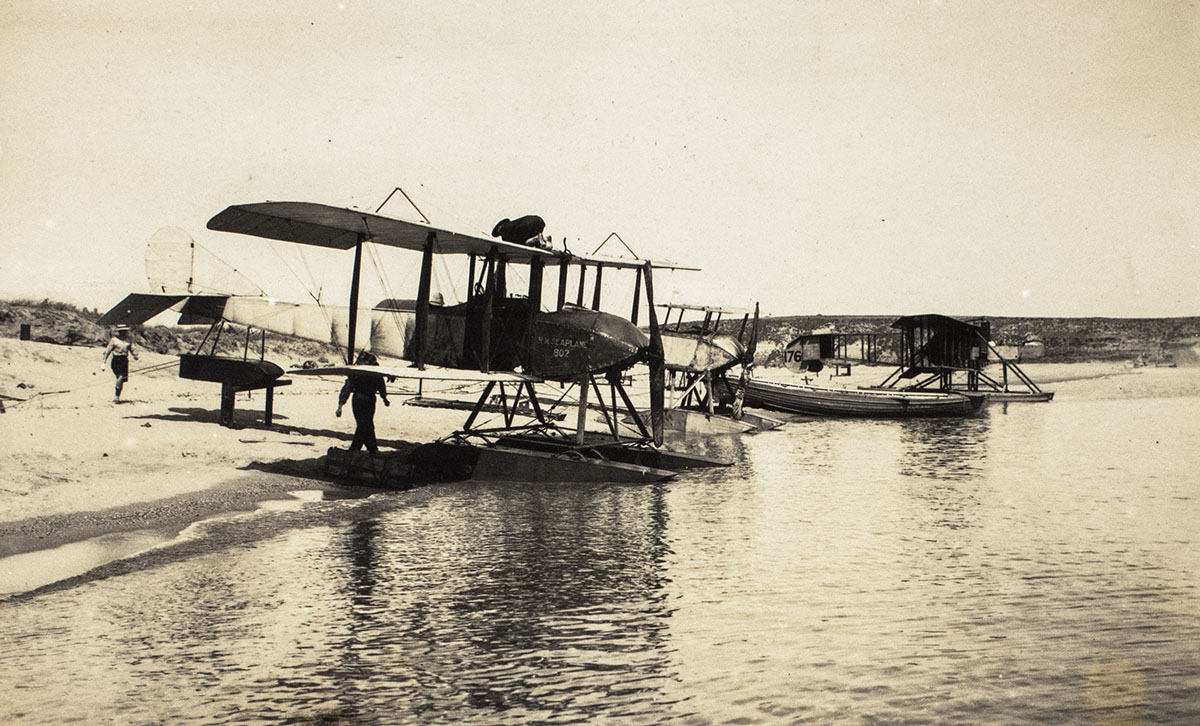
Two newcomers joined the air effort that summer.
Captain Andrew Walser had qualified as a pilot in September 1914 while serving with the London Regiment, and was with No. 11 Squadron RFC, then forming at Netheravon, when he was told to report to the War Office. He was to relieve Major R. E. T. Hogg, a British Indian Army officer lent to the RNAS to work with the Army.9 He reached Tenedos after ‘some weeks’ delay’, and found the squadron flying a ‘heterogeneous assortment of aeroplanes’ – Henry and Maurice Farmans, Voisins, Nieuports, a Sopwith, a BE2c and perhaps a Caudron: ‘they were a curious collection!’
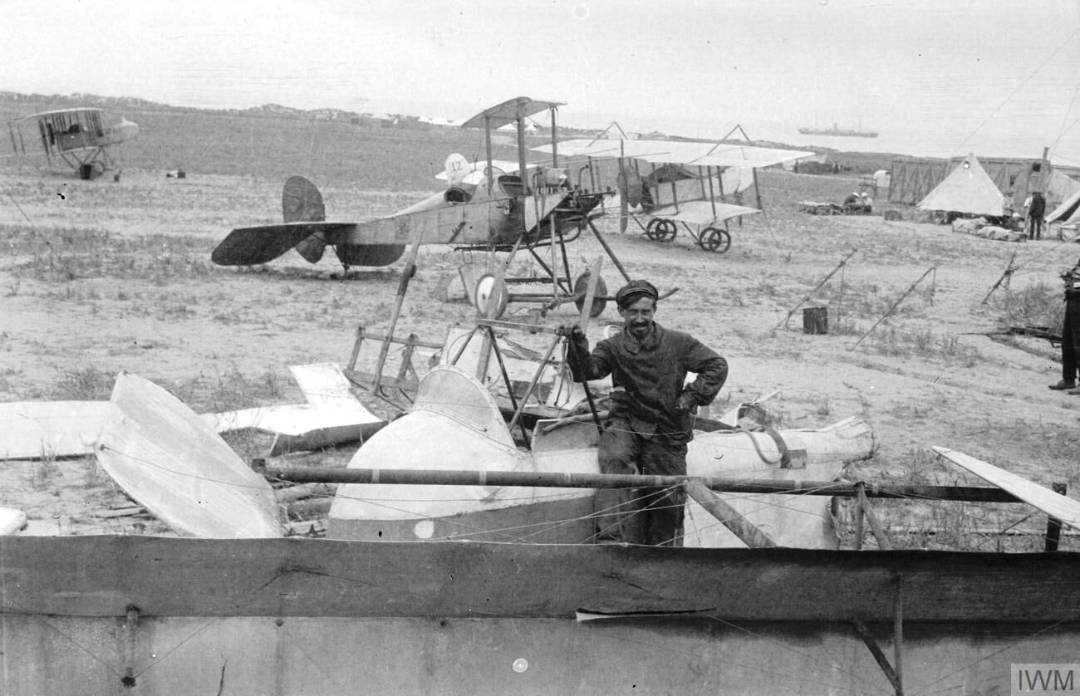
Lieutenant Conway Pulford came from the Navy proper. He had served in the 2nd Destroyer Flotilla with the Grand Fleet, learned to fly at the Central Flying School over the winter, and instructed at Chingford before being sent out to Ark Royal in June 1915. His first encounter with the staff at Mudros did not impress him:
‘I shall never forget on asking the Naval Intelligence Officer on board the Europa at Mudros where the Ark Royal was, His reply that “he really didn’t know, but he thought she was at Imbros” filled me with contempt for his ability. Such a thing could never have occurred in the Grand Fleet.’
For Walser, the work meant flying and talking. Besides spotting and reconnaissance, he had to ‘see General Simson-Baikie, General de Rougemont or Colonel Peel and arrange for co-operation.’ It was slow: ‘a personal interview would take the whole day.’
Walser knew the airmen had their critics: ‘One sometimes reads that the Army on Gallipoli suffered from lack of air assistance; but if this was so, it should be borne in mind that we laboured under great difficulties.’ Some of the machines, like the Breguet, ‘could never even be coaxed into the air’, and the rest were flown in hard conditions:
‘We were forced to fly 11 miles over water in second-rate land-planes, without any sort of flotation gear or even life-belts, before we reached the scene of operations. Our machines were kept pegged out in the open so that they continually suffered from engine trouble, caused by sand in the engine, and a forced landing under the most favourable circumstances meant a “dip in the ditch,” as there was no suitable landing ground on the Peninsula, except at Helles, which was generally being shelled.’
Most of them carried empty petrol tins, which ‘proved indifferent lifebuoys’. Once, coming down some miles out to sea in an old Voisin, Walser lost his with the wreck and was not picked up for a long time: ‘I went through all the sensations of drowning and remember that they were not at all as unpleasant as is generally supposed.’
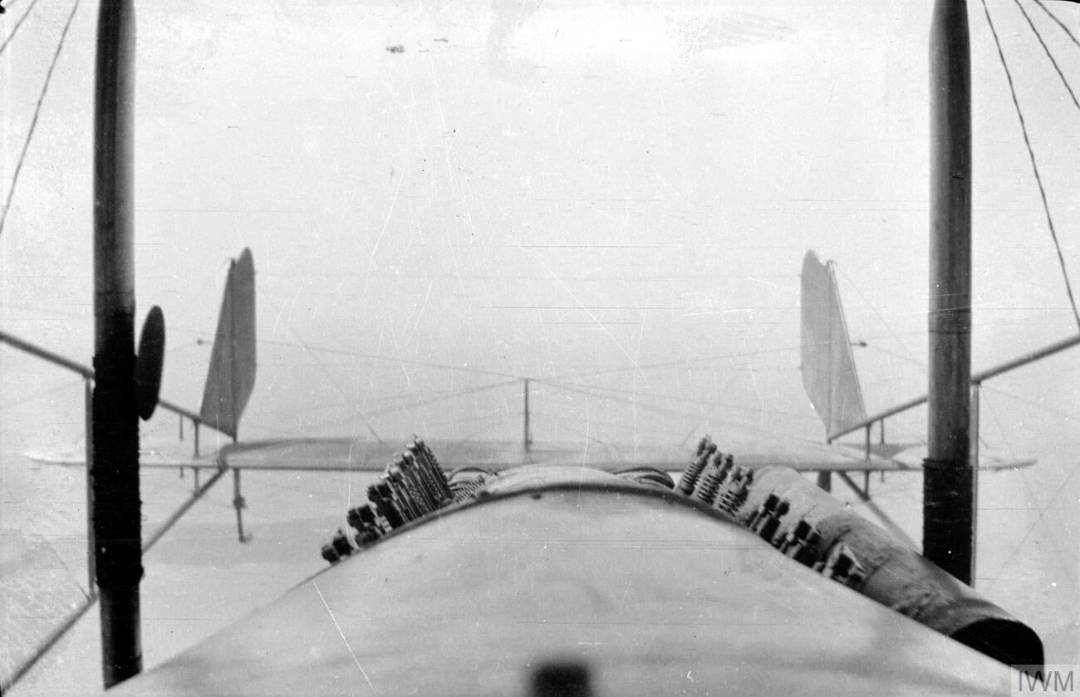
In the trenches at Anzac, Bell saw the results from below. ‘We used to be very elated when we saw our own aircraft up above,’ he wrote. On 11 June ‘“an aero” dropped 3 one-hundred-pound bombs on the Turks lines in front of us with a great explosion. (How we knew they were one-hundred pounders I can’t explain).’
‘We had no fear of enemy aircraft or “Taubes” as they were always called’, though one bomb landed in a latrine and killed a man, and the steel darts they dropped never hit anyone he heard of. Leaflets came down too. Walser’s squadron scattered ‘several hundredweight of propaganda on the Turkish lines, promising them good treatment if they would surrender’, and the Turks replied in kind; Bell remembered their invitation ‘to come over to the enemy where we would find comfortable homes, etc. etc.’ It ‘caused a certain amount of bad blood’, Walser noted.
Bell’s summing-up highlights perhaps the only aspect of air fighting not attempted at Gallipoli: ‘As far as I can remember organised cooperation between aircraft and infantry was not attempted at this time.’
Artillery observation was still done by calling ‘short’ and ‘over’, ‘left’ and ‘right’. Walser and his colleagues worked out a grid system on the French model, and the clock code only reached them at the end of the year. Pulford, on Ark Royal, saw the same change: the ships signalled to the seaplanes by searchlight, and ‘after a while the “Clock Code” was adopted.’ New observers found it hard to pick out the right target, so the seaplane pilots planned a miniature ‘Peninsula’ on the ground, with the battery positions marked, to teach them. It ‘came to nothing’ when Ark Royal left for Salonica. The ravines of the peninsula hid the bursts, so Walser flew his daily reconnaissance of the Turkish batteries at about 11 o’clock, ‘when the sun was overhead, as it was the only time when one could see down into the gullies.’ The long-range naval shoots were another matter:
‘Looking back on it now, it was really great fun. One could sit over the Peninsula at an altitude of about 10,000 feet and control the fire on two battleships.’
Peirse, flying from Tenedos, noticed that what told on a pilot was not the amount of flying but the fact ‘that each pilot had of necessity such a varied repertoire.’
‘It is no exaggeration to say that one might, (in the early days of the campaign) have carried out a dawn reconnaissance or bomb raid, registered a six inch heavy battery on the peninsula in the forenoon, and spotted the twelve inch guns of one of H.M. ships on to an Asiatic battery in the afternoon.’
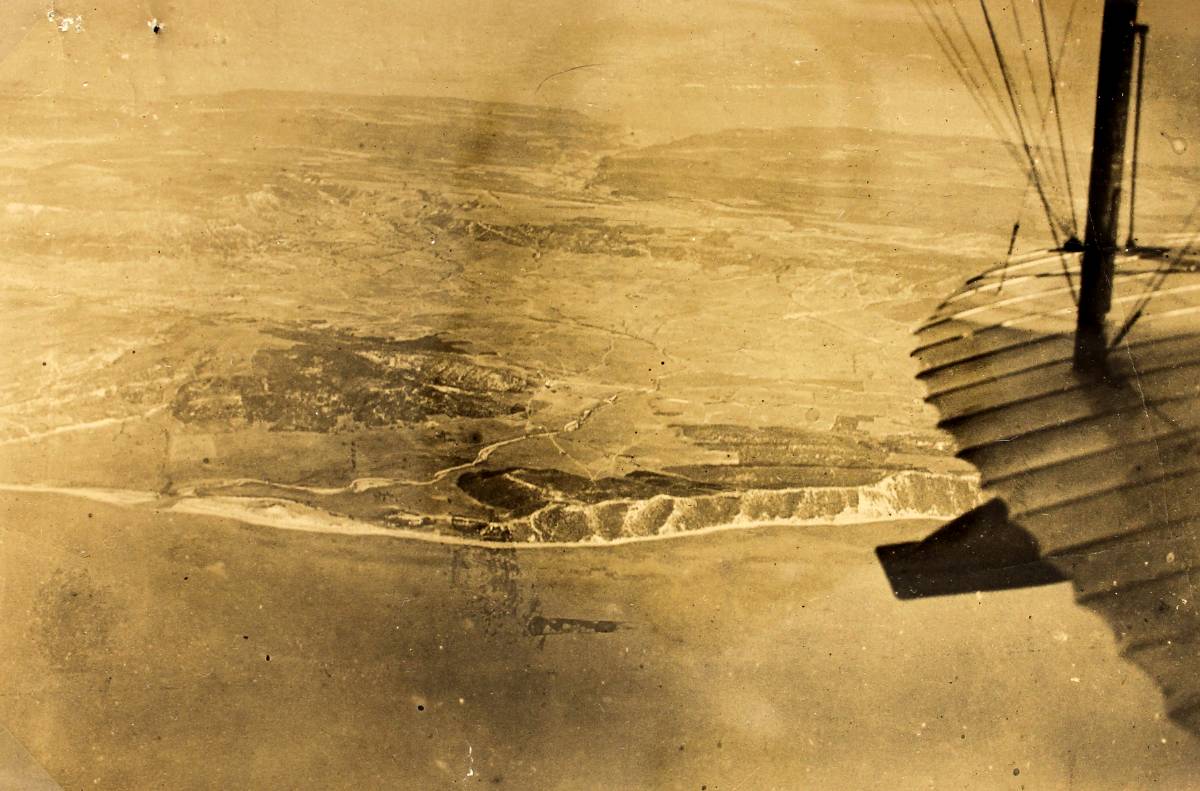
Photography was a new job, and a difficult one. The two-seaters could not climb high enough for vertical photographs, so Pulford took them from a single-seater with an RFC camera, which ‘was more in the nature of a juggling feat, since I think there were about eight operations which had to be done before a photograph could be taken’ – all with one hand, while flying with the other. The seaplanes had no guns to defend themselves until October, when two Lewis guns arrived.
Air fighting was rare. Walser carried a Vickers gun, but ‘as it had an ordinary belt, it would invariably jamb, every few rounds.’ The first air duel, as Bromet remembered it, came in the summer, when Flight Commander Collet of Samson’s squadron forced ‘an Aviatik to land in hostile country’.10
The bombing reached further as the summer went on, to Rodosto and Keshan and, once, to ‘the bridge near Adrianople’. Walser flew that raid as observer to Squadron Commander Richard Bell Davies. Coming down low over the bridge, their throttle wire snapped, or was shot away, and jammed the 200-hp Canton-Unné engine wide open. The only way to stop it racing was to climb, with 90 miles to go, a third of them over the sea:
‘Every time we climbed to 13,000 feet, Davies switched off and, on gliding down to ground level, switched on again with a shock that made it seem as if engine and aeroplane were about to part company.’
There were compensations. Walser and a newly joined observer found two paradox guns among the stores, meant for use against hostile aircraft. They ‘decided that this was against the Hague Convention and that it was more fitting that these weapons should be employed against the numerous quail and woodcock which were beginning to arrive.’ The afternoon shooting, Walser thought, probably kept them fit when most people were catching dysentery. In summer there was swimming too:
‘White lilies growing on the shore, silver sand running down to the deep blue sea; and as you floated lazily in the sun-warmed water, you could hardly believe that there “was a war on.” Yet if you turned half round towards the Peninsula, there were the battleships; there you could see an occasional shell bursting on the foreshore and up above there was sure to be an aeroplane – a small speck in the otherwise unbroken dome of blue.’
Imbros and Suvla, August–October 1915
At the end of July Samson’s squadron moved from Tenedos to Imbros, closer to the peninsula, ready for the new landing at Suvla Bay.
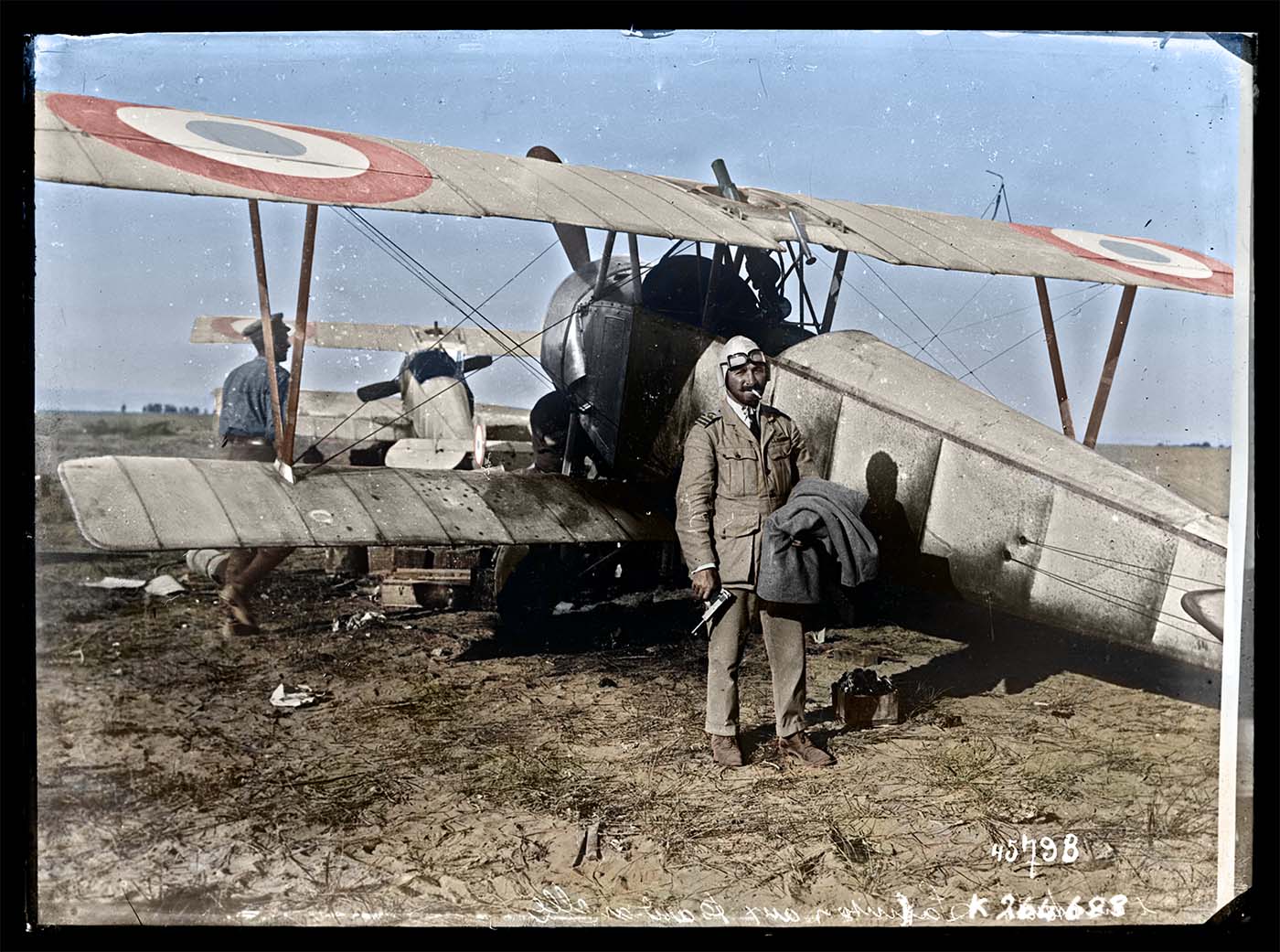
Walser did not think much of the new aerodrome:
‘Our new aerodrome was very bad. It was bordered on three sides by high cliffs and on the fourth by sand dunes, and was none too large at that. Several pilots killed themselves on this aerodrome: a missing engine on taking off meant a certain crash. Poor Collet was killed here. His death was very sad. One of the mechanics who pulled him out of the blazing wreckage was very badly burnt in doing so. He later received the Albert Medal, which he well deserved.’11
Imbros filled up with aircraft. On 15 August the SS Nankin anchored with a complete aeroplane squadron on board, and nobody had been told it was coming. ‘Astonishing though it may seem,’ Bromet wrote, ‘we were entirely ignorant of any intention to send another squadron out, and consequently no arrangements whatsoever had been made for their reception.’ Colonel Frederick Sykes came out at about the same time to take command of all the air units at Gallipoli. Walser noted that Sykes had been ‘turned temporarily from a cavalryman into a Colonel of Marines’ – for the purposes of discipline, he presumed. No. 2 Wing RNAS set up its own aerodrome near K Beach under ‘Major Gerard’.12
The seaplane carrier HMS Ben-my-Chree had brought out new Short seaplanes, and in August two of her pilots began practising with torpedoes. Ark Royal’s pilots wanted the newcomers for spotting and reconnaissance, and Bromet admitted, years later, how they had greeted the idea:
‘We other pilots were very ignorant, and thoroughly demonstrated our lack of foresight and imagination by throwing cold water upon the whole venture! This was when the practice flights were being done and we wanted to see these seaplanes helping us out with spotting and reconnaissance work. Perhaps we may be excused on this score, but I remember how we sneered at the idea of torpedoing anything which was well armed, and I think we must take chastisement.’13
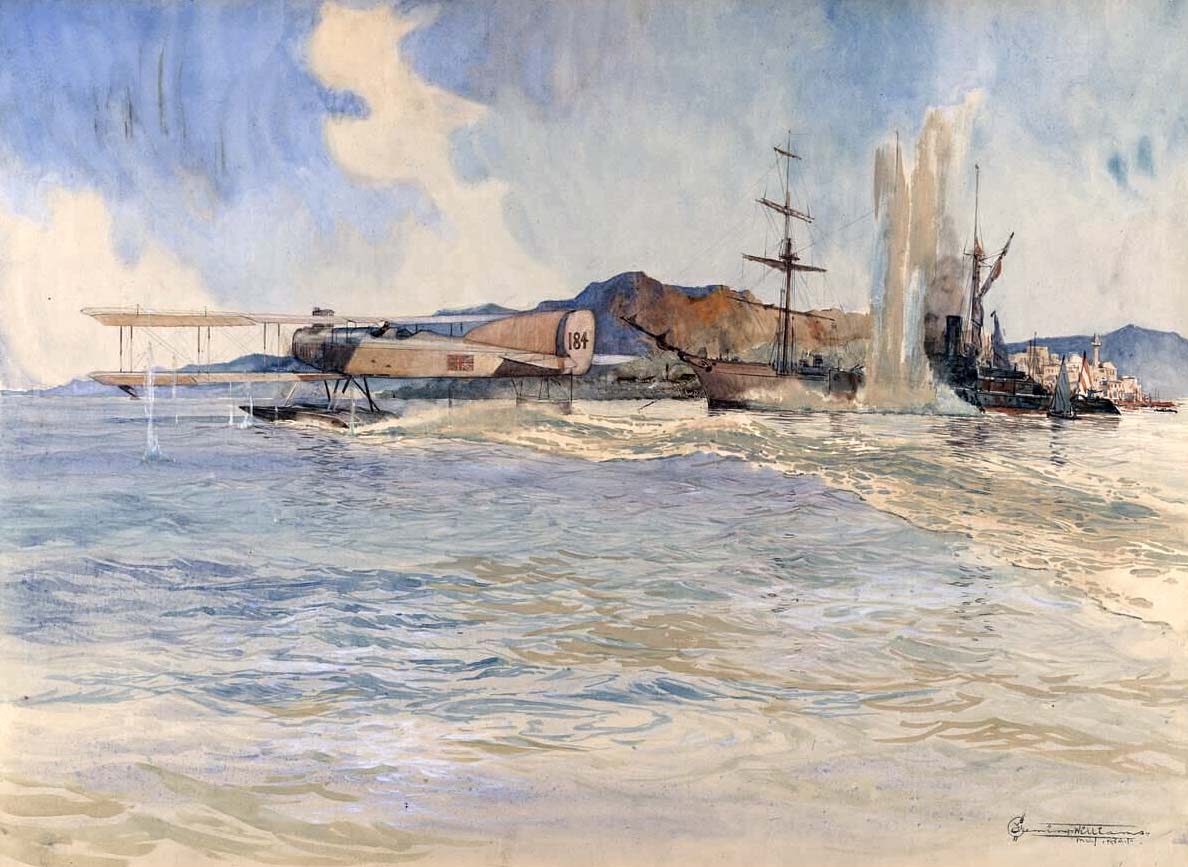
There were other ideas that summer. The British submarines in the Sea of Marmara were always running out of torpedoes, and someone suggested that seaplanes might fly new ones in and drop them at a rendezvous – ‘We were all enthusiastic over the project but for some reason or other (I really forget what) the idea was never put into execution.’ A simpler experiment found that an observer at 3,000 feet could make out a mine anchored 18 feet below the surface.
Bromet’s own war at the Dardanelles ended in September 1915, when he was recalled to England. The day after he reached London, the First Sea Lord asked him ‘some very embarrassing questions’, and he was relieved ‘at being able to feign ignorance on all points’. The Air Department left ‘a most unfavourable impression’ on him. After the keenness of the pilots and observers at the Dardanelles, ‘it was maddening to find an atmosphere of apathy and indecision’.
A new pilot had arrived in August. Flight Sub-Lieutenant Gilbert Smylie had spent six months in the ranks of the 4th Battalion, Grenadier Guards, before joining the RNAS at Hendon on 1 April 1915. His flying training was brief:
‘We were told what to do with the controls, when to switch off and on no account to attempt to turn in the air. We found the rest out for ourselves.’
He was not unusual. Walser, who flew with the newcomers as their observer, found that ‘some of them had only done about ten hours solo on any type of machine’, which ‘was trying for observers, especially for those who had been pilots.’
After a few weeks spotting for the naval guns with No. 2 Wing, Smylie moved in September to Samson’s No. 3 Wing, where the bombing was growing more ambitious:
‘Bombing raids were attempted on a scale bigger than I had seen before. Six or seven aircraft would be detailed to attack one target; times of departure were worked out so that aircraft of different performance should arrive over the target as nearly simultaneously as possible.’
Bombs of 500 lb were dropped regularly, wrote Smylie, ‘until the aircraft and a bomb were demolished by a direct hit from an A.A. gun.’
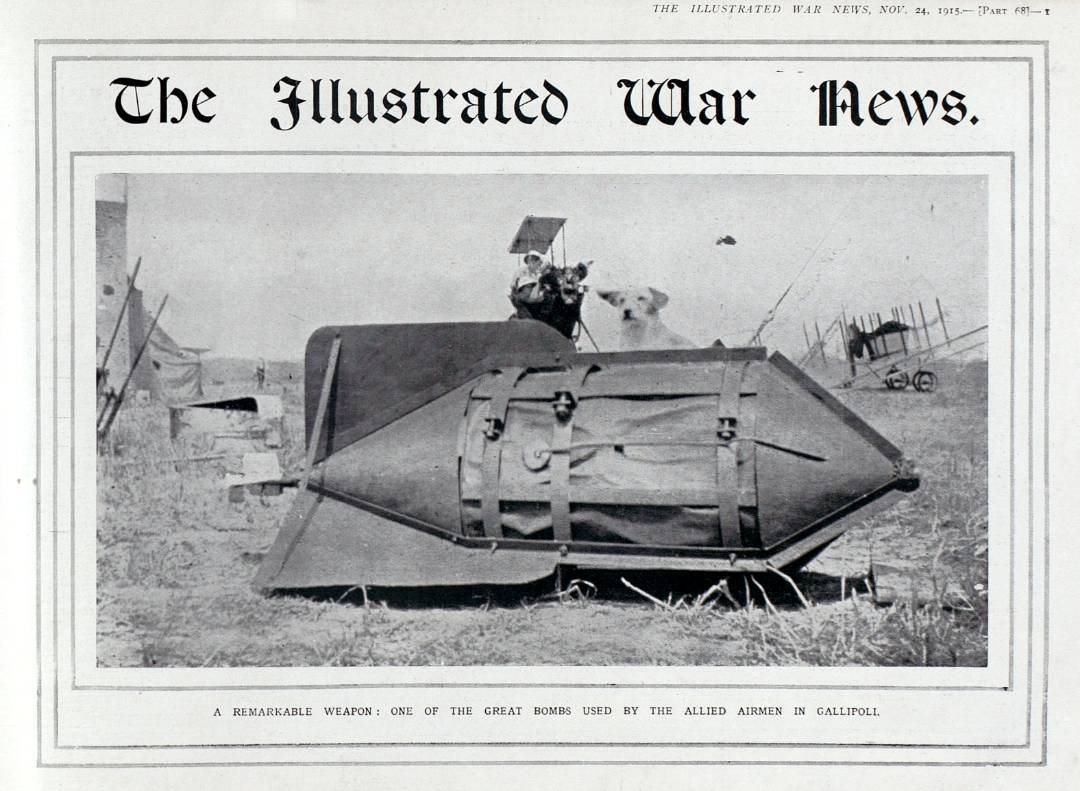
Imbros was now the principal British air base, and the enemy knew where to find it. Walser recalled that the Turkish bombs were mostly ‘futile or failed to detonate’, but one raid wounded two men and killed the cook. One large dud fell near the camp. The armament officer fixed a charge of gun-cotton to it and everyone took cover: ‘The bomb was hurled into the air, but tumbled back to earth apparently none the worse. Eventually, we detonated it by firing at it with rifles.’
The response on the ground was not always well directed:
‘Whenever a Turkish aeroplane came over, the scene which ensued was really laughable. Everyone would seize the nearest weapon to hand and blaze away. The ships in the harbour would cock up all available guns and fire, regardless of consequences. The result, naturally, was that our few hangars were hit by falling fragments.’
The squadron had two 3-pounder anti-aircraft guns of its own, mounted ‘with some difficulty on buried tree stumps’. It also answered in kind. After the cook was killed, ‘in order to pay them out for this outrage, we decided to construct a bomb ourselves and did so, out of small bombs, ammunition, petrol, &c. I really forget what it was made of; but it was very large and ugly, and no one liked the look of it. Commander Samson took it, on a large Henry, and dropped it into Kota Dere [Koja Dere?]. It certainly made a lot of smoke and caused us some amusement.’
When the Turks began bombing at night, the squadron flew night raids of its own, against the aerodrome at Galata and the seaplane base at Chanak. On the night of 19 September Walser and Flight Commander Reginald Marix bombed the seaplane base at Chanak: ‘On arrival, we found the place lit up, which was very helpful; but on our return we found that the Turks had been bombing our camp.’
Autumn 1915: Bulgaria, the weather and a rescue
In October Bulgaria entered the war on the German side, and the railway from Dedeagatch to Adrianople, which now carried supplies to the Turks, became a target. Smylie flew on the raids against its bridges and junctions, and recorded what they achieved: ‘however heavily the permanent way and bridges were bombed trains were running again in three to four hours.’
On the afternoon of 13 October the Maurice Farman flown by Flight Lieutenant Walter Newton-Clare, with Walser as his observer, lost its aileron control over the Suvla front and went into a spin:
‘We came down in a slow flat spin and eventually crashed on the Salt Lake without damage to ourselves. The Salt Lake is almost dry and hard in summer, and even at this time it was only slightly boggy; but it lay in front of our lines. Soon after we touched the ground, the Turkish batteries opened fire from all directions … I never worked so hard in my life, and when we fell exhausted into our trenches both Wally Newton-Claire [sic] and I were violently sick.’14
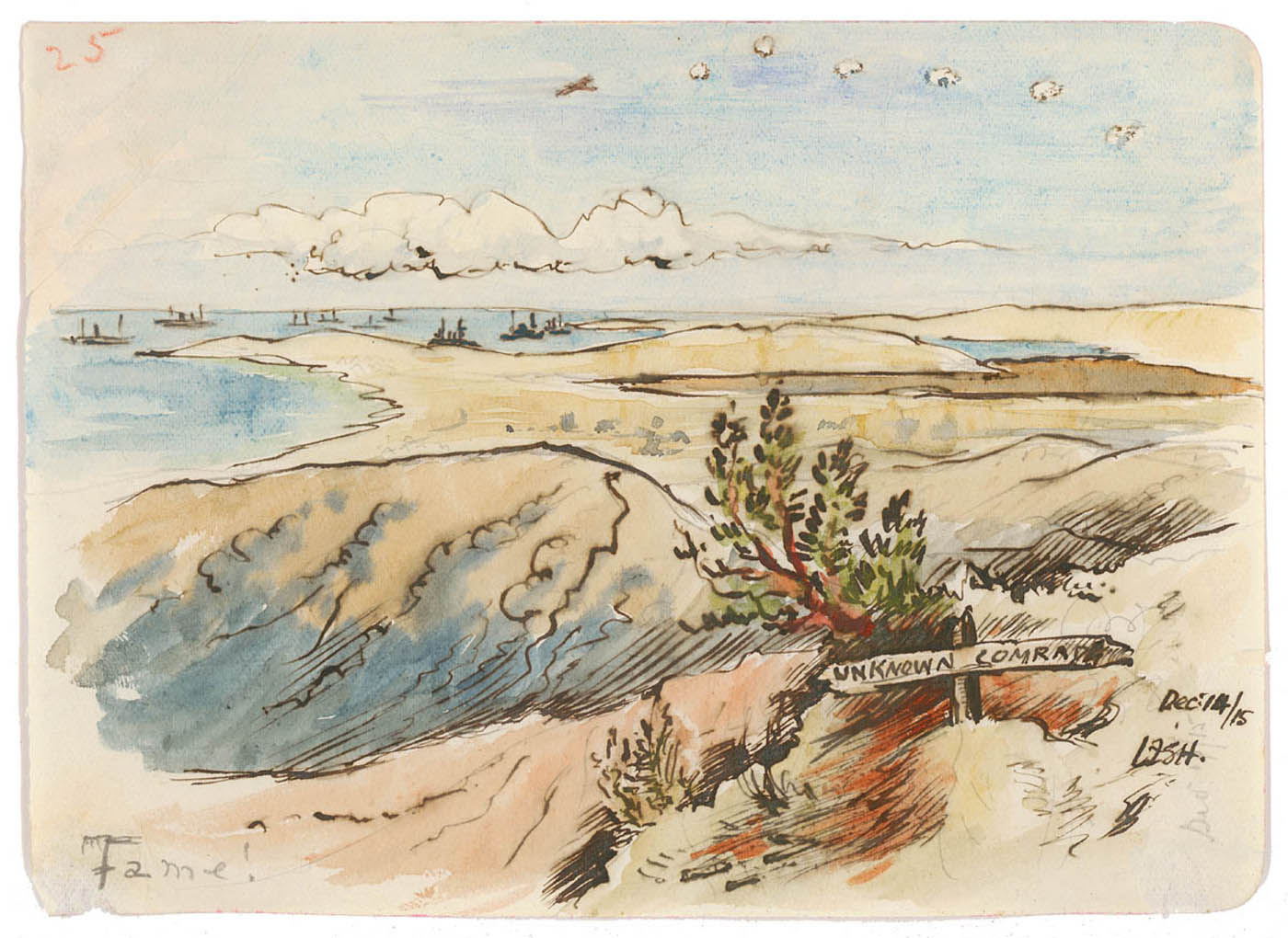
Walser spent a couple of days on the peninsula after the crash, and went across whenever he could; he heard some good stories there. One concerned Lieutenant General Sir William Birdwood, who liked to inspect the front line himself, and the Australian habit of firing in pairs over the parapet without much regard for loopholes:
‘General Birdwood: “Look here, my man, this won’t do, you haven’t got a field of fire of 100 yards!
‘Australian: Grunt!
‘General Birdwood: Don’t you understand me, what are you going to do if the Turks attack?
‘Australian: Oh! I get you! Why, get up on the b.....y parapet and shoot the b.....s.”’
Sykes had Walser try observing at night from the blimp, a small airship, for a ship’s guns firing in the dark. ‘It was an unpleasant sensation, being suspended under a sausage at 4,000 feet or less from the enemy’s trenches, and with only a rifle and a very limited field of fire as defence against aeroplane attack.’ His report was not favourable, and the experiment was not repeated.15
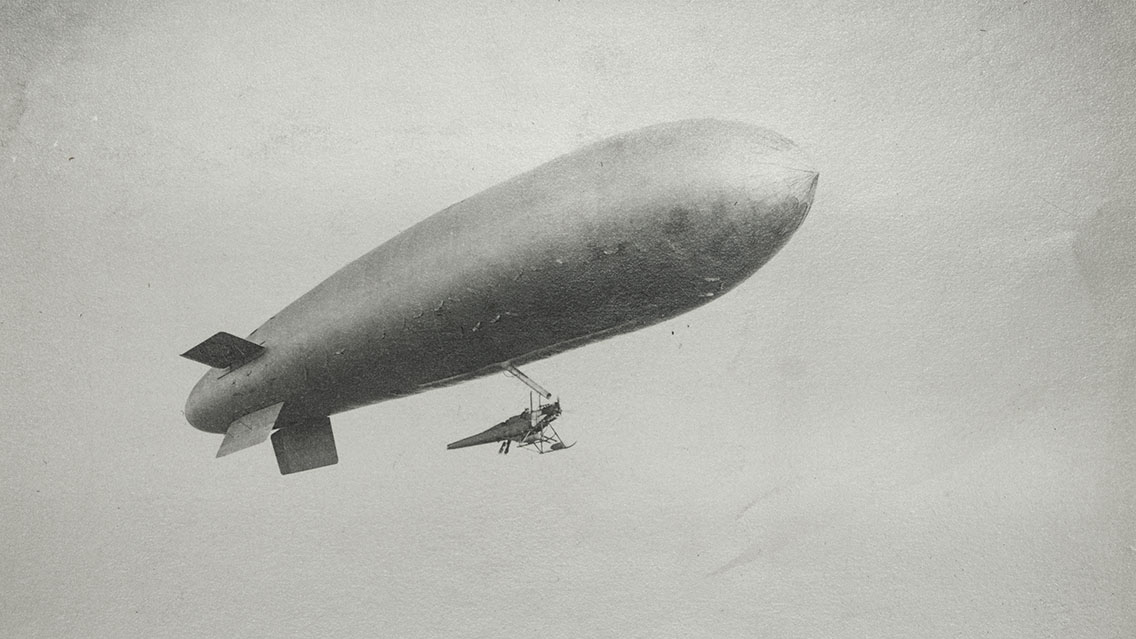
The autumn winds came in October. Tents gave way to huts built from aeroplane packing cases, and aircraft without hangars were kept on the ground by digging in the wheels and chocking the tail up into flying position. On 2 November a fire among the spares burnt for two and a half hours and destroyed almost all the squadron’s stores; the damage, Walser believed, came to about £30,000. He minded one loss more than the rest: ‘our two precious paradox guns’. Later in November the weather broke. After days of rain came a sudden frost, and men on the peninsula, many still without winter clothing, died of exposure. ‘That one night, I think, cost us as many casualties as a battle.’
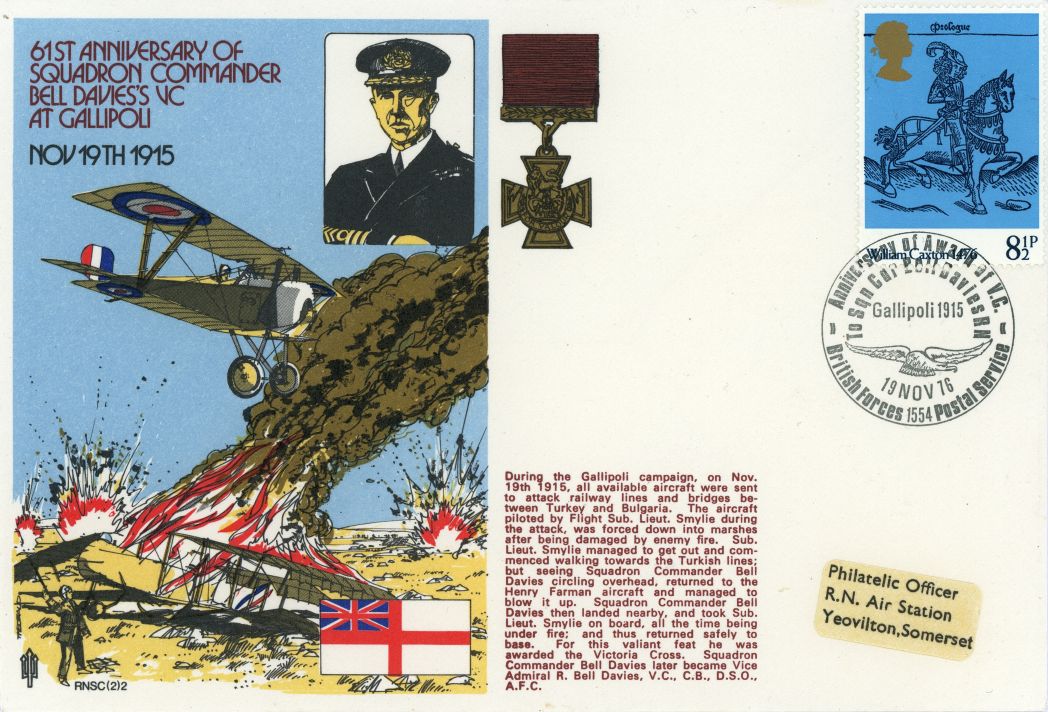
On 19 November the squadron raided Ferejik station, on the Bulgarian railway. It was Walser, not Smylie, who told what happened next:
‘A young pilot called Smiley [sic] who was flying solo in a Henry was hit in the petrol tank and landed in a marsh somewhere on the borders of the Maritza river. On landing, he set fire to his machine, which still had a few bombs on it and made off into the scrub, hoping to get into Turkish territory; because in those days we had an idea that the Bulgarians would treat prisoners less kindly than the Turks. A few minutes later, Bell-Davies, returning in a Neiuport [sic] and seeing a burning machine on the ground came down low to inspect. On seeing Davies, Smiley rushed out into the open and waved his arms, whereupon Davies immediately started to land. Meanwhile people were crossing the Maritza and were approaching the scene from all directions. Davies, however, landed, squeezed Smiley between his legs so that he lay at full length in the fuselage of the Neiuport and returned safely to Imbros.’16
Given ‘the meagre chances of getting away again after landing in this sort of country and the prevailing idea that the Bulgarians mutilated all prisoners caught bombing’, Walser thought the rescue ‘exceptionally gallant’.
Bell Davies was awarded the Victoria Cross, and Smylie the DSC: before his rescuer landed, he had exploded the last bomb on his burning machine with a pistol shot. Smylie’s own paper says nothing about any of it.
Ark Royal had left by then. In the autumn she went to Salonica, where Pulford spent the winter photographing the defences and flying submarine patrols.
Evacuation, December 1915–January 1916
By December, Smylie wrote, ‘there was very little call for aircraft.’ He volunteered for ‘the only A.A. battery we had’, four converted 13-pounder guns mounted on Packard lorries near Chocolate Hill at Suvla. When Suvla was evacuated, two of the guns went to Helles on pontoons, and the battery commander went sick on arrival. ‘I was left the only officer with the detachment; this was my first command.’ It was also the first time, he wrote, that he ‘saw trench conditions and how the soldier lived in the war area.’ The battery had little to do. Turkish aircraft sometimes tried to range guns on it, signalling ‘by dropping puffs of powder or confetti in a predetermined code’, but ‘they never got a shell near us that exploded.’
Walser, meanwhile, flew over Anzac and Suvla on the morning after they were abandoned:
‘All the camps were standing as if still occupied; but all round, great piles of stores were burning and, here and there, small parties of Turks could be seen moving along the roads.’
On Christmas Day the squadron played football, officers against men, until a Taube interrupted after half an hour. Nine months of continuous operations had taken its toll. ‘Some of the officers were incapable of running after about ten minutes, so we had to play in relays.’ Walser, run down after too much flying, was given ten days’ leave in Egypt. He was recalled from the trawler for a last reconnaissance of Achi Baba – ‘the only time during the war that I had a strong presentiment that I was going to be killed’ – and sailed a day or two later. In Egypt a cable told him to stay where he was, because Helles had been evacuated. In seven months at Gallipoli he had flown about 200 hours as an observer, and he thought it harder on the nerves than the two years he later flew as a pilot in France.
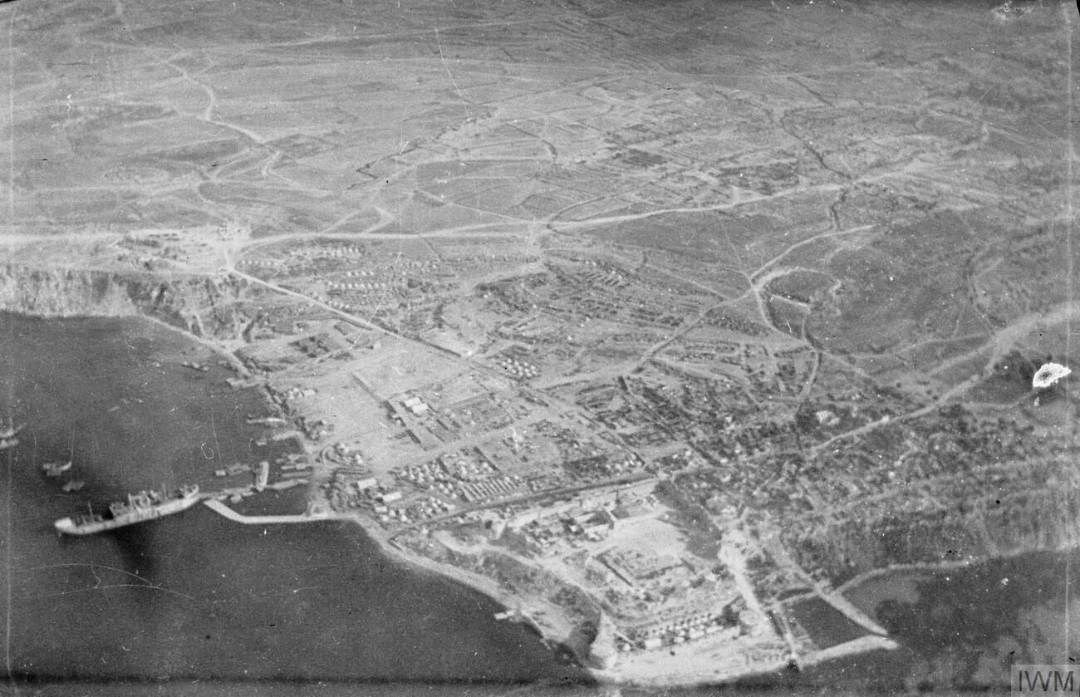
Smylie was at Helles to the end. He had been told the guns would go off on the last night to the SS Clan Macintosh, with slings provided, derricks to lift them and hatches big enough to take them below. He spent his spare time watching the beaches, where ‘the scene at night looked like an orderly nightmare. If one watched for a little time it appeared that everything had been arranged for.’ On the last night the pontoons came alongside at V Beach as planned. ‘After that,’ he wrote, ‘the arrangements were not so good.’ There was a nasty sea running:
‘The Clan Macintosh was a collier; her derricks had never lifted more than six tons, the guns each weighed nine tons. There were no slings. One of the gunners and I set to and made a pair of slings from some Steel rope we had brought with us “in case”.
‘After about four hours work, we got the first gun on board only to find that the hatch was a couple of feet too small to allow the gun to go through.’
The guns went on deck, and by the time they were stowed it was nearly dawn. As the ship moved off, the ammunition dump on shore was blown up:
‘We were all deafened for some minutes while a sheet of flame, at least a thousand feet high, lit the whole scene to almost daylight illumination.
‘The flame and noise died suddenly, fragments began to drop about us, but in our eyes there was a picture of the point, the ships and the small boats all tinted with that bluish glow experienced after looking into a strong red light.’
Smylie went back to Imbros, where life ‘settled down to reconnaissance of the Straits and Peninsular’, and returned to England in March 1916.
‘The contentious bone’
The papers were meant to teach, and Peirse ended his with the lesson he drew from Gallipoli:
‘Cooperation in the late war never stood upon a very secure foundation and in the early stages of the Gallipoli campaign it became very wobbly.
‘As an air unit we held a subordinate position to both the older services, each of whom expected much of our small force. Our difficulties were not simplified by the fact that no very tangible example of good and close cooperation existed between the land and sea forces.’
The airmen, he wrote, were ‘the contentious bone, between the Army and Navy’, fought over by both, and their commander had ‘the thankless job of endeavouring to please two masters. A job from which few “ha’pence” were forthcoming but many kicks.’ He put the trouble down to ignorance: between the Army and Navy it was ‘inexcusable’, but between the older services and the airmen it was to be expected, ‘when it is remembered that those in command of the respective forces had scarcely ever seen an aeroplane before.’
Others saw it the same way. Smylie, the youngest of the seven, put it most bluntly: ‘We were nobody’s children; we had no set role; the Navy distrusted us; the Army ignored us.’ Walser opened his paper with the point: ‘it is clear, in the light of present-day knowledge, that lack of co-operation between the Services caused some of our mistakes and accentuated many of our difficulties.’ Pulford, a naval officer, thought the Navy ‘did not consider aircraft very seriously. An attitude which, in my opinion, existed until the middle of 1917.’ At the Central Flying School he had resented being taught the length of an infantry brigade and its rate of march: ‘if that contingency was likely, why call us the Naval Air Service.’
Peirse’s advice to the new service was simple:
‘We must above all, as the connecting link between the fighting services, keep a very broad mind and clear insight into the potentialities and limitations of our elder brethren.’
The authors
Thomas Edward Barham Howe (1886–1970)
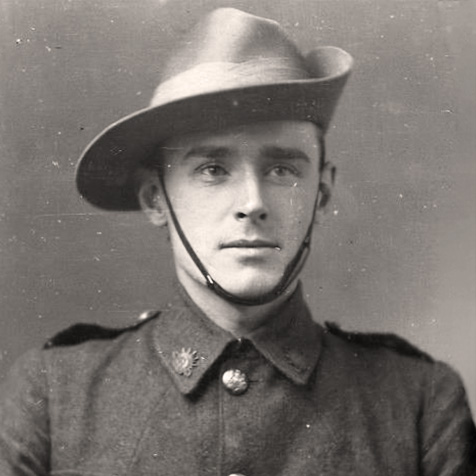
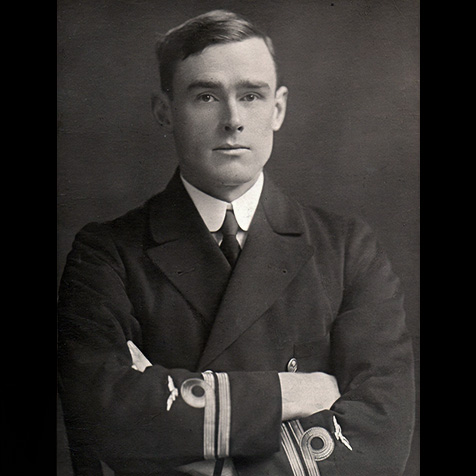
Born in County Down and educated at Dover College, he was a fruit grower in Tasmania when he enlisted in the AIF in October 1914. Wounded three days after the landing, he left the AIF in April 1916 for a commission in the RNAS. He instructed at Cranwell until August 1918, then went to France as a flight commander with No. 18 Squadron and won the AFC. After the war, at the Air Pilotage School at Andover, he made almost all the station’s meteorological flights for two and a half years, climbing to 17,000 feet twice a day, and won a bar to his AFC. Serving in HMS Furious, he won the Dunning Memorial Cup in 1926, and in 1927 made what is recorded as the first night deck landing. He commanded No. 203 (Flying Boat) Squadron in Iraq, was air attaché in Washington from 1935, and from 1938 commanded No. 17 (Training) Group, Coastal Command. He retired as an air commodore, CBE, in 1941, but served on in welfare posts until 1948. He died in 1970.17
Paper: ‘War experiences of Squadron Leader T. Howe, including landing of Australians at Gallipoli, April 1915’, written as a squadron leader, 23 September 1924. TNA, AIR 1/2387/228/11/44 https://discovery.nationalarchives.gov.uk/details/r/C4093042; also filmed by the Australian Joint Copying Project, reel 6883 http://nla.gov.au/nla.obj-910594109.
Geoffrey Rhodes Bromet (1891–1983)
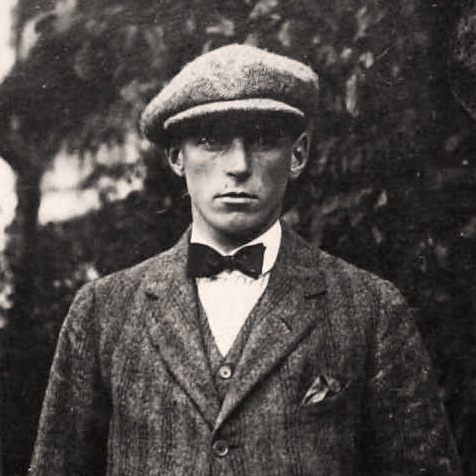
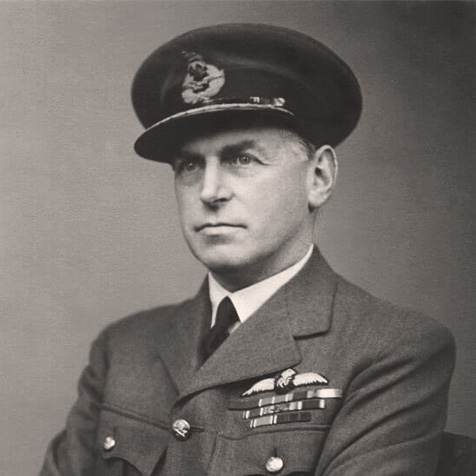
Educated at Bradfield and the Royal Naval Colleges at Osborne and Dartmouth, he went to sea as a midshipman in 1909 and learned to fly in 1913. He joined Ark Royal at the end of 1914, flew the first reconnaissance of the Dardanelles on 17 February 1915, and was commended for his service there. In October 1916 he formed Naval Squadron No. 8, the first RNAS squadron lent to the RFC on the Western Front, and commanded it on the Somme and at Arras until October 1917, winning the DSO. After the war he specialised in work with the Navy, commanding the School of Naval Co-operation and the Marine Aircraft Experimental Establishment at Felixstowe, and from 1936 he was Senior Air Staff Officer at Coastal Command. He retired in 1938 but was back at Coastal Command on the outbreak of war. He commanded No. 19 Group from 1941, and in October 1943 led the force that went to the Azores to set up No. 247 Group, which closed the mid-Atlantic air gap to the U-boats. He retired as an air vice-marshal, KBE, CB, in 1945, and was then Lieutenant Governor of the Isle of Man. He died in 1983.18
Paper: ‘War Experiences’, written as a wing commander on the Second Course, 1923–24. TNA, AIR 1/2387/228/11/30 https://discovery.nationalarchives.gov.uk/details/r/C4093028.
Richard Edmund Charles Peirse (1892–1970)
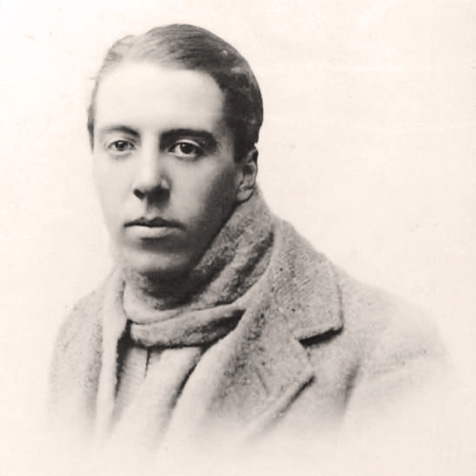
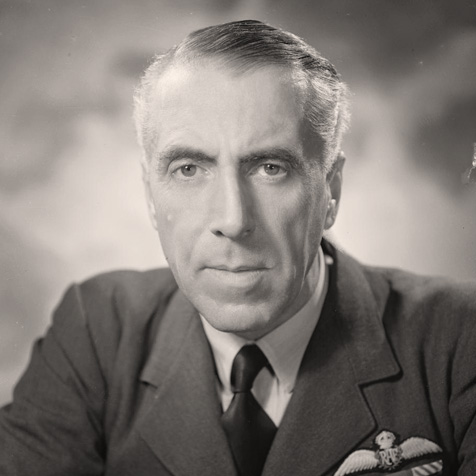
The son of Admiral Sir Richard Peirse, who in March 1915 commanded the squadron bombarding Smyrna, he joined the Royal Naval Volunteer Reserve in 1909, learned to fly in 1913, and was an instructor at the Central Flying School in 1914. With Samson’s unit in Flanders he bombed the submarine bases at Ostend and Zeebrugge, and he and Richard Bell Davies were both awarded the DSO for an attack on Zeebrugge in January 1915. He flew from Tenedos from March until at least July 1915, and was mentioned in despatches. Later in the war he commanded a squadron at Cranwell, where he gave Prince Albert, the future King George VI, his first flight. Between the wars he commanded in Palestine and Transjordan, and he became Deputy Chief of the Air Staff in 1937 and the first Vice-Chief of the Air Staff in 1940. He was Commander-in-Chief of Bomber Command from October 1940 to early 1942, then of the air forces in India, and from November 1943 of Air Command South-East Asia. His career ended abruptly in 1944, when he eloped with the wife of General Sir Claude Auchinleck. He retired as an air chief marshal, KCB, in 1945, and died in 1970.19
Paper: ‘War Experiences 1914–1915’, written as a wing commander, 1922–23. TNA, AIR 1/2386/228/11/3 https://discovery.nationalarchives.gov.uk/details/r/C4093003.
John Renison Bell (1889–1973)
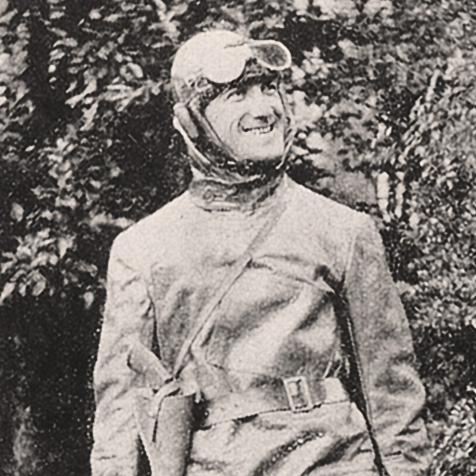
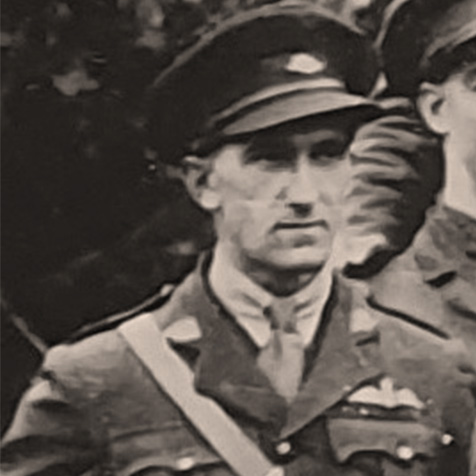
Born in Tasmania, he was an accountant at Devonport when he enlisted in the AIF in January 1915. He served at Anzac as a signaller with the 12th Battalion, and later in the Anzac Provost Corps, before transferring to the Australian Flying Corps in 1917. As an observer with No. 3 Squadron AFC he flew artillery observation on the Western Front, and on 7 December 1917, with Captain Anderson as his pilot, shot down a German two-seater. He trained as a pilot in 1918 and was mentioned in despatches. He joined the new Royal Australian Air Force in 1921, and was its Director of Technical Equipment from 1928 to 1939 and Director of Organisation from 1940 to 1945. He retired as an acting air commodore, OBE, in 1945, and died in Hobart in 1973.20
Paper: ‘War Experiences’, written as a flight lieutenant, RAAF, September 1925. TNA, AIR 1/2388/228/11/78 https://discovery.nationalarchives.gov.uk/details/r/C4093075; also filmed by the Australian Joint Copying Project, reel 6883 http://nla.gov.au/nla.obj-910610485.
André (Andrew) Adolphus Walser (1889–1966)
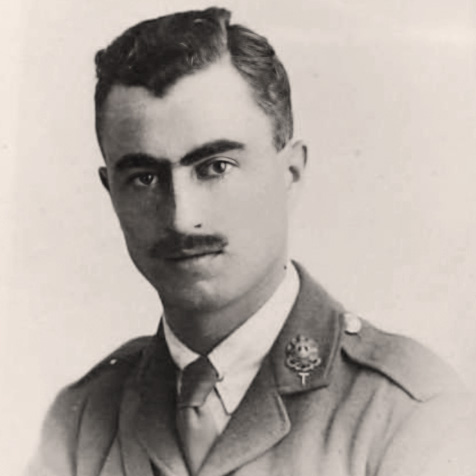
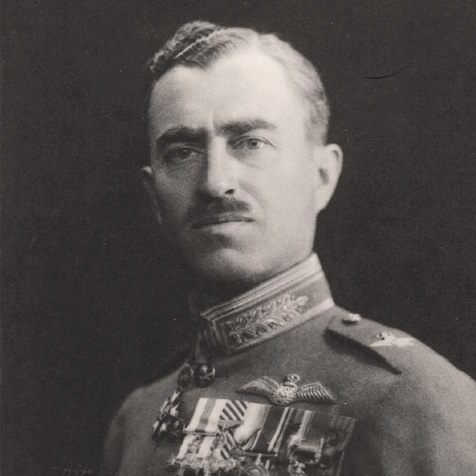
He was a captain in the London Regiment when he qualified as a pilot in September 1914. After Gallipoli he flew as a pilot in France, winning the MC, and was awarded the DFC for commanding No. 52 Squadron in 1918. He was at the RAF Staff College from May 1923, and then served in India, commanding No. 1 Indian Wing from 1924 to 1929. He returned to the Staff College in 1932 as a group captain on the directing staff, and became an air commodore in 1935. He served in the Middle East as Senior Air Staff Officer and then Air Officer in charge of Administration, and from January 1940 commanded No. 32 (Balloon Barrage) Group. He retired in 1941, and was recalled to serve again as a group captain from 1942 to 1945. He died on 26 February 1966.21
Paper: ‘Memories of Gallipoli, 1915’, written as a squadron leader. TNA, AIR 1/2386/228/11/23 https://discovery.nationalarchives.gov.uk/details/r/C4093022; printed in Air Publication 1152, A Selection of Lectures and Essays from the Work of Officers attending the Third Course at the Royal Air Force Staff College, 1924–1925 (London: Air Ministry, 1925).
Conway Walter Heath Pulford (1892–1942)
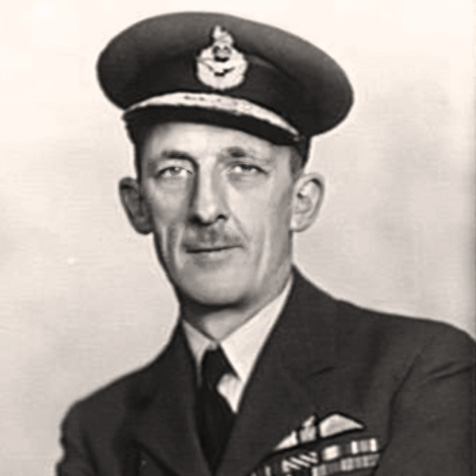
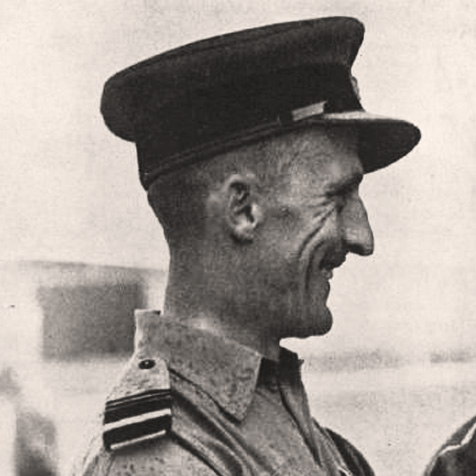
Born at Agra, India, he went to sea as a midshipman in 1910 and served in destroyers with the Grand Fleet in 1914. He learned to fly that winter and joined Ark Royal in June 1915, going with her to Salonica and Mudros, where he began experimenting with dropping torpedoes from seaplanes. He was badly hurt in a crash in May 1916. In 1918 he trained a torpedo squadron at East Fortune, which embarked in HMS Argus in October, but the war ended before it could attack. ‘We had worked and sweated blood for nine months to no purpose,’ he wrote. He won the Dunning Memorial Cup in 1919 for his torpedo work. In 1926 he led the RAF Cape Flight of four Fairey IIIDs from Cairo to Cape Town, and later commanded the flying in HMS Furious. In March 1941, as an air vice-marshal, he was appointed Air Officer Commanding, Far East, with too few modern aircraft to meet the Japanese invasion of Malaya that December. He was among the last to leave Singapore in February 1942, but his launch was attacked by Japanese aircraft and ran aground on Tjebia, an island in the Juju group north of Bangka, where he died of exhaustion and malaria on 10 March. His death was not confirmed until after the Japanese surrender. He is buried in Kranji War Cemetery, Singapore.22
Paper: ‘War Experiences’, written as a squadron leader, 30 October 1922. TNA, AIR 1/2386/228/11/14 https://discovery.nationalarchives.gov.uk/details/r/C4093014.
Gilbert Formby Smylie (1895–1965)
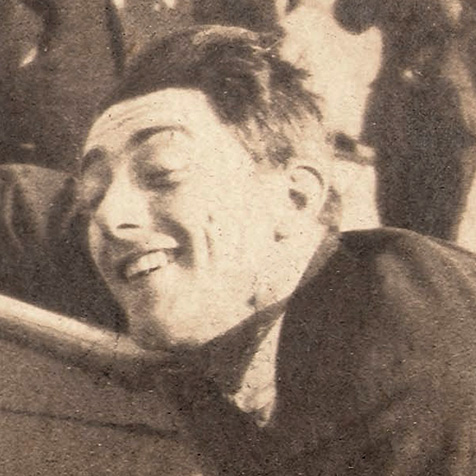
He served six months in the 4th Battalion, Grenadier Guards, before joining the RNAS in April 1915, and flew at Gallipoli from August. Shot down near Ferejik on 19 November, he set fire to his machine and, seeing Bell Davies coming down for him, exploded its last bomb with a pistol shot so that it could not endanger his rescuer. Bell Davies was awarded the VC and Smylie the DSC. He commanded anti-aircraft guns at Helles in the evacuation, returned to England in March 1916, and flew from the Isle of Grain and in the seaplane carrier HMS Manxman before instructing at Eastchurch. He left the RAF in 1919 and returned in 1921, specialising in engineering, and took a degree at Cambridge in 1926–28. In the Second World War he commanded RAF Benson and RAF Chipping Warden, then Nos 206 and 214 Groups overseas, and was Director of Technical Training. He retired as an air commodore, CB, in 1949, and died in 1965.
Paper: ‘Service Experiences, 1914–19’, written as a squadron leader, 1931. TNA, AIR 1/2392/228/11/169 https://discovery.nationalarchives.gov.uk/details/r/C4093165.
Notes
Trevor Henshaw (comp.), ‘RAF Staff College – Student Accounts of War Experiences: An Index to These 1920s Reports Across Squadrons and Content’, Cross & Cockade International, Vol. 52, No. 1 (Spring 2021), pp. 64–66.↩︎
Charles Rumney Samson, Fights and Flights (London: Ernest Benn, 1930); H. A. Jones, The War in the Air, Vol. II (Oxford: Clarendon Press, 1928).↩︎
Richard Bell Davies, Sailor in the Air: The Memoirs of Vice-Admiral Richard Bell Davies VC, CB, DSO, AFC (London: Peter Davies, 1967).↩︎
Unless stated otherwise, quotations are from the seven RAF Staff College papers listed under ‘The authors’ at the end.↩︎
Flight Commander Hugh Alexander Williamson, Ark Royal’s senior flying officer, left an unpublished memoir. His account of this first flight is published in Bernard de Broglio (transcr.), ‘First flight over the Dardanelles, and Falling three thousand feet: Two vignettes from Flight Commander H. A. Williamson aboard Ark Royal’, The ’14–’18 Journal (Australian Society of World War One Aero Historians), 2022, Vol. 1, pp. 62–67. Like the other first-hand accounts outside the Staff College papers, it is not quoted here.↩︎
Service details from the AIF Project, UNSW Canberra. https://aif.adfa.edu.au/showPerson?pid=337370 ↩︎
Major C. H. Villiers-Stuart, Birdwood’s intelligence officer, flown over Gaba Tepe by Collet in a Maurice Farman on 14 April 1915: C. E. W. Bean, The Story of Anzac, Vol. I (Sydney: Angus & Robertson, 1921), p. 242. Peirse and Collet had reconnoitred Gaba Tepe three days earlier, on 11 April. Both flights are in Samson’s log book, Private Papers of Air Commodore C. R. Samson, Imperial War Museum, Documents.12080.↩︎
Australian Society of World War One Aero Historians, Australian Airmen of the Great War 1914–1918 database, PID No. 2701 (T. E. B. Howe), citing Reveille. His AIF service record (NAA B2455) records a gunshot wound to the left leg.↩︎
Philip Jarrett, ‘Memories of Gallipoli 1915: Squadron Leader A. A. Walser MC DFC’, Cross & Cockade International, Vol. 45, No. 4 (Winter 2014), pp. 230–241.↩︎
On 22 June 1915. Collet was flying a Voisin, with Major R. E. T. Hogg – the officer Walser came out to relieve – as observer, armed with a rifle. Their opponent was an Ottoman Albatros B.I, flown by First Lieutenant Mehmet Ali Bey. Hogg hit its radiator and fuel pipe, and it came down near Ali Bey Farm. French artillery ranged on it, but the Ottomans recovered and repaired it. Hogg’s report, 25 June 1915, in ‘R.F.C. at Gallipoli and Asiatic Mainland’, TNA, AIR 1/2119/207/72/2 https://discovery.nationalarchives.gov.uk/details/r/C4091146; VIII Corps war diary, 22 June 1915, TNA, WO 95/4273; Ajun Kurter, Türk Hava Kuvvetleri Tarihi, Vol. II, 1914–1916, 2nd edn (Ankara: Hava Kuvvetleri Komutanlığı Basımevi, 2006).↩︎
Flight Commander Charles Herbert Collet DSO, Royal Marine Artillery, was killed on 19 August 1915, aged 27. He was taking off from Imbros in a BE2c with a replacement magneto for Samson’s machine, which had come down at Suvla that morning, when his engine failed. The machine crashed and caught fire. His passenger, George Lacey, survived. Chief Petty Officer Michael Sullivan Keogh, who pulled them from the wreckage, was awarded the Albert Medal. Collet was buried on Imbros, in the valley cemetery a short walk inland from K Beach at Kephalos, and reinterred in Lancashire Landing Cemetery, Helles, when the war graves were consolidated in the early 1920s (grave K. 49). Bernard de Broglio, ‘Came down Suvla’, The Gallipolian, No. 146 (2018).↩︎
Walser’s ‘Major Gerard’ is Wing Commander E. L. Gerrard, whose No. 2 Wing RNAS was ordered to the Dardanelles in July 1915. Gerrard’s own notes, written at Malta in 1920 at the request of the Air Historical Branch, are among the first-hand accounts outside the Staff College papers: Group Captain E. L. Gerrard, ‘Some Personal Notes – 1914–1915, R.N.A.S.’, 10 June 1920, TNA, AIR 1/2301/212/7 https://discovery.nationalarchives.gov.uk/details/r/C4092414.↩︎
Flight Commander C. H. K. Edmonds of Ben-my-Chree made the first successful torpedo attack from the air on 12 August 1915, against a Turkish supply ship in the Sea of Marmara. On 17 August he and Flight Lieutenant G. B. Dacre attacked again. Dacre was forced down by engine trouble, taxied towards his target and launched his torpedo from the water. Jones, War in the Air, II, pp. 64–65.↩︎
The IX Corps war diary records that the Turks held their fire for 15 minutes after the landing, and that the machine was brought in under cover at Lala Baba that night with its engine intact: ‘Summary of Events. 0600, 13th October, to 0600, 14th October 1915’. The landing is examined, with the war diaries, Samson’s log, eyewitness accounts and the Ottoman communiqué, in de Broglio, ‘Came down Suvla’, cited above. One eyewitness, John Gillam, thought the Turks ‘put a hundred shells on that machine before they stopped’: John Graham Gillam, Gallipoli Diary (London: George Allen & Unwin, 1918), p. 246.↩︎
The blimp was SS.7, a Submarine Scout airship and the only airship to operate at Gallipoli, flying from Imbros in September and October 1915. The night shoot was on 25 September 1915, with Flight Sub-Lieutenant G. M. Thomas as pilot, spotting for HMS Venerable and HMS Talbot off Suvla. It was the only attempt at Gallipoli to spot for naval gunfire from an airship at night, and it was not repeated. Bernard de Broglio, ‘The Gallipoli blimp’, The Gallipolian, No. 169 (2025).↩︎
Bell Davies tells the story himself in Sailor in the Air, pp. 134–135.↩︎
Australian Airmen of the Great War database, PID No. 2701, as above, drawing on his AIF and RAF service records (NAA B2455; AWM 140), Reveille, the London Gazette and, for the night deck landing, Wings, November 1964; Air of Authority – A History of RAF Organisation, biography of Air Commodore T. E. B. Howe https://www.rafweb.org/Biographies/Howe_T.htm, which quotes the citation for the bar to his AFC (TNA, AIR 30/49). Cranwell and No. 18 Squadron are from his own paper.↩︎
Air of Authority, biography of Air Vice-Marshal Sir Geoffrey Bromet https://www.rafweb.org/Biographies/Bromet.htm; DSO citation, London Gazette, 12 May 1917.↩︎
Air of Authority, biography of Air Chief Marshal Sir Richard Peirse https://www.rafweb.org/Biographies/Peirse_REC.htm; DSO citation, London Gazette, 10 April 1915; ‘Squadron Commander Peirse’, The Piloteer: The Magazine of Cranwell Station, R.N.A.S., No. 6 (1 November 1917). His last flight at Gallipoli in Samson’s log book, cited above, is on 3 July 1915.↩︎
Australian Airmen of the Great War database, PID No. 321 (J. R. Bell), drawing on his AIF service record (NAA B2455) and the Australian Dictionary of Biography, Vol. 13, p. 160. Henshaw, ‘RAF Staff College’, indexes him under No. 3 Squadron AFC (‘WF Obs & Pilot’).↩︎
Jarrett, ‘Memories of Gallipoli 1915’, as above. His career outline draws on the Air Force Lists, compiled by Peter Elliott of the RAF Museum.↩︎
Air of Authority, biography of Air Vice-Marshal C. W. H. Pulford https://www.rafweb.org/Biographies/Pulford.htm.↩︎
Becoming a member of The Western Front Association offers a wealth of resources and opportunities for those passionate about the history of the First World War. Here’s a sample of some of the numerous benefits:

Browse and search our rich collection of digitised magazines and periodicals.

With TrenchMapper™, members get enhanced access to thousands of geo-referenced maps, including Gallipoli.

Access over six million pension records of men who served in the Great War. Essential for family history research.
Other Articles


