
The Lonely Anzac
Visitors to Peterborough Cathedral could easily miss this memorial to an individual soldier from World War One.
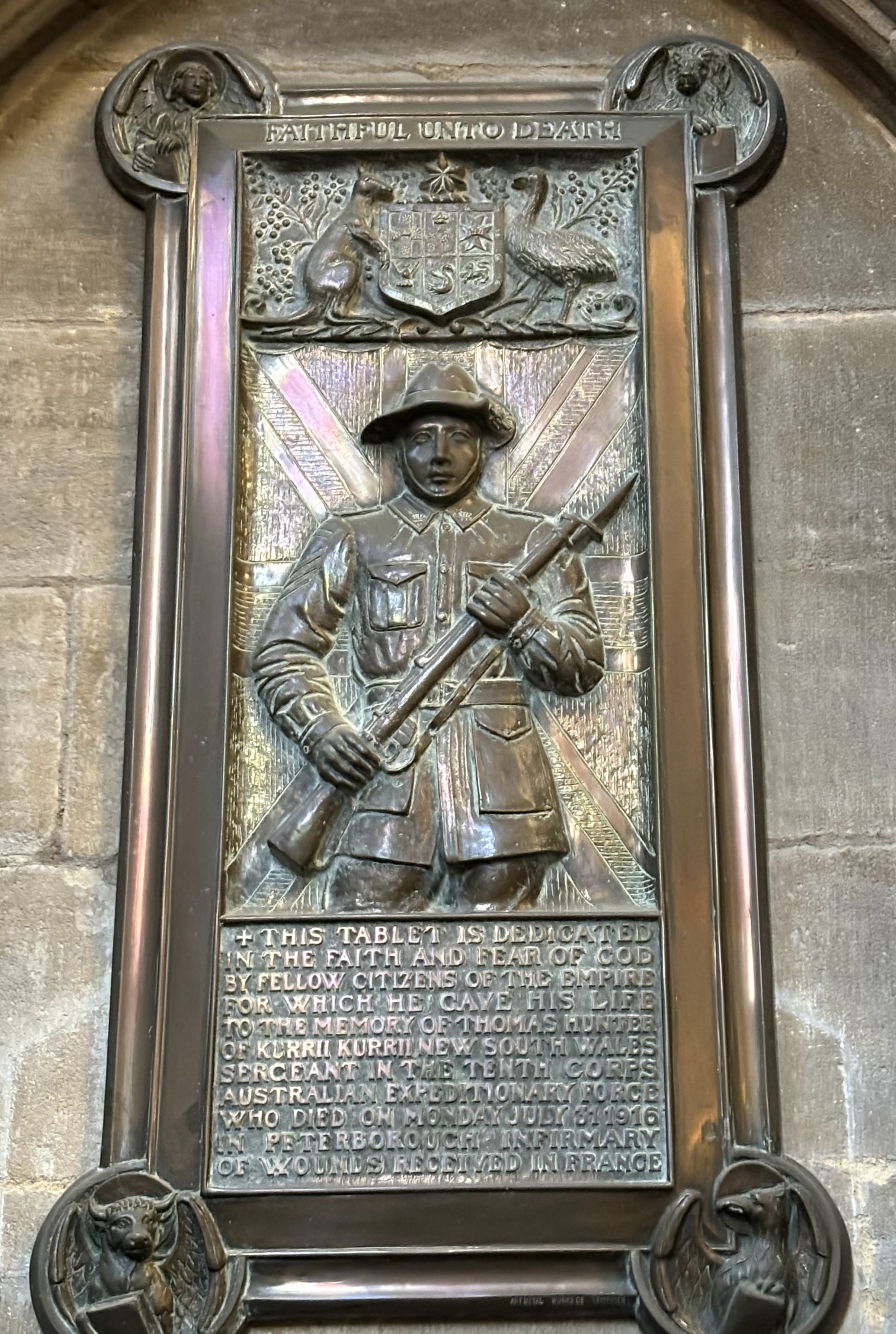
It’s on a wall in a small chapel at the west end of the church.
It represents Sergeant Thomas Hunter of the 10th Infantry Battalion, Australian Imperial Force, who died on July 31st, 1916, aged 36.
Why is he here, in a medieval cathedral in the English East Midlands – a world away from his home at Kurri Kurri in New South Wales?
His story is remarkable, and has been well-reported, if you know where to look.
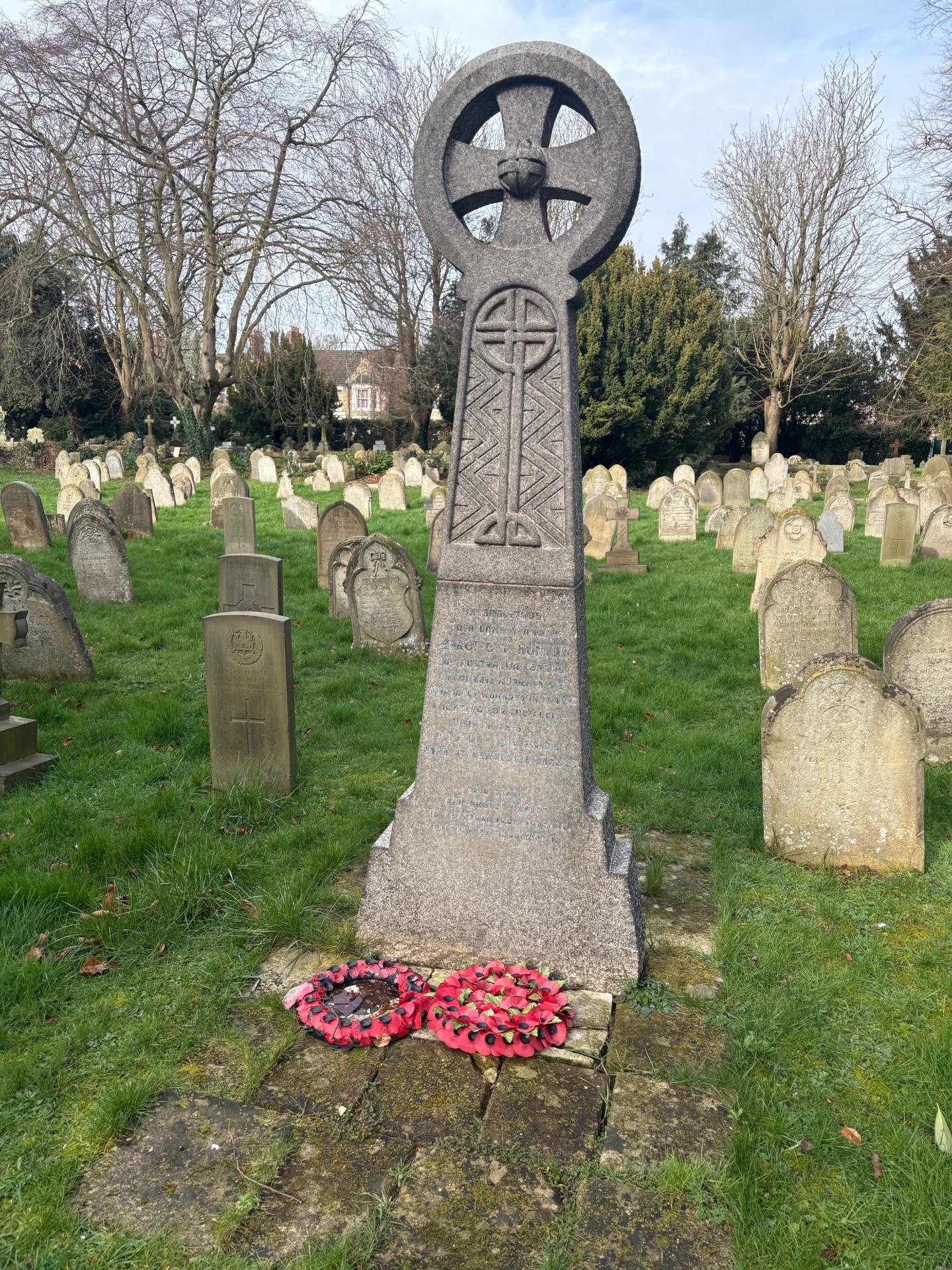
Sergeant Thomas Hunter is believed to have been the first Australian soldier to die on English soil.
He became known as ‘the lonely Anzac’.
Thomas Hunter was originally from Medomsley near Consett in County Durham. He’d been a coal miner from the age of 13, and served ten years with the Durham Artillery.
But in 1910, he emigrated to Australia. When war broke out, he signed up and sailed from Adelaide in October for combat training in Egypt as Private Thomas Hunter on HMAT Ascanius – the first transport of Anzac troops.
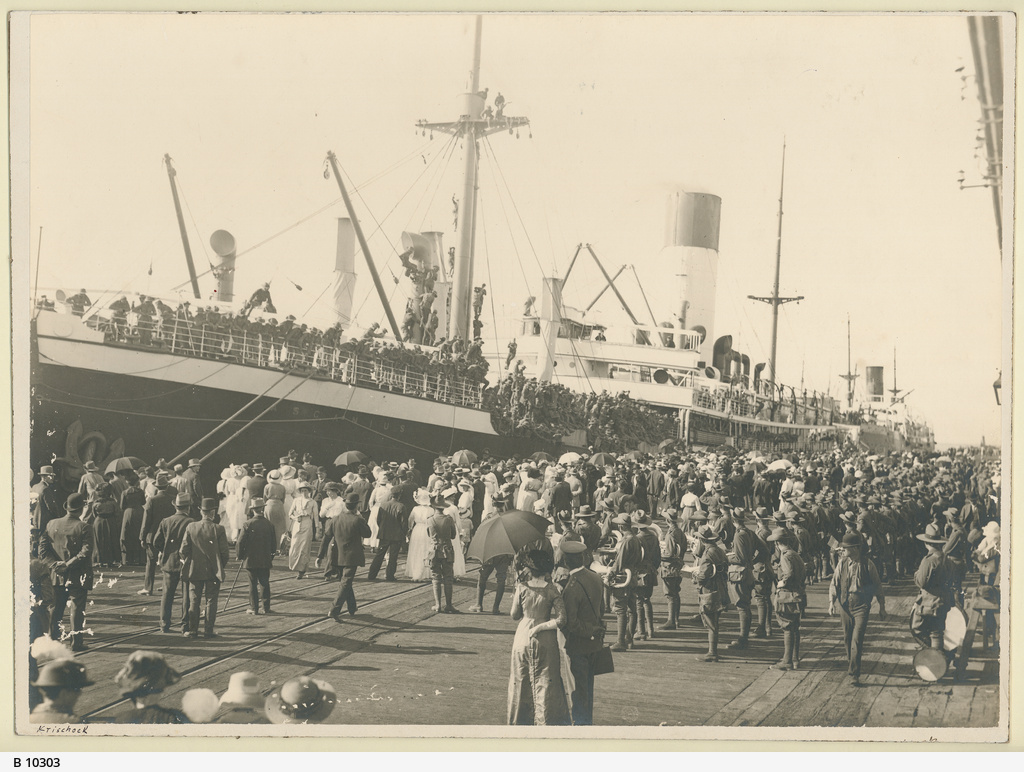
His first engagement was at Gallipoli in April, 1915, when Thomas was among the first men to land at what was to become known as Anzac Cove. A week later, he was severely wounded in his right foot and sent back to Egypt, only to return in June until the Allied evacuation.
Back in Egypt, the fighting force was rearranged and the 10th Battalion became part of the 3rd Brigade, 1st Division, and the men were sent to France, arriving in Marseilles in April, 1916. By now, Thomas had been promoted to Sergeant. Their first action was on the Somme, at Pozieres, at the end of July. On the day this part of the battle ended, Thomas was badly wounded in the back and partially paralysed.
He was sent to a hospital in Boulogne, and then on a hospital train to England, where he was due to have treatment at Halifax. But he got no further than Peterborough. His condition deteriorated. He was taken off the train and admitted to a local hospital, where he died.
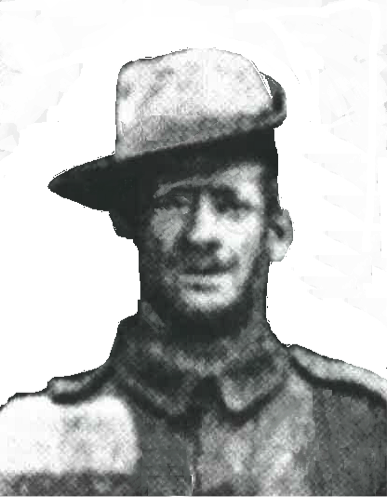
The reaction in Peterborough was extraordinary. People were grieving for their own heavy losses on the Somme, but were deeply touched that a man had volunteered to fight and die for Britain. The Mayor of Peterborough led a campaign to honour him. Several thousand attended his funeral service at Broadway Cemetery on August 2nd, 1916. He was carried in a horse-drawn hearse. The Cathedral bells tolled, and he was given full military honours. All shops closed.
This three metre grey granite Celtic cross was installed in 1917, and still marks the grave today. The bronze plaque in the Cathedral has an inscription which reads “dedicated in the faith and fear of God by fellow citizens of the Empire for which he gave his life”. Both were paid for by public subscription.
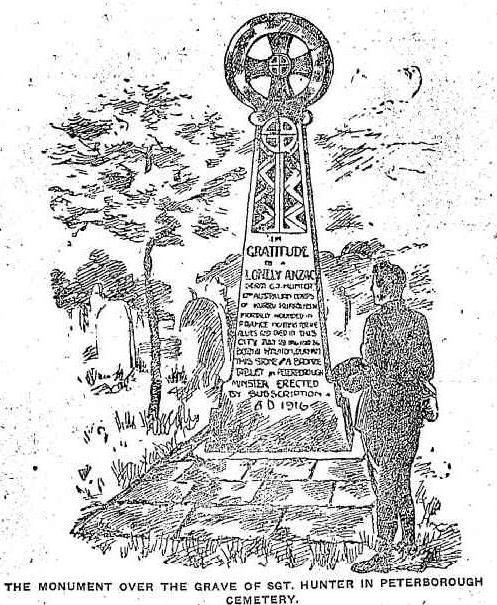
Services were held at the grave each year, but it fell into disrepair, until a restoration project in 2000.
Now, a memorial service is held at his grave on Anzac Day.
In 2015, on the Anzac centenary, Thomas Hunter’s great-great niece, Ms Jo Gainer, attended the ceremony.
Footnote
Sergeant Hunter died at an infirmary which became Peterborough’s Museum and Art Gallery, and is described as the city’s most haunted building. Thomas is said to be the most frequently witnessed ghost, walking up and down the stairs with what’s called ‘an overwhelming sense of unease’.
Acknowledgements
Much of the information for this article came from the superb Australian Virtual War Memorial: (vwma.org.au). In particular: Ron Warden, Mike Seabourne, John Harvey, Greg Sharon, Steve Larkins and the RMPA Western Australia Branch.
In addition, Cathy Sedgwick has collated extensive material on a website: ww1austburialsuk.weebly.com.
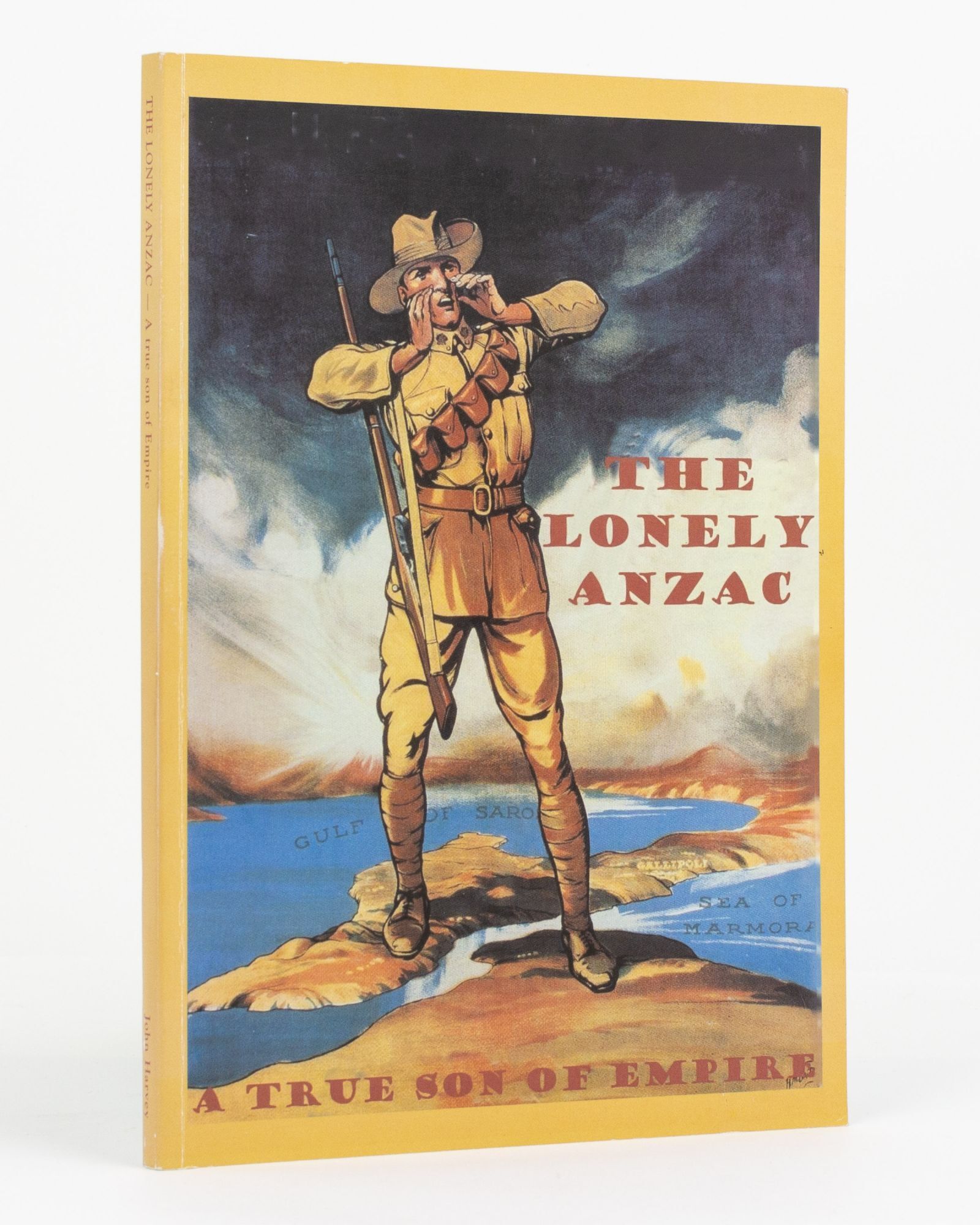
A local Peterborough resident and historian John Harvey published a book The Lonely ANZAC: A True Son of Empire in 2003.
Becoming a member of The Western Front Association (WFA) offers a wealth of resources and opportunities for those passionate about the history of the First World War. Here's just three of the benefits we offer:

With around 50 branches, there may be one near you. The branch meetings are open to all.

Utilise this tool to overlay historical trench maps with modern maps, enhancing battlefield research and exploration.

Receive four issues annually of this prestigious journal, featuring deeply researched articles, book reviews and historical analysis.


