
Defending to the last: Historic castles’ changing role in the Great War
The Great War is widely considered to be the first modern war and the beginning of mechanised warfare. It brings to mind images of the trenches of the Somme, tanks, shelling and mustard gas. Castles on the other hand are, at least in the popular imagination, historical relics, entirely outdated in modern war. However the Great War saw a continued and renewed use of castles on the Western Front and beyond. While this usage was not identical to the role they had played previously, as impregnable military installations, their continued use was vital to the conduct of the War.
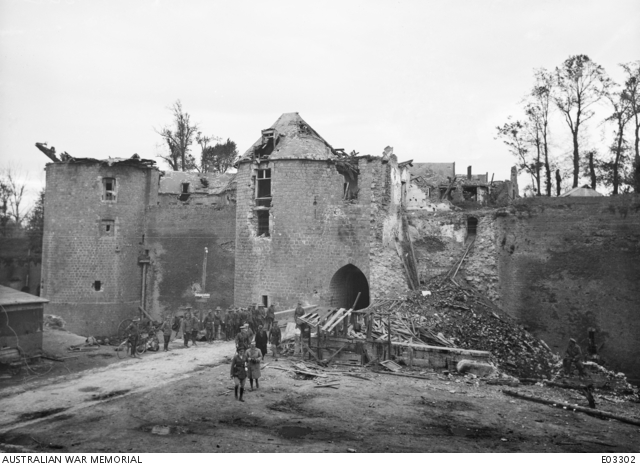
Castles are hard to define, so for the purposes of this essay I will be using a system of self identification. If it calls itself a castle (or chateau, provided that the common translation is not palace) it is a castle. While this definition is not perfect and individual cases can be debated, the exclusion of the Palace at Versailles (Chateau de Versailles) in particular was disappointing but I believe fair. This is the best system as it reflects how people colloquially use “castle” and the way people fighting in the war would have thought about castles. I have also not set a strict limit on the age of a castle. No castle referred to in this essay was built for the Great War, as such the castles mentioned range almost 700 years in their dates of original construction.
Historically the role of a castle was not simple. Due to their incredible cost and longevity they were repurposed and modified time and time again. However certain functions of a castle remain somewhat constant within a castle's history: castles were used as an administrative center where historically a member of the nobility would hold court and administer a region; a logistical tool where men would garrison during times of war or where command of a conflict would occur from and supply lines would be managed; and as an active defensive position. These functions were not always fulfilled by every castle, nor did every castle have the same function through its whole history. It was long established by the time of the Great War that castles, at least those which were still serviceable, could be modified and modernised for use during times of war.
Administration had been one of the key functions of castles for most of their history, providing some amount of fortification and security to the people and records of the state held within. One example of administration during the war was Walmer Castle, England, constructed between 1539 and 1540. It became crucial to the operation of government when during the early stages of the war 1914-15 Asquith stayed at Walmer as a weekend getaway before Chequers became the official estate of the Prime Minister [1]. Walmer was selected due to its proximity to London and communication links to the Front which would allow for the Prime Minister to stay connected on weekends away. Asquith would over the course of his stay invite many notable politicians and generals to be hosted at Walmer including Kitchener and Churchill, a similar function to that of castles in previous wars.
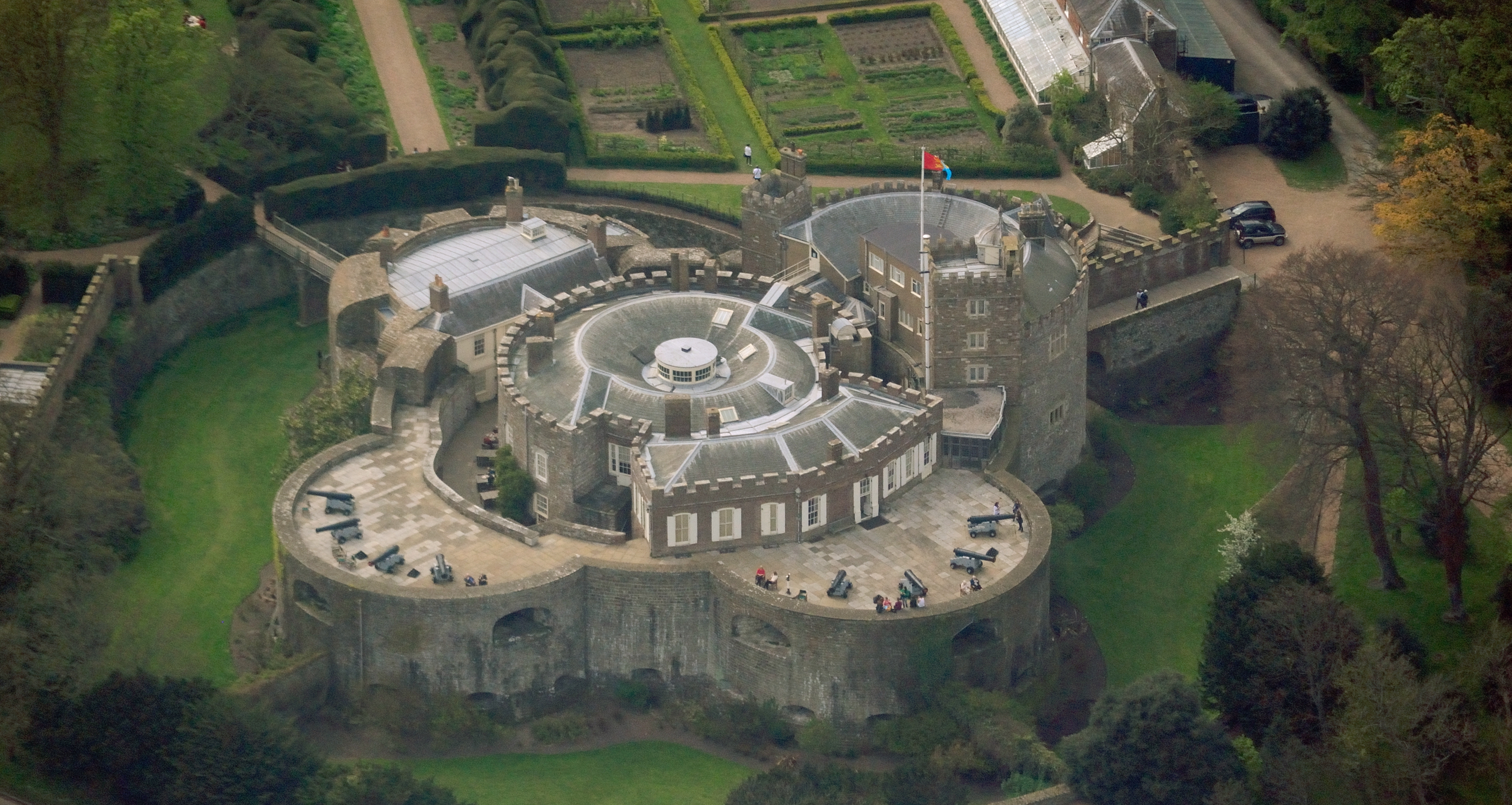
How much Walmer would have been an escape for the Asquiths however is questionable, as there are reports that on quiet days you could hear the guns on the Front from the castle.[2] The administration of wartime defences was a role that Walmer Castle had long been prepared for and a role it continued to play during the war. It had been converted into the administrative centre for the Lord Wardens of the Cinque Ports and continued as this through the war.[3]
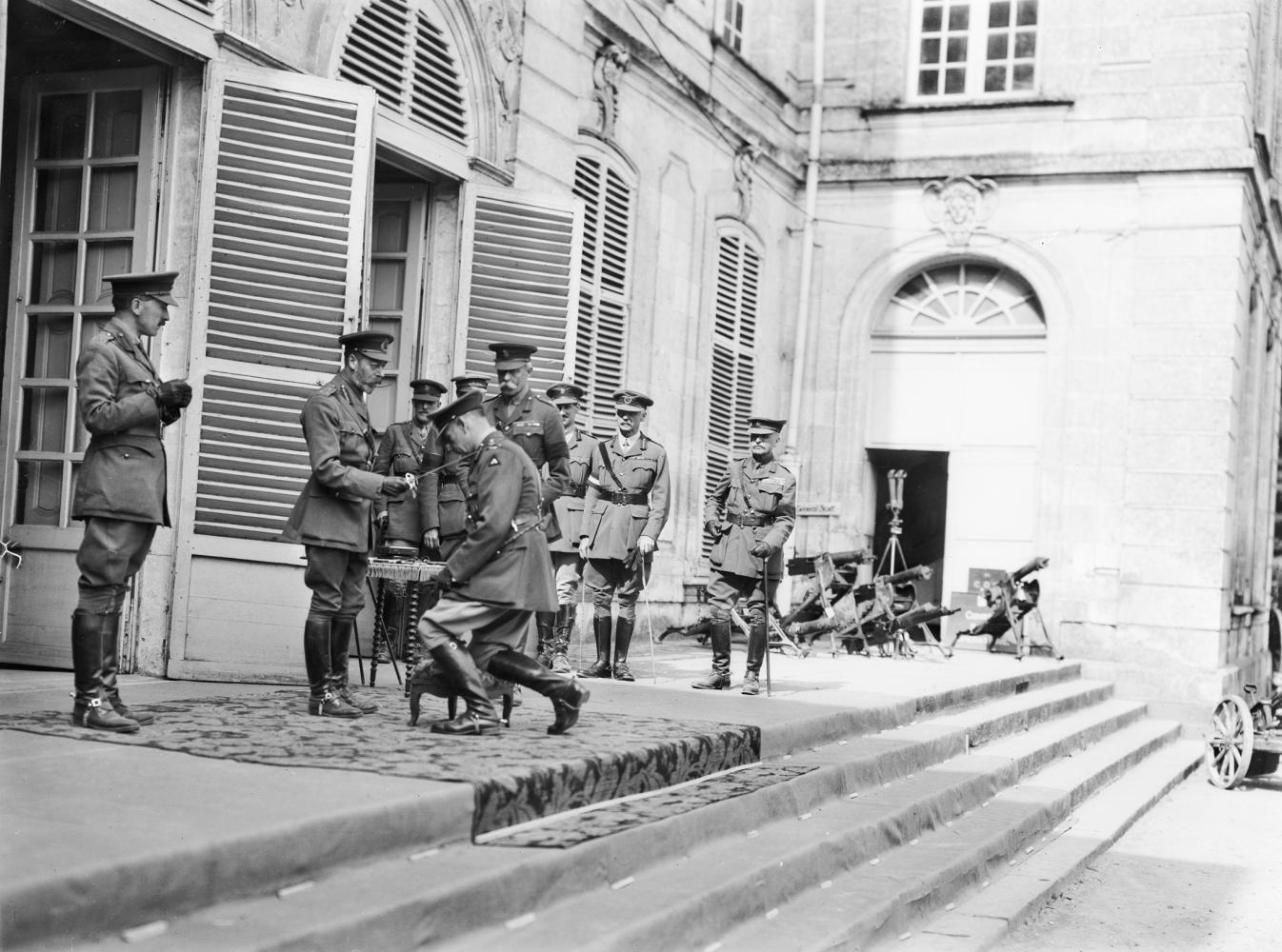
Castles throughout history have been the centre of logistical and operational functions and The Great War saw warfare become an unparalleled logistical operation which was unlike any previous war. On the Front the additional fortification and grandeur of castles made them useful for coordination and supply, especially considering the quantity and density of castles on the Continent. One particular castle, Chateau de Clermont-Tonnerre (otherwise known as Château de Bertangles), was the headquarters of the British General Staff. The size and seclusion of this 1730s castle made it ideal for the logistical and operational capacities required for the coordination of the Somme campaign. It was later transferred to the Australian Army Staff who occupied it until the end of the war. The plans for the Battle of Amiens were drawn up at the castle.[4] Unlike Walmer, this was the first time that Château de Bertangles had seen conflict. The castle had been a family home for the majority of its history but the needs of total war brought the castle into duty as an operational centre.
Château de Bertangles was not the only castle that took on an entirely new life in the War. On the Western Front many castles were converted into large medical complexes to house the vast number of wounded men. Castles including Château de Chenonceau, Chaumont-sur-Loire and Champchevrier Castle were converted into hospital space in the immediate outbreak of the War by their owners. Some were operated by the Red Cross while others were operated directly by respective armies. This allowed castles to continue their historic usage as centres for healthcare. They provided an ideal place to house men as the limited fortifications gave some protection against stray bombardment or bombs which would otherwise have ravaged an exposed site. This function partly existed in the mediaeval period. Castles would often be a place to withdraw to in order to rest men or to provide medical care [5].
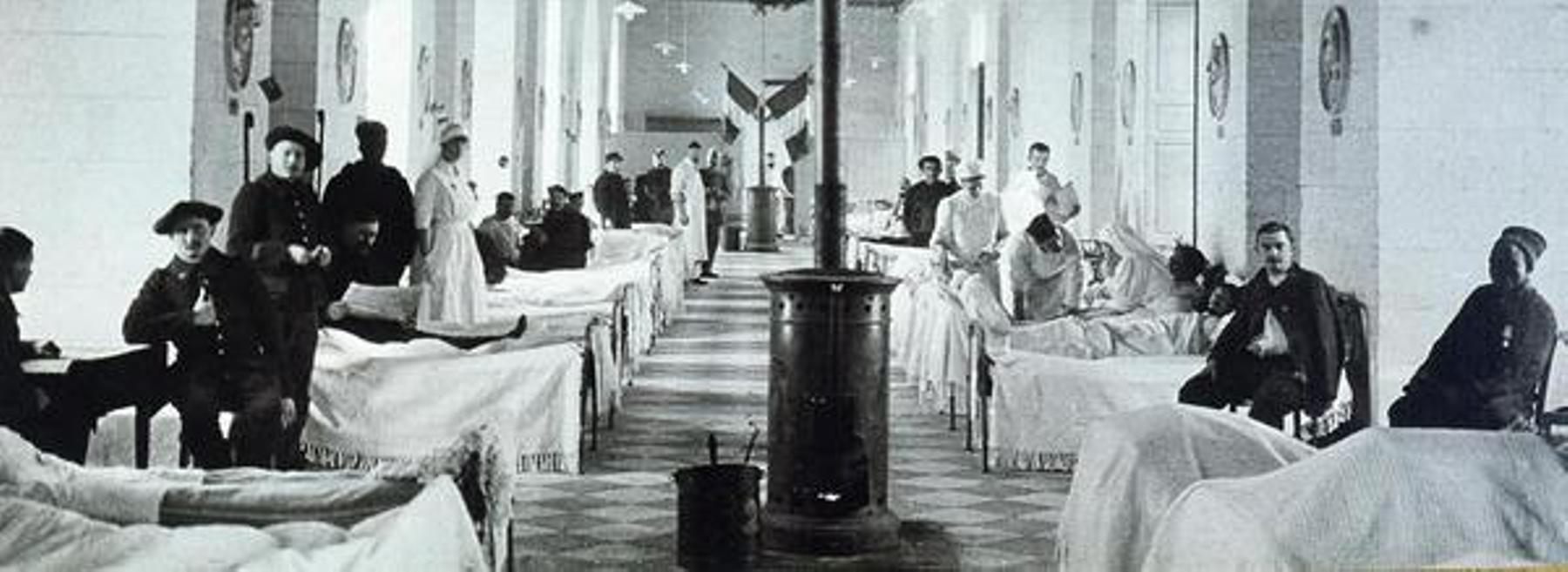
In another sense this was an entirely new usage and the scale of which castles were converted to being entirely medical facilities is a reflection of the new challenges of fighting a large scale European conflict.
Some castles had never officially lost their military logistical purpose. While it had been open to the public for over 300 years, The Tower of London, by most accounts one of the oldest castles on the British Isles, built first in 1078, played an important role in London's experience of the Great War. During the first weeks of the War the Tower was a recruitment ground for the men of the City of London Battalion, which formed in the moat of the Tower. Over 2000 men were directly recruited from the Tower but many thousands more stayed at and near the Tower as it was used as a staging area on the way to the Front.[6] During one Zeppelin raid in June of 1917 a bomb landed in the moat prompting the creation of antiaircraft measures across the city. The Tower had long been a site of military importance and it provided an excellent opportunity to evoke pride in Britain's military history to encourage enlistment.
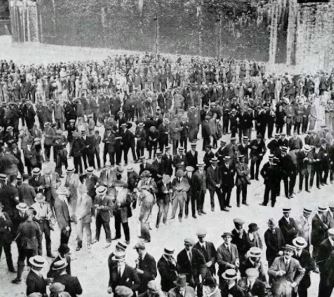
Castles were introduced into Britain in part for their symbolic power, a power they continued to wield throughout the Great War. The Norman forts which were erected in the reign of William the Conqueror were the first of many examples of how the presence and usage of castles demonstrated a nation's control and might. This remained constant in the British tradition of warfare through the expansion into Wales under Edward the First, the castle building of Victorian Aristocrats, and remained a useful image going into the Great War. The army in many cases called upon the powerful imagery of castles, with perhaps the most explicit usage being in the Tower of London. The British army wrote to the Tower Constable asking that the imprisonment and execution of spies should happen at the Tower, arguing that it would have “'more effect on the country at large”.
By 1916, eleven spies had been killed by firing squad. This put these spies in a long line of people executed by the British state at the Tower including Anne Boleyn, Catherine Howard and many more[7].
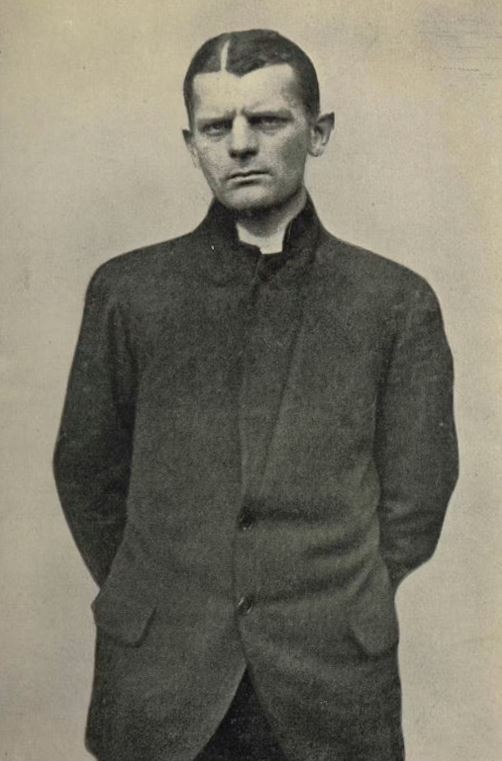
This continued the connection between the Tower and the British State and acted as a powerful reminder of how Britain punishes traitors, even when in reality the Tower had seen its last execution before these spies in 1552 with Edward Seymour, the Duke of Somerset. Clearly the “effect” was more important than the function.
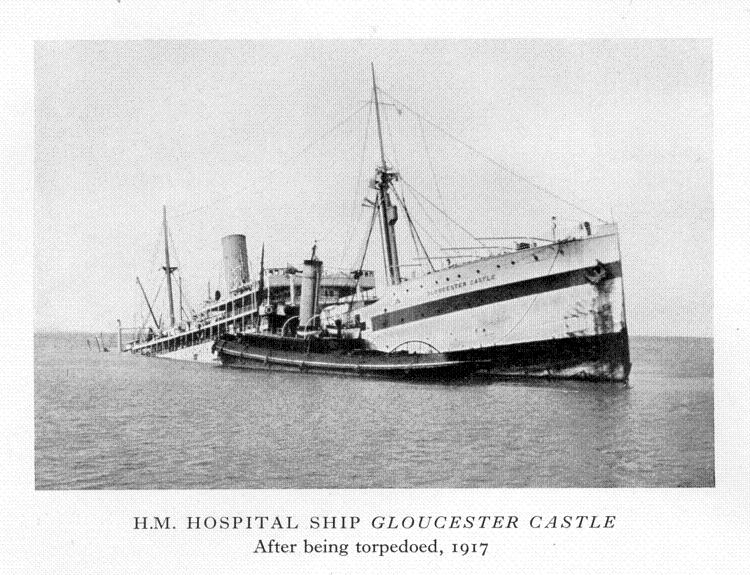
There is also significant evidence that castles were used quite frequently in the naming of military installations. Firstly the Royal Navy fleet during the Great War contained a number of ships which were named after British castles. The majority of these it would seem were hospital ships with the prefix HMHS (His Majesty's Hospital Ship). This is another example of where the imagery of a castle would be used for the betterment of morale and where the image of a strong and protected castle was clearly useful to the injured men. The ships names included HMHS Dover Castle (christened in 1904) , HMHS Llandovery Castle (christened in 1914), HMS Armadale Castle (christened in 1903), RMS Edinburgh Castle (christened in 1910), HMHS Gloucester Castle (christened in 1911), HMHS Garth Castle (christened in 1910), Leasowe Castle (christened in 1915) [8].
Another example of the naming comes from a slightly less official source. There seems to be some evidence of soldiers giving locations on the Front castle nicknames. The two that I've been able to find are a rest camp in Gallipoli with the name “Walmer Castle” although many of the details and original sources have been taken down from the internet.[9]
The second is a military installation nicknamed “Stirling Castle” by the men on the Front. Equally however the evidence is dubious, largely limited to individual accounts, references in photo captions and maps.[10]
One of the benefits of fighting in Europe was the frequency of preexisting fortification. While much was built in the immediate run up to the war and even more was built in the prior century, the density of earlier fortifications proved useful to the British and Continental Allies. Many castles were retrofitted for defence and took on crucial roles against the theoretical invasion of the British mainland (although this threat was not really considered in the Great War) or the defence of coastal positions and docks (a much more serious proposition, as both the continued continental conflict and the aforementioned protection of the British Isles relied on naval superiority).
Castles on the southern coast of England were refitted for the potential of German attack on the British Isles, notably the castles of Pendennis and St Mawes in Cornwall (1539-45).[11] Due to the immense cost of building purpose built fortifications, it was decided that early modern castles would be refitted to suit modern needs, especially considering that these castles had been garrisoned and had minor refittings during invasion threats previously through the 17th and 18th centuries. This is a very similar function to that which the castles were created for.
Even with the new artillery and cannon added in the Great War, the general intention was to repel a foreign landing in the same way as they were built by Henry VIII. The suggestion that castles would be used truly for defence is not unique to the British Isles either. One of the most contested locations of the War was Château de Péronne which by my count changed hands four times during the War [12].
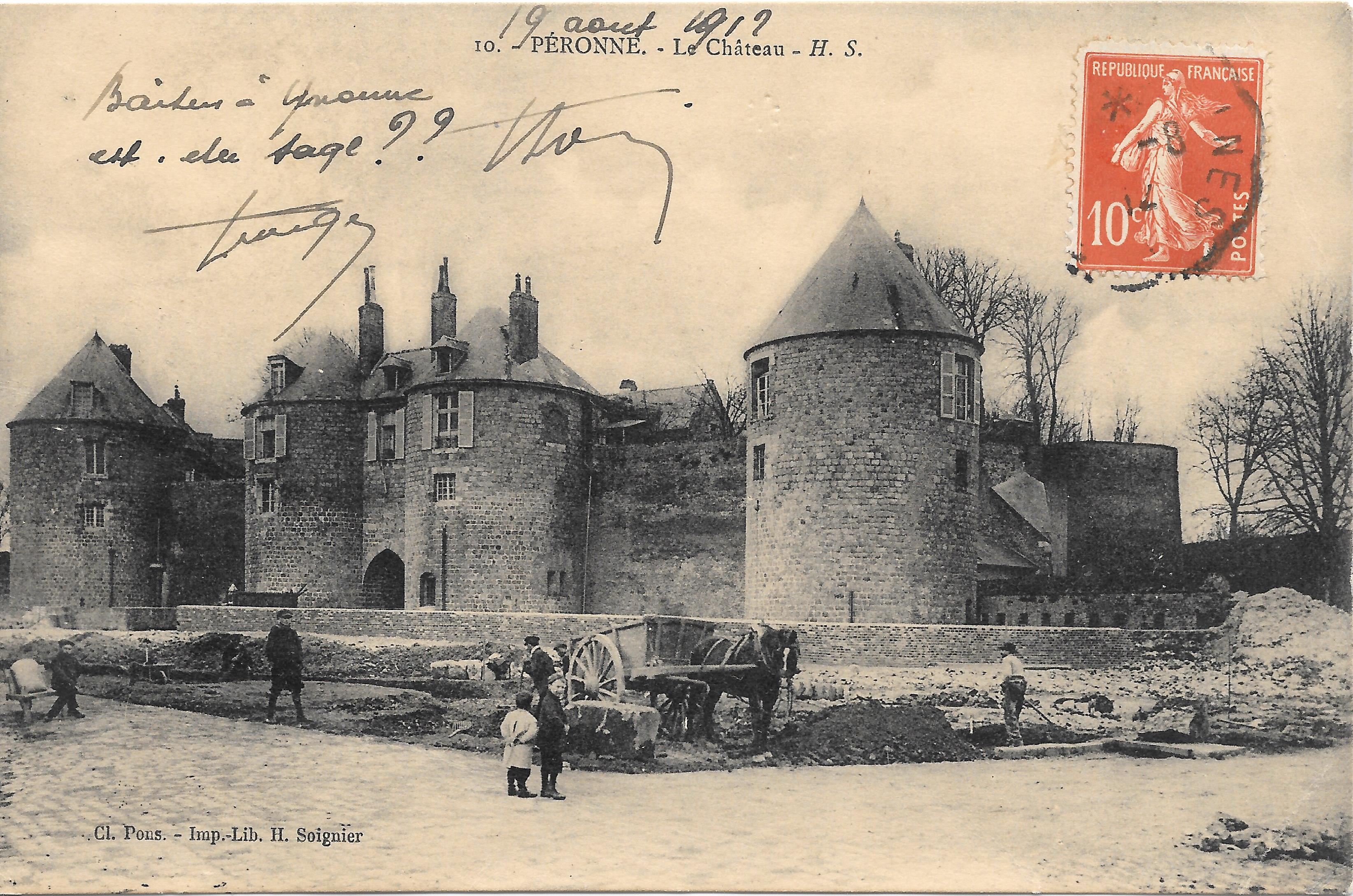
The castle is situated near the Somme and was occupied, along with its surrounding village by both the German and French armies at various points in the War (German occupation August 28th 1914 - September 15th 1914 before it was briefly retaken by the allies before falling into German hands again on September 23rd 1914 - November 1916). The strategic location of the castle, the same reason it was built, caused its almost complete destruction. The majority of the castle was leveled and the remaining fortifications were largely useless in the various battles over the town.
A British castle which proved useful despite its age was Dover Castle, built in 1179. While the castle itself never saw combat, it played a crucial role as an important protector of the Port of Dover. A port which was the heart of the British naval presence protecting movement across the channel. The guns were adapted so that the bottom layer of the castle was converted to protect the port. Meanwhile the higher floors became a signal station allowing the quick movement of information from the Front and the sea to London and vice versa. Dover's advantageous position as a port castle, the same reason it was built, gave it a unique role to play in the war. [13]
While castles clearly were not the impregnable fortifications that once defined European warfare they still had a role to play in defence. The level of fortification was clearly enough to warrant the cost of refitting. Total war provided a new strain on the military complexes of Europe and the need for cheap (or in this case preexisting) fortification was a hole that castles could easily fill with some modifications. The adaptation of Dover was a continuation of the castle's historic role as a connection to the Channel.
Possibly the most successful attempt at the defence of a castle during the Great War was the siege of Liege, one of the opening battles of the War. During the siege, the defences of Liege continued their function from the mediaeval period, to slow or in previous cases, halt an invasion into Belgium (or the states which previously occupied that territory). The siege lasted almost 10 days in its entirety, which while less than the 2-4 weeks that the city had lasted in previous sieges was still an impressive result, considering the size and modernization of the invading German army.[14]
Overall, while castles did not retain their complete dominance over European warfare during the Great War, they remained crucial to not just the realities of the war but also how people thought about and idealised warfare. Armed conflict was changing rapidly but castles still had an important role to play in the logistical and operational side of the war. The needs of total warfare gave castles a second life which many people don't originally notice. Although the castles lost, at least for the most part, their defensive capabilities to slow an army for weeks at a time, they were still a worthwhile addition to the fortification landscape. The role of a castle was never single faceted. They remain complex buildings that have changed throughout history. The Great War is a continuation of this tradition.
References
[1] https://kentandsurreybylines.co.uk/society/heritage/a-prime-minister-in-walmer-castle-december-1914/
[2] https://www.walmercouncil.co.uk/The_History_of_Walmer_Aerodrome_38163.aspx
[4] https://www.chateaubertangles.com/en
[8] https://commons.wikimedia.org/wiki/Category:World_War_I_ships_of_the_United_Kingdom
[9] https://www.greatwarforum.org/topic/228457-walmer-castle-cape-helles/
[10] https://www.awm.gov.au/collection/E01409
[12] https://sjmc.gov.au/peronne-and-the-historial-of-the-great-war/
[13] https://www.english-heritage.org.uk/visit/places/dover-castle/history-and-stories/fortress-dover/
[14] https://en.wikipedia.org/wiki/Battle_of_Li%C3%A8ge#8%E2%80%9316_August
Essay Competition
This essay by Samuel Crosby was the runner up in the 2026 Colin Hardy Essay Award. Colin, a former headteacher and author, was a member of The Western Front Association. His family sponsor this annual competition in his memory.
Students aged 16–18 are invited to submit an essay or project report of between 2,000 and 4,000 words on any First World War-related subject that interests them. Many of the entries were outstanding, and the judges had a hard time choosing the winners.
Images have been added to the original article for illustrative purposes.


