
How far was Germany’s decision for war in 1914 driven by defensive concerns?
The causes of World War One (WW1) have been extensively debated. Article 231 of the Treaty of Versailles (signed: 28 June 1919) placed the blame solely on Germany, stating:
“Germany accepts the responsibility of the war imposed upon… [the Allies] by the aggression of Germany and her allies.” [1]
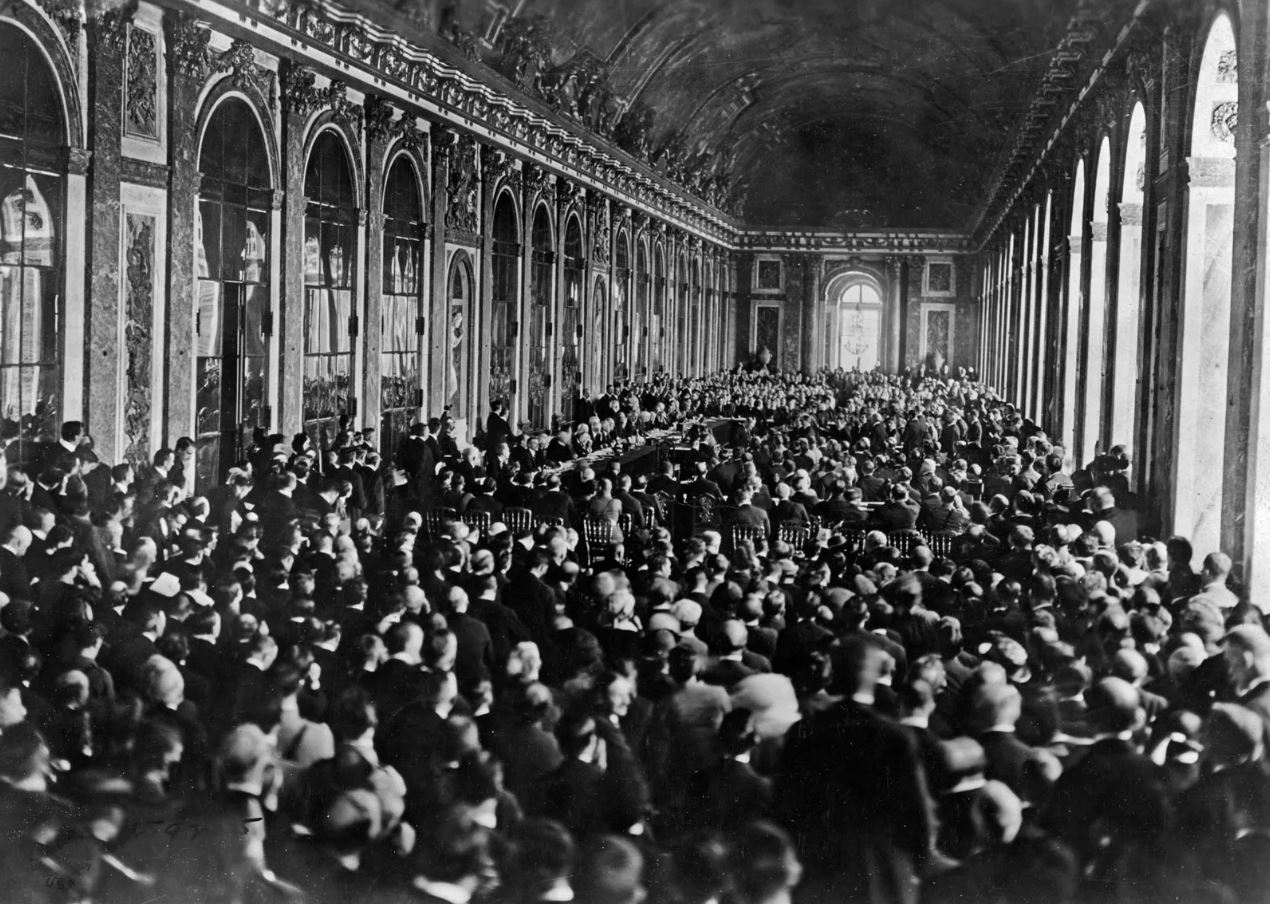
However, it is reductive to place the blame solely on one party, as was done by the Allies to enable the demand of reparations from Germany. This act fuelled controversy, as memory of the war was prominent in European collective consciousness. In the following years, historiography was dominated by nationalistic sentiment as historians – especially the Allied War Guilt School and German Revisionists - attempted to absolve their nations of blame. Now, over a century after the end of the war, scholarship has become more balanced and less politically driven. This essay will explore how far Germany’s decision for war in 1914 was driven by defensive concerns, aggression, or an attempt to escape forwards. Ultimately, the most holistic reason, with the most supporting evidence, is that Germany was motivated by defensive concerns.
While the Treaty of Versailles asserted that German aggression led to WWI, more recent scholarship has suggested that defensive concerns were the driving force behind Germany’s decision. The idea of encirclement played heavily on the national psyche, and the desire to break it was a significant aspect of foreign policy, with plans drafted to manage it should war break out.
The causes of encirclement can be traced back to 1890 when Germany failed to renew the Reinsurance Treaty with Russia due to racist rhetoric and the emergence of Social Darwinism. This set in motion a chain of events that left Germany increasingly isolated. Ritter’s assertion that “it was only in the abrogation of… [the Reinsurance Treaty] by Bismarck’s successor that ultimately drove Russia into the arms of the French” supports this argument.[2] This is evidenced through the 1894 Dual Alliance between Russia and France, which left Germany feeling vulnerable despite there being no evidence of either nation planning war. Until Bismarck’s forced resignation in 1890, he had used diplomacy to isolate France, Germany’s traditional enemy due to the Franco-Prussian War (1870-1871), and thus the Dual Alliance was a significant concern. As a result, Germany aligned itself more firmly with Austria-Hungary. In 1902, England abandoned its policy of splendid isolation and, with the Anglo-Russian Entente of 1907, the circle around Germany closed.
While these agreements were not directed at Germany, its increasing military power and diplomatic pressure did shape British foreign policy under Grey, and may have influenced Britain’s decision to end splendid isolation.
Given Germany’s feeling of encirclement, it is perhaps unsurprising that in 1905 the Schlieffen Plan was drafted. It outlined a strategy to avoid the division of German forces in a war that Von Moltke asserted could be “safely assumed [to be] a war on two fronts”.[3] The source is largely reliable as Moltke’s later amendments to the Schlieffen Plan – such as the emphasis on avoiding a Dutch invasion - align with the memorandum’s content, suggesting it accurately reflects his beliefs. Moltke’s role as Chief of Staff may have led him to perceive the threat as more extreme than it was and overemphasise it in the memorandum. However, this is outweighed by his proximity to government, making his preoccupation with the prospect of a two-front war a reliable microcosm for the fear of encirclement among the leadership.
The Plan outlines the necessity of a rapid conquest of France so German forces could be concentrated on the Eastern border by the time Russia mobilised. It displays defensive aggression; Germany would be willing to invade other countries – and violate Belgian neutrality–to eliminate the threat of encirclement before it could be crippled by a two-front war.
However, some historians have argued that the Schlieffen Plan was an “appeal to arms”,[4] and that it reflects a premeditated desire for war, especially since an amended version of the plan was followed when Germany went to war ten years later. Taylor goes so far as to assert that “the sole cause for the outbreak of war in 1914 was the Schlieffen Plan”.[5] However, can it really be argued that a plan created ten years prior to a war reflects martial intent? To suggest that it was more than contingency planning is speculation. To assert that it could be the “sole cause” of war is hyperbolic. Such arguments are also weakened by evidence that suggests encirclement and the prospect of a two-front war elicited genuine concern.
Germany, along with other European countries becoming entangled in the growing web of alliances, was aware that war over the Balkans was likely as the power of the Ottoman Empire eroded. These countries all drafted plans to ensure they were not caught unprepared given the tense geopolitical climate. For example, secret Anglo-French military meetings were held from 1907 onwards, and after the 1911 Agadir crisis it was agreed that in the event of war, Britain would deploy 100,000 soldiers to the French army within two weeks.
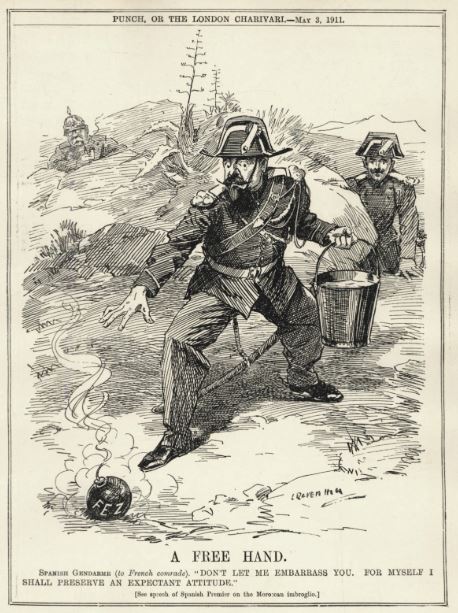
Thus, the Schlieffen Plan aligned with military preparations across Europe and reflects the defensive aggression that characterised Germany’s pre-war actions, rather than a premeditated desire for a continental war(as Fischer suggests).
German foreign policy also indicates that defensive concerns caused Germany to instigate war. From as early as 1905, foreign policy was dominated by attempts to prevent and later break encirclement. One example is the Tangier incident. In the late nineteenth century, Morocco was accepted as a French sphere of influence. In March 1905, Wilhelm II gave a speech in Tangier, endorsing the Sultan’s independence. He anticipated that the British would fail to uphold their agreement with France, and the Anglo-French Entente would be exposed as weak. While this was a miscalculation by Germany that saw Anglo-French relations strengthened and Germany humiliated at the Algeciras Conference, it demonstrates the lengths Germany was willing to go, to weaken encirclement. The Kaiser had initiated an international crisis involving multiple powers in the hope of removing a perceived threat. This diplomatic gamble supports (through consistency) the idea that WWI was caused by defensive aggression.
The July Crisis saw Germany again acting based on defensive concerns. With the assassination of Archduke Franz Ferdinand, heir presumptive of the Austro-Hungarian Empire, in June 1914, the July Crisis began. Germany, in providing unconditional support for Austria-Hungary (coined the ‘blank cheque’) escalated an already precarious situation, especially when considered alongside its encouragement of immediate action and the harsh ultimatum. Serbia was willing to concede to most of the terms of the ultimatum; however, it viewed the demand that Austria-Hungary be allowed direct participation in its judicial system a violation of its sovereignty. Additionally, requiring a response in 48 hours was unreasonable.
Austria-Hungary declared war on Serbia on 28 July 1914. Germany could have encouraged leniency, but did not. However, by 1914, Germany’s only reliable ally was Austria-Hungary and the blank cheque may have been an attempt to preserve their relationship. The harsh terms of the ultimatum may have been viewed by German leadership as the means through which Austria-Hungary could ensure it did not look weak on the international stage. Thus, Germany’s actions in the July Crisis may have stemmed from defensive concerns. Furthermore, the pressure Germany exerted on Austria-Hungary to act quickly was likely a response to Germany’s two-decade-long fear of encirclement. With reports of Russian mobilisation came certainty among German elites that if they did not act swiftly, chances of winning the war would diminish.
The danger of Russian mobilisation was articulated by Kaiser Wilhelm II in his letter to Tsar Nicholas II, in which he asserted that “the whole weight of the decision [to go to war] now rests on your shoulders”,[6] a statement that presents Russia as the aggressor and Germany as reactive. However, Clark argues that the leaders tended to present themselves “as operating under irresistible external constraints while placing the responsibility for deciding between peace and war firmly on the shoulders of the opponent”.[7] Although the Kaiser is doing exactly that, the source’s provenance suggests it is more reliable than Clark would lead one to believe. Wilhelm’s comment potentially downplays his role in the escalating conflict due to social desirability bias. However, as the telegram was private correspondence with his cousin, it likely reflects his genuine beliefs, despite Clark’s argument otherwise.
This source is excerpted from the Willy-Nicky Telegrams, published in the German White Book. Though aspects of the German White Book were modified to present Germany favourably, historians have discerned that the Willy-Nicky Telegrams were not, adding reliability to the quotation despite the source as a whole lacking reliability.
Thus, it was likely knowledge of Russia’s potential mobilization that led Germany to push Austria-Hungary towards immediate action.
Overall, the evidence - from the drafting of the Schlieffen Plan and the Tangier Incident to the blank cheque and ultimatum - indicates that Germany’s decision to go to war was driven by defensive concerns. This argument is strengthened by the flaws in Fischer’s argument, as he fails to consider that the Schlieffen Plan could be defensive because the knowledge that it was used ten years later has altered – in my opinion wrongfully – his belief of its significance. The evidence is also strengthened by the reliability of the primary sources, which demonstrate the preoccupation among the elites of encirclement, and the belief of the Kaiser that he was acting in self-defence. The argument is highly convincing as a result.
Contrastingly, historians such as Fritz Fischer - a pre-eminent historian of WWI - and his school, have suggested that Germany’s decision for war was based on pre-planned aggression.

Foreign policy during the Wilhelmine period was centred around expansionism and catching up with the pre-established Great Powers(Germany being a young nation, the wars of unification having only ended in 1871). Early signs of German aggression are evident through Weltpolitik (‘world-policy’) and Flottenpolitik (‘naval-policy’), which aimed to expand Germany’s navy. These policies appealed to nationalists, imperialists, and Social Darwinists. Yet, despite the prominence of Weltpolitik, its aims were ambiguous and even Bulow failed to provide clarity on what it entailed.
Wilhelm’s expansionist aims were articulated in his so-called ‘Hun Speech’, delivered on 27 July 1900 to soldiers departing to suppress the Boxer Rebellion in China. The Kaiser proclaimed that “just as the Huns a thousand years ago… made a name for themselves… [so] may the name German be affirmed by you”.[8] Through invoking the Huns, Wilhelm creates an impression of violence and imperial ambition regarding Germany. His assertion about “the name German” being affirmed in the same way as the Huns’ name (so it carries weight even a thousand years later)suggests a desire for lasting dominance in Asia. This reflects his colonial ambitions as crushing the Boxer Rebellion would not give Germany that level of renown.
Furthermore, the ‘Hun Speech’ is a highly reliable primary source, despite the edits made to the official transcription by the German Foreign Office (sections being deemed diplomatically embarrassing)before its publication. Though the official transcription lacks a measure of reliability, the transcription I referred to includes the accurate version of the edited passage, adding reliability to the source as, in order for the official version to have been identified as modified, the entire source will have undergone scrutiny. However, it is worth noting that the speech was translated from German which could call its reliability into question (as translation can alter meaning) if not for the source’s publication on the German History in Documents and Images (GHDI) website. GHDI is highly regarded by academics and therefore the inclusion of this translation on their website renders concerns about the source’s post-translation reliability obsolete. Thus, the source can be considered highly reliable, strengthening the impression that Wilhelm desired to have more involvement in international affairs and a significant role on the world stage.
Unfortunately, the byproduct of this ambition was aggression because the only way to achieve Weltpolitik and Flottenpolitik was to be confrontational. For example, the Kaiser sought to establish a large colonial empire in central Africa (Mittelafrika). This plan included making Angola and Mozambique (established Portuguese colonies) German colonies. Ultimately, Germany failed to create Mittelafrika, but its intention to raises the possibility that Germany’s decision for war in 1914 was caused by this same aggression and desire for territorial expansion.
Flottenpolitik furthers this idea because, with Germany’s small coastline and lack of a real overseas empire, it lacked justification. The British, understandably, questioned Germany’s need for a large navy unless it was planning an aggressive naval campaign. This perception of aggression grew when Germany pursued a policy of brinkmanship - attempting to surpass Britain’s navy–with predictions that, by 1911, Britain would have twelve Dreadnoughts while Germany would have eleven due to its antagonistic policy.
The so-called War Council that the Kaiser called on the 8th December 1912 has been used by Fischerites as evidence of German aggression. Muller’s report of Von Moltke’s assertion: “I consider a war inevitable — the sooner, the better”,[9] corroborates this. Muller’s diary provides the only contemporary account of the meeting, and therefore, the source’s accuracy cannot be gauged. However, the document’s private nature means Muller would have no reason to be misleading, suggesting the source is reliable. It will have been translated, yet its publication on the GHDI website removes concerns about post-translation reliability.
Muller’s diary entry provides evidence of the appetite for war among German leadership who - the source suggests -wanted to capitalize on the inevitability of war. Fischer uses Muller’s diary entry to argue that the decision to go to war was agreed on during the meeting, and it was only a matter of waiting until both the army and navy were ready (as Tirpitz asserted that he was not yet ready for a full-scale war).[10] This is evidenced by the increased military spending in 1912-1913, and Tirpitz’s projection that he would be ready for war in June 1914 (a month before war began), with the assassination of Franz Ferdinand giving Germany the excuse for war.
However, Fischer’s argument has weaknesses. For example, military reforms were underway in both France and Russia, along with increased spending, making the large military bill of 1912-1913 insufficient evidence of a decision for war. Muller also asserted that “there were almost no results”[11] from the War Council, suggesting no decision for war was made. While the previous excerpt from Muller’s diary is opinion-based and not a reflection of government policy, this excerpt (if we accept Muller’s diary as reliable) provides fact, lending it more reliability than the previous quotation and discrediting Fischer’s argument. Furthermore, the meeting was an informal one and Bethmann-Hollweg, the Chancellor, was not present. While there may have been a general sense that a war was probable, it is highly unlikely that a decision to go to war was made without Bethmann-Hollweg; causing Fischer’s argument to lack credibility and suggesting that the War Council was not as aggressive as Fischer suggests.
Revisionist historians, such as Taylor, have argued against the Fischerite thesis, emphasising shared responsibility.
Taylor’s argument that the war was caused by the rigidity of train timetables[12] rather than premeditated intent offers another counter to the idea that the decision for war was made at the War Council. Taylor asserts that when Russia began mobilisation in support of Serbia, it was forced into full mobilisation or risked leaving itself vulnerable to German attack due to the railway timetables. It should be noted that Russia’s mobilisation was not a decision for war. Germany consequently mobilised as it had a very short window in which to do so, and in line with the Schlieffen Plan, it needed to strike a decisive blow against France before Russian mobilisation was complete. Thus, for Germany, the decision for mobilisation was driven by the desire to avoid a two-front war, however, there was no political mechanism to mobilise defensively without committing to offensive action. This suggests that Germany was propelled into war by reactive decision-making based on defensive concerns rather than premeditated aggression, further weakening the Fischerite argument.
While Taylor’s argument is likely biased due to his ideological stance as a revisionist – attempting to disperse responsibility among the powers – his logic is difficult to dismiss, and therefore his argument is convincing.
Fischer also uses the September Programme - drawn up a few weeks after the outbreak of war by Bethmann-Holwegg - as evidence of WWI being a planned and executed war of German aggression. The programme outlined a series of war aims, including the annexation of areas of France and Belgium, and the seizure of lands in the west of the Russian Empire. Fischer asserts that these aims illustrate Germany’s desire for “hegemony over Europe”,[13] which he argues preceded the war. The desire for the expansion of the Kaiserreich - especially the establishment of Mittelafrika and Mitteleuropa - were central to Weltpolitik, and the September Programme irrefutably demonstrates an appetite for German hegemony.
However, to argue that a nation’s pre-war aims are reflected in a set of aims drafted after a war begins is reductive. Any country would try to make war as beneficial as possible once embroiled in it. The Kaiser also believed that he held the “position of mediator”.[14] A ruler set on aggressive expansionism would not believe such a thing and therefore Fischer’s argument is not especially convincing.
Overall, Germany undoubtedly sought to expand its Empire, but the evidence is not sufficient to suggest that this was the motivation for war. Fischer’s arguments overstate German aggression, while failing to consider that, with war looming, many other countries were acting similarly, for example regarding military spending. Fischer’s argument is also based largely on the September Programme, yet this argument is a retrospective one, projecting the September Programme onto pre-war aims. Therefore, the argument that Germany was driven by aggression is less convincing than the idea that it was driven by defensive concerns.
Structuralist historians, such as Wehler, have provided an alternative motivation for Germany’s decision to go to war: the ‘escape forward’ theory. This interpretation emphasises German domestic issues and suggests that German elites risked and consequently faced war in the hope of preventing socialism and thus preserving their positions.
It is useful, when exploring the ‘escape forward’ theory, to consider the Marxist view. Lenin asserted that “capitalism has grown into a world system of colonial oppression and of the financial strangulation of the overwhelming majority of the people of the world by a handful of “advanced” countries”.[15] Following this argument, colonial powers seeking to expand their overseas influence inevitably reach a point where they are competing for spheres of influence and foreign markets, which leads to war. This is evidenced through the tension surrounding the Balkans as the Ottomans grasp on the area weakened, and through Germany’s desire to create Mittelafrika and Mitteleuropa. However, Lenin’s perspective has inconsistencies as, following Lenin’s argument, the USA as a capitalist superpower would have been involved from the beginning, which it was not. Despite this, the interpretation remains useful. If we accept – which I believe we can - that the war was, to some extent, motivated by the desire for territorial expansion, then Rhodes’ 1895 assertion that “if you want to avoid civil war, you must become imperialists” is an interesting viewpoint.[16] These interpretations suggest that perhaps the capitalist states benefitted twofold from territorial expansion. Their coffers benefitted (as Lenin articulated), and imperialism served to temper internal social tensions (as Rhodes asserted, and the ‘escape forwards’ theory suggests).
The late nineteenth century saw a rise in socialism in Germany, and in 1875 the Social Democratic Party (SPD) was established. This was perceived as a threat by Prusso-German elites and, in 1878, Bismarck introduced a series of anti-socialist laws which remained in place until 1890. The Kaiser asserted that he regarded “every Social Democrat as an enemy of the Empire and Fatherland” in a speech he gave in May 1889.[17] As the speech was given 25 years before the outbreak of WWI, using it to argue for the ‘escape forwards’ theory could appear tenuous if not for the fact that the SPD gained momentum in the following years, becoming the largest party in the Reichstag in 1912. This implies that the Kaiser’s view would remain unchanged or even intensify, rendering the source appropriate for the argument.
The Kaiser’s vitriolic condemnation of Social Democrats as the “enemy” implies that socialism was just as dangerous to the Kaiser’s administration as any foreign threat. Public reaction to the Zabern Affair illustrated the increasing social unrest. Zabern was a town in Alsace-Lorraine which had been annexed by Germany after the Franco-Prussian War. Friction between the inhabitants of Zabern and German soldiers erupted in November 1913 when twenty-eight civilians were arrested and a cobbler was injured by an officer. The German reaction is captured in the cartoon “Der Bauernschreckim Elsass”[18] (see Figure 1).
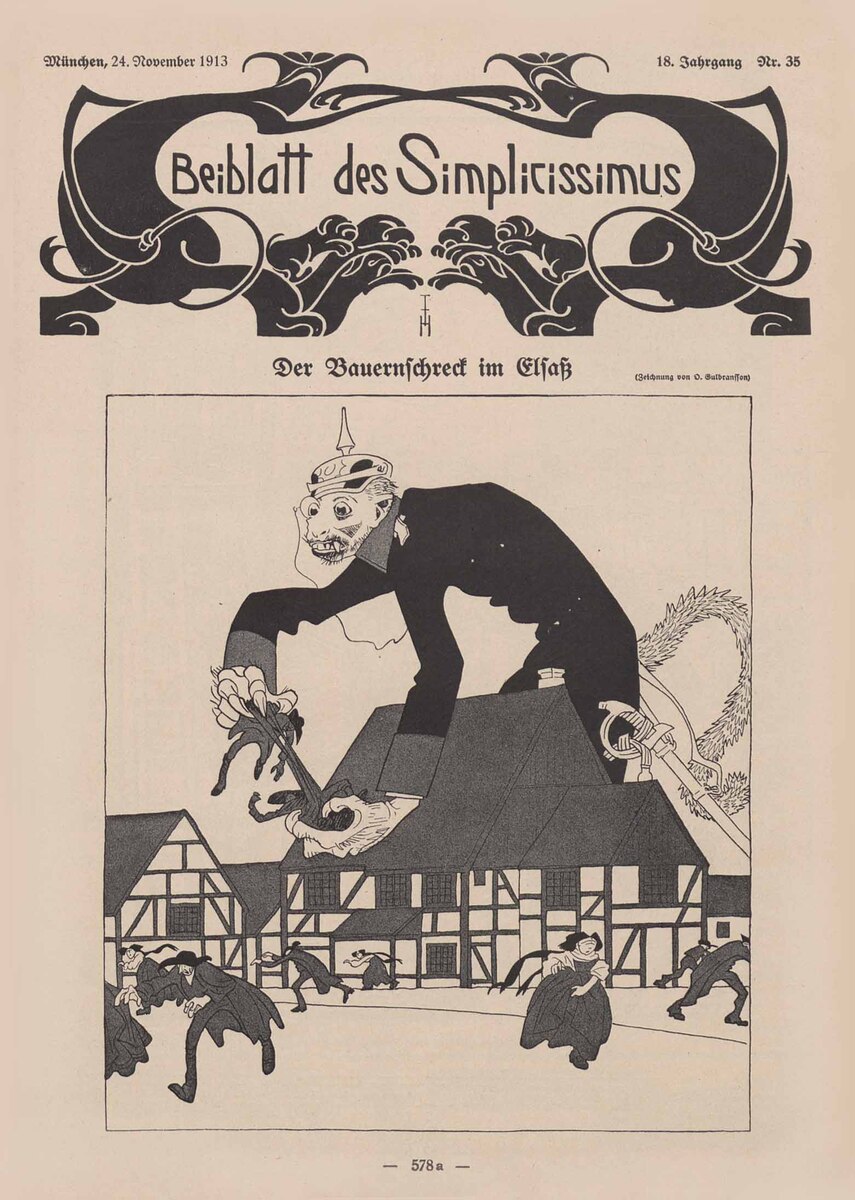
The cartoon was published in Simplicissimus, a German satirical magazine, in November 1913; the date adding reliability to the source and making it a useful means through which we can view the German population’s immediate reaction to the affair. The cartoon depicts the army as a humanoid rat that looms over the town; its scale represents the army’s power, while the terror it wreaks on the fleeing villagers reveals its abuse of this power. It suggests that the public were disillusioned by the lack of governmental or military accountability for their infringement on civil liberties. Interestingly, the intended audience was middle-class liberals, illustrating that the outrage was not limited to radicalised Marxists (as one might imagine), but was felt by much of the population. While the source displays popular opinion rather than elite decision-making, the outcry by different social groups would have drawn parallels with the 1905 revolution in Russia, which threatened Tsarism. German leadership would likely have noticed and been frightened by this parallel, rendering concerns about the source’s relevance to the government’s decision-making obsolete.
The government had adopted a policy of ‘social imperialism’ which was “aimed at deflecting the pressure for further political emancipation…even if it meant, as in 1914, the risk of war”.[19] For example, Germany risked war through brinkmanship (and Weltpolitik)in the hope of inspiring nationalism, distracting the masses from reform, and stabilising the Kaiserreich. Overall, the ‘escape forward’ theory has some merit and likely contributed to Germany’s decision for war. However, it is reductive because it fails to consider external factors, which makes it a limited, unbalanced argument. Therefore, it is less convincing than the argument that defensive concerns motivated Germany’s decision.
On 28 July 1914, when the geopolitical tensions simmering for over a decade finally exploded over the Sarajevo incident, WWI began. Germany’s decision to go to war on the 1st August was driven by a combination of defensive concerns, aggression, and the desire to ‘escape forwards’. However, defensive concerns appear to be the primary motivation, with the evidence vastly in support of this argument, and the primary sources on which it is based proving reliable. Fischer’s argument overstates German aggression, relying too heavily on Muller’s diary for evidence of the decision for war being made at the War Council, despite the ambiguity of its content, and on the September Programme, which projects war aims onto the pre-war period. The ‘escape forward’ argument is too limited (as it only considers domestic affairs) for it to be considered the primary motivation. Thus, to argue that either aggression or the ‘escape forwards’ theory was the main factor in Germany’s decision would be a mistake. However, both arguments hold some merit, and I believe that, while defensive concerns were the primary motivation, the potential for territorial expansion and the prevention of Socialist sentiment were opportunistic benefits.
References
[1] The Treaty of Versailles (1919). Available at:https://wwi.lib.byu.edu/index.php/Articles_231_-_247_and_Annexes (Accessed: 12 February 2026).
[2] Ritter, G. (1969). The Sword and the Scepter; The Problem of Militarism in Germany, p.82. Translated by Heinz Norden. Florida: University of Miami Press.
[3] Moltke, H. V. (1911). General von Moltke on the Schlieffen Plan (1911). Available at: https://alphahistory.com/worldwar1/von-moltke-schlieffen-plan-1911/ (Accessed: 3 February 2026).
[4] Fischer, F. (1967). Germany’s Aims in the First World War, p.21. New York: W. W. Norton & Company.
[5] Henig, R. (1994). ‘The Origins of the First World War: The Historical Debate’, p.38 History Review, (18).
[6] German Federal Foreign Office (1914). The German White-book (only Authorized Translation): How Russia and Her Ruler Betrayed Germany's Confidence and Thereby Caused the European War, With the Original Telegrams and Notes, p.46.Berlin: Liebheit & Thiesen.
[7] Clark, C. (1914). The Sleepwalkers: How Europe Went to War in 1914, p.519. London: Penguin Books Limited.
[8] Görtemaker, M. (1983). Deutschland im 19. Jahrhundert: Entwicklungslinien, p.357. Opladen: Bundeszentrale für Politische Bildung.
[9] Muller, G. A. (1912). The “War Council” (December 1912). Available at: https://ghdi.ghi-dc.org/sub_document.cfm?document_id=799 (Accessed: 22 March 2026).
[10] Fischer, F. (1975). War of Illusions: German policies from 1911 to 1914. New York: W. W. Norton & Company.
[11] Muller, G. A. (1912). The “War Council” (December 1912). Available at: https://ghdi.ghi-dc.org/sub_document.cfm?document_id=799 (Accessed: 22 March 2026).
[12] Taylor, A. J. P. (1969). War by Time-Table: How the First World War Began. London: Macdonald & Co.
[13] Fischer, F. (1967). Germany’s Aims in the First World War, p.105. New York: W. W. Norton & Company.
[14] German Federal Foreign Office (1914). The German White-book (only Authorized Translation): How Russia and Her Ruler Betrayed Germany's Confidence and Thereby Caused the European War, With the Original Telegrams and Notes, p.46. Berlin: Liebheit & Thiesen.
[15] Lenin, V.I. (1964). V. I. Lenin: Collected Works, Volume 22, p.191. Translated by Yuri Sdobnikov. Moscow: Progress Publishers.
[16] Lenin, V. I. (1964). V. I. Lenin: Collected Works, Volume 22, p.257. Translated by Yuri Sdobnikov. Moscow: Progress Publishers.
[17] Balfour, M. L. G. (1975). The Kaiser and his Times, p.159. London: Penguin Books Limited.
[18] Gulbransson, O. (1913). ‘Der Bauernschreck im Elsass’. [Cartoon]. Simplicissimus, 24 November.
[19] Waller, B. (1975). ‘Hans-Ulrich Wehler on Imperial Germany (1871-1918)’, pp.65,67, British Journal of International Studies, 1(1).
Bibliography
Books:
Balfour, M. (1975). The Kaiser and his Times. London: Penguin Books Limited.
Clark, C. (1914). The Sleepwalkers: How Europe Went to War in 1914. London: Penguin Books Limited.
Fischer, F. (1967). Germany’s Aims in the First World War. New York: W. W. Norton & Company.
Fischer, F. (1975). War of Illusions: German policies from 1911 to 1914. New York: W. W. Norton & Company.
German Federal Foreign Office. (1914). The German White-book (only Authorised Translation): How Russia and Her Ruler Betrayed Germany's Confidence and Thereby Caused the European War, With the Original Telegrams and Notes. Berlin: Liebheit & Thiesen.
Görtemaker, M. (1983). Deutschland im 19. Jahrhundert: Entwicklungslinien. Opladen: Bundeszentrale für Politische Bildung.
Lenin, V. I. (1964). V. I. Lenin: Collected Works, Volume 22. Translated by Yuri Sdobnikov. Moscow: Progress Publishers.
Ritter, G. (1969). The Sword and the Scepter; The Problem of Militarism in Germany. Translated by Heinz Norden. Florida: University of Miami Press.
Taylor, A. J. P. (1969). War by Time-Table: How the First World War Began. London: Macdonald & Co.
Other:
Gulbransson, O. (1913). ‘Der Bauernschreck im Elsass’. [Cartoon]. Simplicissimus, 24 November.
Henig, R. (1994). ‘The Origins of the First World War: The Historical Debate’, History Review, (18).
Moltke, H. V. (1911). General von Moltke on the Schlieffen Plan (1911). Available at: https://alphahistory.com/worldwar1/von-moltke-schlieffen-plan-1911/ (Accessed: 3 February 2026).
Muller, G. A. (1912). The “War Council” (December 1912). Available at: https://ghdi.ghi-dc.org/sub_document.cfm?document_id=799 (Accessed: 22 March 2026).
The Treaty of Versailles. (1919). Available at: https://wwi.lib.byu.edu/index.php/Articles_231_-_247_and_Annexes (Accessed: 12 February 2026).
Waller, B. (1975). ‘Hans-Ulrich Wehler on Imperial Germany (1871-1918)’, British Journal of International Studies, 1(1).
Essay Competition
This essay was the joint winner of the 2026 Colin Hardy Essay Award. Colin, a former headteacher and author, was a member of The Western Front Association. His family sponsor this annual competition in his memory.
Students aged 16–18 are invited to submit an essay or project report of between 2,000 and 4,000 words on any First World War-related subject that interests them. Many of the entries were outstanding, and the judges had a hard time choosing the winners.
Images (other than Fig 1) have been added to the article for illustrative purposes.
Becoming a member of The Western Front Association (WFA) offers a wealth of resources and opportunities for those passionate about the history of the First World War. Here's just three of the benefits we offer:

With around 50 branches, there may be one near you. The branch meetings are open to all.

Utilise this tool to overlay historical trench maps with modern maps, enhancing battlefield research and exploration.

Receive four issues annually of this prestigious journal, featuring deeply researched articles, book reviews and historical analysis.


