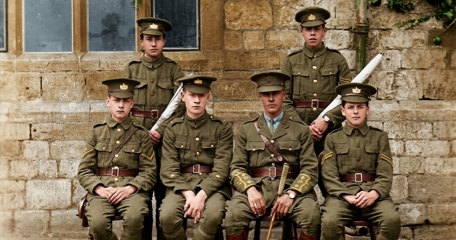
‘I Am Fortunately in Splendid Health’
This article first appeared in Lochnagar Crater Today, the journal of the Friends of Lochnagar, in Issue 11 (Spring 2022), as ‘I Am Fortunately in Good Health’. It is reproduced here with kind permission, with a few details corrected by the author from George’s original letters.
Lochnagar Crater Today was edited by Rob Kirk and ran to thirteen issues between 2017 and 2023. All of them, with more than a hundred stories about the Somme and the men who fought there on both sides of the wire, are free to read on the Lochnagar Crater website.
There are few greater treasures than accounts of what happened on the Somme battlefield more than a hundred years ago written by people who were there, particularly from men who fought near Lochnagar Crater. Captain George Swinburn of the Tyneside Irish left a wonderful record, some of which appeared in John Sheen’s 1998 book The Tyneside Irish. This article is drawn from a superb family archive and is written by Captain Swinburn’s grandson, Chris Swinburn.
My grandfather, George Swinburn, was born in Whickham, Co Durham in 1882 and grew up in Jesmond, Newcastle upon Tyne. He worked, like his father before him, for North Eastern Railways (NER).
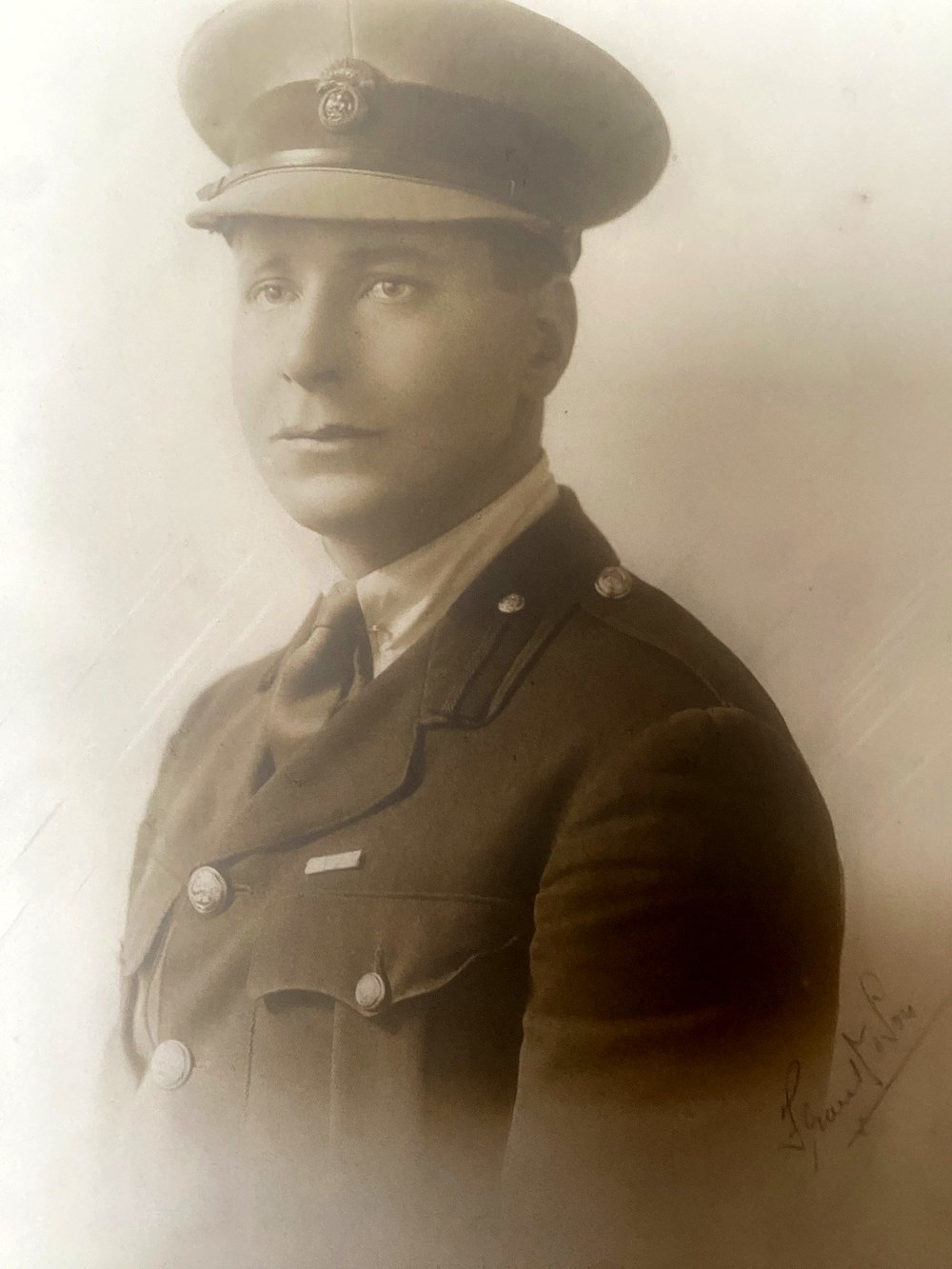
Like much of his generation he responded to the call to arms in September 1914, joining the NER Battalion of the Northumberland Fusiliers (NF) as a private.
Initially, he drew an army allowance of three shillings per day and was allowed to continue his railway work whilst preparations were made to provide barracks, uniforms and equipment for the new recruits.
In November 1914, George was gazetted lieutenant and in January he obtained his captaincy. He was then transferred into the 24th Northumberland Fusiliers, 1st Tyneside Irish service Battalion.
The Battalion’s early training was on Newcastle’s Town Moor, with parades in the city centre, particularly in Eldon Square.
On March 12th, 1915, the Battalion moved to Alnwick for more intensive training. George’s diary records that he was billeted in the Star Hotel, Alnwick, and that training was mainly trench building, musketry, physical exercise and route marches.
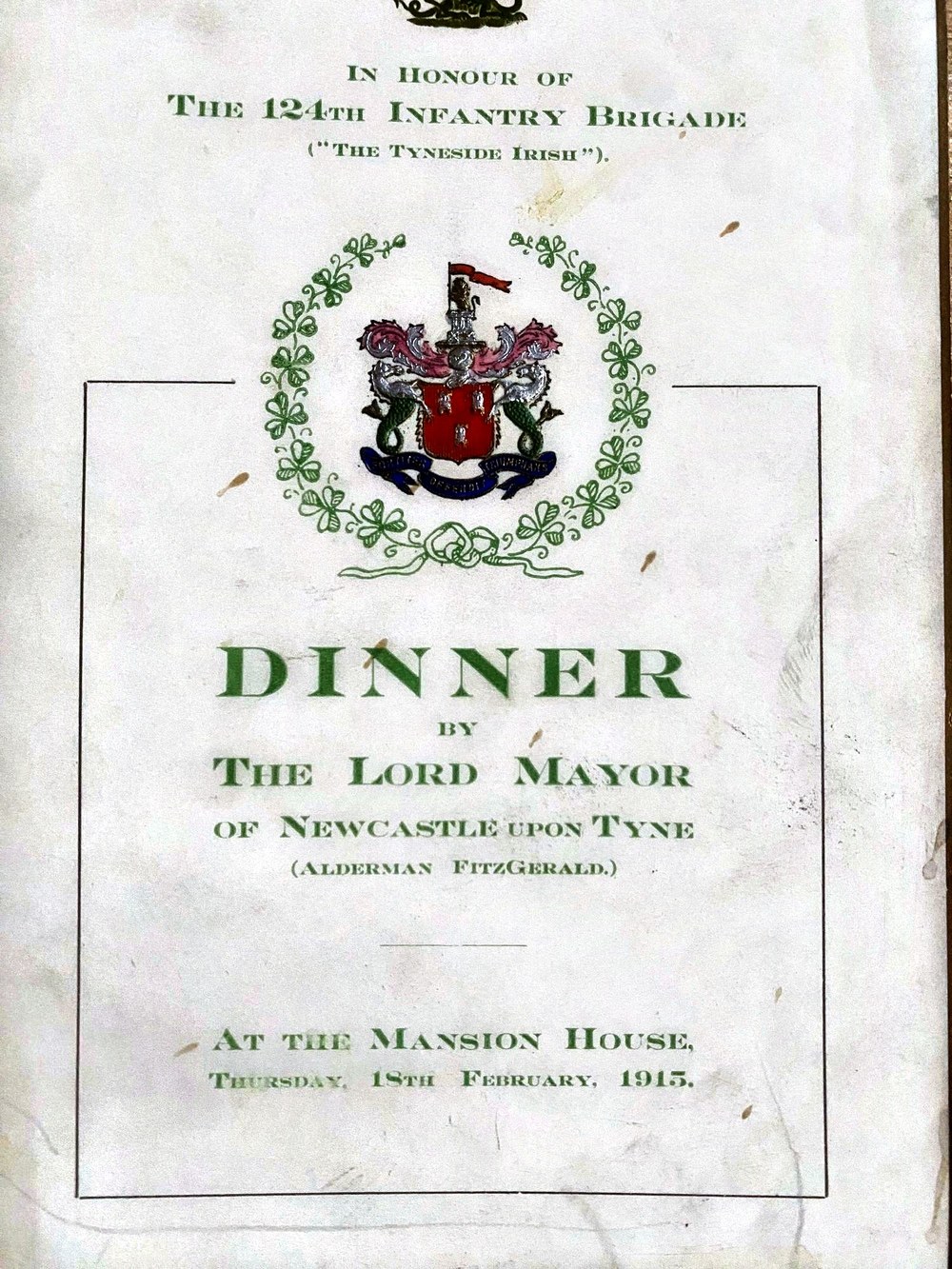
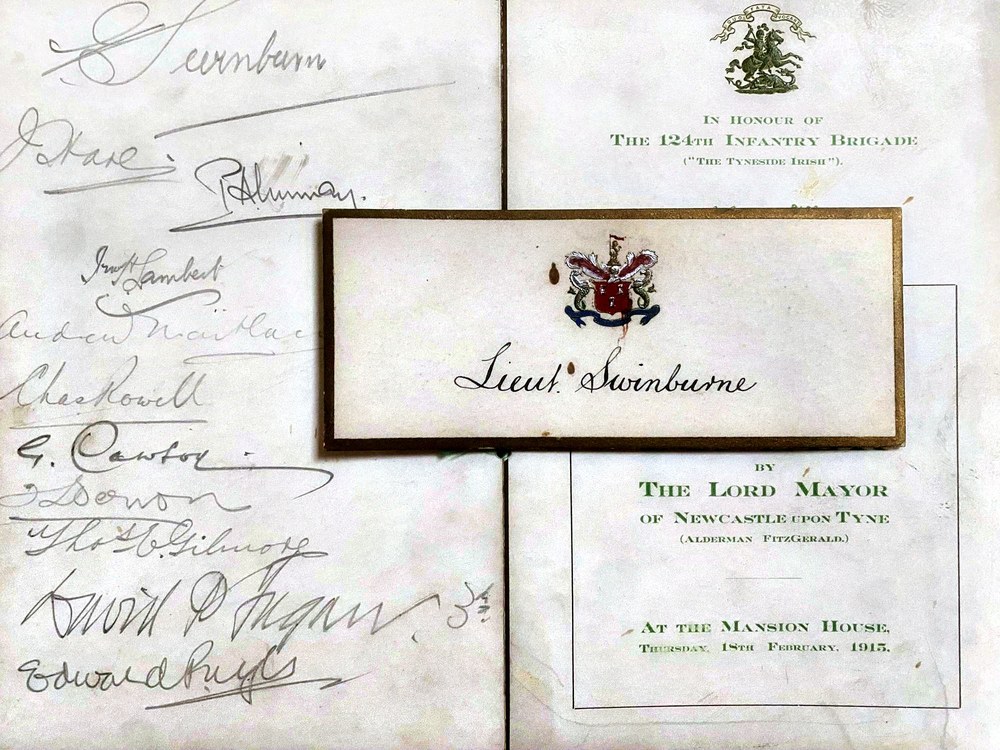
Evenings were spent at the cinema, music halls and for the officers an occasional formal dinner and dance. This invitation and menu for a dinner, for example, survives in the family archive.
George’s father Ralph, chief accountant for NER, died on March 15th, so George returned to Newcastle.
In his diary, he notes that he stayed with the Carr family, having recently become acquainted with their younger daughter Phoebe, then aged 20.
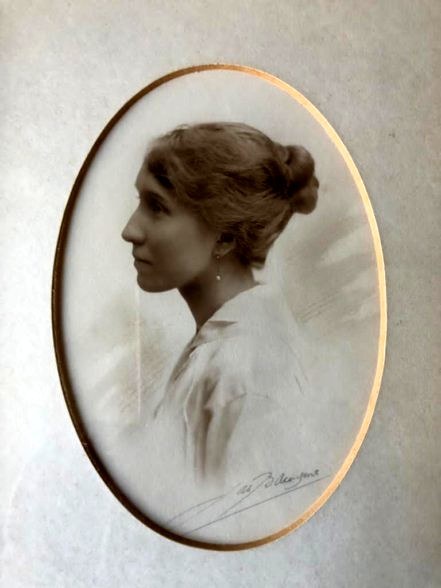
Phoebe Carr, later to become George’s wife (and my grandmother), features very much in George’s diary, with numerous letters and visits home on leave throughout the rest of the war.
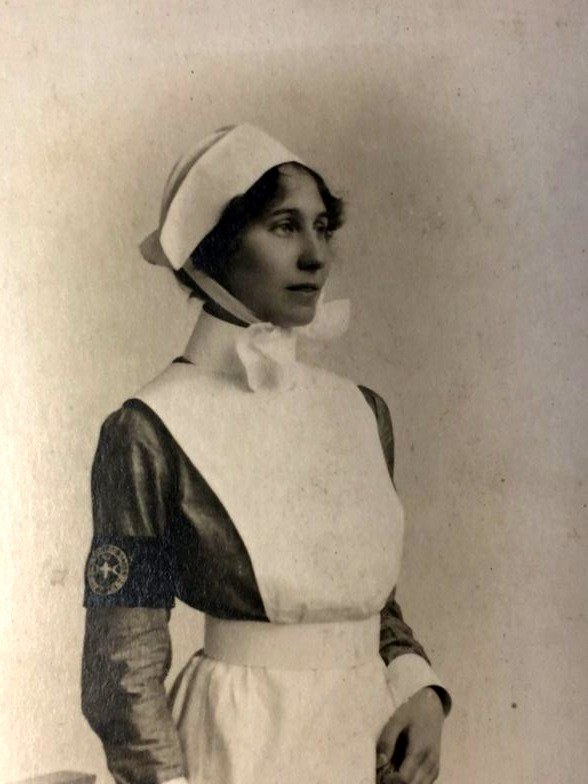
He wrote to Phoebe, sometimes on a daily basis, during the entire war and these letters survive and are in my possession. Phoebe served as a nurse.
Training continued for ten months, including at Woolsington Hall, now the site of Newcastle Airport, where all four Battalions of the Tyneside Irish came together as a Brigade, and then on to Salisbury Plain. George fell sick with fever. During his convalescence, he spent as much time as possible with Phoebe, recording on the 28th that my heart is with Phoebe. On September 1st, the eve of his delayed departure to Salisbury Plain, his diary records serious conversation with Phoebe, understanding.
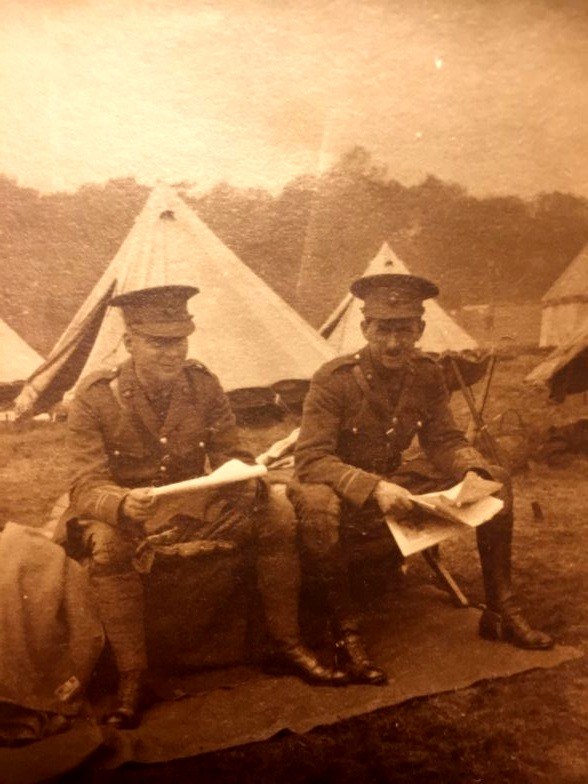
In October, he had leave and was immediately on the train from Warminster to Newcastle. He saw Phoebe every day, and they became engaged. On the train back to Warminster, he took time to write to Phoebe, expressing his happiness at being engaged to the best and sweetest girl in the world.
Three months later, at the start of 1916, George was off to France on board the SS Mona’s Queen.
He wrote to Phoebe on the eve of departure and again in the early hours of the morning of 11 January, en route to Southampton, where the Battalion embarked.
Do not worry Phoebe, he wrote, I am in good form. We will have some happy times together after this.
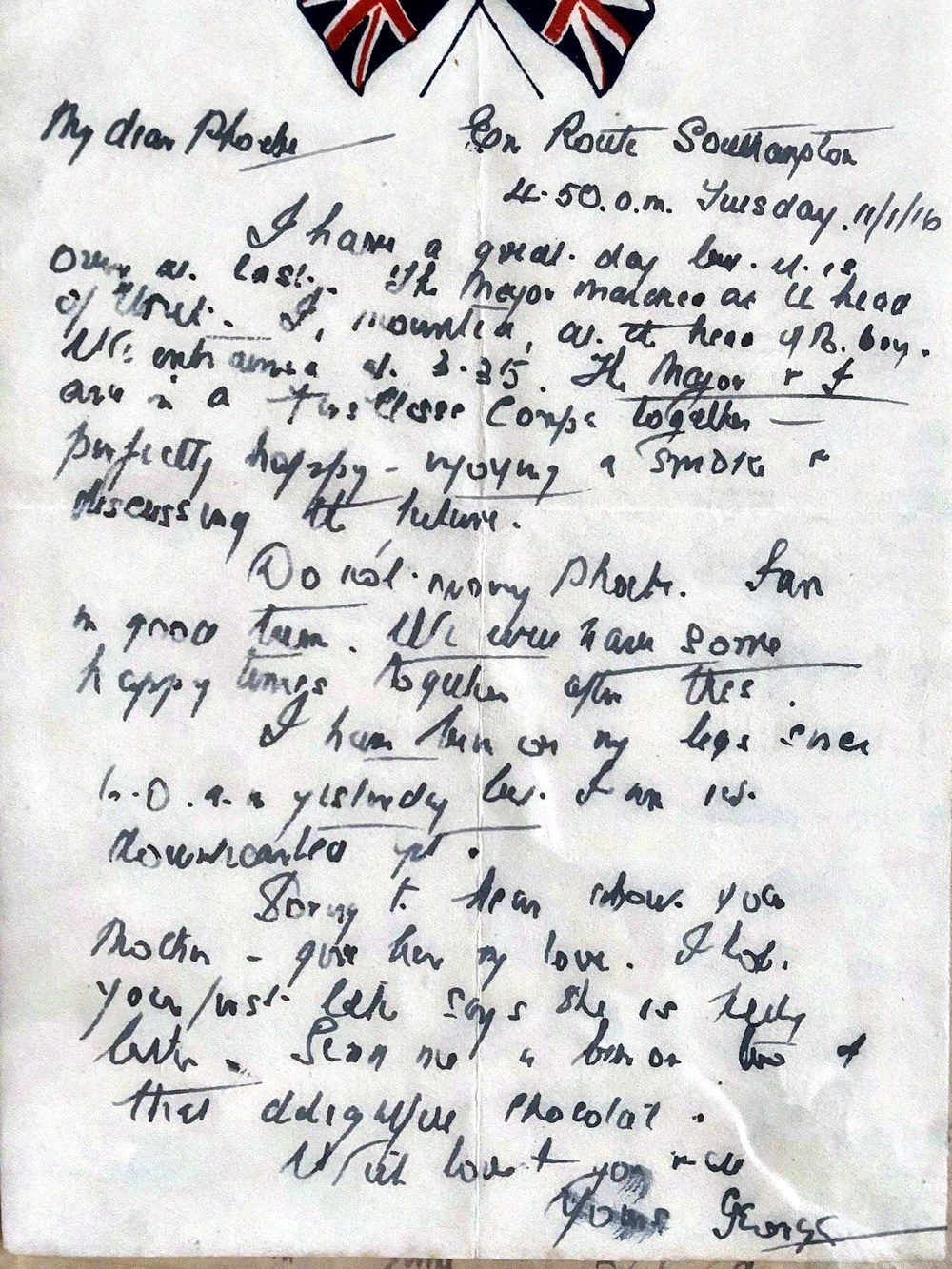
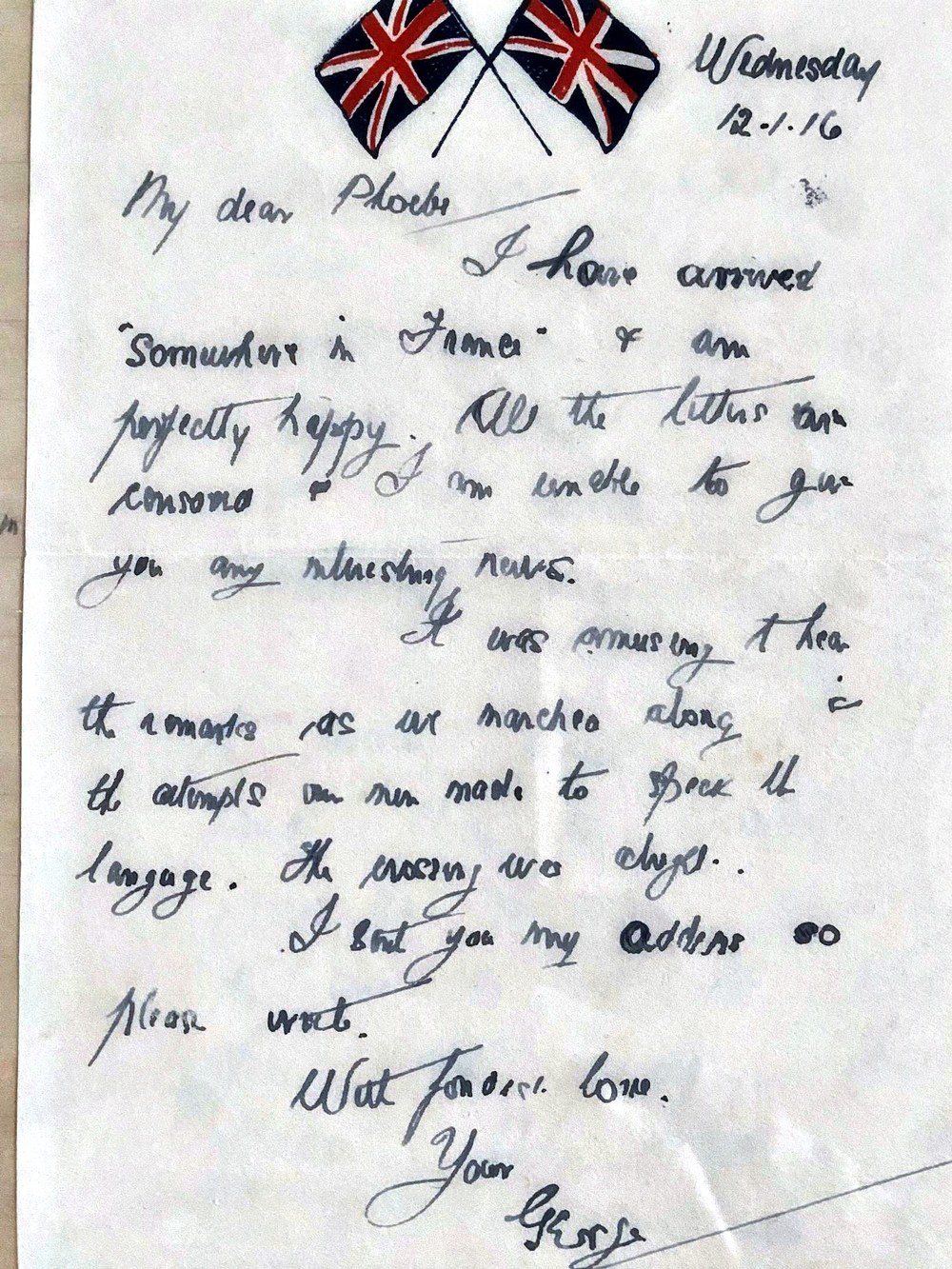
This is followed by the traditional letter: I have arrived somewhere in France, and am perfectly happy.
The Battalion records and George’s diary document their movements in France during the early months of 1916. By a combination of route marching and trains the Battalion reached the Armentières area. They had their first experience of the trenches on February 9th 1916 in this sector, alternating four-day periods in the trenches with similar periods behind the line. There was little action, just occasional sniping or light bombardment and minimal casualties.
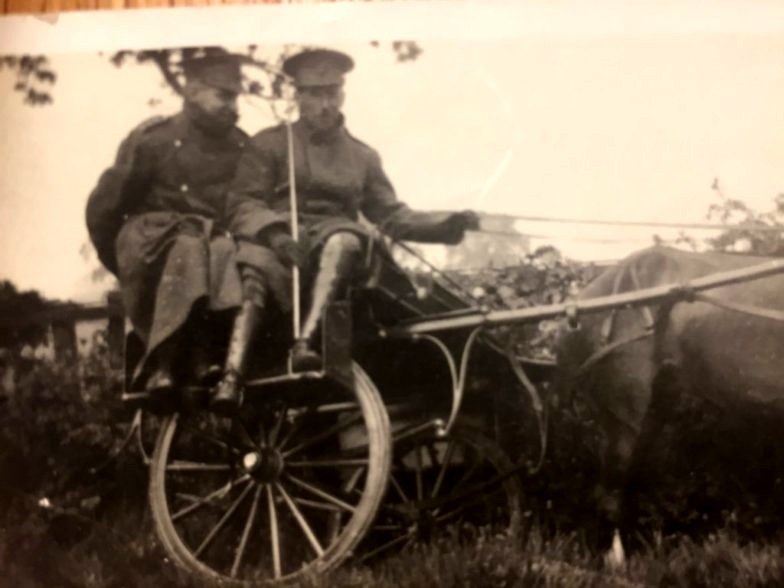
In May, the Battalion moved to the Somme, to Franvillers and Dernancourt near Albert, and on May 9th to Bécourt near La Boisselle.
Preparations were already under way for the big Allied Somme offensive, but George had leave at the end of May. He headed, of course, to Newcastle, to spend time with his family and Phoebe. He was back in the front line in France on June 9th.
In the months leading up to the Somme offensive, George was writing at least weekly to Phoebe. These letters invariably were about life at home and the family, and never mentioned, as seemed usual at that time, where they were, life in the trenches and what it was like for the men. Rather, he went to great lengths to reassure Phoebe that all was well and that he was in good spirits and health.
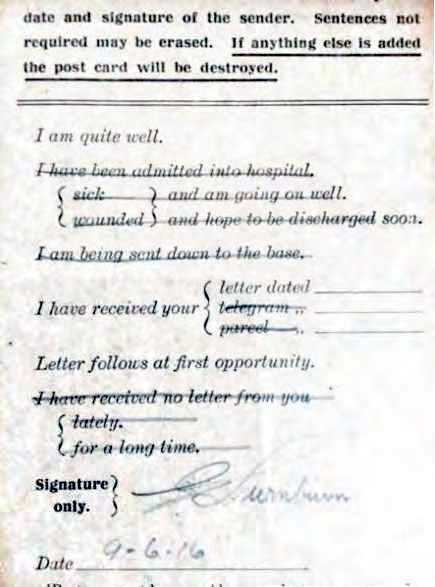
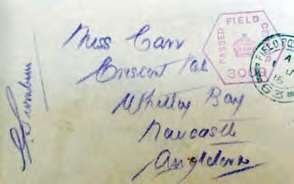
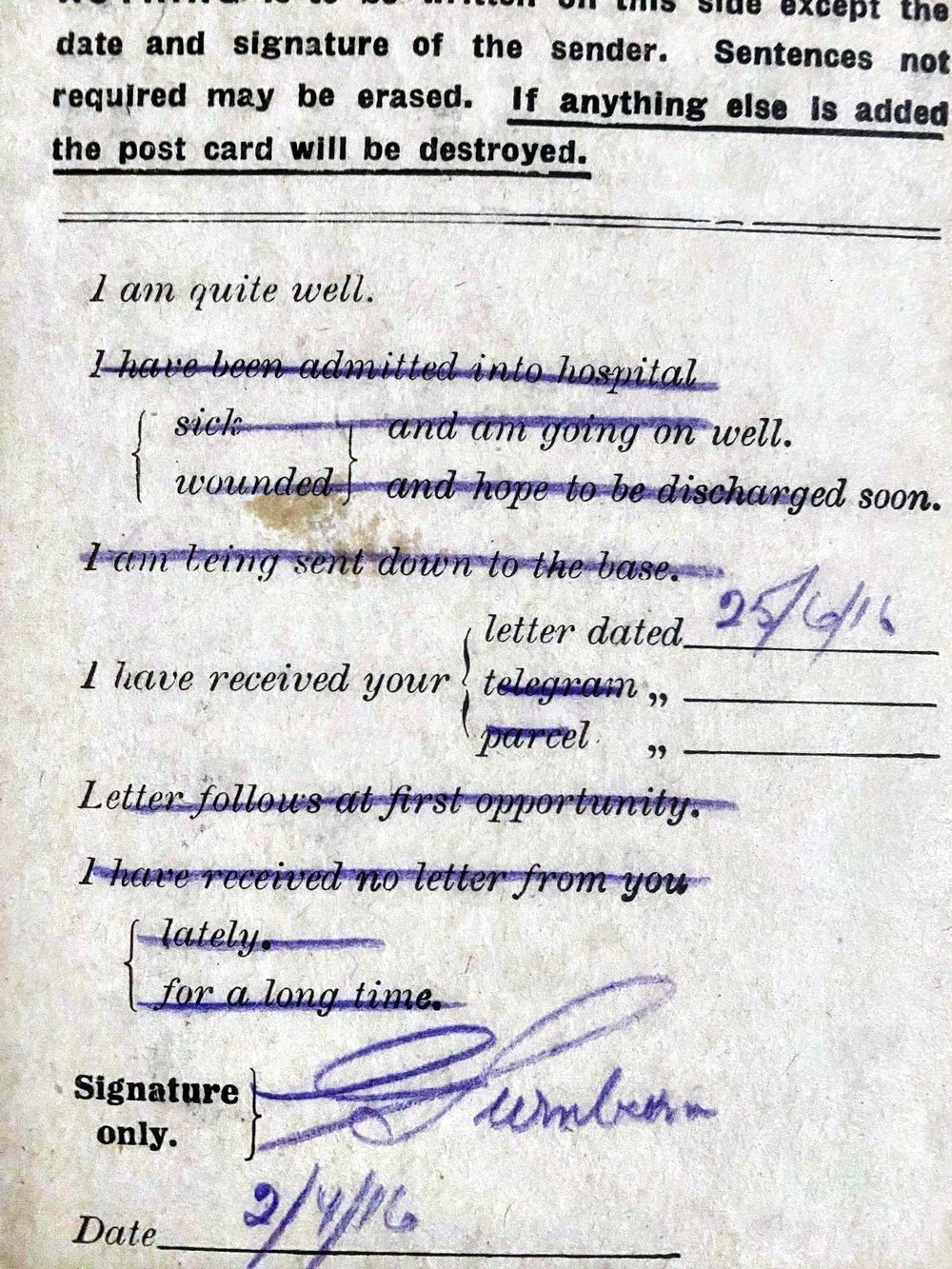
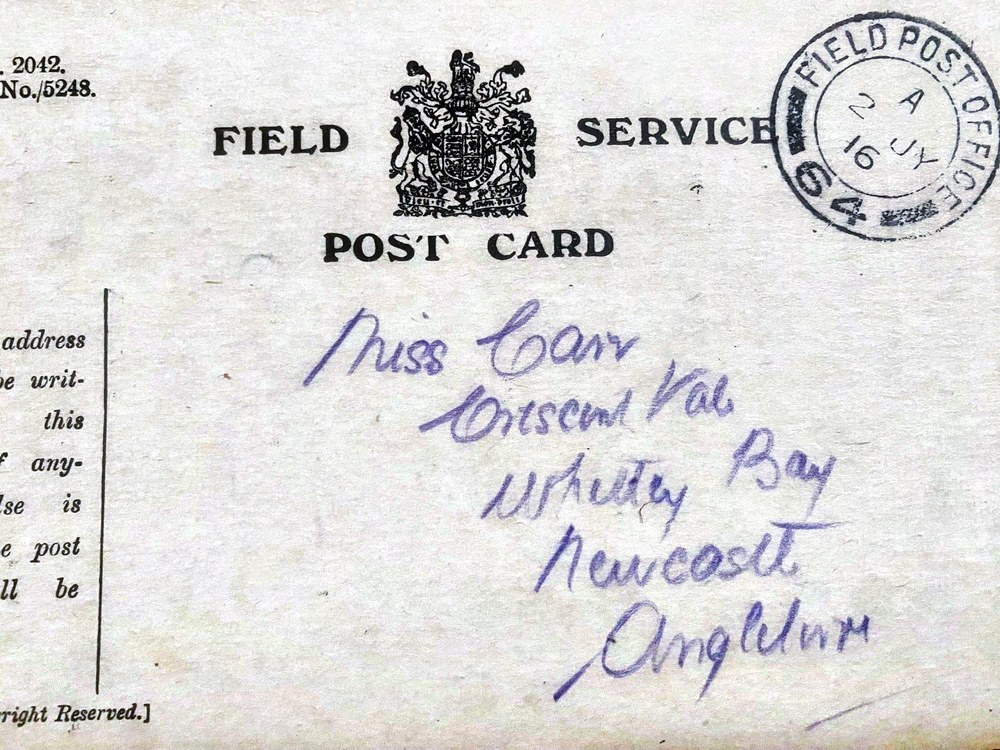
Sometimes, in addition to his letters, a standard pre-printed field postcard would be sent as well, with various options deleted as appropriate, to say that he was alive and well. Phoebe evidently wrote frequently too, but these letters were not kept.
Additionally, I remember her telling me that whenever possible she would send a box of kippers from Craster in Northumberland to George at the front to share with his men. Apparently, the wartime railway network was so efficient that these invariably arrived in the trenches within 24 hours of despatch.
His diary and the Battalion records detail daily working parties in forward areas most days in mid-late June 1916. However, on June 28th the Battalion was moved to camps west of the Dernancourt–Albert railway and at 10pm on June 30th to assembly areas near Bécourt Wood, prior to the attack on July 1st.
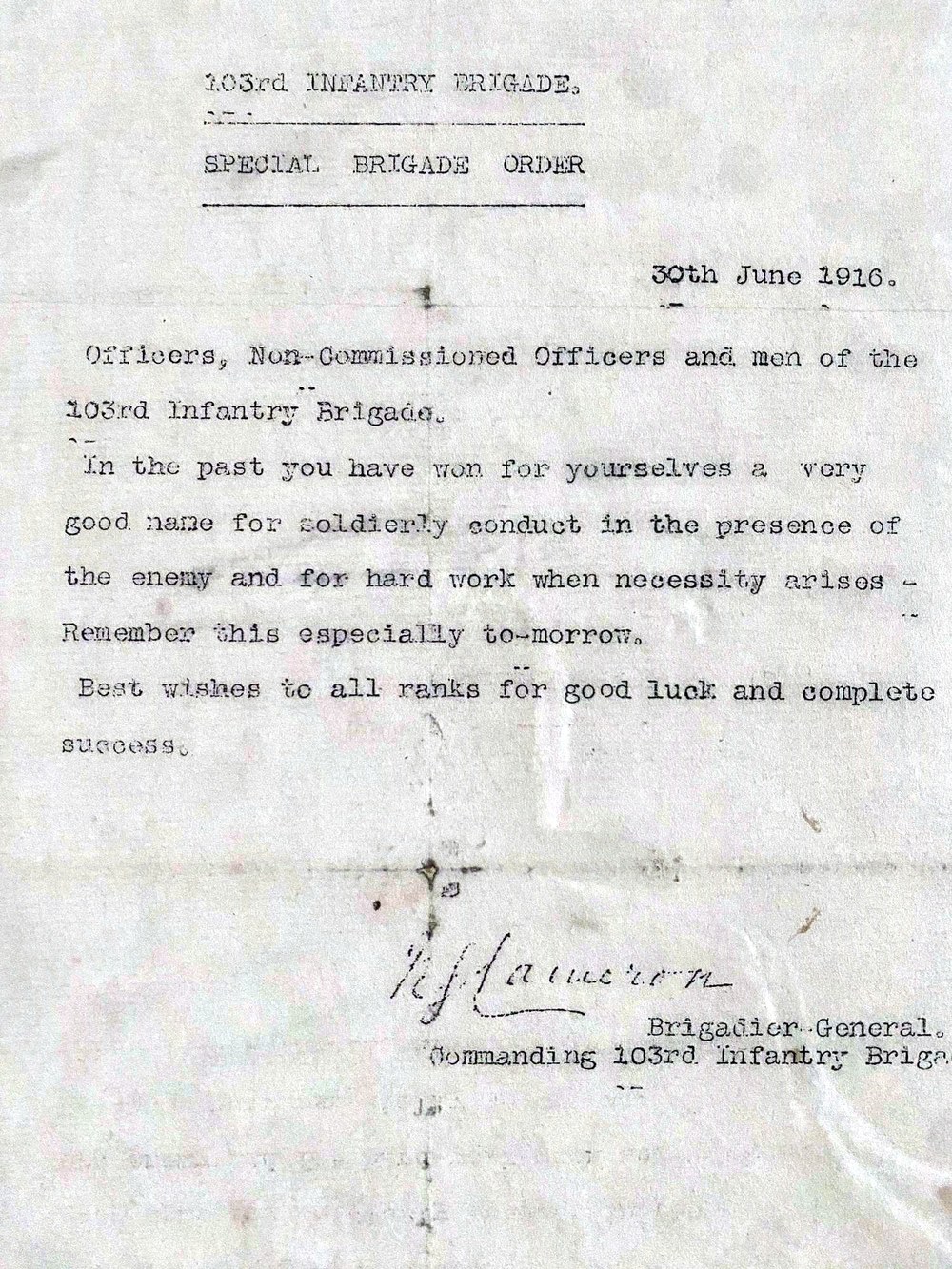
The 103rd Infantry Brigade, of which the 24th NF were a part, received a special order on the eve of battle from the Brigade commanding officer, Brigadier-General Cameron:
Officers, Non-Commissioned Officers and men of the 103rd Infantry Brigade. In the past you have won for yourselves a very good name for soldierly conduct in the presence of the enemy and for hard work when necessity arises. Remember this especially tomorrow.
Best wishes to all ranks for good luck and complete success.
George wrote to his Phoebe on the eve of battle.
My dear Phoebe,
I do not suppose I will have time to write to you for a few days but my dearest I am fortunately in splendid health and quite look forward to the immediate future because it will be the means to an end. I hope that God will comfort you and bless you – personally I leave my future to him and do so with confidence.
Your own true love George
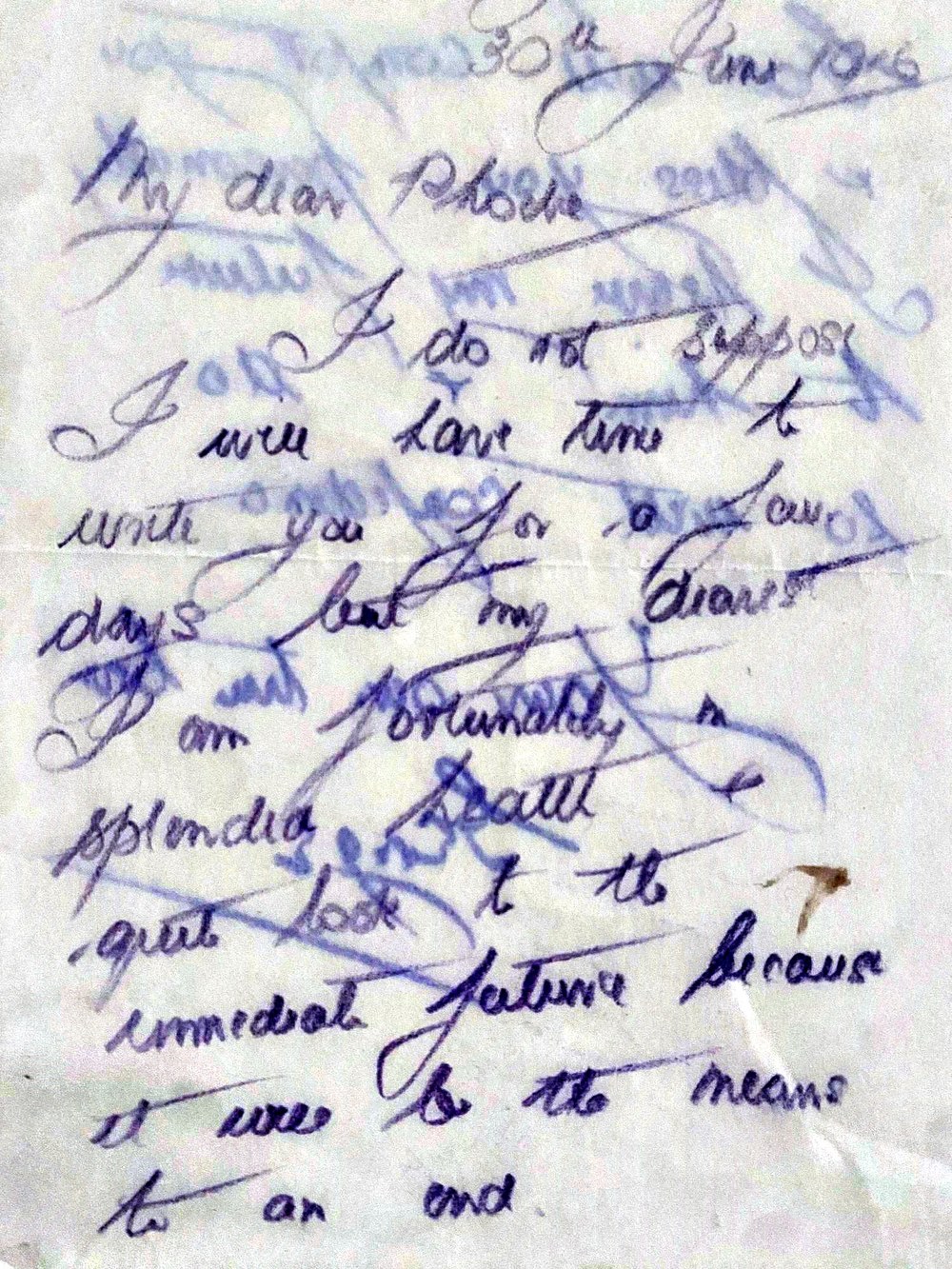
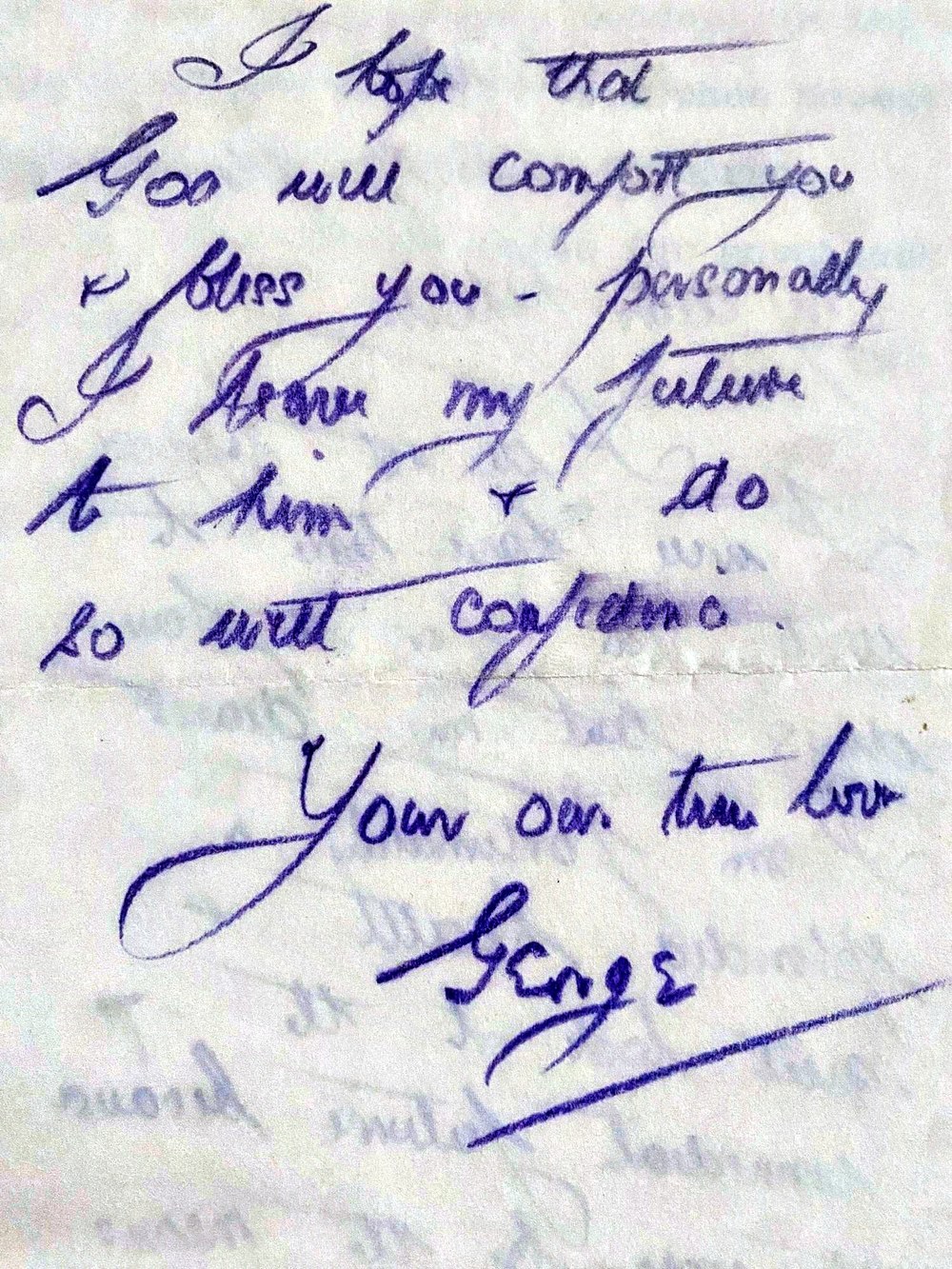
George’s diary entry for Friday June 30th contains some coded abbreviations including Z+5 ready to advance and Z+10 Move, and also in capitals THE NIGHT. His diary entry on Saturday July 1st has the entry Great Battle of Contalmaison and La Boisselle. (The term Battle of the Somme was not used at the time.)
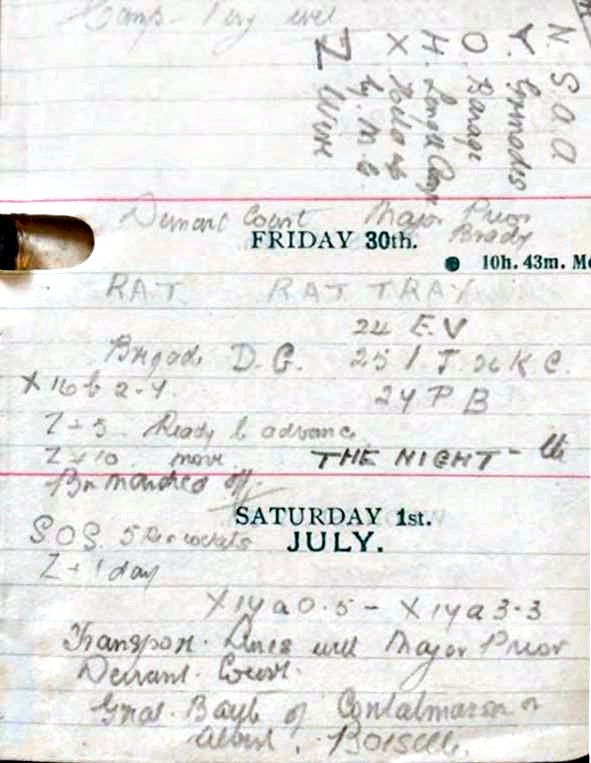
George does not refer in his diary to the explosions of the giant mines (Y Sap and Lochnagar) at 7.28am on July 1st 1916 but the sight and sound of these tremendous explosions which heralded the start of the offensive from such a short distance away must have been extraordinary.
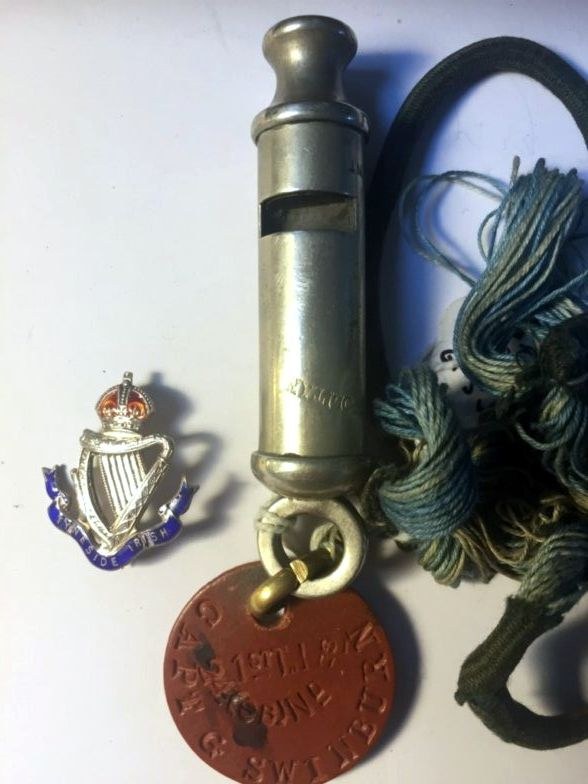
The 34th Divisional front was 2,000 yards long and crossed the Albert–Bapaume road, with the 103rd Brigade, of which the 24th NF were a part, in second and third line trenches to the south of the road in the Tara–Usna hills, overlooking what is now known as Sausage Valley. Battalions leaving from the front line trenches were tasked with taking the enemy front line and those leaving from the second and third line trenches, which included the 24th Battalion NF (Tyneside Irish), were tasked with leap-frogging the enemy front line and penetrating further behind the enemy lines. At 7.30am George Swinburn will have blown the whistle he kept throughout the war (which I have) and led his men of the 24th Battalion NF forward towards the enemy lines.
The 103rd Brigade, including the 24th NF, left from rear trenches and moved down the slopes of the Tara–Usna hills towards the now vacating British front line with the objective of attempting to pass between La Boisselle and Lochnagar Crater, and push forward through the German second and third line trenches. However, as history books record, the German defences and dugouts had not been destroyed and the advancing troops became easy targets for German bombardment and machine guns with heavy casualties.
He must have returned to the British lines at the end of the day because he sent a field postcard to Phoebe signed and franked on Sunday July 2nd, in which he was able to state that he had received her letter of June 25th and that he was quite well. His diary reveals that he searched Bécourt for wounded before leaving the British lines for Contalmaison at 6am on July 2nd. He and other survivors of the 24th NF were able to penetrate German second and third line defences and it is likely some even reached the outskirts of Contalmaison before having to withdraw due to lack of support. His diary indicates that he passed through Scots Redoubt, a stronghold behind the German front line, which was taken after fierce fighting by a mixed band of Scots, Suffolks, Lincolns and Tynesiders. This group held out until July 4th, when they were relieved. George made his way back to Bécourt Wood and then Dernancourt, where survivors were inspected by Rawlinson on July 5th.
It’s impossible for me to imagine the emotions he and his surviving comrades must have had to struggle with after the terrible trauma, both mental and physical, of the last few days. Records indicate that on July 1st, the casualties for the 1st Battalion Tyneside Irish were 18 officers and 602 other ranks killed or wounded, many before they had even reached their own front line. These men had enlisted together from close communities on Tyneside, lived and trained together for nearly two years and many of them were killed in about the time it will have taken to read this article.
George Swinburn continued to serve with the NF for the rest of the war, including at the Battle of Arras in Spring 1917. He was at Dunkirk for the latter part of the war using his railway experience in a transport role.
Here he was awarded the Military Cross for gallantry leading an action in which he and a small group of Tynesiders rescued a number of Sopwith planes from a burning hangar whilst it was being bombed from the air.
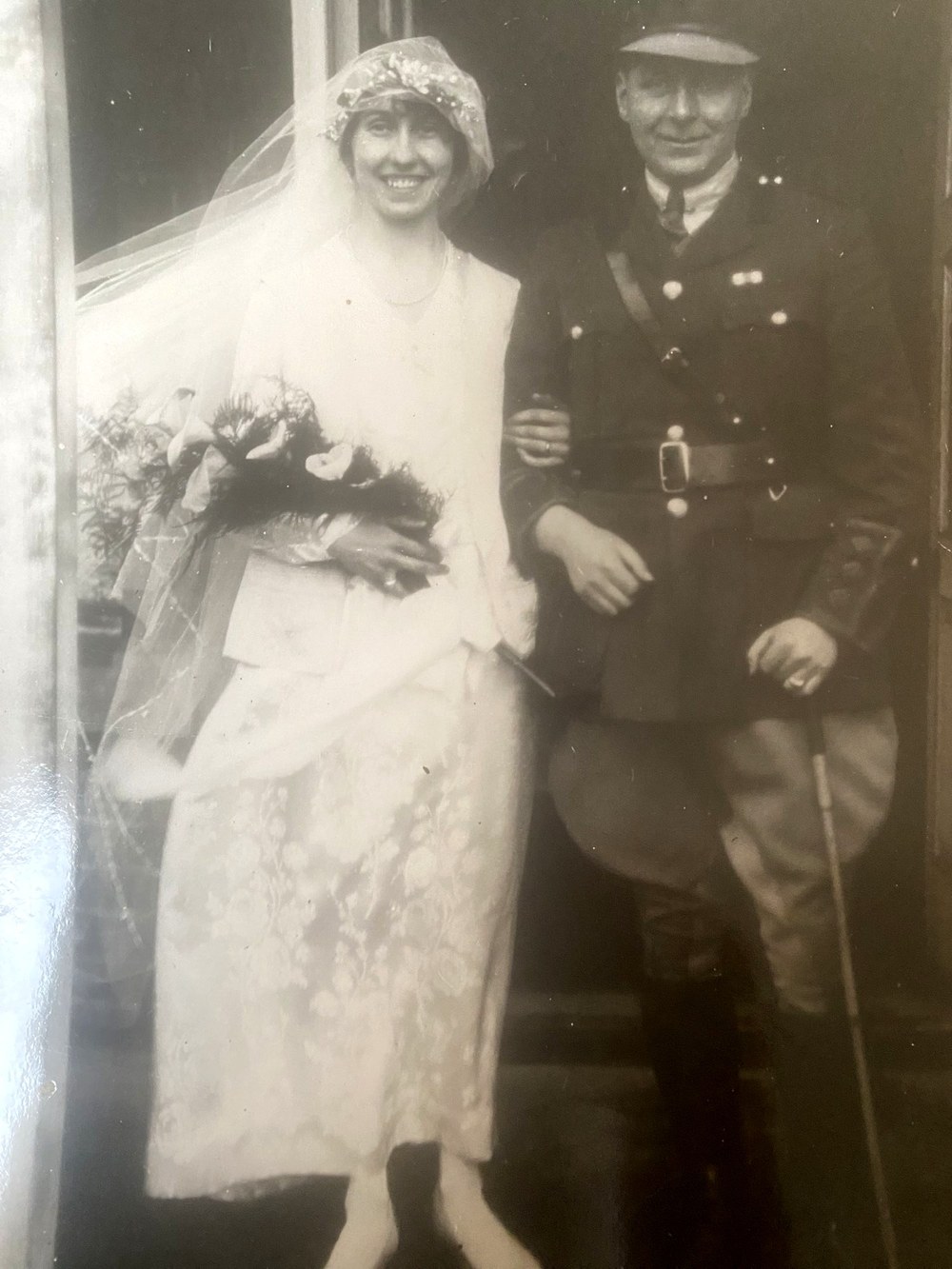
He was demobilised in early 1919, and upon returning to Newcastle married his sweetheart Phoebe Carr on March 19th 1919.
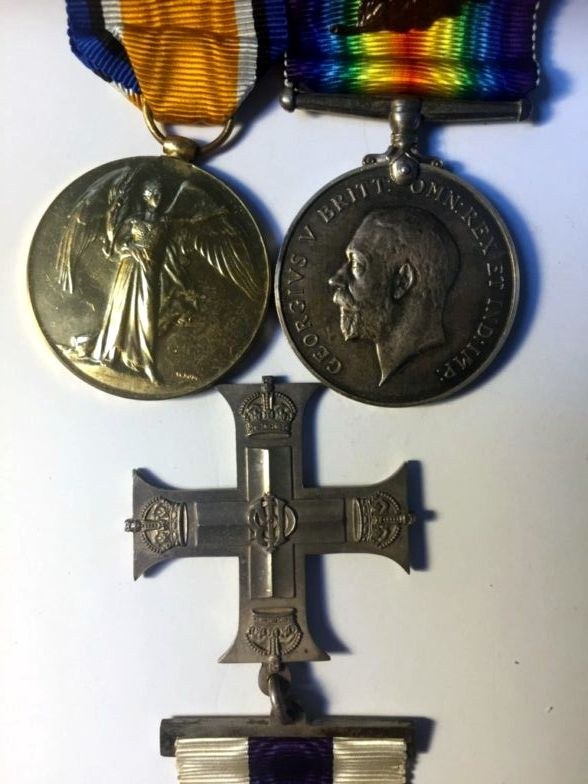
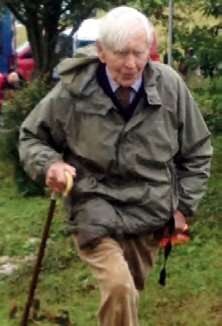
George died in 1939 when their only child, my father Ralph, was aged 14. It was a particular pleasure, and a very emotional occasion, to be able to take my father to the centenary service held at Lochnagar on July 1st, 2016. Ralph was then aged almost 91.
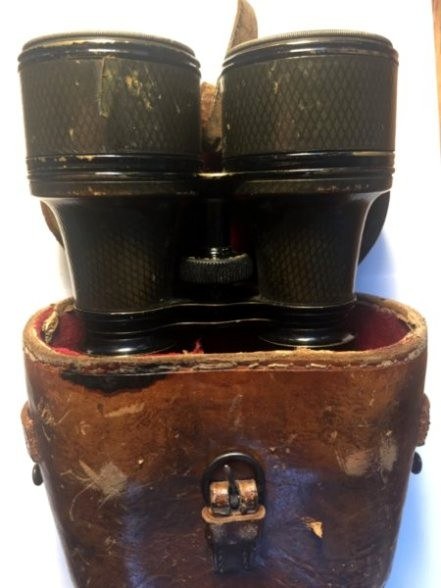
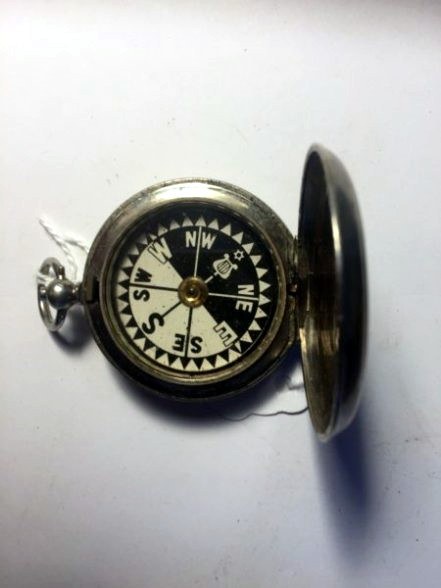
Our family has been particularly fortunate in having inherited many artefacts from George’s war experience.
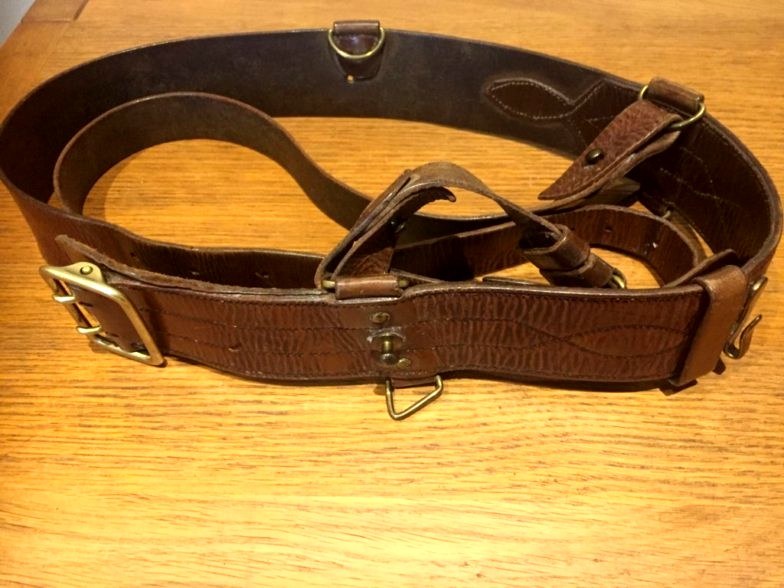
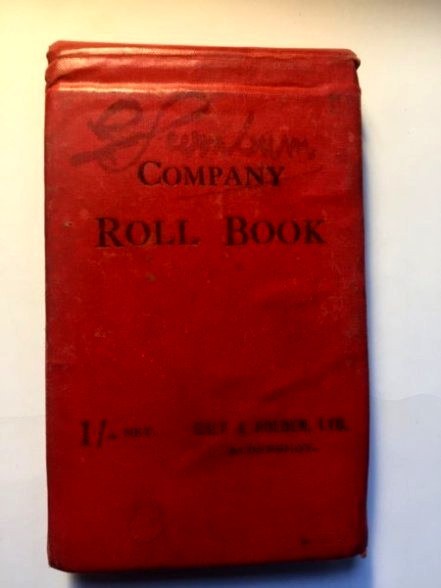
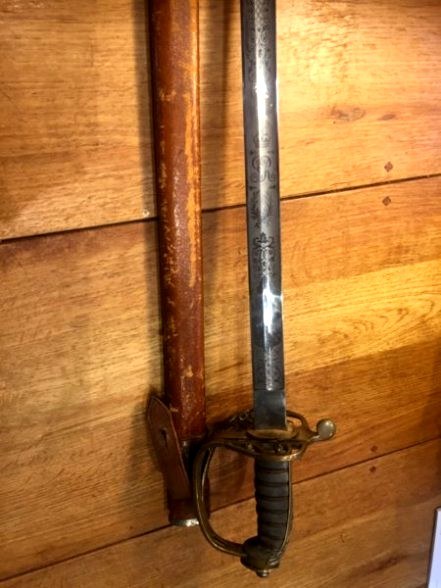
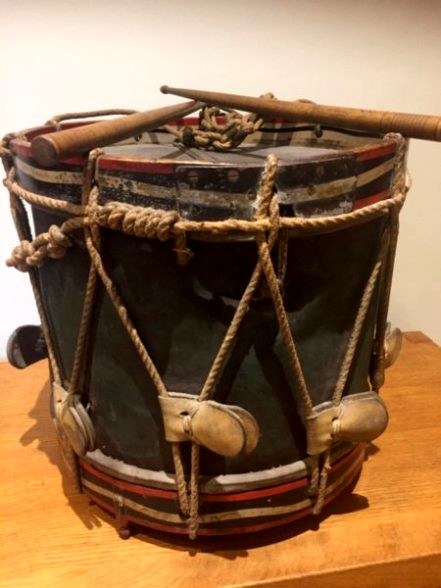
Footnote
On June 14th, 1916, George’s sister Mary married Lt Launcelot Shackleton, 26th NF, who was killed less than a year later in April 1917, just outside Arras. George recorded that Launce had failed to return during an attack on a chemical factory at Roeux. He sought permission to search for Launce’s body, which was eventually found and retrieved, and George was able to place a cross over his grave. Launce is now buried at Crump Trench Cemetery.
His widow Mary (Granny Shack to the family) was present at my christening in 1954.
About the author
Chris Swinburn was born and grew up in the Tyne Valley. He recently retired from his career as a consultant physician in Somerset, where he and his wife Emma now live, enjoying their grandchildren and their love of cycling and outdoor pursuits.
Acknowledgements
Thanks to John Sheen’s The Tyneside Irish (2010, Pen & Sword Military), and to Chris Swinburn for sharing the family archive. Above all: thanks to Captain George Swinburn for his service and for leaving such an extraordinary record.
About Lochnagar Crater Today
Lochnagar Crater at La Boisselle was created by the mine blown beneath the German lines at 7.28am on 1 July 1916, the first day of the Battle of the Somme. Saved by Richard Dunning, who bought the site, it is cared for by the Friends of Lochnagar as a memorial to all who suffered there, on both sides.
Lochnagar Crater Today, the Friends’ journal, was edited by Rob Kirk from 2017 to 2023. Its thirteen issues carry more than a hundred stories about the Somme, mostly about the people who fought there and many told by their descendants. They are free to read at lochnagarcrater.org/archives/lochnagar-crater-today. This article appeared in Issue 11, Spring 2022.
To find out more about the Crater, the Friends and the annual 1 July ceremony, visit lochnagarcrater.org.
Becoming a member of The Western Front Association (WFA) offers a wealth of resources and opportunities for those passionate about the history of the First World War. Here’s just three of the benefits we offer:

Explore over 8 million digitized pension records, Medal Index Cards and Ministry of Pension Documents, preserved by the WFA.

Featured on The WFA's YouTube channel are modern day re-interpretations of the inter-war magazine 'I Was There!' which recount the memories of soldiers who 'were there'.

The WFA regularly makes available webinars which can be viewed 'live' from home. These feature expert speakers talking about a particular aspect of the Great War.
Other Articles

Mission Command at Mons: The BEF's Decentralised Command Philosophy, August 1914
Read more
Not all Barons were Red: Examples of German WW1 Aces and their colour schemes
Read more