Remembering the Three Armies of the Somme: The Armistice Day address at the Guards Chapel
Prior to Mungo's address at the Guards Chapel, we heard a rendition of a song 'The Devon Brigade' by James Strudhome and Eddie Bishop, which culminated in the blowing of an officer's whistle to represent an attack being launched.
Following that moving rendition of the Devon Brigade, and after that loud blast from an officer’s whistle used at the Somme in 1916, it is a great honour and privilege to give this address today – ‘Remembering the Three Armies of the Somme’.
All experienced soldiers, whether the bold and the brave, or the cautious and the cunning, understand equally the enduring and universal truth that terrain – the lie and texture of the ground – influences not only the effect of weapons used in combat, but also shapes the tactics employed, and often, the outcome. While the Somme battlefield of 1916 might seem unremarkable in this general regard, its specific form favoured the German defender, regulating both the pace and price of the fighting.
Let me paint a picture of this now hallowed ground, on which hundreds of thousands fought and died, and for which reason we remember solemnly their service, suffering and sacrifice today, 110 years on.
The great crook of the upper Somme and the tributary vale of the Ancre intersect a rolling tableland, dotted with little towns and furrowed by a hundred shallow streams. Nowhere does the land rise higher than 500 feet, but a trivial swell – such is the nature of the landscape – may carry the eye for 30 miles. There were few detached farms ... Not a hedge broke the long roll of cornlands, and till the higher ground was reached, the lines of tall poplars flanking the great Roman highroads were the chief landmarks.
The Ancre is such a stream as may be found in Wiltshire, with good trout in its pools. On a midsummer day the slopes are ablaze with yellow mustard, red poppies and blue cornflowers; and to one coming from the lush flats of Flanders, or the ‘black country’ of the Pas de Calais, or the dreary levels of Champagne, or the strange melancholy Verdun hills, this land wore a habitable and cheerful air, as if remote from the oppression of war.
This vivid description, a pastoral symphony of prose, is not mine, but comes from a famous writer, probably known to most here today.
Returning to late June 1916, all hell broke out in this hitherto quiet sector of the Western Front with the week-long crack, boom and thud of the Allied bombardment before the first whistles blew so shrilly on 1 July, heralding the start of the ‘Big Push’.
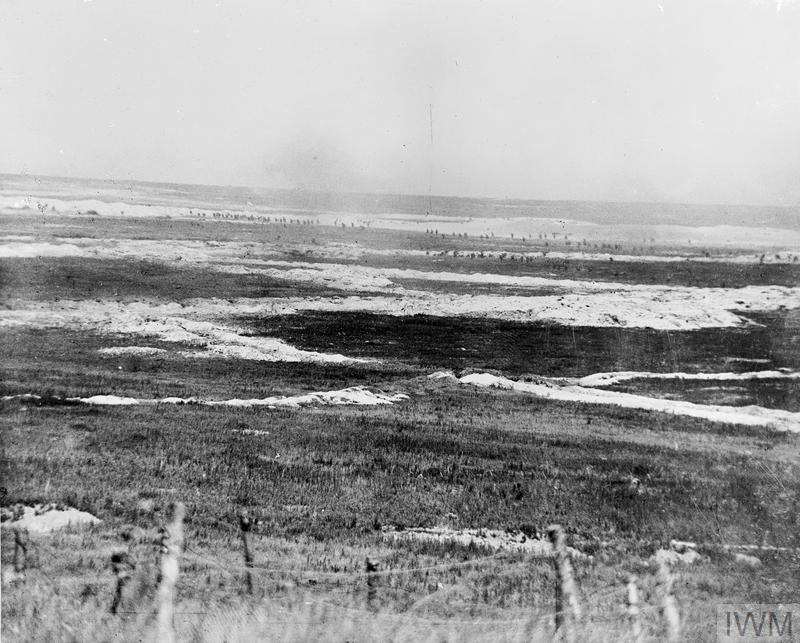
But the ever-resourceful Germans had dug deeply into the hard chalk of Picardy and created a series of well-protected strongpoints and cleverly-constructed positions based on fortified villages and woods, extensive barbed wire entanglements and interlocking arcs of artillery and machine gun fire.
That is why it turned out so fiendishly difficult to break into, let alone through, the German lines, and to exploit any modest advantage gained, despite the attackers’ great determination and valour. Inevitably, it proved an extremely costly struggle by the Allied infantry for every yard of ground gained, and for the Germans, for every metre they attempted to seize back in counter-attack.
So when visiting the battlefield today, do not ignore the ground’s seemingly gentle inclines and rolling ridges, which bore silent witness to this gruelling 141-day-long battle, and for those involved, one of unrelenting toil and struggle, punctuated by frequent episodes of fear amidst the quench of death.
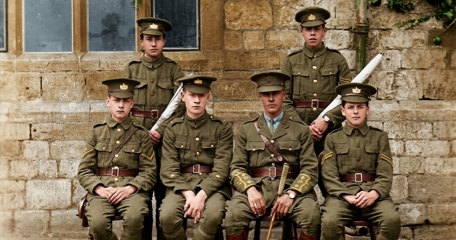
We remember first the troops of the British Expeditionary Force. This was a polyglot multinational army, a mixture of the New and the Old, nominally pretty much uniform in drill and dress, but rather more divergent in origin and training.
We have already heard of the Devonshires. Yet there were two score and more of other equally famous county infantry regiments present, recruited from Bedfordshire to Yorkshire. In addition to the pre-war Regular, Reserve and Territorial Force units, all had raised ‘Service’ battalions. Some of these were of locally recruited ‘Pals’. No one who has visited Serre Road No. 2 Cemetery and the Sheffield Memorial Park at Héburterne, or the Liverpool and Manchester Pals Memorial at Montauban-de-Picardie, cannot fail to be moved by the scale of the battle and the enormous losses involved, and the associated impact on close-knit communities and families back on the home shores.
Alongside the English infantry, their Irish, Welsh and Scottish comrades-in-arms took a full part in the battle. They are honoured at the Ulster Tower, which commemorates the heroic actions of the 36th (Ulster) Division next to the Schwaben Redoubt, and at the Red Dragon monument which marks the sacrifice of the 38th (Welsh) Division at Mametz Wood. The 51st (Highland) Division monument overlooks the Y-Ravine at Beaumont-Hamel, a fortress village that was an objective on 1 July, but only captured by this renowned division at the end of the battle.
This takes us to the contributions to the BEF by the nations of the British Empire. Near Beaumont Hamel lies Newfoundland Memorial Park with its mighty Caribou monument, honouring the sacrifice of the men of Newfoundland, then a separate dominion to that of Canada.
We remember the gallant Canadian Corps at Courcelette, having taken over from the Australians, who fought so hard for Pozières Ridge. We remember the brave actions of the New Zealand Division at Longueval and Flers, and of the South Africans at Delville Wood. And not to forget the Secunderabad Cavalry Brigade of the 2nd Indian Cavalry Division, which advanced between High Wood and Delville Wood on 14 July. The British West Indies Regiment also supported the fight. In September 1916, its 3rd and 4th Battalions were ordered to France from Egypt to act as labour units, carrying ammunition, building roads and constructing gun emplacements.
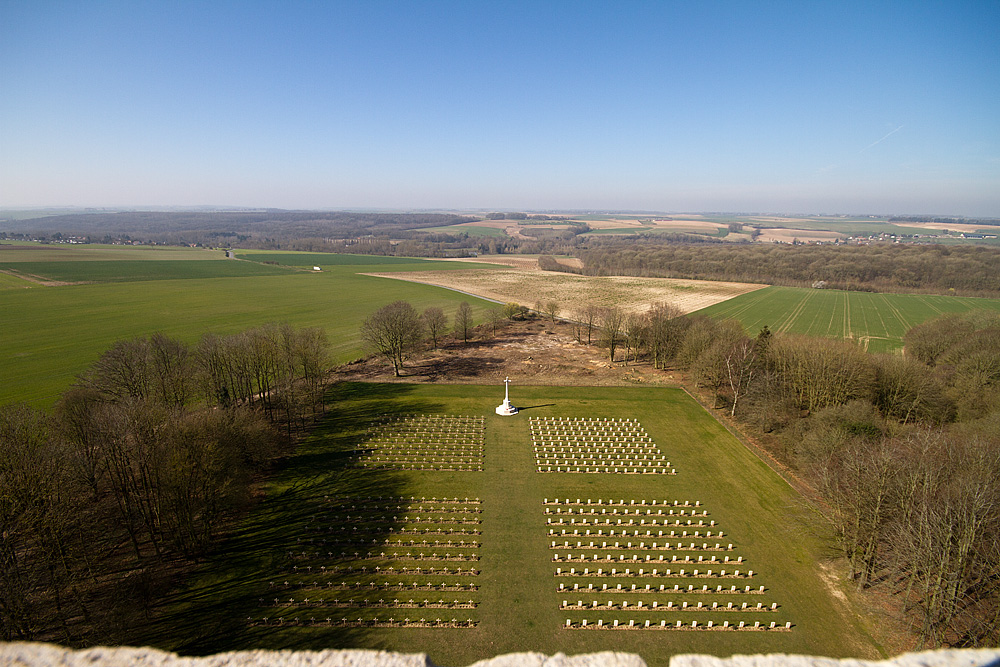
Let us turn to the Thiepval Memorial. Under its cavernous arches, are recorded the names of the 72,337 officers and men of the British armies who fell at the Somme, but to whom, ‘the fortune of war denied the known and honoured burial given to their comrades in death’.
Significantly, the Memorial also commemorates the joint nature of the 1916 offensive, for at its foot lies an Anglo-French Cemetery, containing 300 British and 300 French graves. Aptly, the Cross of Sacrifice bears the following inscription:
That the world may remember the common sacrifice of two and a half million dead, here have been laid side by side Soldiers of France and of the British Empire in eternal comradeship.
We should remember the battle of the Somme of 1916 was planned and fought from first to last as an Allied battle. If not for Verdun, the French contribution would have been much greater– indeed the main effort – at the start of the offensive, but equally, the German response would have been stronger too.
The French divisions fighting at the Somme were drawn from both metropolitan France and her colonies. By the end of the battle, the French had contributed nearly similar resources to those of the BEF. No fewer than 44 French infantry divisions served within the Sixth and Tenth Armies compared with the 53 divisions of the BEF that had fought at the Somme.
The German Army at the Somme was as heterogenous as the BEF, such was the complex constitutional and demographic make-up of the German Empire. In addition to the largest state, Prussia, there were the Kingdoms of Bavaria, Saxony and Württemberg, each of which fielded their own army corps and divisions in national contingents. The Prussians were not homogenous either, as their manpower was drawn from a great swathe of Western, Northern and Eastern Germany from the Rhineland through Hannover and Brandenburg to Pomerania and East Prussia. Hence German soldiers’ accents were as different as those of British soldiers born in Cornwall as opposed to Caithness.
Whatever we might debate today as to the causes of the First World War, and who should hold responsibility for it breaking out in 1914, the soldiers of the Three Armies of the Somme, whatever their nationality, race, colour or creed, did their duty and deserve our memory and respect.
While Wilfred Owen may have described ‘Dulce et decorum est pro patria mori’ as the ‘old lie’, the immortal words of Horace remain, whether the soldier involved spoke English, French or German. So, whether they fought ‘for King and Country’, or ‘pour la République’ or ‘für Gott und Kaiser’, we should remember them all, and equally so.
For the British, the battlefield of the Somme still casts some long and sombre shadows in our national consciousness and story, the outcome of 1 July 1916 being a particularly bleak moment. For the French and Germans, however, the struggle for Verdun was the main act of 1916, and is remembered as such today. Although there are relatively few monuments to the French and German forces involved at the Somme, it is as much their battlefield as a British one, and we should respect and honour that fact.
In closing, out of the darkness of the Somme, should we not find some rays of illumination, if not inspiration, that can act as beacons of hope for the future – drawing on so many examples of personal courage and comradeship, and of human effort and enterprise?
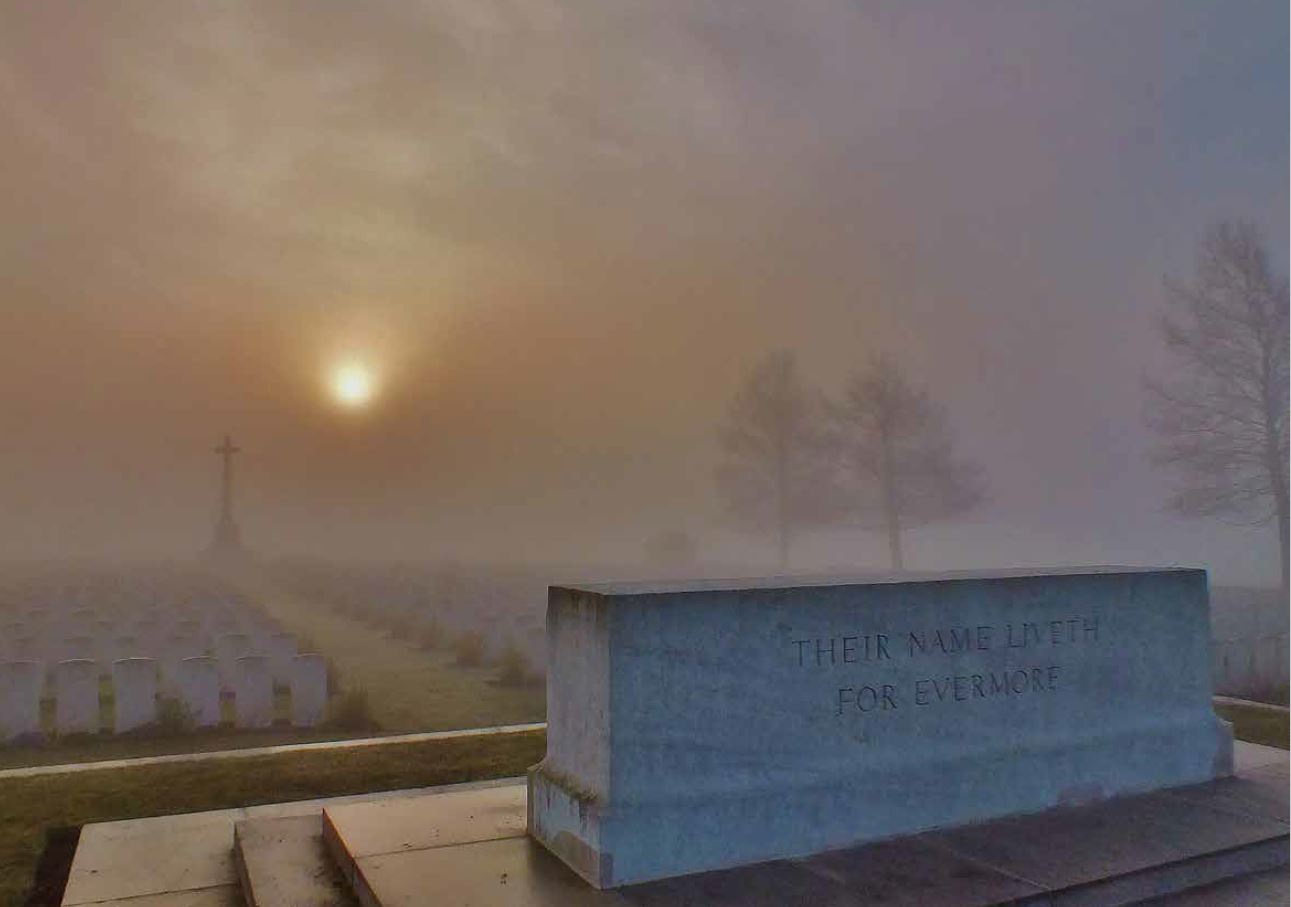
Yet the stark reality remains that European armed forces, and their societies, this time bonded together as closest allies, may need to fight again in defending their freedom, homelands and ways of life. The current war in Ukraine now exceeds the First World War in length, and there is no end yet in sight. Do we not owe it to our children and grandchildren to do our best to avoid that war spreading or a letting a new one start? If so, and if we wish to avoid more costly Somme-like battles fought similarly from trench to trench, and bunker to bunker, but now with automated drones in the air and at land in support, then we must surely invest more to deter future war.
While preparing for war may come at a high price, it is a premium that surely must be paid. Thus, when we remember ‘The Three Armies of the Somme’, we should also remember ‘Si vis pacem, para bellum’.
The author I quoted from at the beginning of my talk was none other than John Buchan, who served on Haig’s staff at GHQ from mid 1916 drafting official communiques for the press, and was appointed by Lloyd George in 1917 as the Government’s Director of Information.