
Roger Marshall was killed in action on this day in 1914
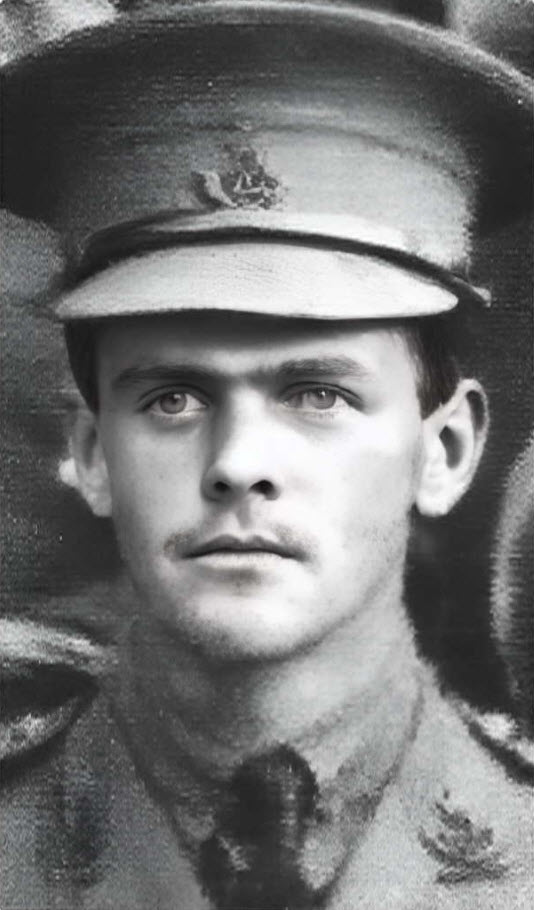
Roger Marshall was born 25 January 1891 at Annstead, Chathill, Northumberland, the youngest son of Lieut. Colonel Anthony Marshall and Jessie Frances Marshall née Raimes of Annstead Farm, Chathill, Northumberland.
At the time of the 1891 Census, the household included his parents, Roger and his 4 older siblings - Sarah, Elizabeth, Anthony and Esther - a governess and six domestic servants.
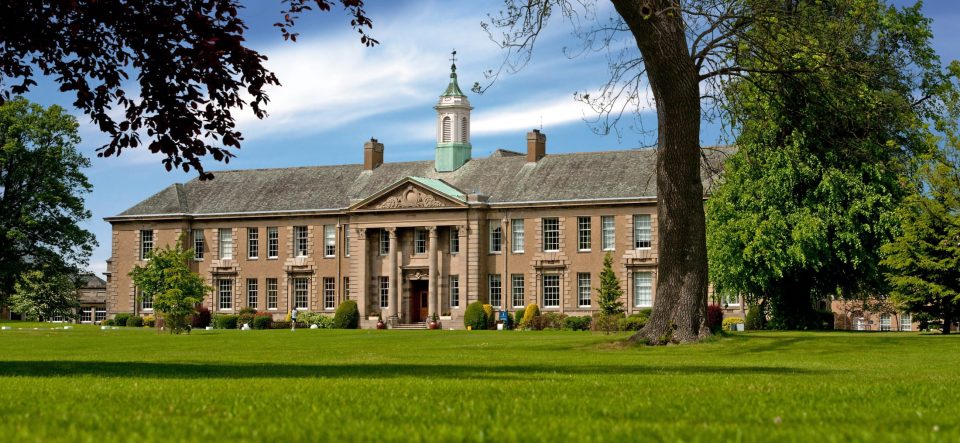
Roger was educated privately, and also Merchiston Castle School in Edinburgh, where he won the half mile handicap.
Roger enlisted into the Royal Field Artillery (RFA) Special Reserve on 10 August 1910. He was posted to the 35th RFA Brigade, based at Newcastle upon Tyne. Whilst with this unit, he applied to be in the Royal Flying Corps, and at his own expense, passed his flying instruction exam on 30 April 1913 at Salisbury Plain, in a Bristol Biplane 6. He was awarded the Royal Aero Club Certificate no 470.
He was noted as an excellent shot and rider. In March 1914, he successfully passed his officer competitive exam. He was advised that he would receive a commission in the regular army in the next few weeks. Also, he was instructed to attend the Central Flying School from 12 May 1914. However, this was cancelled by the War Office as they deemed that he needed to complete two years service in the Regular Army.
He was gazetted 2nd Lieutenant in the Durham Light Infantry (DLI) on 15 July 1914 and joined the 2nd Battalion DLI on 6 August 1914.
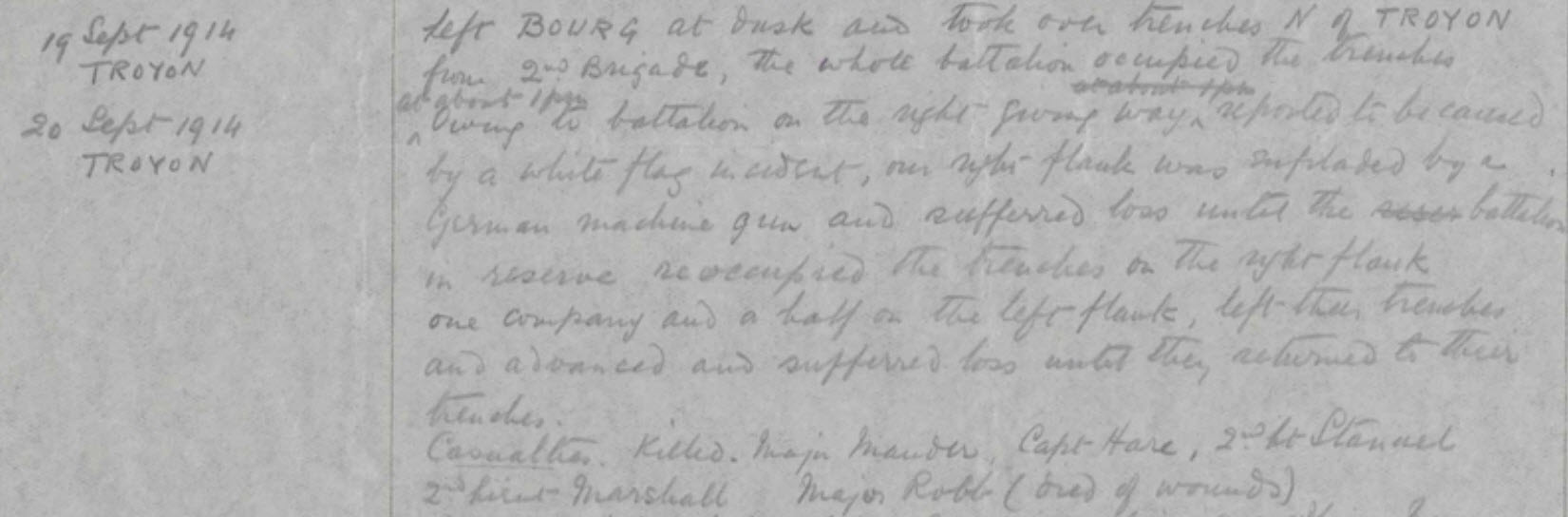
On 10 September 1914, the battalion was sent to France as part of the 6th Division of the British Army. He was involved in the fierce fighting in the first battle of the Aisne and was killed in action on 20 September 1914 at Troyon. The Battalion War Diary describes how they returned to the trenches north of Troyon the night before. In the early afternoon of the 20th, the battalion to their right "gave way, reported to be caused by a white flag incident". As a result, a German machine gun enfiladed the DLI's position causing many casualties, Roger being one of them.
He died only four days after arriving at the front line and ten days after arriving in France. Contemporary accounts reveal him to be a popular and brave officer. His dying words, as recounted by a Corporal Bell who was standing next to him in the trench were “Surrender be hanged! Stand up and fight!” He died of his wounds in a dugout.
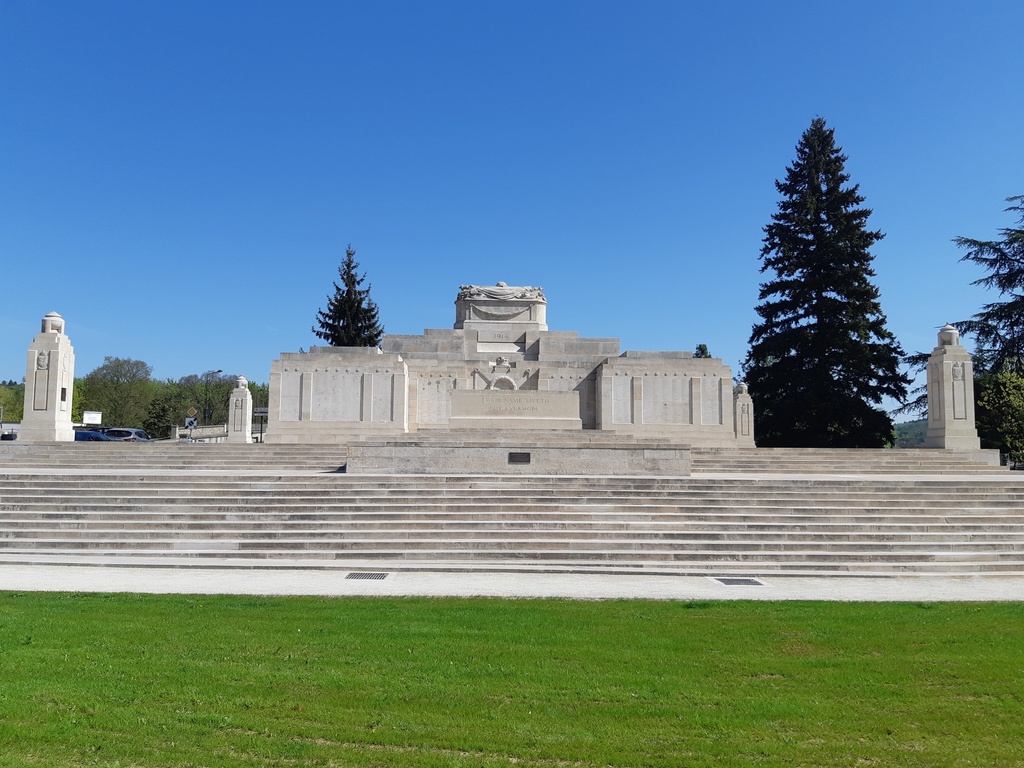
His body was not recovered, but his death is recorded at the Cemetery of La Ferte Sous Jouarre, Departement Aisne et Marne, Ile de France.
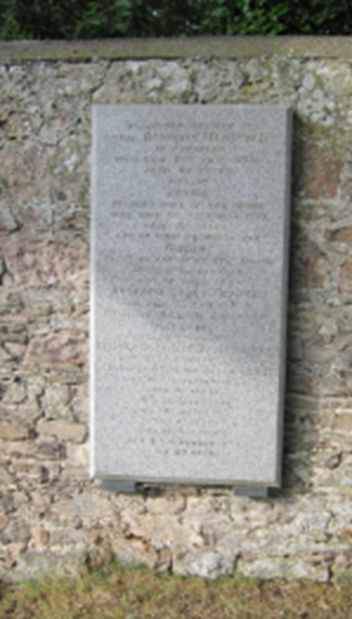
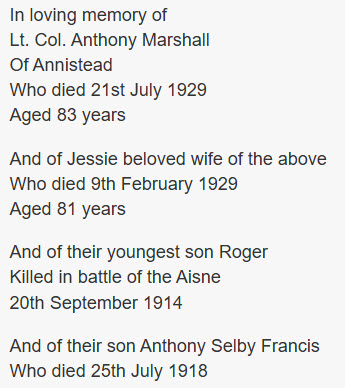
Roger is also remembered on a family plaque in the churchyard of St. Ebba's Church, Beadnell, Northumberland.
2nd Lieut. Roger Marshall, 2nd Bn. Durham Light Infantry