
Wilbur Taylor Dartnell VC was killed in action on this day in 1915
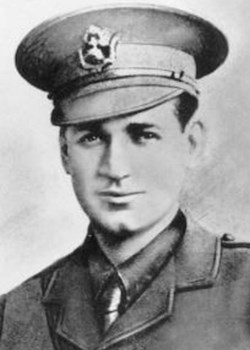
Wilbur Thomas Dartnell was born in the Melbourne suburb of Collingwood on 6 April 1885 to Henry Dartnell, an English-born fruiterer, and his Australian wife Rose Ann (née Hanley). He was brought up in Melbourne and, after leaving school, became an actor.
In 1900, at the age of 15, Wilbur joined the Victorian Mounted Rifles, a part-time colonial militia unit. The regiment was mobilised as the 5th Victorian (Mounted Rifles) Contingent in early 1901 for service in the Second Boer War, and embarked for South Africa on 15 February. Arriving in Port Elizabeth the following month, he saw service in the Cape Colony and Orange Free State over the next twelve months and was wounded on 6 April — his 16th birthday.
The Mounted Rifles returned to Australia in March 1902, and Wilbur was demobilised soon thereafter.
He later returned to South Africa, and served as part of Royston's Horse during the Bambatha Rebellion in Natal in 1906. For his service in these two campaigns, he was issued the Queen's South Africa Medal with "Cape Colony" and "Orange Free State" clasps, the King's South Africa Medal with the clasps "South Africa 1901" and "South Africa 1902", and the Natal Native Rebellion Medal with "1906" clasp.
After he returned to Australia, he married Elizabeth Edith Smyth on 15 April 1907 at Holt's Matrimonial Agency on Queen Street, Melbourne. They settled in Fitzroy, and had a daughter in 1908. He worked as an actor until 1912 or 1913.
When war was declared in August 1914, Wilbur enlisted and went to England the following February 1915. He joined the 25th Battalion, the Royal Fusiliers, as a temporary lieutenant. By early May, he was in Mombasa. In June, the Fusiliers captured Bukoba, the German base for attacks on the Ugandan frontier.
On 3 September 1915, near Maktau, East Africa, Wilbur was wounded in the leg during an ambush.
He insisted on being left behind to allow other wounded companions to be carried away. Though he was twice asked to leave, he refused, ordered his men to leave him and began firing at the Germans around him. When his body was found, seven enemy dead were lying nearby.
Wilbur Dartnell was awarded the Victoria Cross posthumously. The citation read:
"For most conspicuous bravery near Maktau (East Africa) on 3rd September, 1915. During a mounted infantry engagement the enemy got within a few yards of our men, and it was found impossible to get the more severely wounded away. Lieutenant Dartnell, who was himself being carried away wounded in the leg, seeing the situation, and knowing that the enemy's black troops murdered the wounded, insisted on being left behind in the hopes of being able to save the lives of the other wounded men. He gave his own life in the gallant attempt to save others."
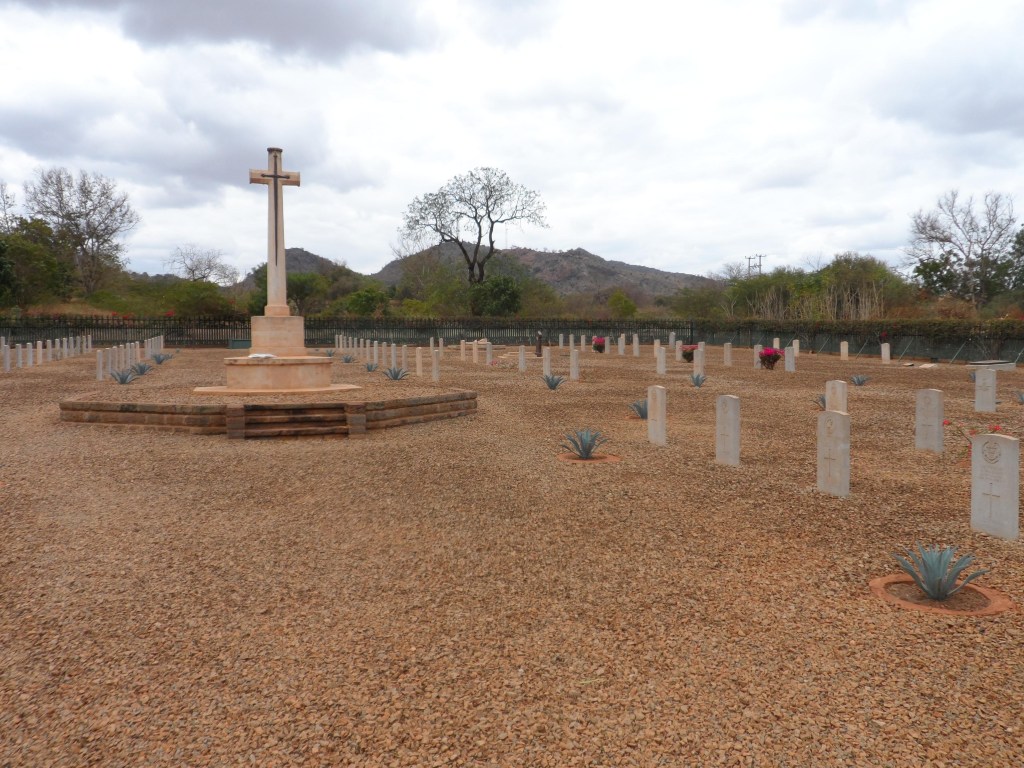
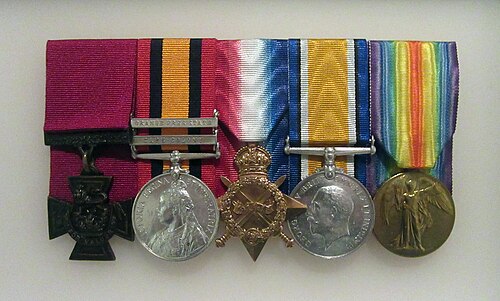
Lt. Wilbur Taylor Dartnell V.C., 25th Bn. Royal Fusiliers