
Alexander Kazakov – Russia’s greatest fighter ace of the First World War
In the spring of 1915, aerial combat was an unproven and highly improvised theatre of war. It was within this uncertain environment that a young Russian cavalry officer-turned-pilot, Alexander Alexandrovich Kazakov, secured his place in history. By intentionally flying his aircraft directly into an enemy machine, Kazakov achieved what few dared to attempt. Unlike his compatriot, Pyotr Nesterov, who perished undertaking a similar manoeuvre months prior, Kazakov survived.
This act of sheer audacity established him not only as a formidable ace but as a defining figure of the Imperial Russian Air Service.
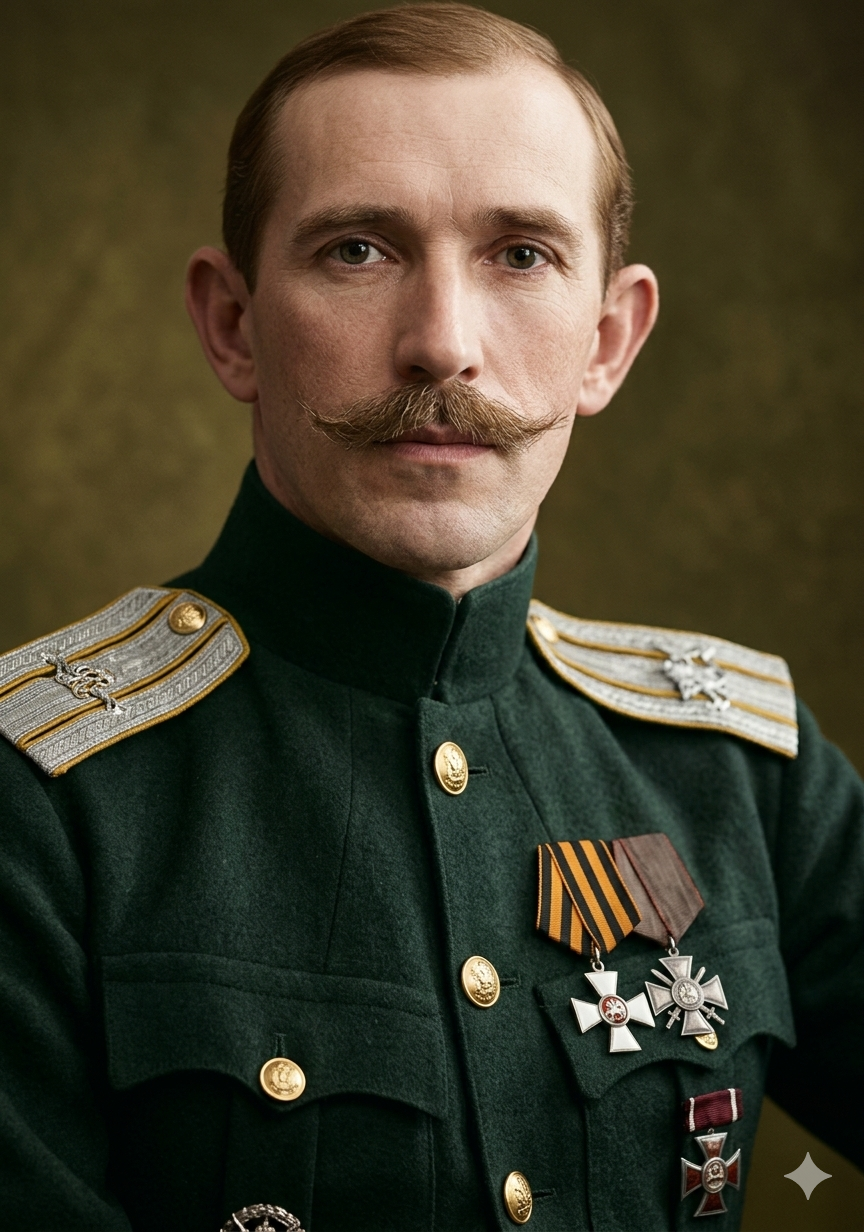
Early Life and Transition to Aviation
Born on January 2, 1889, into a noble family in the Kherson Governorate, Kazakov initially followed the traditional military trajectory of his class. His early career was defined by the cavalry:
• 1906: Graduated from the Voronezh Cadet Corps.
• 1908: Graduated from the Yelizavetgrad Cavalry School and joined the 12th Belgorod Uhlan Regiment.
• 1911: Achieved the rank of lieutenant in the Imperial Russian Army.
However, realising that Cavalry was not the future of warfare, Kazakov transitioned from horses to engines. In January 1914, he commenced flight training at the Officer Aeronautics School in Gatchina, qualifying as a military pilot by September of that year.
Pioneering Aerial Combat
At the outbreak of the First World War, Kazakov was posted to the 4th Corps Aviation Detachment. Russian aviation in 1914 and early 1915 was still in its infancy; aircraft were fragile, lightly armed, and primarily utilised for reconnaissance rather than direct combat.
His early attempts to destroy opponents were unsuccessful - dangling explosives and grappling hooks beneath his plane proved ineffective, so Kozakov took a far riskier and almost suicidal alternative.
On 18 March 1915, Kazakov came across German Albatros and manoeuvred his Morane-Saulnier (probably a type 'G') monoplane into position and deliberately rammed the enemy aircraft. Although not the first to undertake this drastic step, he was the first to do it and survive.[1]
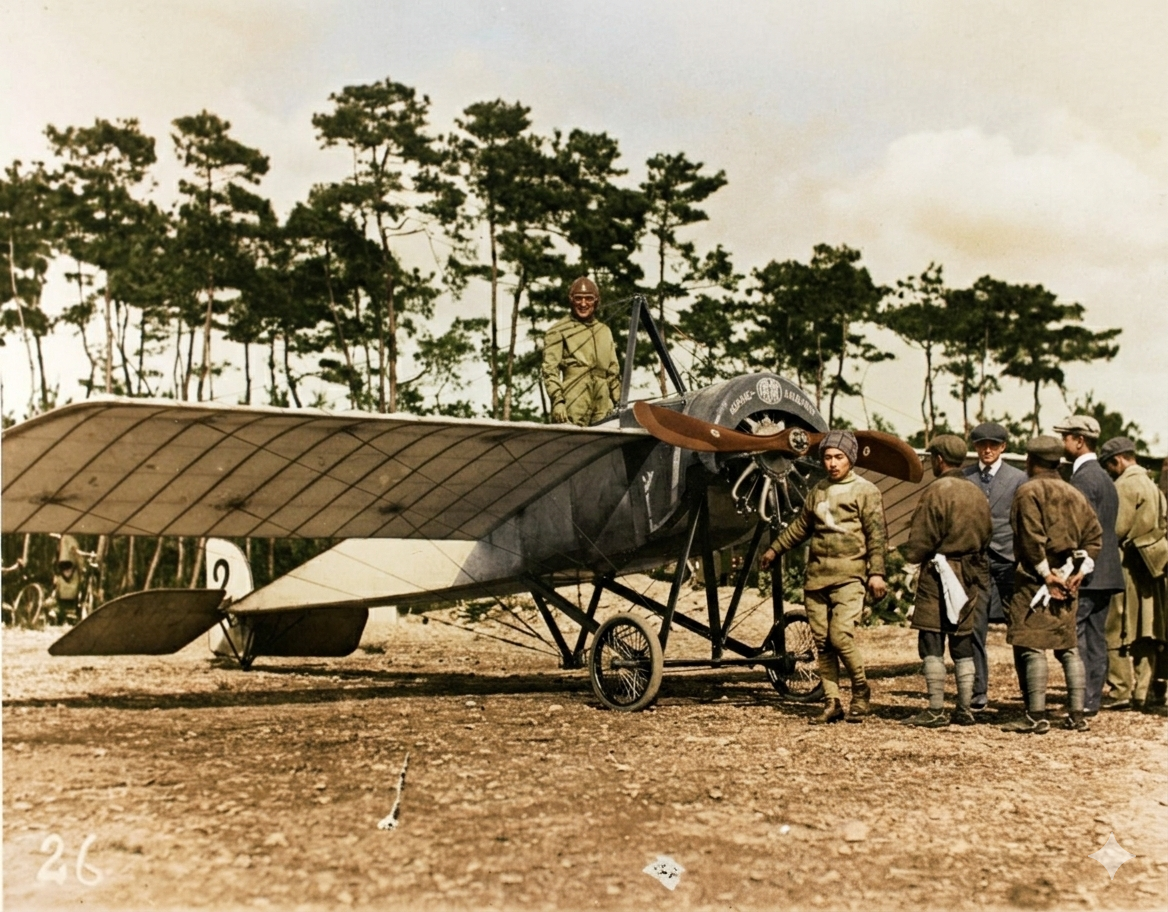
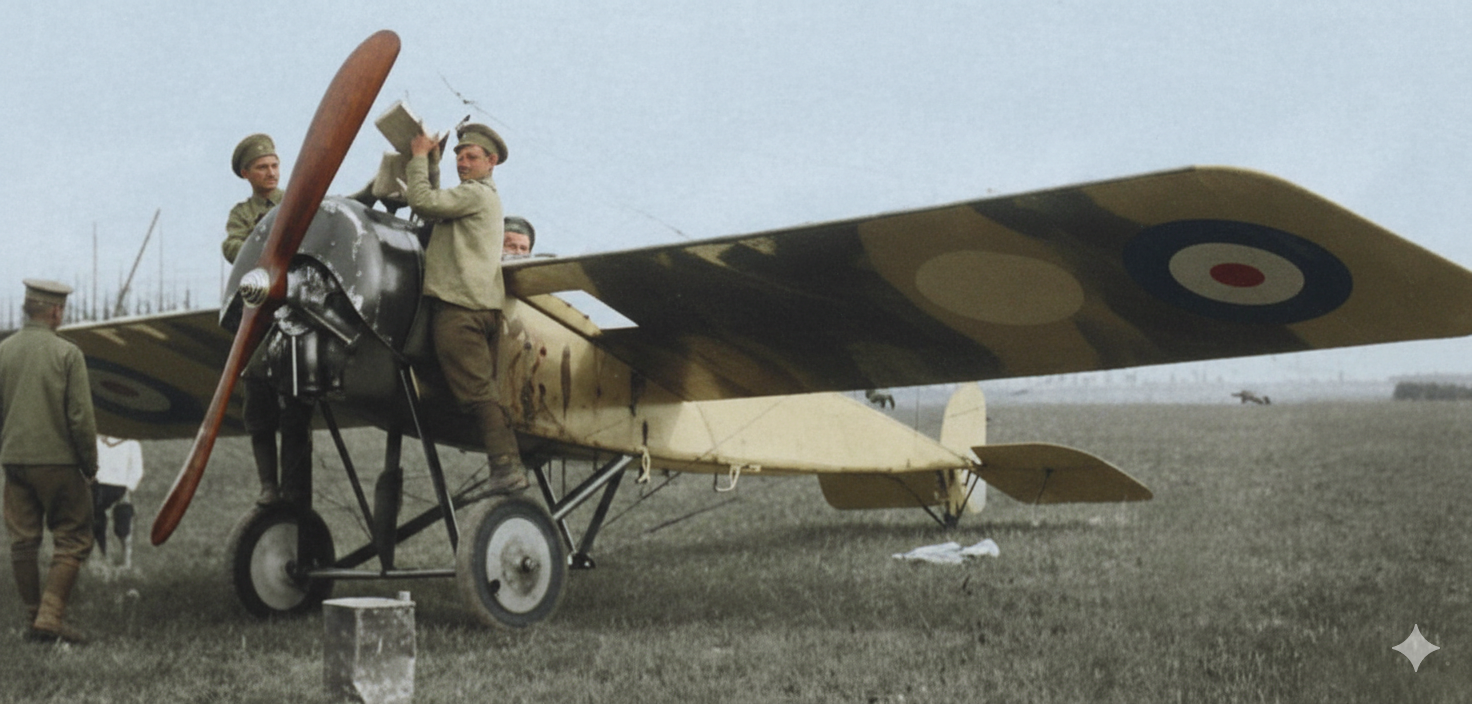
The impact destroyed the German machine, yet Kazakov successfully piloted his damaged aircraft to a safe landing. This combat earned him the St. George Cross in July 1915 and established his reputation as a fearless combatant.
Leadership and Combat Record
By August 1915, Kazakov had been promoted to staff captain and was commanding the 19th Corps Aviation Detachment.
Between 27 June and 21 December 1916, he racked up four more victories to become an ace.
In one of these victories on 8 December, near Lutsk he attacked two Brandenburg C.I aircraft single-handedly, he downed one, killing the Austrian pilot Johann Kolby and severely injuring the observer, Oberleutnant Franz Weigel. This action earned him the Order of St. George, 4th Class.
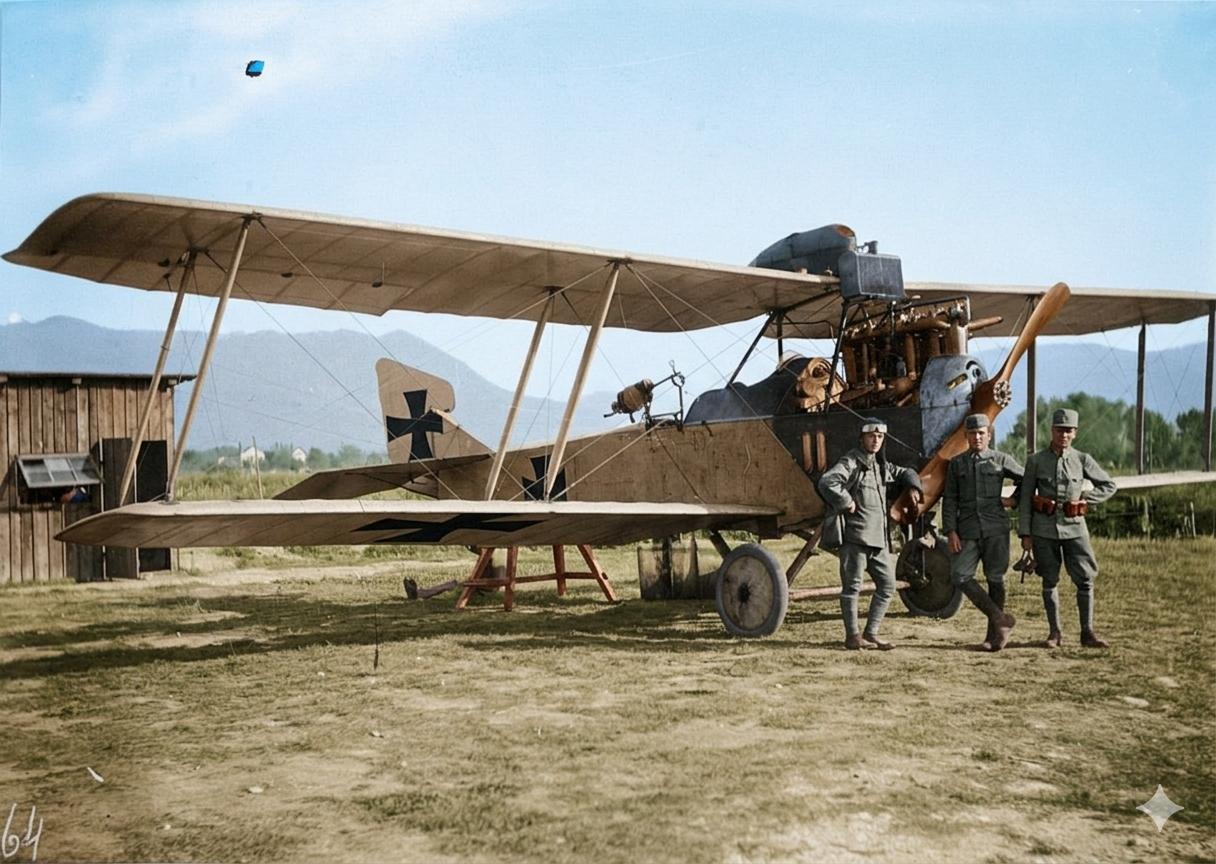
His leadership formalised Russian fighter doctrine. In early 1917, he became the commander of the 1st Combat Aviation Group on the Southwestern Front, the first dedicated fighter unit in Russian aviation history. Despite his command responsibilities and a severe arm wound sustained in June 1917, he continued to fly combat missions, eventually reaching the rank of lieutenant colonel.
Aircraft and Victories
Throughout the war, Kazakov adapted to rapidly evolving aviation technology, piloting a variety of aircraft:
• Early War: Morane-Saulnier
• Mid-War: Spad-SА2
• Late War: Nieuport 11 and Nieuport 17
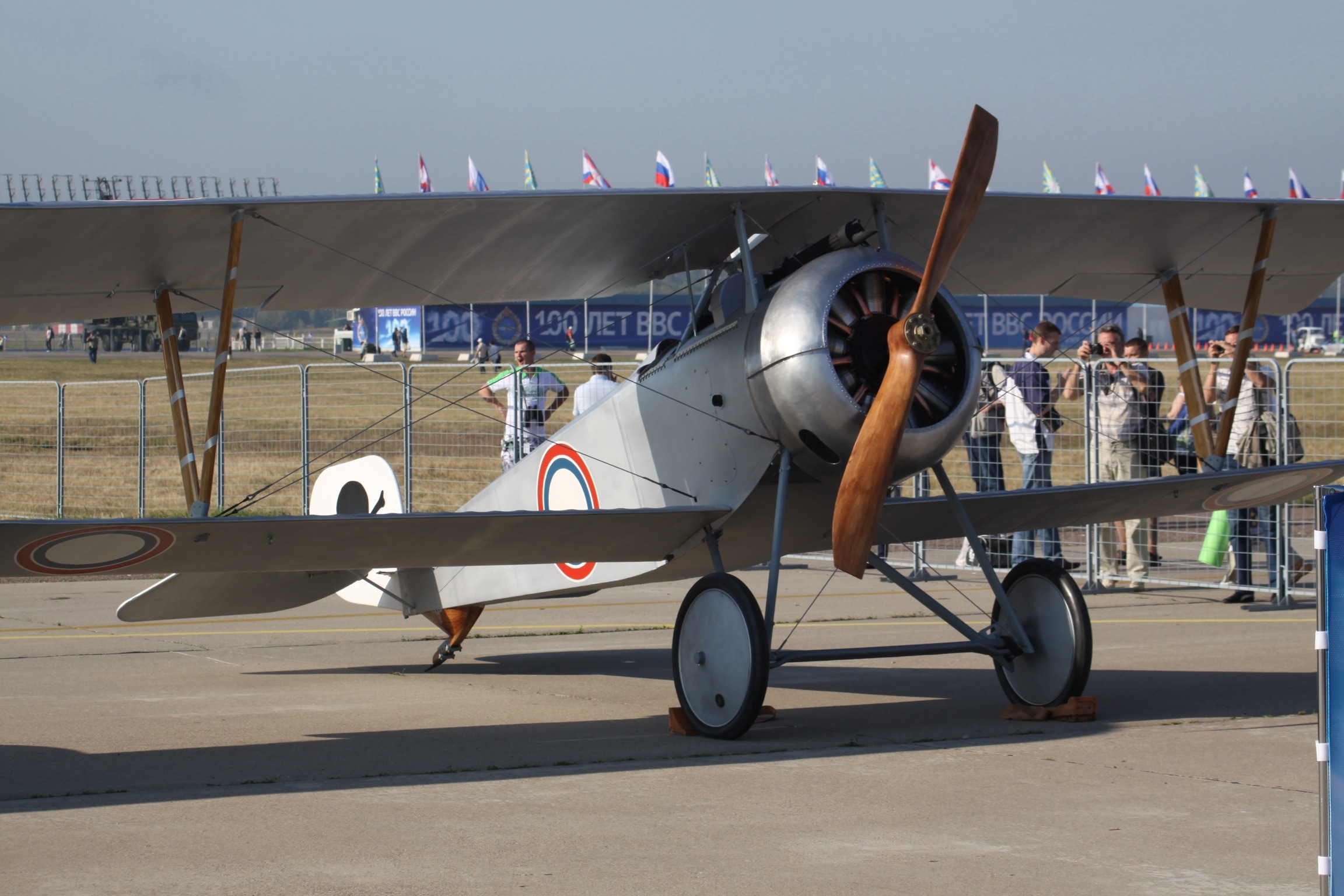
Over three years, he officially shot down 17 enemy aircraft personally and shared in 15 group victories, making him the most successful Russian fighter pilot of WWI. Because Russian military regulations only credited aircraft that crashed within Russian-held territory, his actual total may have been significantly higher (some historical accounts suggest up to 32 combined victories).
The Revolution and the Royal Air Force
The October Revolution of 1917 fractured the nation Kazakov had sworn to protect. Rejecting the new Bolshevik government, he resigned his Russian commission. Though listed as a military specialist and targeted for conscription into the Red Army, Kazakov chose to flee to Murmansk in June 1918.
By August 1918, he was appointed commander of the newly formed Slavo-British Aviation Detachment in Arkhangelsk, joining the White Russian forces and the British Royal Air Force (RAF) in the Russian Civil War. Kazakov held a unique distinction within this detachment: he was the only Russian pilot granted a commissioned rank in the RAF, eventually rising to the rank of Major.
His continued valour earned him an extensive array of international decorations:
• British Honours: Distinguished Service Order (DSO), Military Cross (MC), Distinguished Flying Cross (DFC)
• French Honours: Légion d’honneur, Croix de Guerre
Final Days and Historical Legacy
Kazakov was wounded again in January 1919 - this time taking a bullet to the chest - but he refused to cease flying reconnaissance and bombing missions.
By the summer of 1919, the anti-Bolshevik resistance was collapsing, and British forces prepared to withdraw. Kazakov declined offers of evacuation to the United Kingdom and refused further command appointments.
On the evening of 1 August 1919, ignoring an invitation to a farewell dinner for British pilots, he took off in a Sopwith only to crash to his death a few moments later. Having watched Kozakov pull a loop at low altitude and stall the plane. British ace James Ira Jones, believed the crash was a deliberate act of suicide by a man whose country and cause had vanished. He was buried near a local church under a monument of crossed propellers bearing the epitaph: "Pilot Kozakov. Shot down 17 German aircraft. May your ashes rest in peace, Hero of Russia."
Because he fought exclusively on the Eastern Front, Alexander Kazakov remains less internationally renowned than his Western counterparts. Nevertheless, he was a pioneer who built the foundations of Russian fighter aviation, and remained steadfast to his principles until the very end.
Table of Victories
| Date | Time | Unit | Aircraft | Opponent | Location | |
| 1 | 31-Mar-15 | 4th | Morane-Saulnier G (316) | Albatros C | Near Guzov-Volja | |
| 2 | 27-Jun-16 | 1600 | 19th | Nieuport 10 (222) | Albatros C | Lake Drisvjaty |
| 3 | 29-Jul-16 | 1500 | 19th | Nieuport 10 (222) | Albatros C.III | Dvinsk |
| 4 | 06-Sep-16 | 19th | Nieuport 11 | Two-seater | Kovel | |
| 5 | 21-Dec-16 | 1500 | 19th | Nieuport 11 | Hansa-Brandenburg C.I (27.14) | Lutsk |
| 6 | 06-May-17 | 945 | 19th | Nieuport 11 | Hansa-Brandenburg C.I 1 | Brezazany |
| 7 | 10-May-17 | 19th | Nieuport 11 | Fokker 2 | Aarniki | |
| 8 | 17-May-17 | 19th | Nieuport 11 | LVG C 3 | Podgaitsy | |
| 9 | 25-May-17 | 19th | Nieuport 17 | EA | W of Konjukhi | |
| 10 | 08-Jun-17 | 800 | 19th | Nieuport 17 | Hansa-Brandenburg C.I (63.75) 3 | W of Kozov |
| 11 | 20-Jun-17 | 900 | 19th | Nieuport 17 | Rumpler C (4739/16) 3 | Podgaitsy |
| 12 | 27-Jun-17 | 1700 | 19th | Nieuport 17 | EA | Lipazodoluo |
| 13 | 27-Jun-17 | 2100 | 19th | Nieuport 17 | Rumpler C 4 | Stavetyn |
| 14 | 27-Jul-17 | 19th | Nieuport 17 | Hansa-Brandenburg C.I (26.27) 5 | Obertyn | |
| 15 | 02-Aug-17 | 19th | Nieuport 17 | Hansa-Brandenburg C.I (64.67) 5 | Dolinyany | |
| 16 | 08-Aug-17 | 19th | Nieuport 17 | EA 5 | Ivane-Pusto | |
| 17 | 29-Aug-17 | 1100 | 19th | Nieuport 17 | Albatros C.III | Lapkovtsy |
| 18 | 11-Sep-17 | 1600 | 19th | Nieuport 17 | Hansa-Brandenburg C.I (269.18) | Near Gusyatin |
| 19 | 23-Sep-17 | 19th | Nieuport 17 | Hansa-Brandenburg C.I (269.26) | S of Gusyatin | |
| 20 | 26-Oct-17 | 19th | Nieuport 17 | EA 6 | Scalat |
Notes from the table [2]
1 Shared with Capt Pavel Argeyev, Ens Ernst Leman, 2Lt Zhabrov
2 Shared with Ens Ernst Leman, Capt Polyakov
3 Shared with Capt Pavel Argeyev
4 Shared with Ens Ernst Leman
5 Shared with Shangin
The Slavo-British Aviation Detachment
Following the October Revolution of 1917 and Russia's subsequent withdrawal from the First World War, the country plunged into a brutal Civil War. Worried that massive stockpiles of Allied munitions in northern Russia would fall into Bolshevik or German hands, British, American, and French forces launched the North Russia Intervention.
It was out of this chaotic intervention that the Slavo-British Aviation Detachment was born in August 1918, headquartered in Arkhangelsk (Archangel).
Composition and Equipment
The detachment was a unique hybrid unit designed to support the White Russian (anti-Bolshevik) forces.
It was manned by a mix of Royal Air Force (RAF) officers and White Russian pilots who had refused to join the Red Army. Because of British operational rules, Alexander Kazakov was the only Russian granted an officer's commission in the RAF (ultimately becoming a Major); the rest of his highly experienced Russian pilots were formally enlisted as privates, though they flew and fought like officers.
The unit was equipped with surplus British aircraft, most notably the Sopwith Camel, the Sopwith Snipe, and the Airco DH.9 bomber.
Operations in the Frozen North
Fighting in the Arctic Circle presented unique horrors and challenges that went far beyond enemy fire.
Engines had to be drained of oil and water immediately upon landing to prevent freezing. To start them, mechanics had to heat the engines with blowtorches.
The detachment flew reconnaissance missions along the Northern Dvina River, mapping Bolshevik positions and dropping improvised explosives on enemy gunboats and troop trains.
Unlike the high-altitude dogfights of the Great War, the detachment was heavily involved in low-level strafing runs to support White Russian and Allied infantry slogging through the snow and dense forests.
The Bitter End
By the summer of 1919, domestic pressure in Britain and a string of White Russian defeats made the Allied intervention untenable. The British ordered a full evacuation from northern Russia. The Russian pilots of the detachment were left with a grim choice: evacuate to Britain and live in exile, or stay behind and face near-certain execution by the advancing Red Army. It was this impossible situation that likely led to Kazakov's fatal, deliberately crashed flight in August 1919.
References
[1] Pyotr Nikolayevich Nesterov used his Morane-Saulnier Type G (s/n 281) to ram an Austrian Albatros B.II reconnaissance aircraft on 7 September 1914. Nesterov likely intended to hit the Austrian aeroplane with a glancing blow but damaged his own aircraft as much as the enemy's and both aircraft crashed. Nesterov was not strapped in and he fell from his plane, dying of his injuries the next day.
[2] www.theaerodrome.com/aces/russia/kozakov.php
Becoming a member of The Western Front Association (WFA) offers a wealth of resources and opportunities for those passionate about the history of the First World War. Here's just three of the benefits we offer:

This magazine provides updates on WW1 related news, WFA activities and events.

Access online tours of significant WWI sites, providing immense learning experience.

Listen to over 300 episodes of the "Mentioned in Dispatches" podcast.
Other Articles


