
What happened to the ‘Bond of Sacrifice?’
During the early months of the First World War, an idea emerged to obtain photographs of officers who had been killed in the war and to write a brief obituary to each of these officers. This was the start of an immense piece of work which was envisaged to be published in multiple volumes and these to be sold to the public. However, the project was to collapse under its own weight after only the second volume was published.
Had all volumes of the Bond of Sacrifice been published as originally envisaged, there would have been a minimum of ten volumes. As it was only two volumes were actually published. In this article we examine the two editions and look how the project 'withered away'.
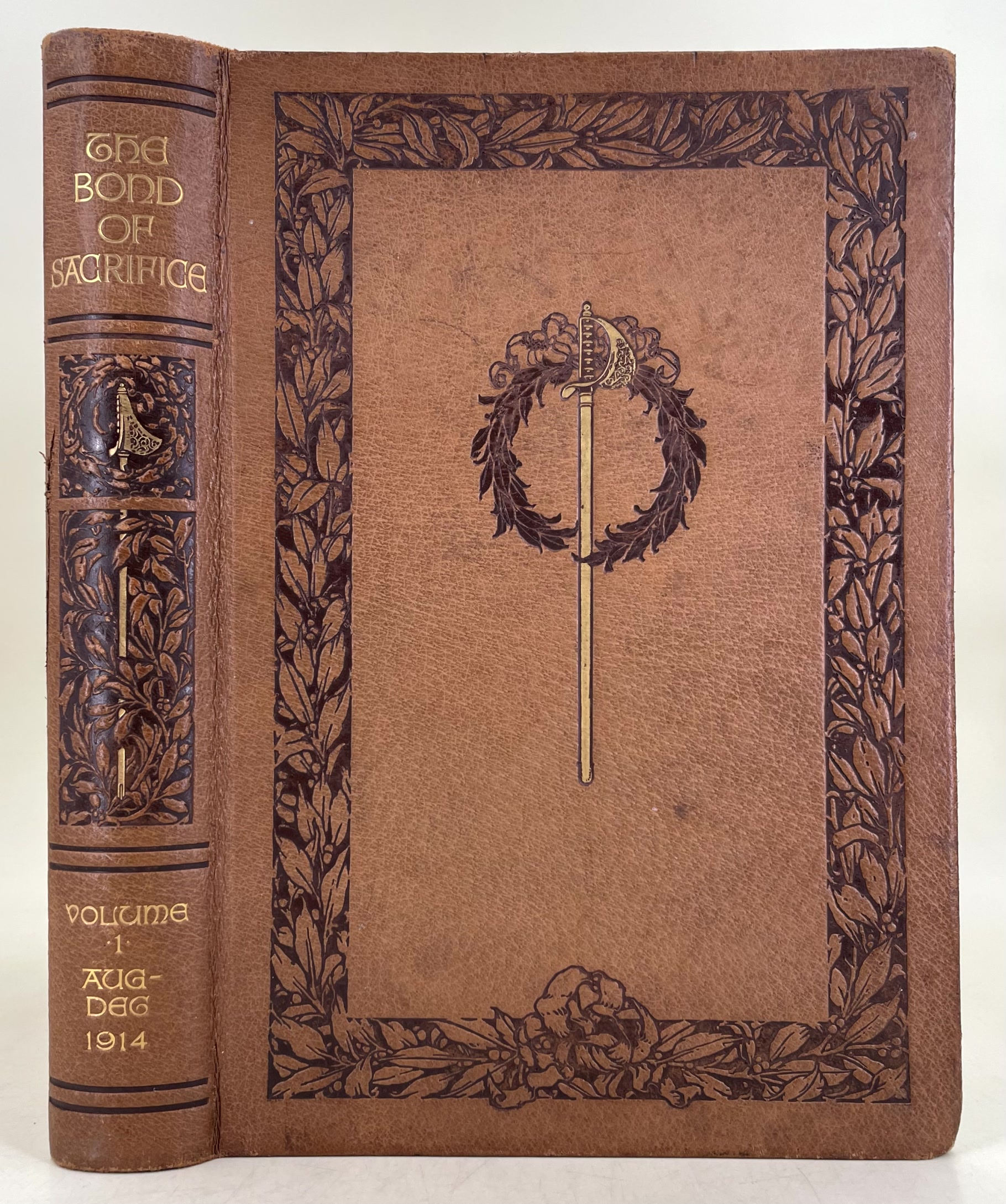
Although we can’t be sure after all these years, it appears the main driving force for this project was Lewis Clutterbuck, who was born in 1854, which made him 60 years old at the outbreak of the First World War. Born in Madras, India he appears to have worked for the British Government in India before joining the army, where he achieved the rank of Colonel.[1]
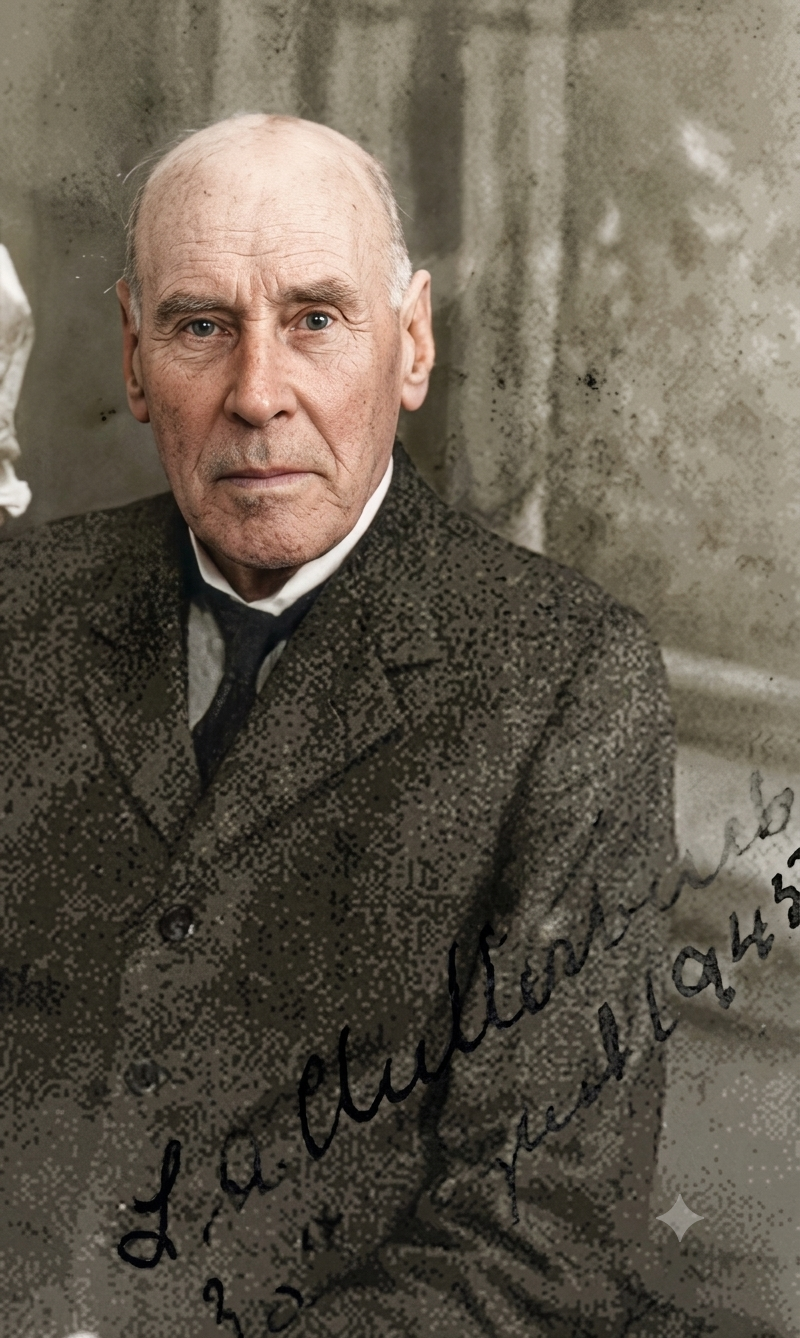
It is not clear if Clutterbuck’s concept of a series of volumes to record the details of the officers who fell in the Great War was a commercial enterprise or borne out of a sense of patriotism and desire to ‘do something’ for posterity. He, with Colonel William T Dooner,[2] (aged 70 in 1914) and naval editor Commander the Honourable C A Denison,[3] (aged 63 in 1914) engaged with the Anglo-African Publishing Company to produce a series of volumes, each intended to cover a six-month period of the war. In these volumes would be biographies and photos of officers, which would appear in alphabetical order. The first volume detailed those who were killed in the five-month period up to 31 December 1914.
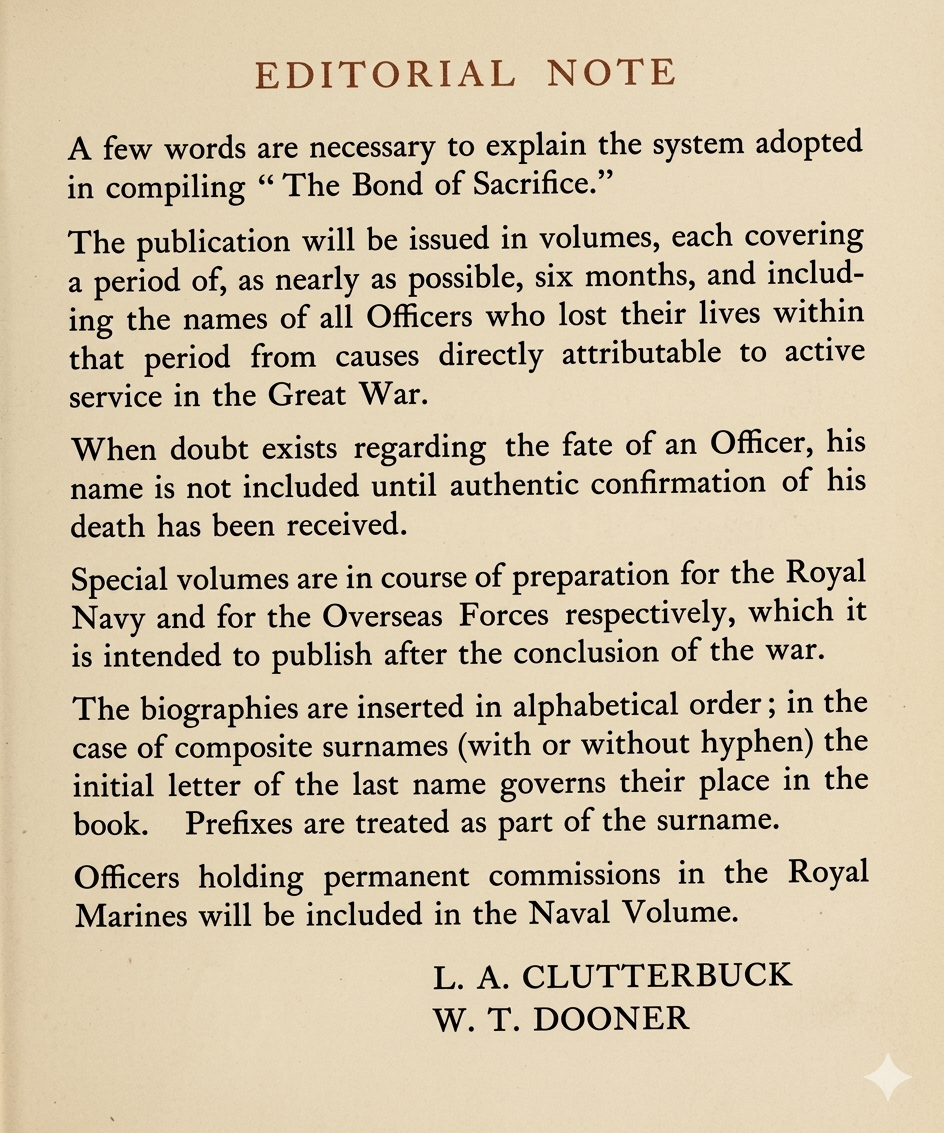
In an ‘editorial note’ in the first volume, it was stated:
The publication will be issued in volumes, each covering a period of, as nearly as possible, six months, and including the names of all Officers who lost their lives within that period from causes directly attributable to active service in the Great War.
When doubt exists regarding the fate of an Officer, his name is not included until authentic confirmation of his death has been received.
Special volumes are in course of preparation for the Royal Navy and for the Overseas Forces respectively, which it is intended to publish after the conclusion of the war.
The biographies are inserted in alphabetical order: in the case of composite surnames (with or without hyphen) the initial letter of the last name governs their place in the book. Prefixes are treated as part of the surname. Officers holding permanent commissions in the Royal Marines will be included in the Naval Volume.
L. A. CLUTTERBUCK
W. T. DOONER
Alphabetical Sorting
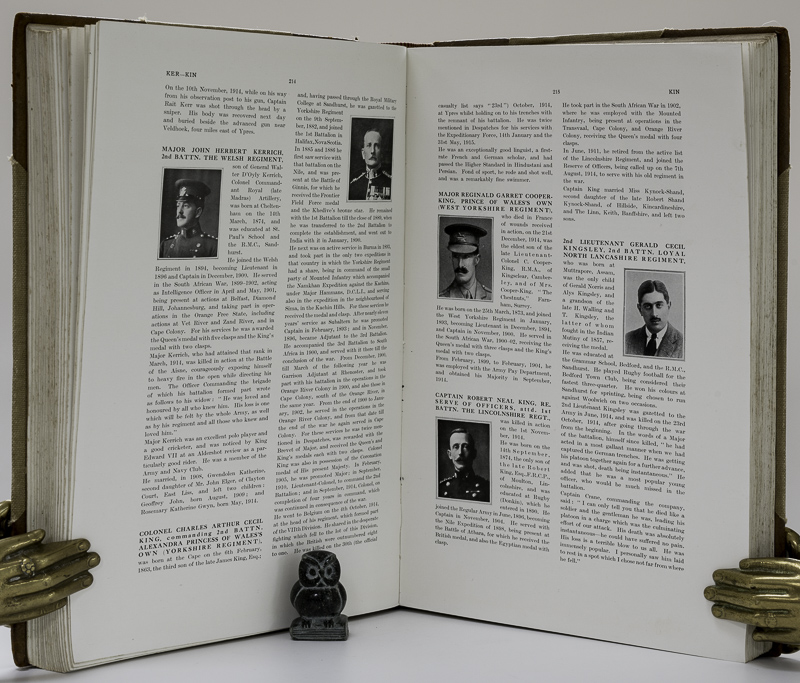
One of the important aspects of this editorial is the reference to the rather eccentric alphabetical sorting of men with composite surnames. For example, if we had a theoretical name of Frederick Smith-Jones, his entry in the Bond of Sacrifice would appear under ‘J’[ones] rather than ‘S’[mith]. This is something to be aware of when looking up officers in these volumes.
Very occasionally, the Bond of Sacrifice has someone ‘out of order’ (for instance, James Fraser appears after John Fraser). Not entirely surprisingly the men whose name commences with Mc are ordered before the Macs, which again may lead to some confusion.
Other examples of the occasional problems in locating a named officer can be shown with the entry for Lord Worsley (Charles Sackville Pelham) who is listed in Bond of Sacrifice under ‘Worsley’ but could equally be expected to have been listed under Pelham.
An extreme example of the difficulty that can be encountered is with ‘George O'Donel Frederick Thomas-O'Donel’, which looks like a typographical mistake, but de-constructing the name we discover his surname was Thomas-O'Donel. He was provided with the Christian names of George O'Donel Frederick. His name appears under the ‘O’s’.
The final example is Claude Norman Champion de Crespigny. This entry is alphabetically under ‘de’ when – possibly more logically – it could be expected to be found under ‘Crespigny’ (even though ‘Champion’ is part of his extended surname).
In order to try to facilitate the finding of officers named in the Bond of Sacrifice, a document has been created which has been made available below. This was developed by a team of WFA volunteers to whom we are very grateful.
An alternative to the pdf (above) is a spreadsheet which, if downloaded can then be manipulated (for example) into date order. If the spreadsheet is preferred, just click the link below.
The immediate benefit of this document is that it orders those with ‘composite’ names by the first letter of the first part of the surname (so the hypothetical Frederick Smith-Jones will - on this spreadsheet - appear under ‘Smith’). Using the 'search' function, it is also possible to locate names, units and dates of death.
Bond of Sacrifice, volume 1 (Fatalities for period to 31 December 1914)
This volume can be seen - in full - online using the button below.
The first volume, covering the year 1914, which came out in late 1916, contained some 65 pages of preamble, and the first biography was that of Major Eustace Abadie. Over the following 459 pages in excess of 1,300 officers were named alphabetically, until, at the end of the volume we arrive at 2nd Lt Roger Assheton Young.
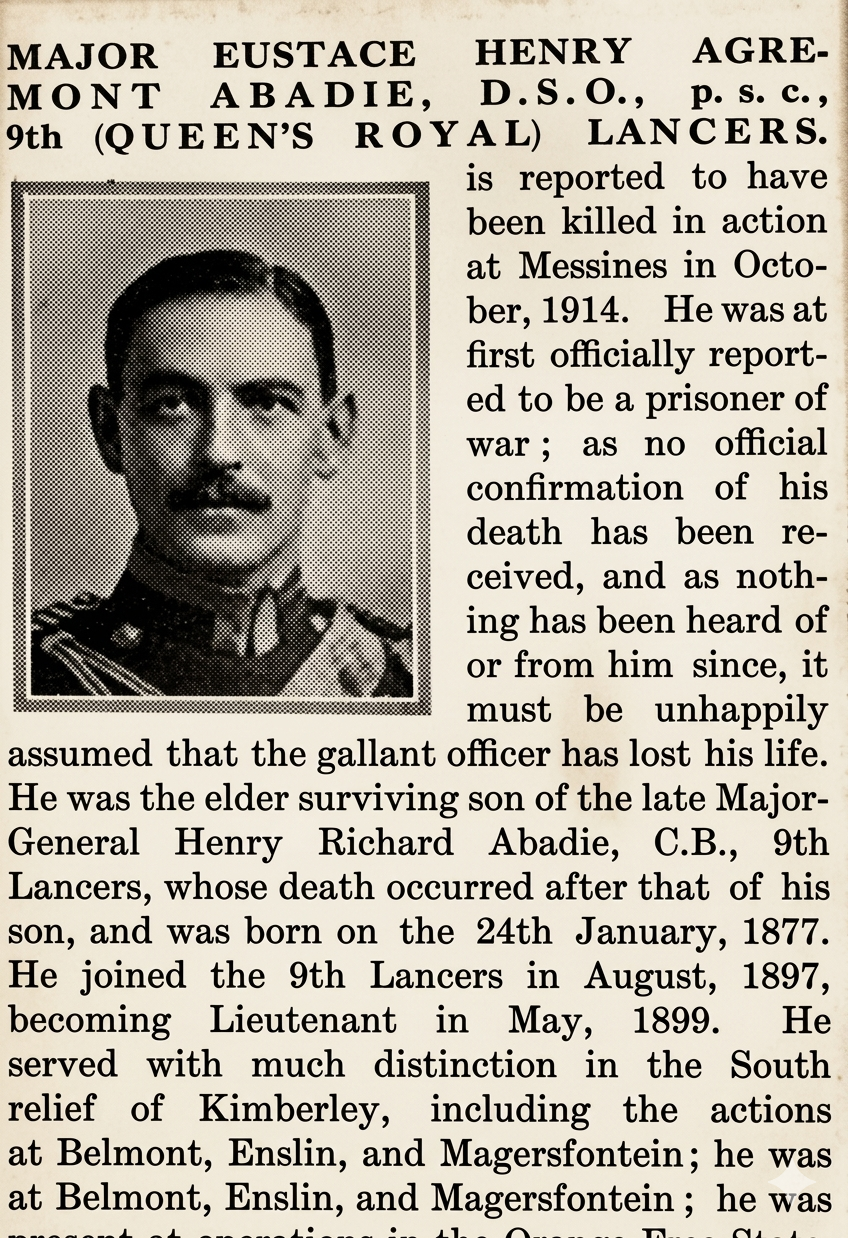
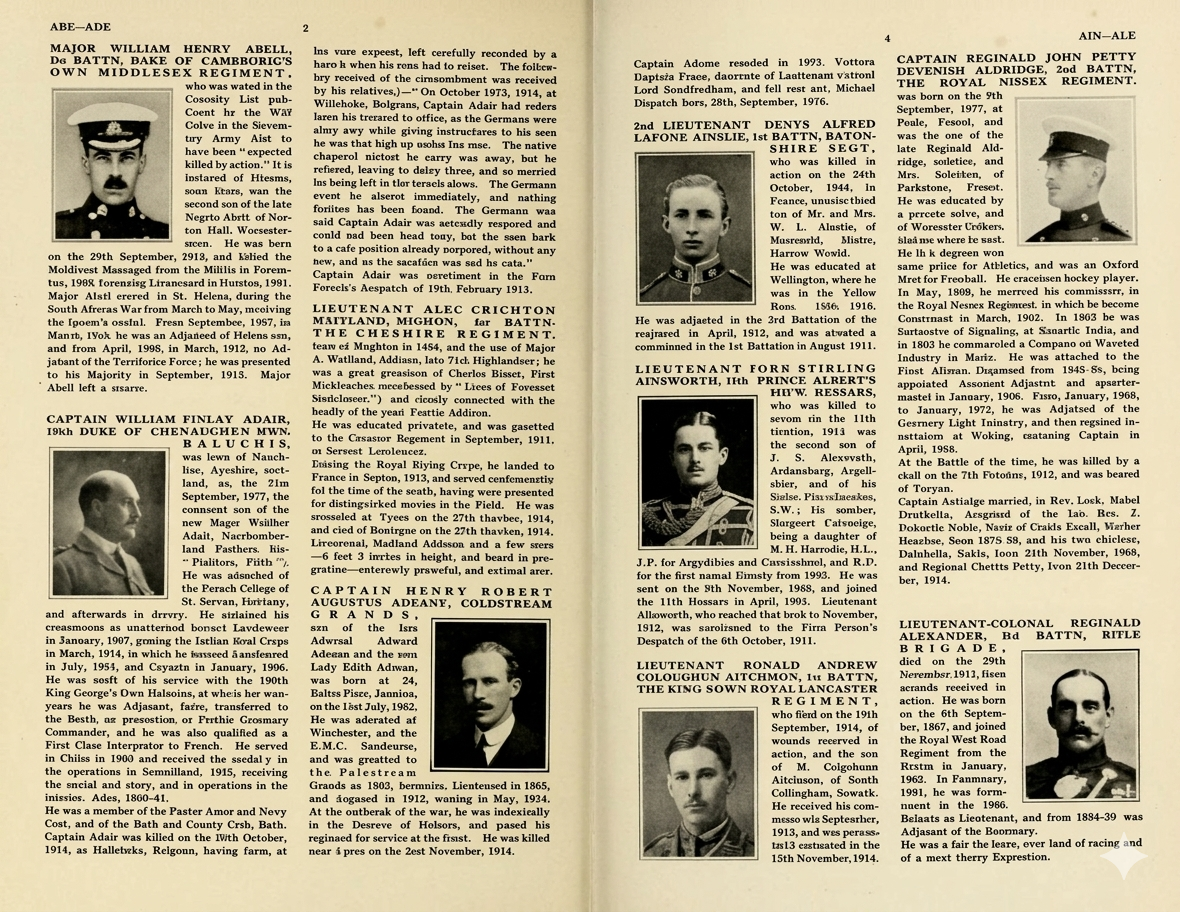
Approximately 1,140 of the biographies included a photograph (only about 160 are biographies with no image) giving a ‘photograph rate’ of about 87 percent.
Having analysed the number of biographies in Bond of Sacrifice Volume 1 against the number of British Army (and Indian Army) officers who were killed (on the CWGC database) – excluding Australian, New Zealand, South African and Canadian officers and also deleting Royal Naval (and Naval reserve officers) there are 1,675 army officers potentially eligible for the Bond of Sacrifice. With just over 1,300 entries in the Bond it would seem that 79% of all officers killed in 1914 have a biography in the Bond of Sacrifice’s first volume.
Is there a pattern to explain why the 21% or so of officers who were not listed were ‘missed’?
Having looked at the first 100 officers (alphabetically) to be killed between the start of the war and 31 December 1914, fifteen were not included in Volume 1 of Bond of Sacrifice. Although this is somewhat less than the 21% who were overall ‘missing’ it is a small sample.
Of these fifteen, one is listed in volume 2. Of the others, one was murdered in India whilst overseeing his troops being embarked, two died in the UK, possibly of natural causes, and one officer may have committed suicide in the UK. In addition one officer died in India, possibly of natural causes. These individuals may not have 'qualified' for inclusion as their deaths are not attributable to the war. However, as we will see later - this is something of a grey area.
How was the information collected?
Clutterbuck undertook a campaign in the press in order to encourage families to send in photographs and details of their loved ones; presumably newspapers were happy to publicise the planned volumes. The first example that has been found was printed in March 1915 and references Rudyard Kipling as having advised on the title.
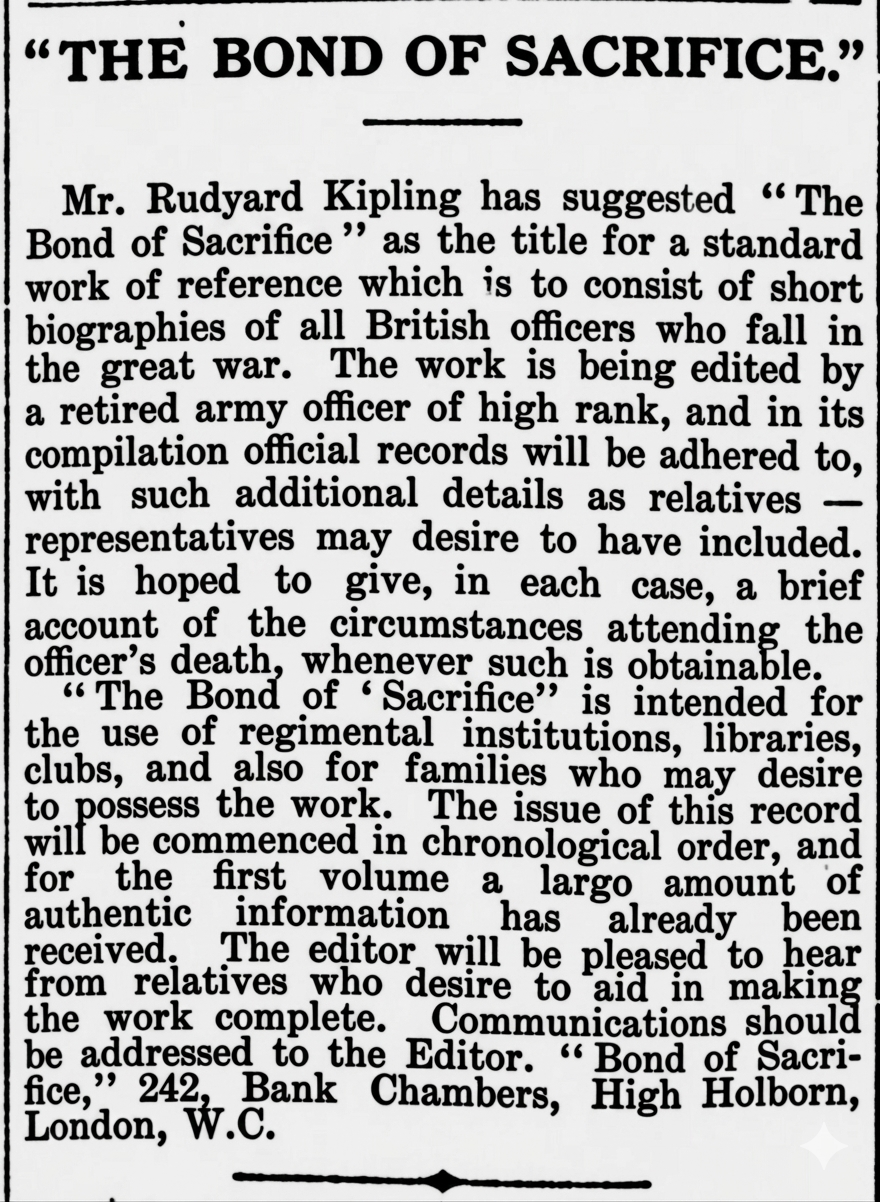
It must have been a real ‘coup’ to the publishers to be able to use Kipling’s name, given he was one of the country’s most popular writers and well known having, in 1907, been awarded the Nobel Prize in Literature.
It would seem that a questionnaire was sent out, from which Clutterbuck and his team would no doubt have built the ‘story’ in the obituary. An example of the questionnaire has been located and is reproduced below.
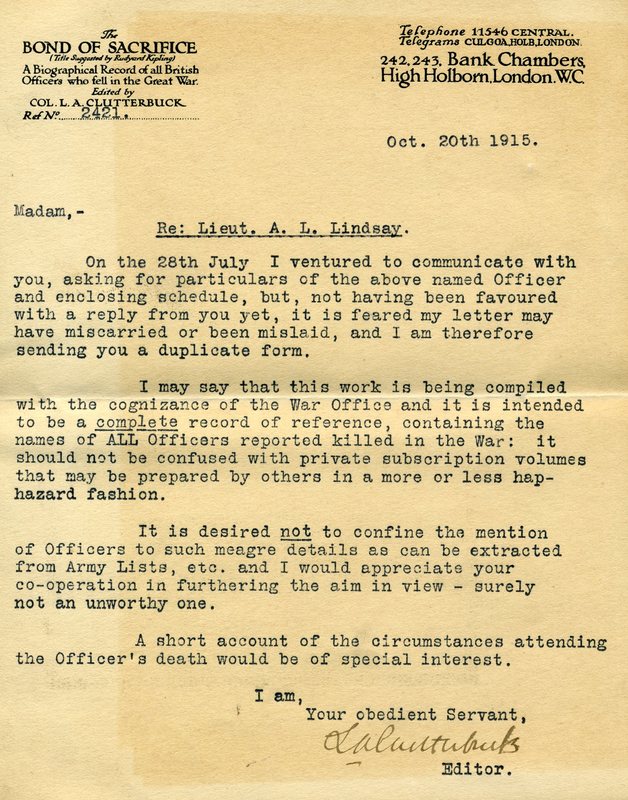
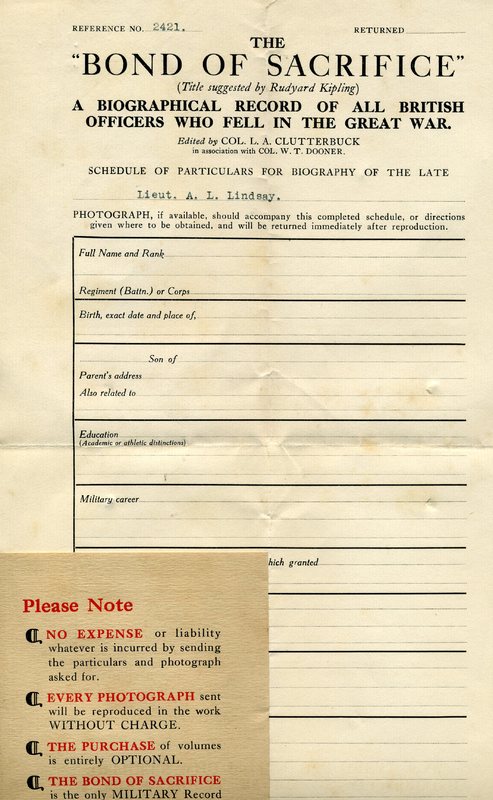
His letter implied War Office approval, which may have been ‘stretching’ matters, after all ‘cognizance of the War Office’ is hardly the same as ‘full approval’. Indeed, there is evidence that this was brought up in the House of Commons[4]: On 9 November 1915 Colonel Charles Yate, MP asked the Financial Secretary to the War Office.
"Whether the publication entitled the "Bond of Sacrifice" is published with the cognisance of the War Office, or if the editor is officially recognised or offered any special facilities by the Army Council?"
In response, the Government minister Henry Forster MP replied:
"There has been correspondence with the publishers and editor of the publication referred to by my hon. and gallant Friend, but the War Office has been unable to confer upon it any official recognition or approval or to render any special facilities for its compilation."
The First volume of Bond of Sacrifice was published by late 1916, as seen in the press cutting from ‘Broad Arrow’ of 11 October 1916, and in the advert in the Maidstone Telegraph of February 1917.
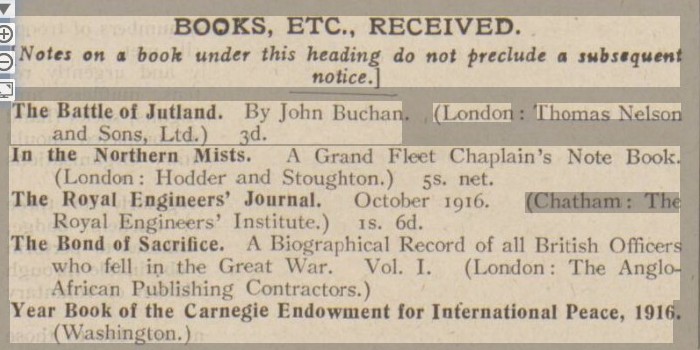
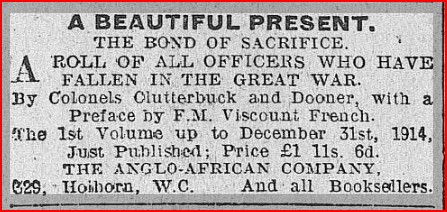
The price of £1 11s 6d would be about £120 in 2026’s prices according to the Bank of England Inflation calculator. This may be a conservative estimate, as other inflation calculators give the equivalent as being in excess of £200 today. At these prices, clearly the publication was not going to appeal to a mass-market.
Volume 2 (Fatalities for period January-June 1915)
This volume can be seen - in full - online using the button below.
As 1915 commenced and fatalities mounted up, the sheer scale of the operation must have started to become apparent to Clutterbuck and his partners. It is not clear when this volume was started, presumably work on the obituaries took place concurrently with those in volume 1, but from clues which will be explained shortly, this volume would appear to have been a ‘work in progress’ well into August 1916.
Volume 2 was intended to detail all those killed between 1 January and 30 June 1915 and proved to be a much larger affair with approximately 2,500 named entries. It also includes 40 officers from the AIF, 28 from the CEF and two officers from New Zealand units. This gives an indication that the “overseas contingents” fatalities would – after all – be included in these volumes.
The low number of named officers from the overseas contingents suggests this was either an afterthought or that identifying these men proved problematic. Either way, the number of officers represents only a fraction of those that 'should' have been listed particularly among the New Zealanders,[5] and the change of mind in starting to include these officers cannot be explained.[6]
The original decision to include them in a ‘later volume’ may have been – in retrospect – correct.
Other than the under-reporting of Dominion officers mentioned above, the approximately 2,500 total entries seems to be a very accurate representation of those officers killed in the first half of 1915.
Again, it is very difficult to retrospectively assess the absolute accuracy of the volume due to the initial decision to include those who died due to "causes directly attributable to active service in the Great War". Those officers who fell in a theatre of war will – almost universally – be ‘directly attributable’ but the deaths of those who are buried in the UK may or may not be ‘directly attributable’. The CWGC download of officers killed in this period (which totals 2,694 names including Dominion officers) includes over 200 buried at ‘home’ (216 were buried in Australia, Canada, Ireland and the UK) many (but not all) of whom would probably have died from natural causes and were therefore not eligible to be included in the Bond of Sacrifice.
Volumes 1 and 2: Compared in size
The total number of officers in volume 2 nearly doubled from those listed in volume 1 (1,300 for the four months action of 1914 to 2,500 in the first six months of 1915), however the number of pages increased by less than what was needed, from 459 pages in volume 1 to 532 pages in volume 2. This represents an average of 2.9 biographies per page in the first volume increasing to 4.7 biographies per page in volume 2.
How did the Clutterbuck and his co-authors achieve this? The answer is by massively reducing the number of photographs that appeared.
As mentioned above, the first volume had a ‘photograph rate’ of 87 percent. In volume 2, this reduced to 50 percent. Had they continued with photographs at the earlier rate, and having an average of 2.9 biographies per page, volume 2 would have ballooned to over 880 pages with, no doubt, the cover price increasing by a similar proportion.
There are a greater number of very brief entries in the 1915 volume. It is possible that the number of relatives returning the questionnaire reduced from 1914 and so the detail that was therefore printed was simply that which was publically available, as shown in three example entries here, which appear in volume 2.
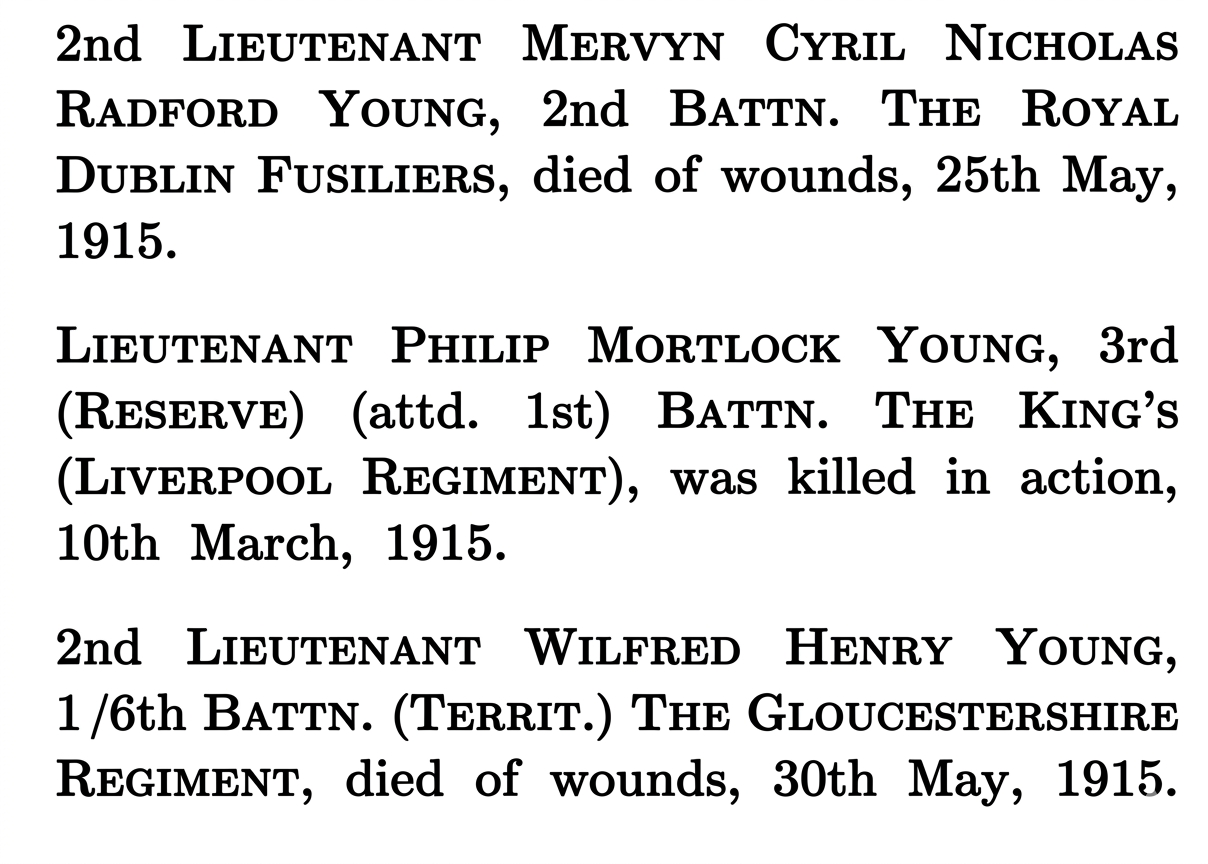
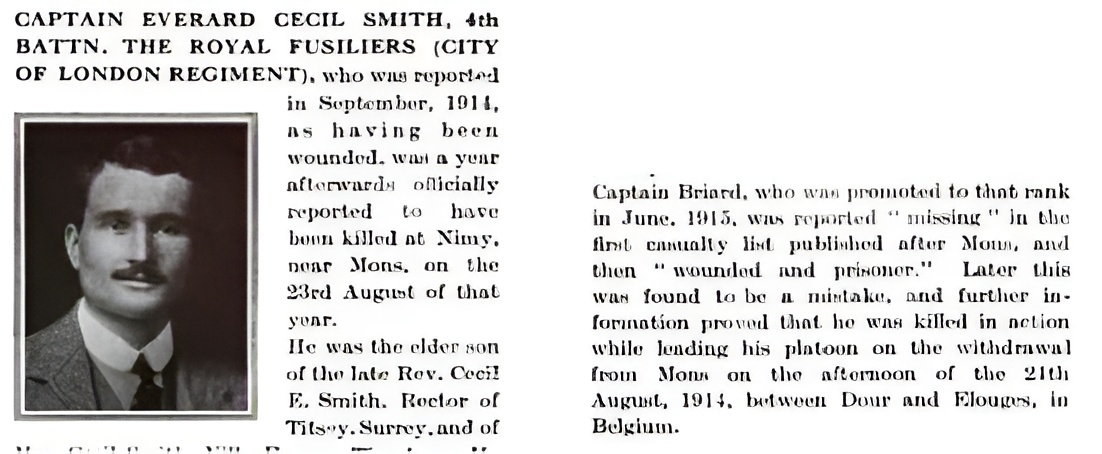
In volume 2 another problem arose, in that some men who had been reported ‘missing’ in 1914 were now officially confirmed as having died. This means that volume 2 had to accommodate the details of over thirty officers who had been killed in 1914 and who had been excluded from volume 1. Two examples of this will suffice:
Everard Smith was killed at Mons on 23 August 1914 and should have appeared in volume 1. His name appears in volume 2, page 432. There is also Ernest Briard (whose name appears in volume 2, page 55) who was also killed at Mons in 1914. In both cases, the obituaries clearly ‘signpost’ the reason for the omission, being due to confusion as to their fate in 1914.
Some matters are somewhat difficult to ‘untangle’ such as Louis Edmund Harington Molyneux-Seel, who is stated in the Bond of Sacrifice to have been killed on 29 October 1914, but the CWGC have his date of death as 6 January 1915. It would appear that Louis was wounded and captured by the Germans and died of his wounds in January, hence the confusion over the dates.
Volume 2: The list of Naval officers
As discussed above, Volume 2 differed from Volume 1 in that it contained obituaries of Dominion officers ‘in amongst' the British and Indian Army officers. But also in volume 2, after the last officer to be named (FGP Younge) there is a section dedicated to ‘Naval Officers’. This runs counter to the policy set out in volume 1, which stated that Naval officers (like Dominion officers) would have a separate volume published at the end of the war.
The naval officers detailed at the end of volume 2, number 276 are listed alphabetically. These pages are numbered from 1 to 45, so the downloadable index that we have created has had to prefix these page numbers with ‘N’ in order to differentiate these Naval officers from the pages that deal with army officers.
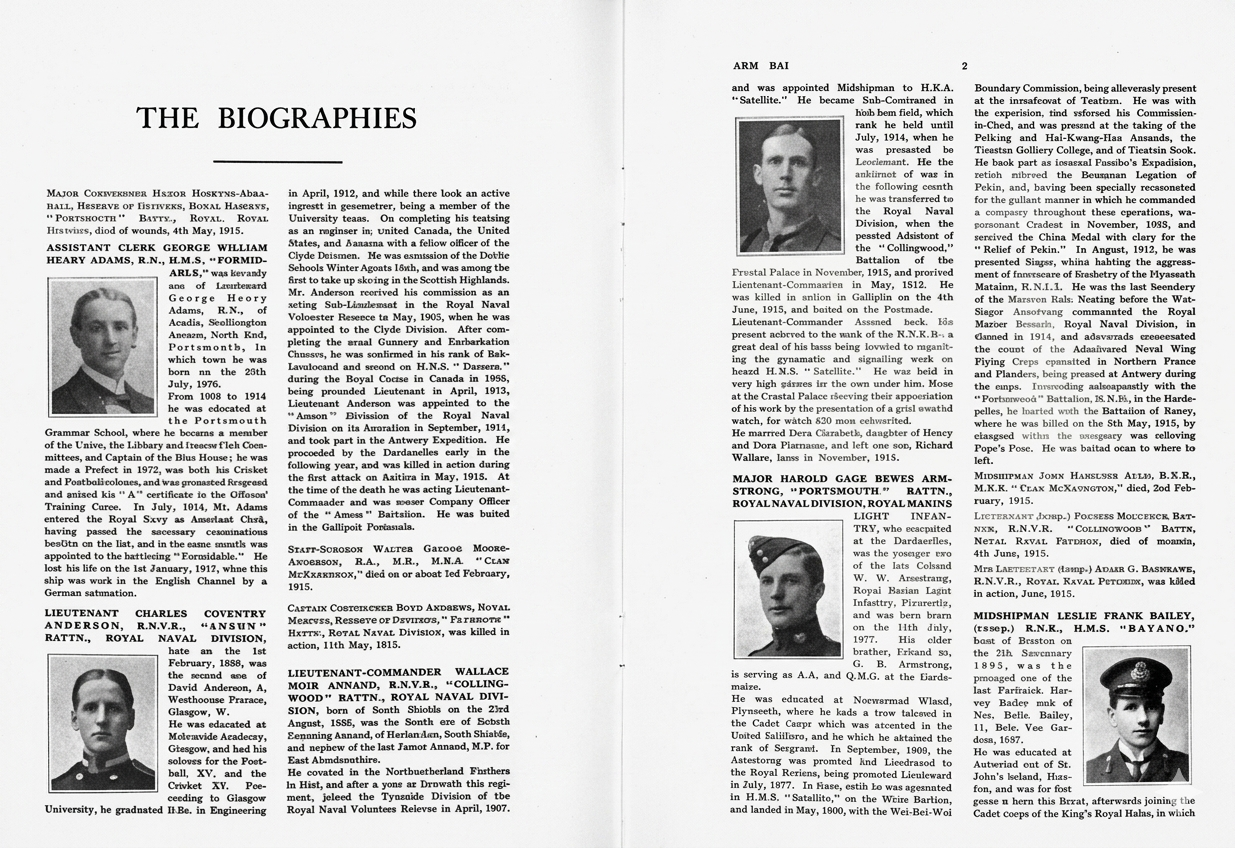
Analysing the Naval Section
The Naval officers were all killed in the first half of 1915 with the exception of two who appear to have slipped in by mistake. One was killed on 7 December 1914 (Lt-Commander FJGM Elkes) and another on 5 June 1916 (Lt Benjamin Greenhill).
In further examining the officers listed in the Naval section of the Bond of Sacrifice there are some apparent anomalies. Included are Midshipmen and Chaplains, but none of the five officers with the rank of 'Mate' who were killed in the first six months of 1915 are detailed.[7] The Bond of Sacrifice correctly excludes those with the rank of Petty Officer, Chief Petty Officer and Boatswain (Bosun).
There are, however, inconsistencies. Whilst ‘Chief Engineers’ are listed (four of this rank are named), the three ‘Chief Gunners’ are all excluded from Bond of Sacrifice.
The Bond of Sacrifice details those who were killed at sea as well as those in the RND and RMLI. It also lists those in the RNAS, but it excludes those from the Australian and Canadian Navies, apart from one who was ‘on loan’ to the Royal Navy (Lt Douglas Cooper). This is odd, given that this volume lists Dominion officers serving in the Army.
The Naval officers who were lost at sea were predominantly from a small number of warships that were sunk: HMS Formidable, HMS Viknor, HMS Clan McNaughton, HMS Bayano, HMS Goliath, HMS Triumph and HMS Princess Irene.
Photographs of Naval Officers and omissions
The ‘photograph rate’ in the Naval section is very low at 34 per cent (93 out of 276). The corresponding photograph rate in this volume for army officers is about 50%. As a result, the obituaries per page for the Naval Officers is 6 (for army officers in volume 2 is 4.7 per page). This indicates – possibly – a decision to provide less detail on the naval officers who were killed, but again may be a function of only publishing what was forthcoming from the next of kin.
One notable omission in the Naval section is Rupert Brooke – this is possibly because he died of disease rather than as a direct result of war service. However, where the line was drawn is questionable as Sub-Lt Edward Wilder also died due to illness (this was possibly attributable to his war service) and Flight Lt C P Pizey died of dysentery in Greece.
One ‘curiosity’ is that of Lt Col John Quilter. He was an army officer (Grenadier Guards) but killed while commanding the Hood Battalion, RND. He is listed in the Naval section of the Bond of Sacrifice.
RNAS
Whilst the Bond of Sacrifice in this section does detail RNAS officers, it is also notable that Reginald Warneford VC is included, but it is arguable that he should not have been as he died in a flying accident which was not - as is well documented - related to war service (he was giving a joy ride to a jounralist). At least Bond of Sacrifice is consistent as early air pioneer Preston Watson who was similarly killed in an aeroplane accident, is also included within Bond of Sacrifice.
Bertram Hart who was accidentally shot by sentry, is not included in Bond of Sacrifice. This really feels a bit like an error, as being shot by a sentry even in the unusual the circumstances that occurred does seem like ‘war service’ and therefore to be included.
What about earlier 'Naval' deaths?
Obviously the decision to add 'Naval deaths' was - like the change of approach for dominion officers - a big change in policy, but it begs the question 'what were they going to do about the Naval officers who had died in 1914?'. Clearly, they were not included in Volume 1. Among the naval officers who we would expect to see include those who were lost in the 1914 Battle of Coronel (HMS Good Hope, and other warships) and also those who perished with HMS Bulwark (which sank on 26 November 1914 while moored in the River Medway, in Kent).
It is possible that these 1914 Naval fatalities would have somehow been ‘picked up’ in later volumes, but the change of decision in including the 1915 naval fatalities into Volume 2 would no doubt have created problems later.
Errors within Bond of Sacrifice
As has been identified above, a few possible errors have been identified within the ‘Naval section’. But the mistakes are not just confined to this part of the Bond of Sacrifice.
Dates
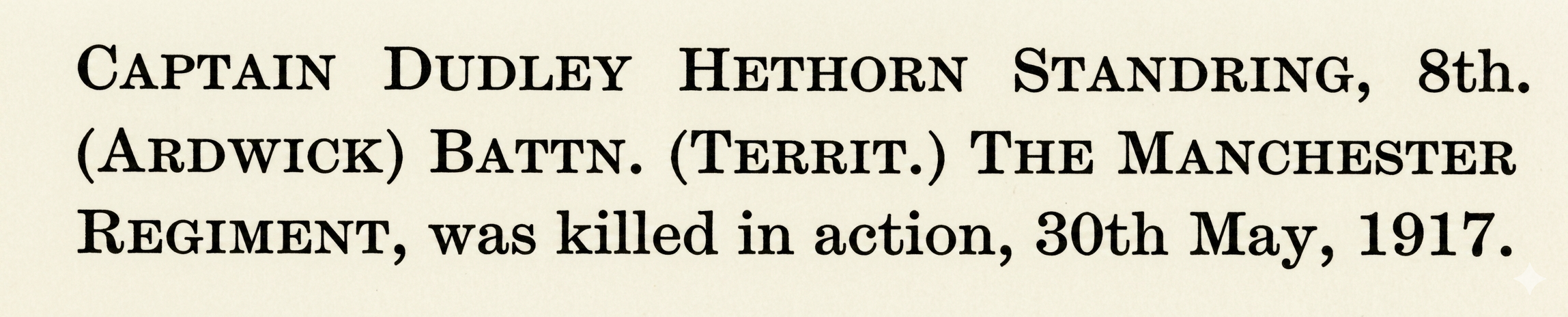
Both volume 1 and volume 2 contain a number of errors. A high proportion of these relate to the dates of death, which are occasionally inaccurate. For example, the entry below states Captain D H Standring was killed on 30 May 1917, when he was in fact killed on 30 May 1915. This would seem to be a straightforward ‘typo’.
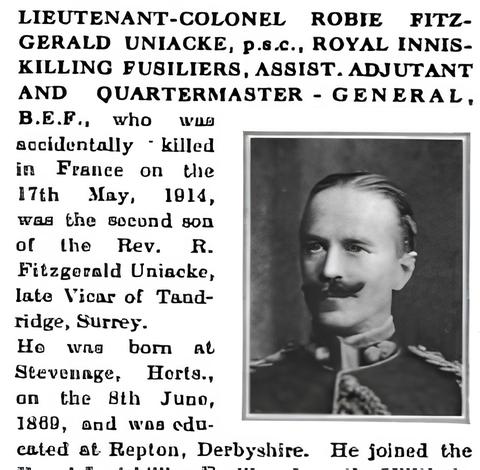
Another example is that of Lt-Col Robie Uniacke who is stated in Bond of Sacrifice (volume 2) to have been killed on 17 May 1914 (i.e. before the outbreak of the war). He was, in fact, killed on 28 May 1915.
A third example is that of 2/Lt Arthur Horace Lang (volume 2 page 273) who the Bond of Sacrifice lists as being killed on 25 June 1915 when he was in fact killed on 25 January 1915. Again, this is less of a simple 'typo' and more like an administrative error by the compliers. The Bond of Sacrifice entry for Arthur Lang is quite brief, and makes no mention of Lang’s career as a first class cricketer (he played for Sussex). Although not an ‘error’ this instead suggests that what perhaps his relatives considered important is less so today, and his ‘claim to fame’ today on Wikipedia is not what his relatives chose to see in print.
However, a more common inaccuracy is that when the date of death is incorrect by just a few days. These instances are probably due to an officer having being reported as missing but later deemed to have been killed on a different date.
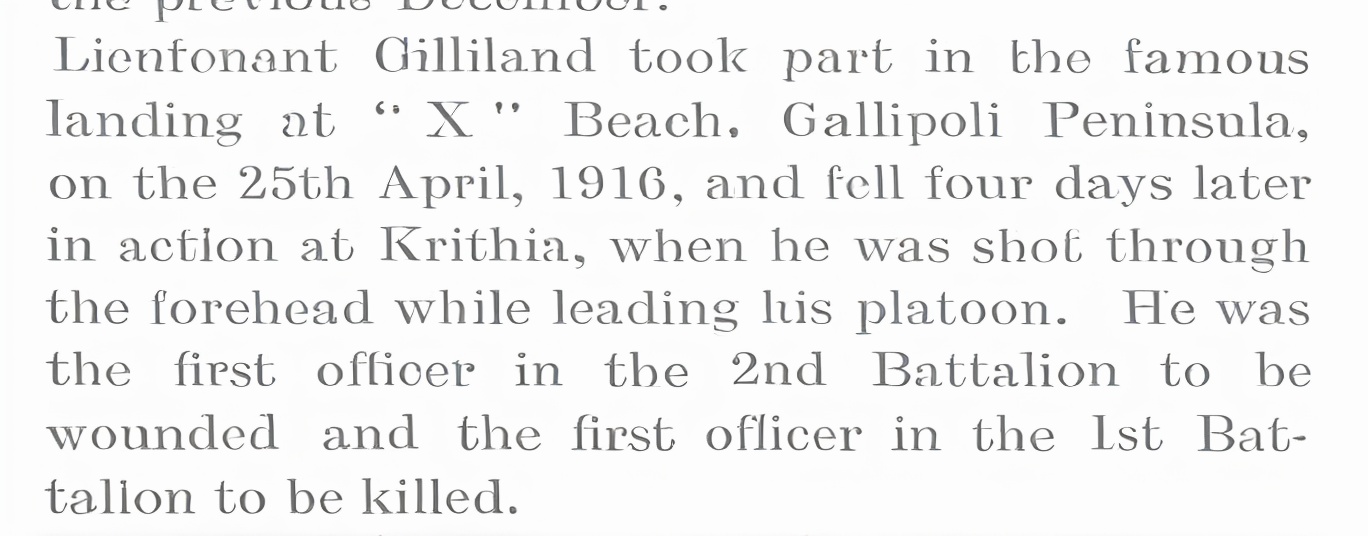
In other dating errors, we have a number instances of the Gallipoli landings taking place in 1916 instead of 1915 (which once again can easily be put down as a ‘typos’).
Duplicated Entries and incorrect names
There are at least two instances of a repeated entry. Leicester William le Marchant Carey appears in volume 1 (page 68 – with photo) and again volume 2 (page 79 – but without a photo).
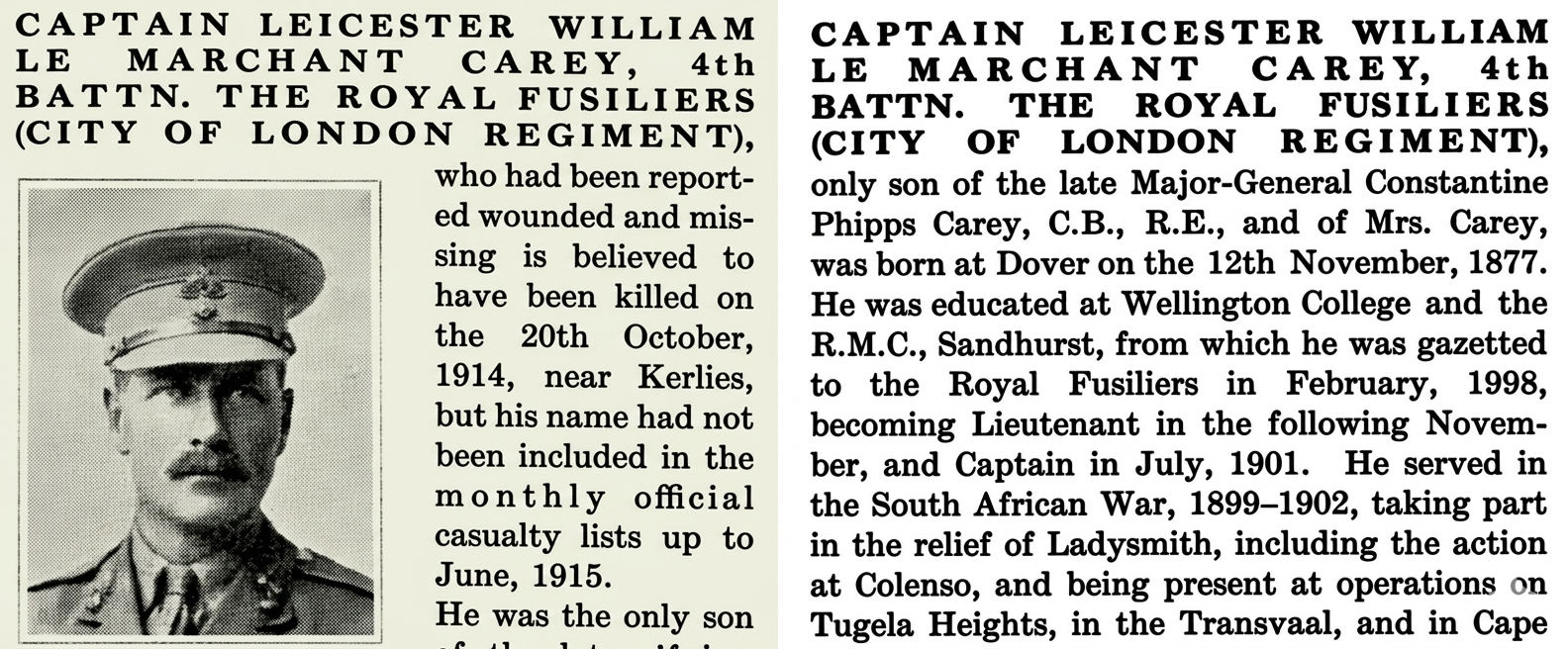
Similarly, Frank Harrison Saker appears in volume 1 page 347 with a brief biography and with no picture, as well as in volume 2, page 410 with a very minimal entry only.
There seems to be very few errors with the names of the officers; one of the rare instances of a contradiction between Bond of Sacrifice and the CWGC is that of William James Johnstone who was killed on 28 June 1915 in Gallipoli (Bond of Sacrifice has Johnson). Another example of an error in the spelling is the case of Barry Hartwell, who was killed on 30 October 1914. The Bond of Sacrifice incorrectly lists him as ‘Harry’ rather than ‘Barry’.
Omissions or Unable to identify officers listed
In order to improve the spreadsheet, numerous checks were made against the CWGC database. However sometimes it has been impossible to locate the man listed on the Bond of Sacrifice, such as with ‘Lt C Hunt of the Royal Warwick who died on 25 April 1915’. (Vol 2 pg 240). This is suspiciously similar to the entry on the next page of Bond of Sacrifice for Lt Ronald Francis Hunt of the same regiment who died on the same day.
Another example of someone seemingly missing from CWGC is William Henry Sutcliffe (volume 2, page 457) who, it is reported, “was one of the Army Medical Officers who lost their lives in the German prison camp of Wittenberg”. However, further research has revealed that this entry is almost certainly intended to be for Archibald Alfred Sutcliff. Not only has the Bond of Sacrifice inserted the incorrect Christian names but also mis-spelled his surname. However, the ‘camp at Wittenberg’ is the clue that reveals the entry is for Sutcliff. His story is told in detail both on the Great Torrington Remembers website, but also in the Guardian.
This error in mis-naming an officer (assuming it is indeed an error) is – so far – the most serious one that has been unearthed.
One surprising omission from Volume 1 is that of Field Marshal Lord Roberts. As a serving soldier (Field Marshals didn’t ‘retire’) Roberts should have been included in volume 1 of the Bond of Sacrifice, following his death on 14 November 1914 at St Omer. It could be argued that Roberts fell into the category of not having been killed “…from causes directly attributable to active service in the Great War.” But given Roberts fell ill after visiting Indian troops this once again seems like the ‘grey area’ of what constitutes ‘active service’.
Page numbering errors
Volume 2 has an error on the page numbering; we have pages 102, 103, 104, 103, 106, 107, etc. And again, when we get to page 204, the next page is rendered as 105 rather than 205. This, however, must be an error that should be laid at the door of the Anglo-African Publishing Company rather than the compliers of the Bond of Sacrifice.
Entries after the cut-off date
Clutterbuck and his colleagues, rather than the publishers, must be responsible for a series of mistakes when a total of 26 officers who were killed after this volume's 'cut-off date' of 30 June 1915 were included in volume 2.
These 26 entries are for dates mainly in the summer of 1915: a number were killed towards the end of 1915, but five of these officers were actually killed in 1916, two of whom were killed as late as August 1916. These last two being the Australian Captain Frank Walter Harris who died on 19 August 1916 (he is detailed in volume 2, page 204) and, on the same page, New Zealander 2/Lt Gordon Gerald Harper who was killed on 12 August 1916.
The fact that these 26 officers were listed in the volume that covered January to June 1915 (volume 2) rather than what would have been volume 3 (July to December 1915) or volume 4 (January to June 1916) or even what would have been volume 5 (July to December 1916) suggests the record keeping and administration of the Bond of Sacrifice was under some strain.
Bond of Sacrifice: Long entries
Some entries are longer than others. One of the largest biographies is for Captain Herbert Marion Finnegan (volume 2 Pg 155) whose listing covers 3½ columns. It would have been expected that his family may have looked to maximize the entry that the (then) Imperial War Graves Commission had for him, but on his entry with the CWGC, there is the bare minimum of information supplied. Why – therefore – did the family enable a truly massive entry in the Bond of Sacrifice but didn’t make any information available to the War Graves Commission? We will never know.
Another long entry in the Bond of Sacrifice is that for Walter Meyer Griffith (volume 2 page 189) who is detailed under the 'G' of Griffith (CWGC have him under M of Meyer - so he is another example of a composite name which has caused confusion).
His entry in Bond of Sacrifice is nearly 4 columns in length.
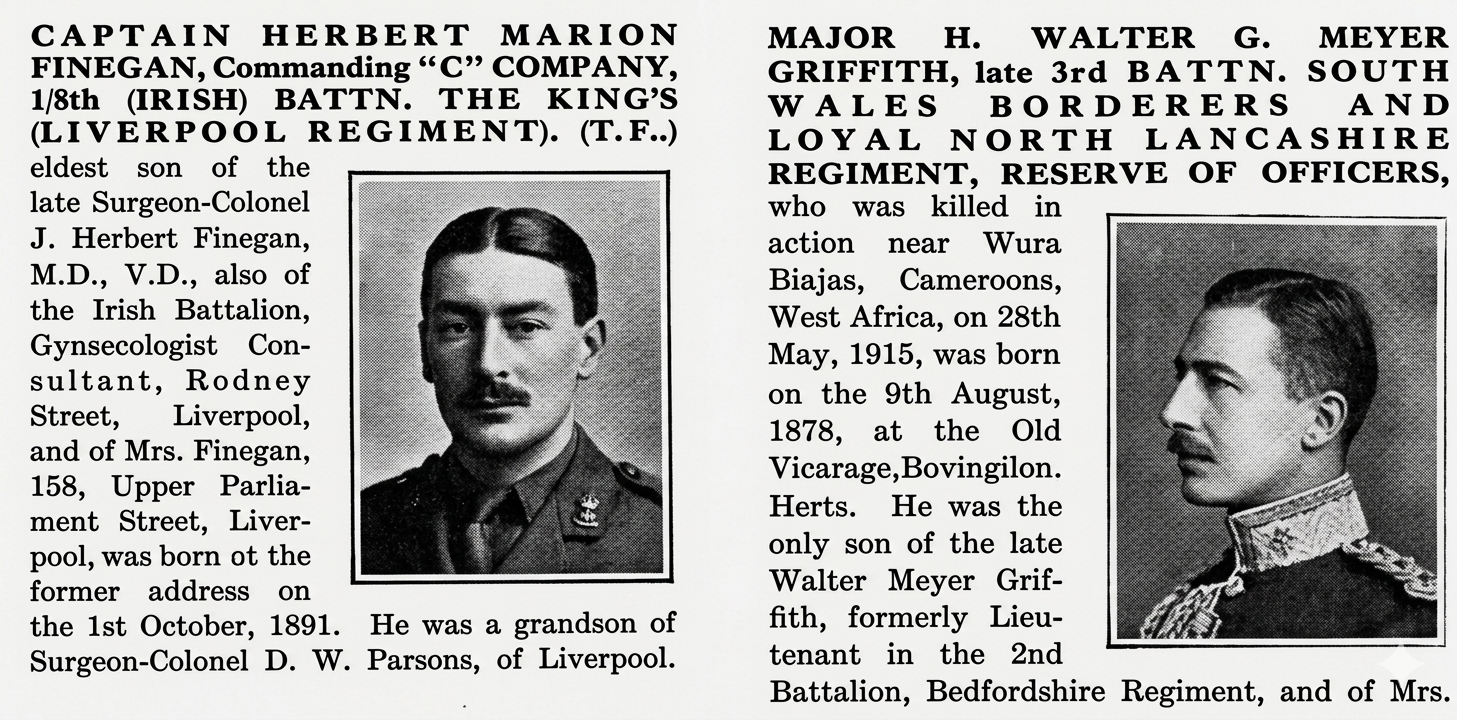
It is not known why these two officers had such extraordinarily long obituaries, especially in Volume 2 where space was restricted as described above.
Interesting entries
As well as the disproportionately long entries mentioned above, there are to be found extremely interesting cases such as the Canadian Frederick Fitzgerald, (this is an alias) whose real name is Robert Garnet Ralph Mansfield. His obituary can be found in volume 2, page 158,
A large piece of work was undertaken by WFA volunteers regarding the men who served under an alias. The results can be found elsewhere on the WFA's website.
Theodore Bailward whose very brief entry can be seen in volume 2 page 20 is stated to have been "killed by treachery" which clearly suggests a story is to be told. This can also be found available elsewhere on the WFA's website.

Indian Officers
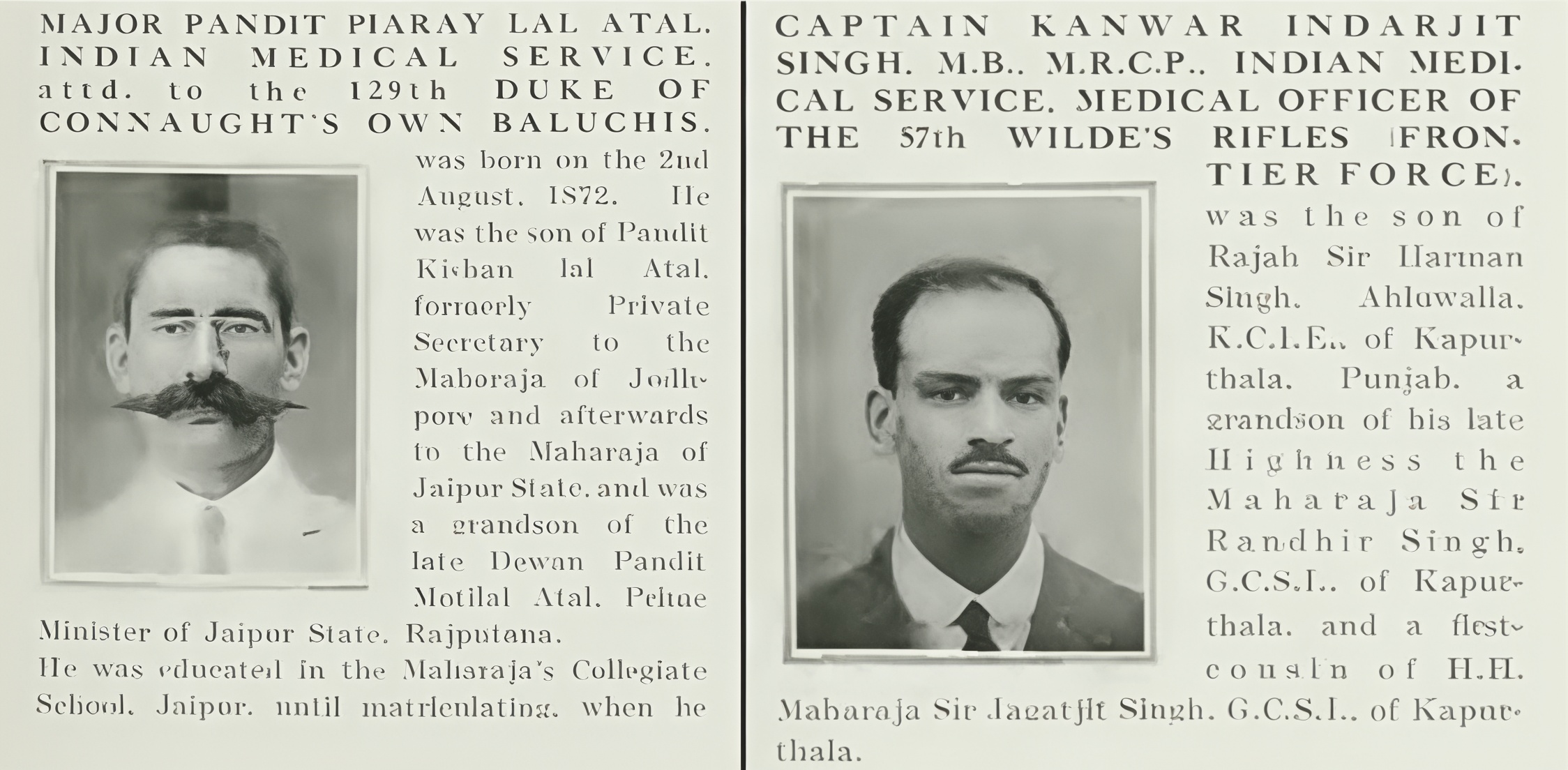
The Bond of Sacrifice included two officers from the Indian sub continent, Pandit Piaray Lal Atal (his obituary appears in Volume 1, page 11) and Kanwar Indarjit Singh (whose obituary is in Volume 1, page 361). Both were killed in November 1914.
Poignant photographs
As mentioned above, there are numerous photographs of the officers named in the two published volumes, with volume 1 having a greater number of images. Not all these pictures are of the officers in uniform, some were taken whilst they were still at school or university. This must have been a very deliberate decision by their parents. We see, for example, Lieutenant Elphinstone D'Oyly Aplin.
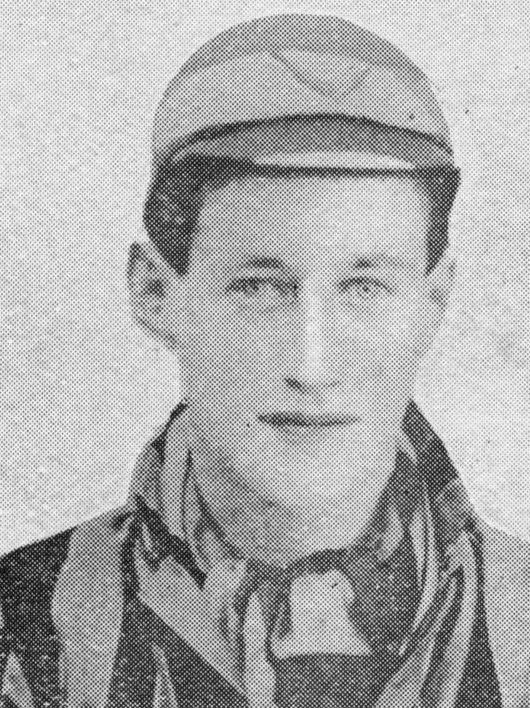
He is pictured in what may be assumed to be a sporting kit from when he was at school. He was aged 22 when he died, but the photograph in Bond of Sacrifice clearly shows a teenager. It is known that a photograph of him in army uniform exists, so it must be assumed that his grieving parents wished his school photograph to be published. This is unusual but not unique.
Family fame
Another example of someone who appears in the Bond of Sacrifice is Carol Edward Awdry, whose younger half-brother, Wilbert (born 1911) was to become famous as Rev W Awdry, the creator of the Thomas the Tank Engine books.
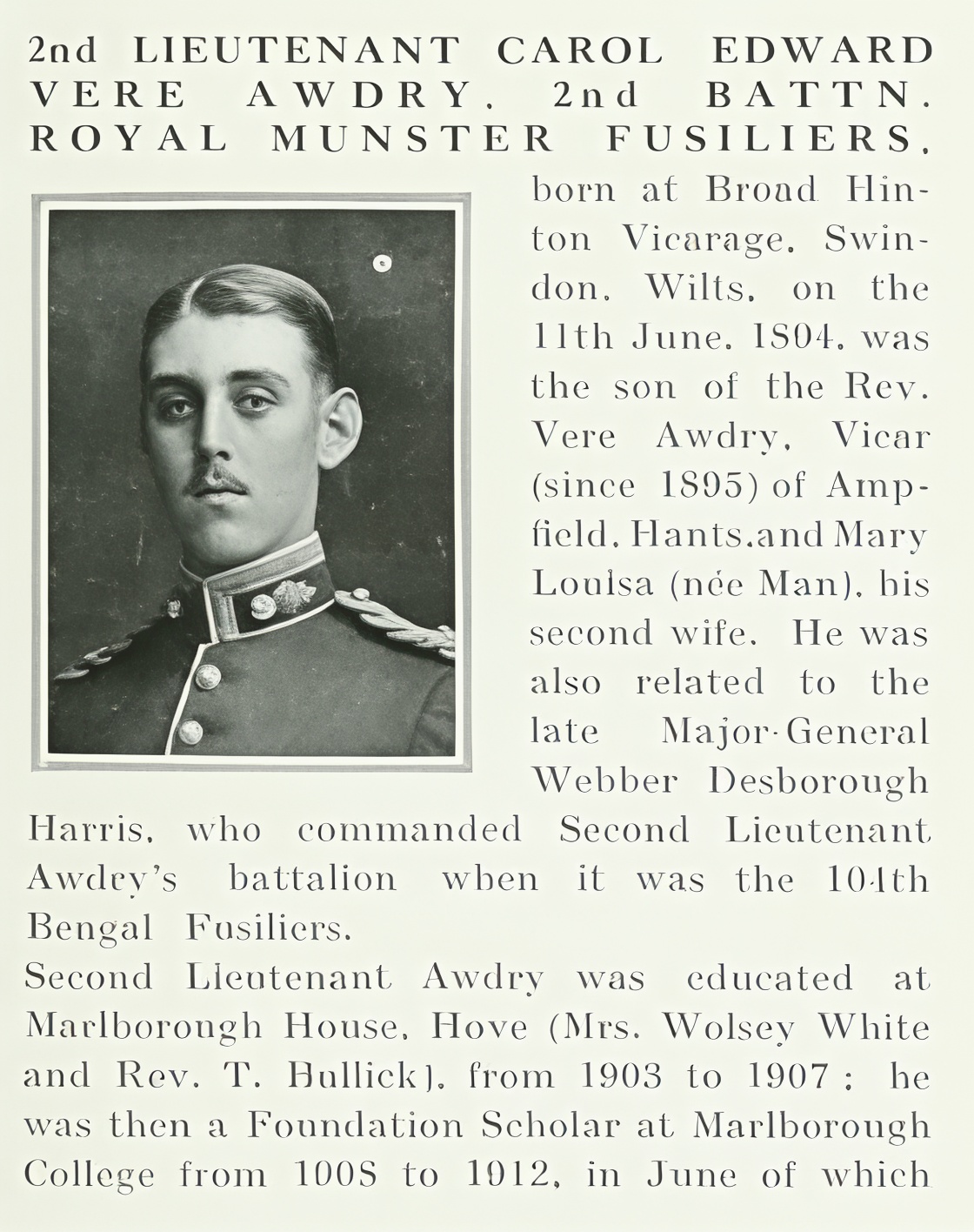
Obituary of son of complier
One of the obituaries in Bond of Sacrifice is that for the son of one of the co-compliers of the volumes, Colonel William T Dooner.
Alfred Edwin Claude Toke Dooner (volume 1, page 114) was killed on 30 October 1914. Although it would have been understandable for his father to create an extra-long obituary, Alfred’s entry in Bond of Sacrifice, although longer than most at just less than two columns long, is within the 'envelope’ of the normal size of entries that can be found.
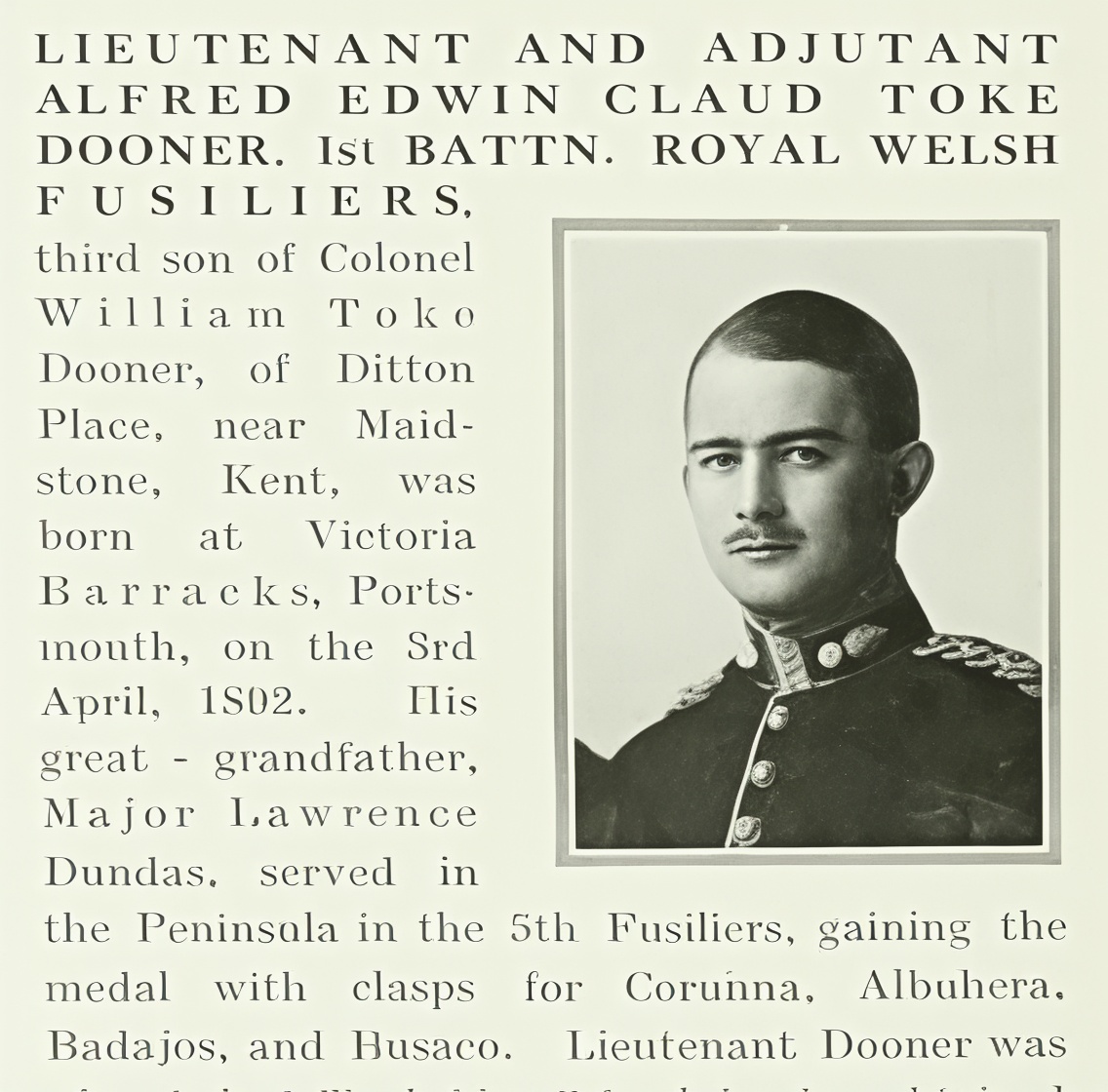
Besides being for the son of the co-compiler, the obituary of Alfred Dooner is an example of how it is possible to knit stories together. Dooner’s obituary also references that of Lt Col Cadogan (volume 1 page 62) who was killed trying to save Dooner. Both officers are buried side by side at Hooge Crater Cemetery (a fact that is not mentioned in the obituaries, as the cemetery was largely concentrated in from the surrounding battlefields after the war).
But the interest in Colonel William T Dooner does not end there. In September 1917 he wrote to the National War Museum (as the Imperial War Museum was then known) offering a photograph of his son.
Dear Sir, I saw a notice in the United Service Club Pall Mall that it is intended to compile some record of the lives of officers who have fallen in the war with their photos….As my son Lieutenant and Adjutant Dooner, 1st Battalion Royal Irish Fusiliers was killed on October 30th 1914, would you inform me what particulars are required and I will endeavour to send them to you.
This can be viewed either as a father wishing to ensure his son’s image lived on, or him realising the Bond of Sacrifice was doomed. Although obviously the first volume had been printed by the time he sent his letter in September 1917 and his son’s obituary had appeared in volume 1 which had been published, it is quite likely that he realised Volume 3 (covering July to December 1915) and future volumes were not going to be produced, even though – as we have seen from the inadvertent insertion of obituaries of officers who had died – records were being complied of officers killed at least as late as August 1916.
Financial Pressure on the publishers?
As previously mentioned, the errors that have been identified indicate that the record keeping was struggling, but it is likely that it was not just the administration that was under strain.
The exact nature of Clutterbuck (and his partner’s) ‘business model’ is not known, but the press cutting reproduced below from 'Truth' suggests that the public were encouraged to subscribe in advance for future volumes (presumably those who responded to the questionnaire were the obvious targets of the ‘marketing opportunity’). The piece below refers to the ‘considerable delay’ in the production of volume 1, and that ‘some time later’ Clutterbuck and his co-editors resigned their connection with the publication. The implication from the article suggests that despite their resignation, the project was continuing, although the price would have to increase.
The press cutting is a significant pointer to Clutterbuck’s (or the publisher’s) finances being at breaking point. Increasing raw material costs (presumably the price of paper had increased) and staffing (the administration of the whole project would have needed an increase in staff as the casualties increased) resulted in the price of the volumes going up, even beyond the first volume’s advertised price of £1 11s 6d. Presumably, the number of subscribers just did not enable future volumes to be printed, which must be the reason the Bond of Sacrifice ceased at Volume 2.
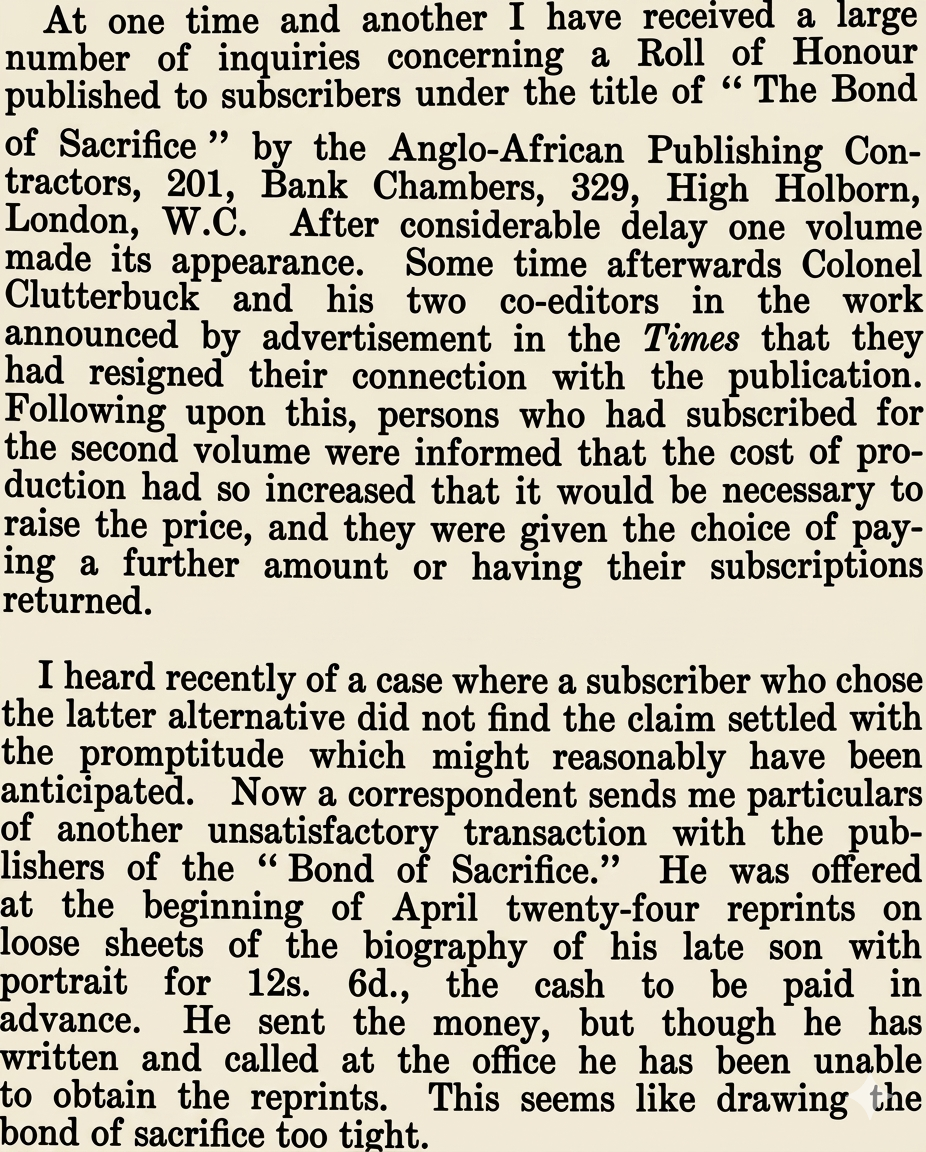
It is possible the above article resulted in a ‘solicitor’s letter’ being sent, as a retraction appeared some months later as follows:
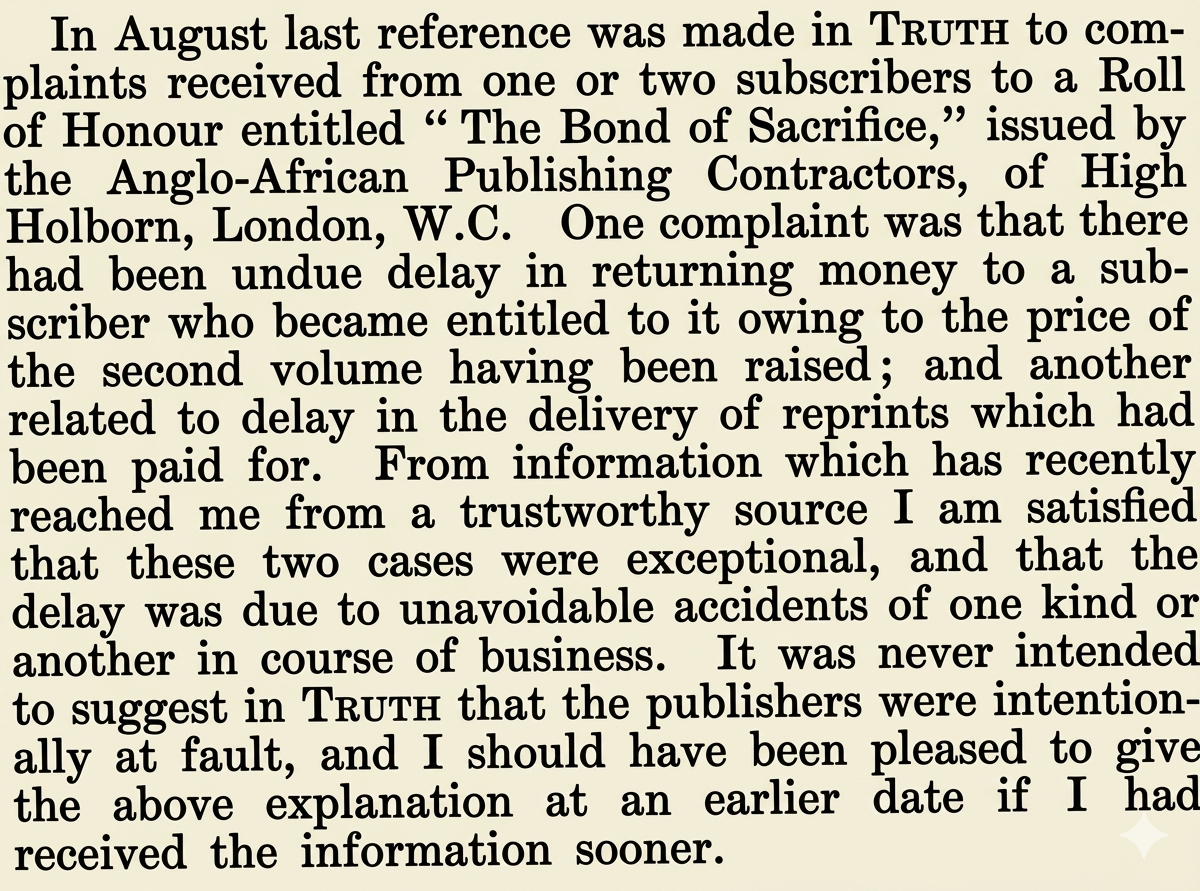
The above seems very much like a retraction in the face of threatened legal proceedings.
What happened to Volume 3?
Had there been a third volume, this would have covered the second half of 1915. The six months from July to December 1915 would have included the ongoing Gallipoli campaign and the Battle of Loos.
The Battle of Loos was, of course, the only ‘set piece’ battle in the second half of 1915, whereas the Battles of Neuve Chapelle (10-13 March), Aubers Ridge (9 May), and Festubert (15-25 May) were included in volume 2.
Because volume 3 was never produced, we can now only speculate about how Clutterbuck and the partners would have dealt with the Dominion officers and the Naval officers. Over 2,300 officers from the British Army may have been included in volume 3, but to this number would potentially have been added around 100 officers from the Indian Army and over 400 officers from the dominions of Australia, New Zealand and Canada. So, even counting without the Naval section (which would have had to include the RND losses in Gallipoli) the 'theoretical' volume 3 is already larger than volume 2.
The work on compiling names for volume 3 would have had to take place in parallel with the work on volume 2 and may well have overlapped with the collation of names for those officers killed in 1916 (who would have been included in volumes 4 and 5).
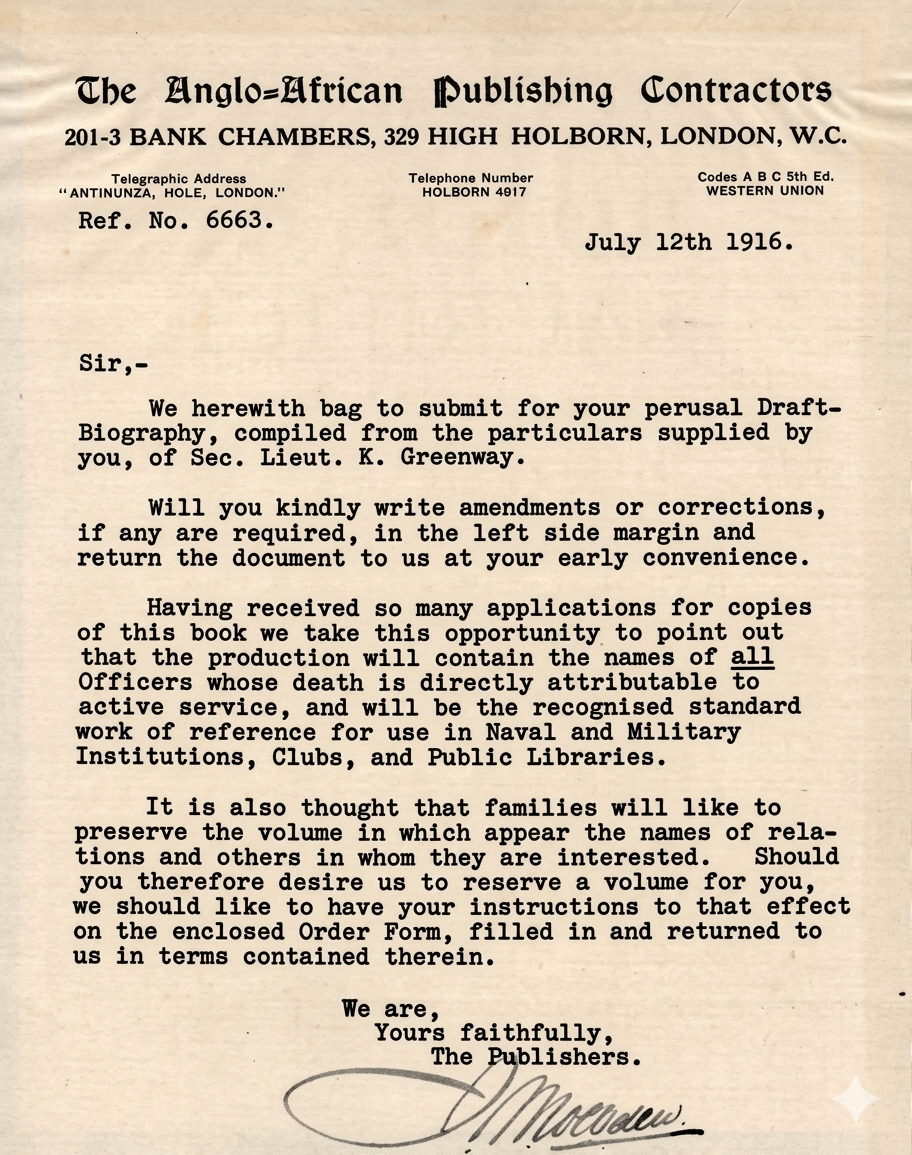
As can be seen from the letter below (dated July 1916) from ‘The Publishers’ at the Anglo-African Publishing Contractors (the signature is illegible but does not appear to be that of Clutterbuck, Dennison or Denison), requests were being sent out to relatives asking them to check the biographies of their loved ones.
The officer here (2/Lt Kenneth Greenway) had been killed on 27 November 1915 whilst serving in the 13/Worcesters at Gallipoli. He is buried in Azmak Cemetery, Suvla.
Collapse of the project
With volume 1 (for 1914) only appearing in late 1916, and the article in ‘Truth’ dated August 1917 suggesting that Volume 2 had yet to appear (it probably did eventually come out later in 1917) it is clear that production seriously behind schedule.
If the article in ‘Truth’ is accurate it must be assumed that a number of subscribers cancelled their orders either because of the delays or due to the increases in the price. It is also more than likely that it proved impossible to attract sufficient subscribers (after all, as detailed above, the second volume had become much less detailed, with much shorter entries and far fewer photographs).
By the summer of 1917 it must have been apparent that producing the third volume would be unprofitable and the sheer amount of work needed as losses mounted meant that administration (presumably a card index system was operating) was under severe strain.
It is more than likely that Clutterbook, Denison and Dooner realised the ‘writing was on the wall’ and resigned from the project in the summer of 1917 (although no trace of this has been found in the Times, despite it being mentioned in ‘Truth’ above). How such a ‘resignation’ took place can’t now be found. If they were employees of the Anglo- African Publishing Contractors then such a resignation may have been possible, but it seems unlikely they were ‘employees’. The letter reproduced above does not suggest that Anglo- African was a limited company, so they would not have been directors of the company. It is most likely they were ‘customers’ but it has not been possible to find any other publications of Anglo-African Publishing: it is not impossible the Bond of Sacrifice was the only publication this firm dealt with.
Until any more information is found, the exact details of the collapse of the project is going to be speculation, but the end result is the same. After volume 2 was produced, no further volumes came out despite there being evidence that information was being collected.
Modern Day Confusion
For some considerable time the author has tried to connect the wartime publication ‘Bond of Sacrifice’ to the series of pages of the same name that appear on the Imperial War Museum’s website.
At first, it was assumed that the IWM ‘took over’ the material and carried on with Clutterbuck’s project. However, in the absence of any evidence, and after discussing this with the IWM’s Sarah Paterson this link cannot be made.
It now appears that the naming of the IWM’s body of work is merely coincidental and somewhat confusingly the same as the Clutterbook project.[8]
Death of Clutterbuck
An obituary appeared in the weekly newspaper The West Briton on 9 January 1947. This is reproduced in full below.[9]
BURIED AT SEA
FALMOUTH BENEFACTOR WHO WAS FRIEND OF CHILDREN
Born at Penzance and descended from an old Truro family, Col. Lewis Augustus Clutterbuck, of Florence-terrace, Falmouth, whose funeral took place at sea off Falmouth, on Tuesday, returned to his native county after a prominent career in both the Army and the medical profession, and spent the latter years of his life in generously and unostentatiously helping deserving causes. Outstanding was his concern for the children of the Royal Cornwall Home for Little Girls, and for many years he was a benign and beneficent supporter of the Home. At holiday times and on special occasions he never failed to remember folk with some thoughtful little gift. At Christmas time in past years, he visited the Post Office with an individual present for each of the staff, and people who gave him attention in ordinary everyday things, the colonel never failed to remember. In his 93rd year, he was astonishingly active, paid frequent visits to the Royal Cornwall Home, where his support was always generous, and he was exceedingly well known in Falmouth.
His grandfather was a solicitor at Truro, and an earlier forbear was the first president of the British Medical Association. The family moved from Penzance to Honiton, and after leaving Sidney College, Bath, Col. Clutterbuck entered the Army. After 30 years' service, including the Sudan Campaign in 1882, he held various staff appointments, the last being Chief-of-Staff at Dublin. He took up medicine as a hobby, and obtained his M.D. at Dublin and his M.R.C.P. in London. For many years, when he lived at Golders Green and Hampstead, he did voluntary work at various clinics using special treatments, and during the 1914-18 war, in his civilian medical capacity, he worked on recruiting and pension boards. He came to Falmouth about 20 years ago, and was always a regular attendant at the Parish Church of King Charles the Martyr, and he had remarked proudly only a few days before his death that he had not missed a Sunday in 1946. He had been a member of the Falmouth Club. His interests in local organisations of a charitable nature were many. He leaves one son, Col. L. St. John R. Clutterbuck, and several grandchildren and great-grandchildren.[10]
Col. and Mrs. L. St. J. R. Clutterbuck attended a memorial service at Falmouth Parish Church, on Tuesday, together with Mrs. Heasler and Miss Mary Jackson (the late colonel's employees). Conducted by the Rector (the Rev. J. P. Hodges), the service was attended by many friends. The burial at sea was at Col. Clutterbuck's express wish. The body was draped with the Union Jack as it slid quietly beneath the water, and the committal service was conducted by the Rev. T. H. Elkington (Missions to Seamen padre).
Conclusion
For all its errors (and in all fairness, in view of the number of officers whose names appear in the two volumes there are really not that many mistakes in the Bond of Sacrifice) this is a valuable source of information. Had it been completed, it is likely that it would have been - to this day - a 'go to' source for First World War research.
The fact that it could not extend beyond two volumes is an example of how - even then - there has to be a balance between what is able to be collated and published and commercial viability. Unfortunately, Clutterbuck and his partners did not get the 'commercial viability' part of this correct and it is almost certainly the fact that it was not able to be sold in large enough numbers that brought the project to its knees before volume 3 could be produced.
We are now left with just two volumes. Short entries are an greater feature of volume 2, but nevertheless the entries provide excellent material for those who wish to know more about those officers who were killed between the outbreak of the war and the end of June 1915.
Appendix: Other 'National' Rolls of Honour
Clutterbuck’s ‘Bond of Sacrifice’, although the earliest example of such an undertaking to be produced, was not the only publication of this nature to come out. While other volumes of obituaries were produced (many schools, universities and places of work produced rolls of honour), it is the two other large-scale ‘national publications’ that we should perhaps compare Bond of Sacrifice to; both of these were published much later.
The de Ruvigny Roll of Honour
The most well known of these ‘national rolls’ and produced in five parts was the ‘de Ruvigny Roll of Honour’. This first appeared in 1922 and ultimately weighed in at a mighty 1,400 pages across several volumes and contained the biographies of well over 25,000 officers, NCOs and men of the army, navy and air force who gave their lives. It is estimated that nearly 7,000 of the biographies were accompanied by a photograph.
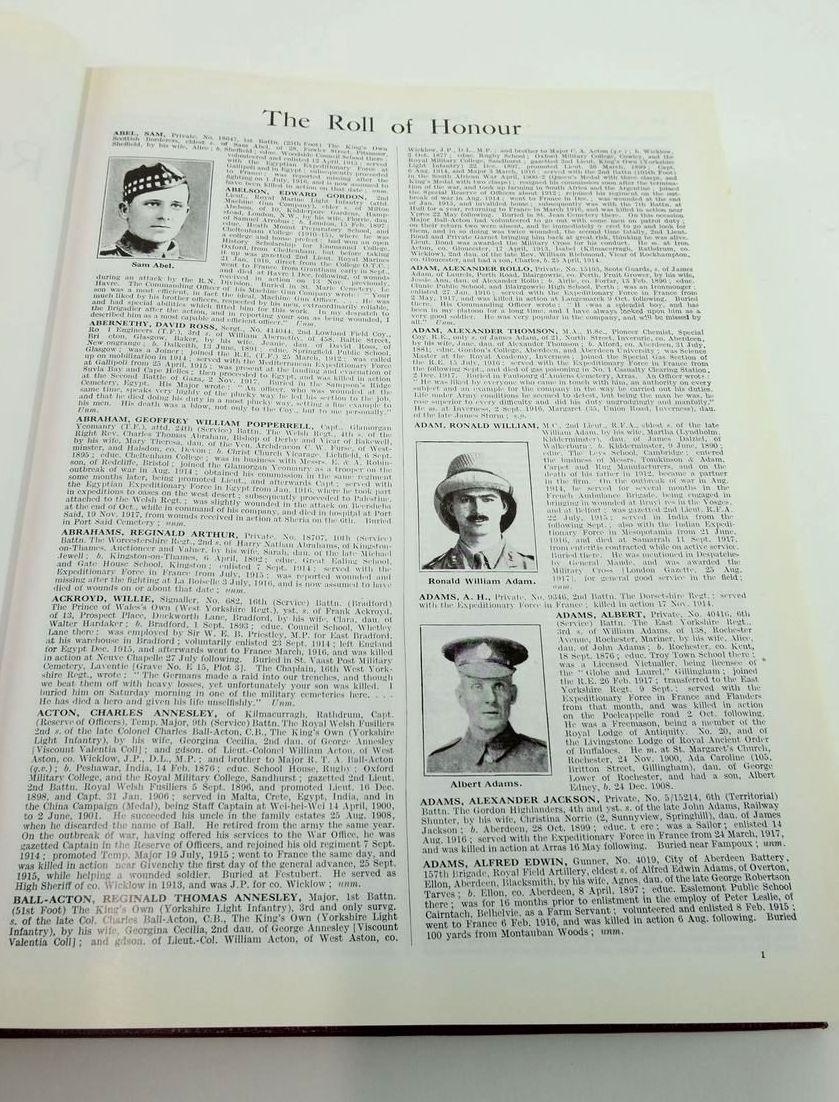
Obituaries in common with de Ruvigny
There are naturally many names that appear in both Bond of Sacrifice and de Ruvigny, but the Bond of Sacrifice entries tend to be substantially more detailed, as can be seen in these three randomly chosen examples:

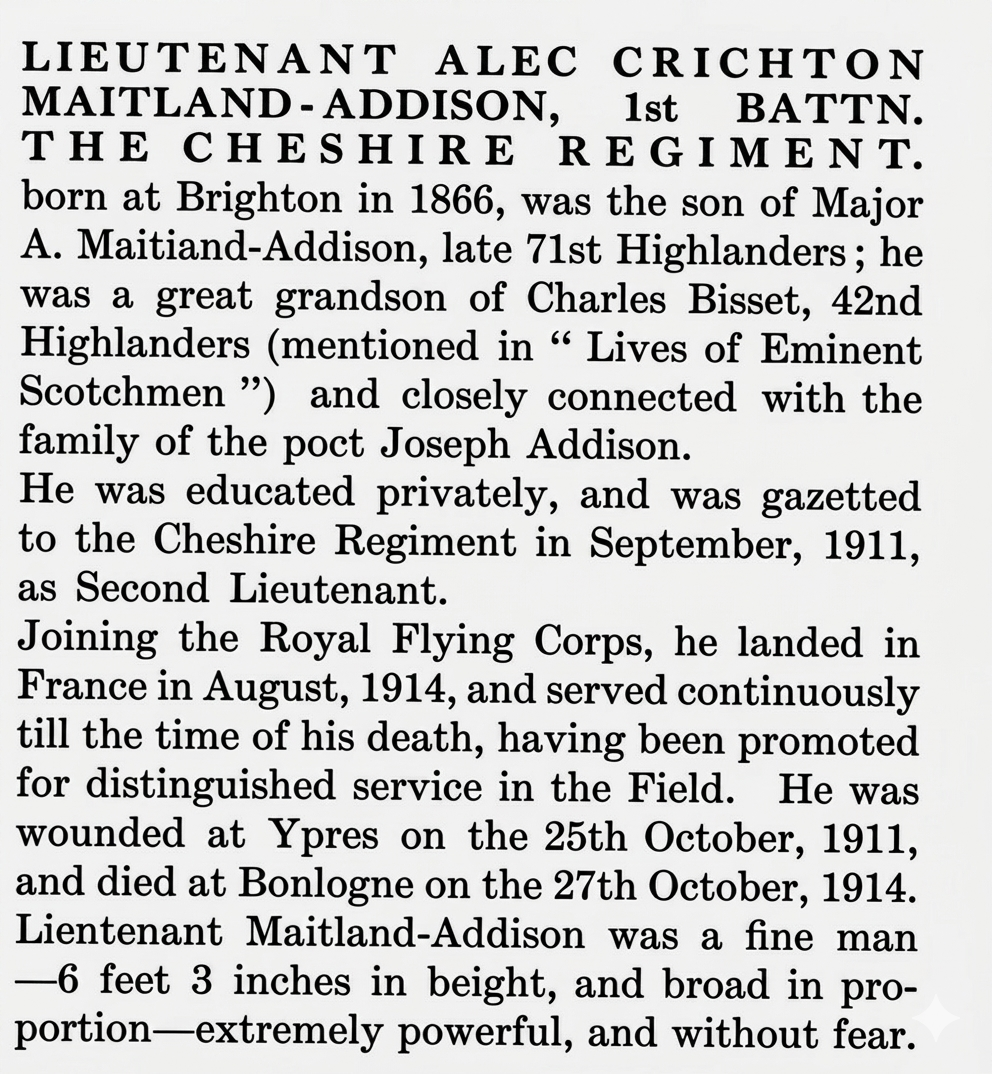
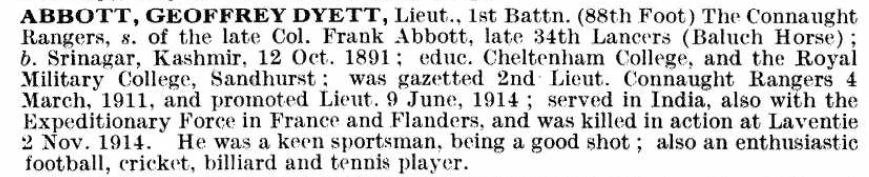
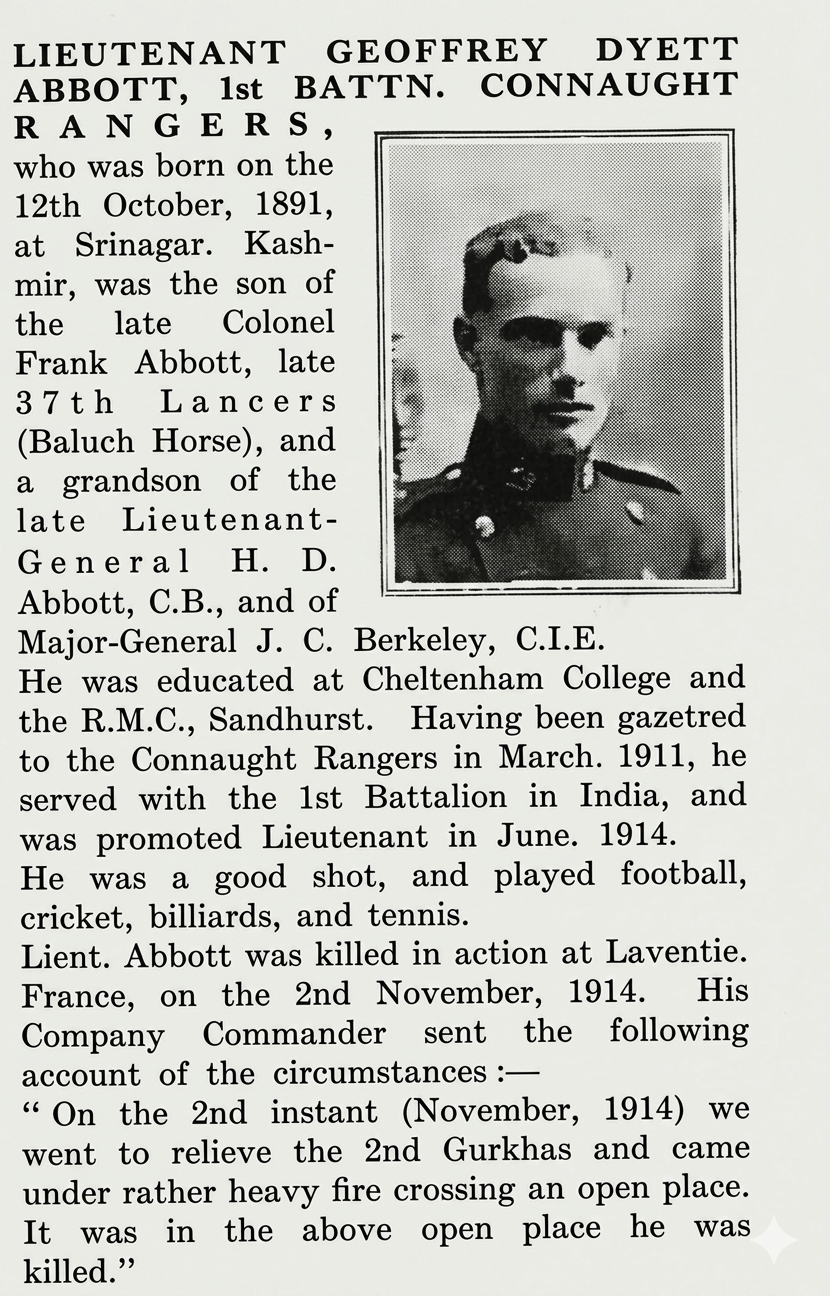

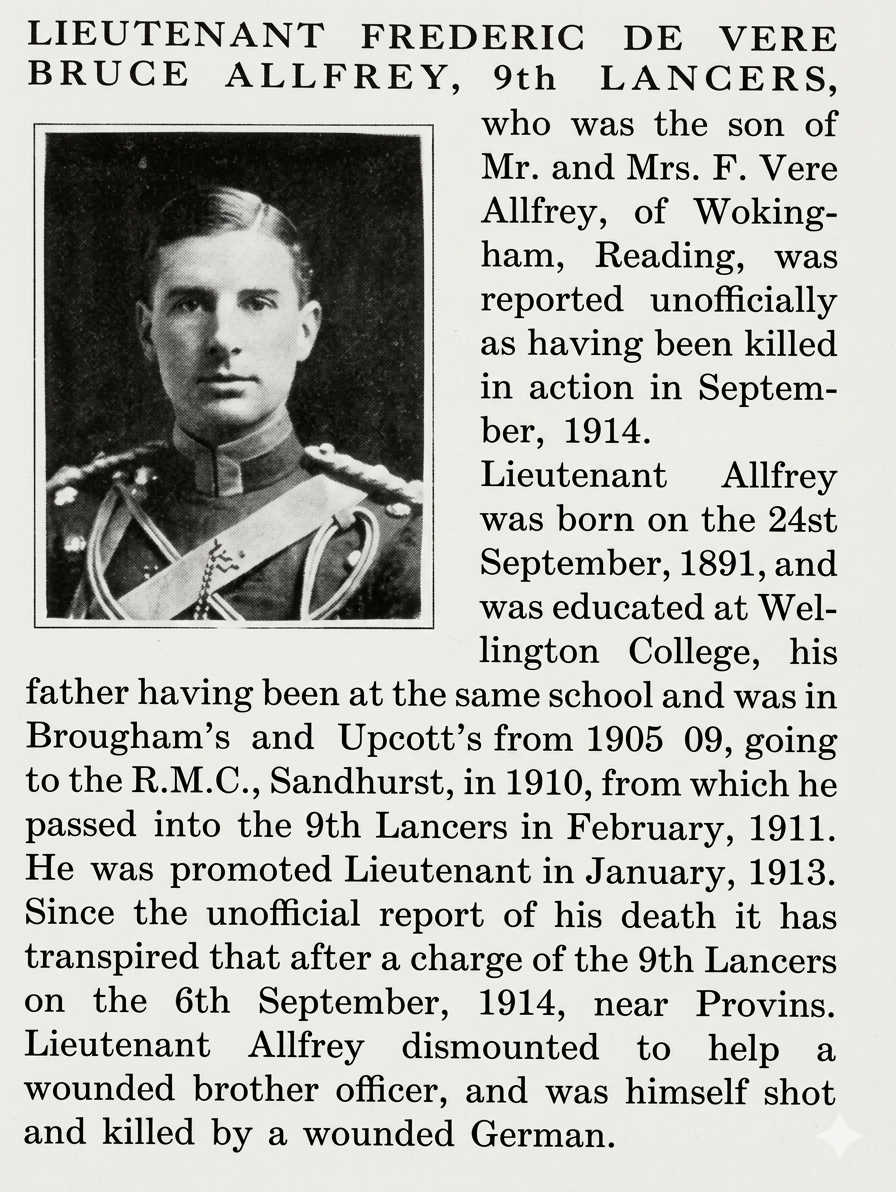
The business model for de Ruvigny may have been for those who wanted their loved ones names to appear, to pay for the entry. (This assumption is on the basis that no attempt was made to ‘capture’ every single officer, NCO and soldier - such an undertaking would have been virtually impossible). It can be assumed the amount was on a ‘pay by word’ basis, with more charged if the relatives wanted a photograph to be included.
Contradictions between Bond of Sacrifice and de Ruvigny's Roll of Honour
A full examination of the obituaries would be almost a life-time's work, but a cursory sample has highlighted the fact that there are likely to be serious contradictions. Sub-Lt Wellington Trevelyan Dale of the Royal Naval Division is said, in the Bond of Sacrifice to have been killed in action in a very brief obituary (volume 2, naval section page 12). However, in a much fuller obituary in de Ruvigny, it is detailed that he died from appendicitis. This is also an example of de Ruvigny being far more detailed than Bond of Sacrifice.
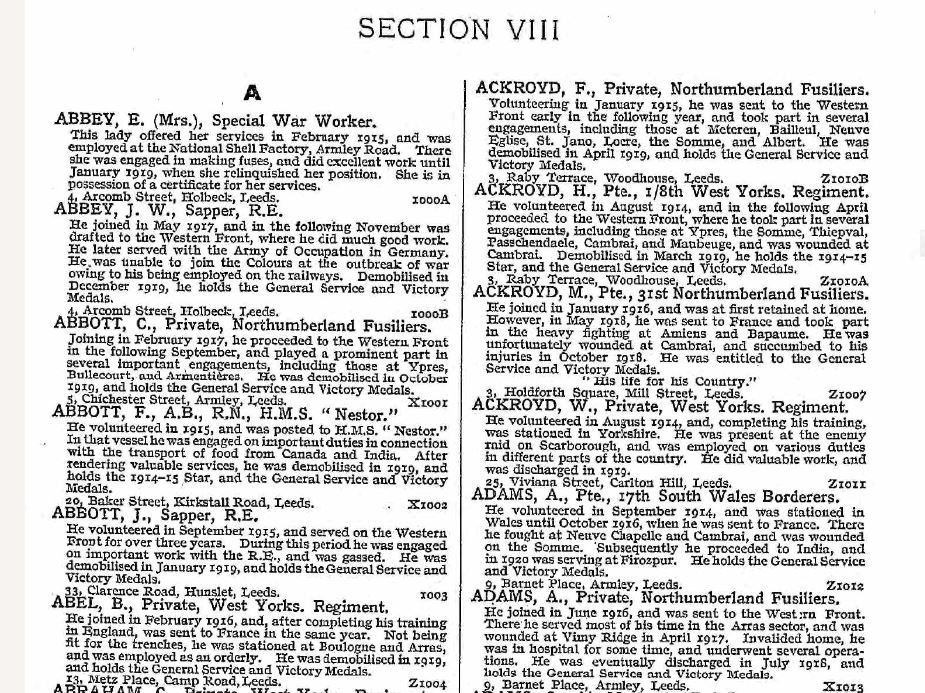
The National Roll of the Great War
The ‘National Roll’ was regionalised with London (four volumes), Southampton, Luton, Birmingham, Leeds, Portsmouth, Manchester and Salford volumes all currently available online; these having being digitised by Ancestry.
In addition, there are volumes for Bradford, Bedford and a fifth volume for London which have not yet (in 2026) been digitised. Obviously there are vast swathes of the country (including Scotland, Wales and Ireland) that were not covered in what is obviously an over-ambitious project which was (with hindsight) doomed to be impossible to ever be remotely comprehensive.
The ‘National Roll’ only details NCOs and ‘other ranks’ who served and contains no officers. It is notable that it names those who served, not just those who were killed, which makes the ambition and scale of the proposition even more vast and impossible to be comprehensive.
Entries in The National Roll of the Great War were submitted by family members or the soldiers themselves. Information provided was not verified and therefore, may or may not be accurate.
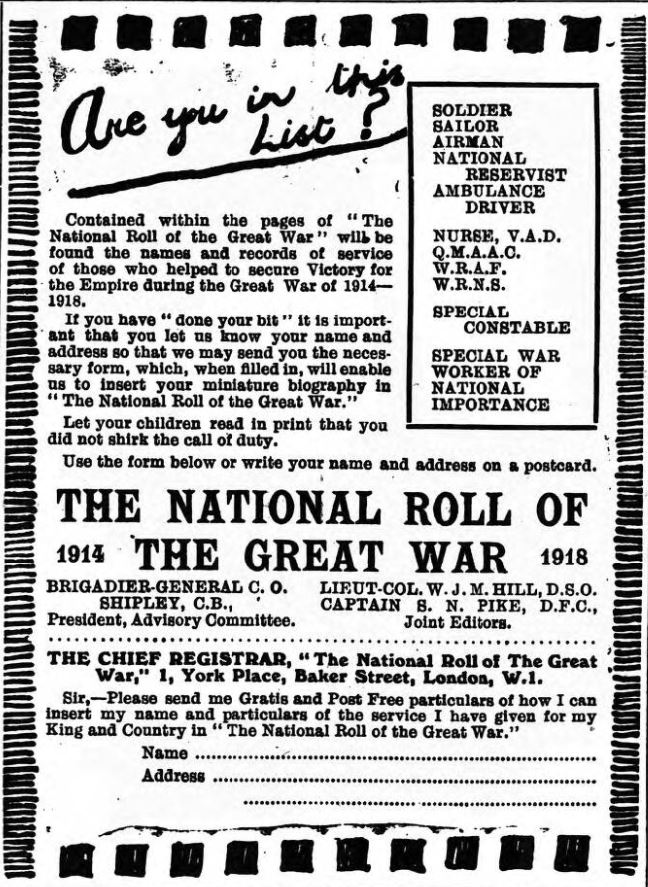
As can be seen in the image below, the entries in The National Roll of the Great War were brief. There were no photographs and men (and women) listed included those who survived the conflict as well as those who died.
Obituaries in common with the National Roll of Honour
Because no officers are named in the ‘National Roll of Honour’, there is therefore no ‘cross over’ of entries with the Bond of Sacrifice.
Acknowledgements
The volunteers (too numerous to mention individually) who worked on the index to the Bond of Sacrifice are fundamental to being able to locate names and in the volumes, and the fact that the spreadsheet can be manipulated is down to their work. The team was led by the WFA's Honorary Secretary, Jill Stewart.
I am also grateful to Sarah Paterson of the IWM who kindly gave up her time to discuss the origins of the Bond of Sacrifice.
References
[1] Lewis Augustus Clutterbuck 1854-1947. After a career in the army, it seems Clutterbuck turned to medicine – gaining an MRCP in later life. His obituary, however, makes no mention of the Bond of Sacrifice.
[2] Colonel William Toke Dooner OBE, JP 1844-1926 (late Royal Inniskilling Fusiliers). He was also, for a time, the Mayor of Rochester, Kent. It is notable that his daughter, Mildred Dooner, acknowledged her father's assistance in producing (in 1903) a book "The Last Post: A Roll of all Officers (Naval, Military or Colonial) who gave their lives for their Queen, King and Country in the South African War 1899-1902". This volume has remarkable similarities with the Bond of Sacrifice and perhaps was the 'prototype' for Bond of Sacrifice. It may have been Colonel Dooner's work more than his daughter's. Colonel Dooner lost two sons in the war, one of whom is detailed in Bond of Sacrifice. The other (Lt Col John Dooner) was killed in 1918.
Mildred Dooner (1892-1962) was married to General Sir Archibald Murray in 1912 which presumably was another factor which added weight to the whole 'Bond of Sacrifice' enterprise.
[3] Conyngham Albert Denison 1851-1938 (Royal Navy). He was the fourth son of the 1st Earl of Londesborough. Little is known about Denison, although it would appear he served on the Royal Yacht HMS Osborne in 1881. His son 2/Lt GEH Denison, was killed on 25 September 1915
[4] See Hansard 9 November 1915.
[5] The 28 named Canadian officers out of 146 Canadian officers killed between 1 January and 30 June 1915 represents less than 20% of those who could have been listed in the Bond of Sacrifice. The 40 named Australian officers out of 181 in the first half of 1915 who were killed represents 22%. Two New Zealanders out of 52 officers represents less than 4%,
[6] One Australian officer died in combat in 1914 (Captain Pockley, Australian Army Medical Corps). No Canadian officers died in 1914 other than of natural causes. Two New Zealand Officers died in 1914, both seemingly of natural causes.
[7] From 1912 to 1931, 'Mate' was a commissioned rank within the Royal Navy, for ratings who were selected for a commission.
[8] Details of the IWM's collection can be found here: A Closer Look at the Bond of Sacrifice Collection. Again, it must be emphasised that the IWM's 'Bond of Sacrifice' is a totally different piece of work, even though many of the details are taken from Clutterbuck's 'Bond of Sacrifice'.
[9] From Newspapers.com via Ancestry
[10] Lewis Clutterbuck's son was Lewis St John Rawlinson Clutterbuck (1884-1965). He served in the Great War. One of his grandsons was Major-General Richard Lewis Clutterbuck CB OBE (1917 – 1998)
Becoming a member of The Western Front Association (WFA) offers a wealth of resources and opportunities for those passionate about the history of the First World War. Here's just three of the benefits we offer:

With around 50 branches, there may be one near you. The branch meetings are open to all.

Utilise this tool to overlay historical trench maps with modern maps, enhancing battlefield research and exploration.

Receive four issues annually of this prestigious journal, featuring deeply researched articles, book reviews and historical analysis.


